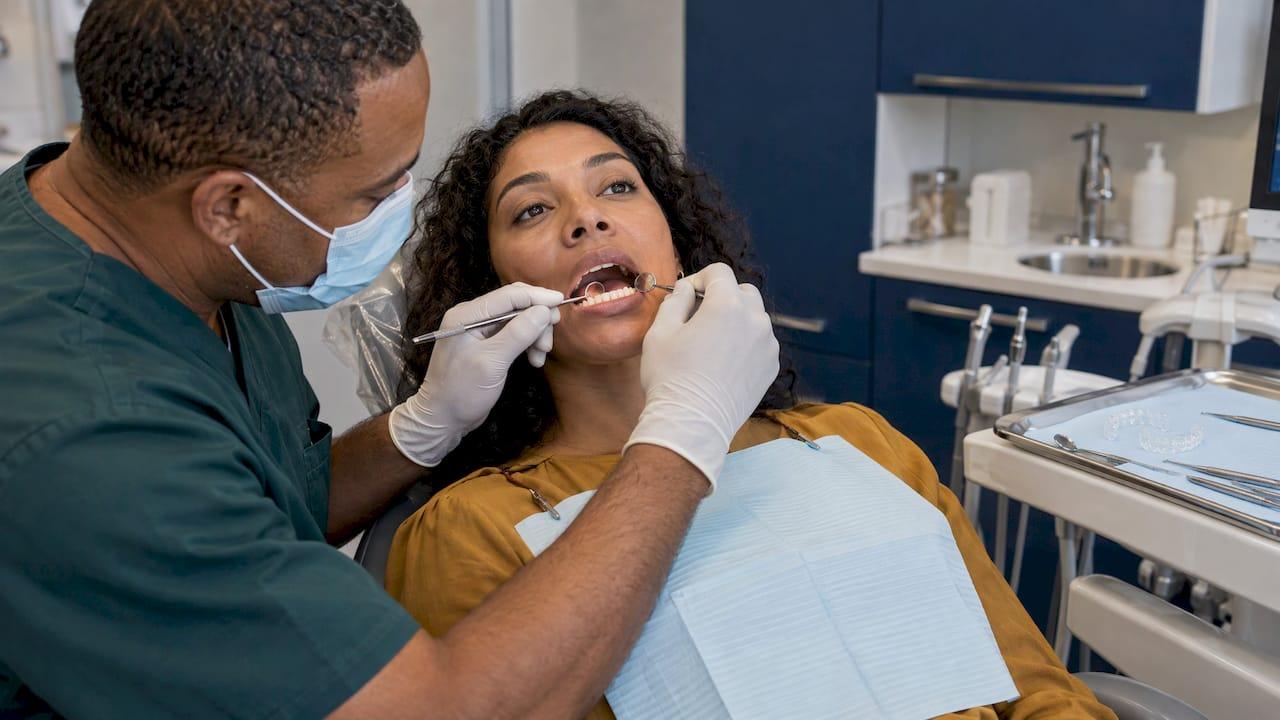
If your teeth have drifted since your braces came off, you are not unlucky and it is rarely too late. Teeth keep moving for life, and after braces they are most likely to move back toward where they started. Most mild shifting can be corrected with a short round of clear aligners followed by a retainer you actually keep wearing. At DC Implant & Cosmetic Dentistry in Washington, DC, we can examine the change, take imaging and give you a written plan, often with a same-day appointment.
TL;DR
- Teeth shift after braces because bone and gum fibers take months to settle and the natural forces of chewing, swallowing and speaking keep nudging teeth. The American Association of Orthodontists (AAO) says skipping retainers for even a few days can cause significant shifting.
- An old retainer that no longer fits snugly is a sign that teeth have moved. Do not force it on.
- Small to moderate relapse is often treated with clear aligners such as Invisalign. The right choice depends on what has changed and on your bite and gums.
- The earlier you act, the less movement there is to undo and the shorter treatment tends to be.
- After realignment, a retainer is what keeps the result. Plan on wearing one long term.
Table of Contents
- Why teeth shift after braces
- How fast can teeth move back?
- Should you wear your old retainer to push teeth back?
- Can Invisalign fix teeth that shifted after braces?
- What the process looks like
- Retainer choices after realignment
- Other things that move teeth
- Traveling during aligner treatment
- Our perspective
- Get your teeth checked while the shift is small
- FAQ
- Sources
Why teeth shift after braces
Braces do not change the fact that teeth sit in living bone, held by a web of fibers and pushed by your tongue, lips and cheeks. Orthodontic treatment moves teeth through that bone. Once the braces are off, the surrounding tissue still has a memory of the old position.
The AAO explains that bone remodeling is lifelong and that forces from speaking, biting and chewing make teeth drift. It also notes that teeth are especially prone to moving right after treatment (AAO).
Three things explain most of it:
1. The fibers around your teeth need time to adapt. A 2023 systematic review reports that the elastic fibers around the teeth and the fibers linking neighboring teeth take the longest to remodel, up to 8 months. Another review of retention and relapse puts some fiber groups at 3 to 6 months and notes that one type may take up to 6 years. That is why the first months after braces are the riskiest.
2. Teeth that finished outside a stable zone are more likely to move. The same systematic review describes a "neutral zone" where tongue and soft-tissue forces balance. Teeth finished outside it carry a higher risk of recurrence. A clinical guide in Dental Update adds that when teeth are moved beyond their zone of equilibrium, such as a widened arch, some patients may need indefinite retention.
3. Everyday habits and everyday forces keep pushing. A 2025 expert consensus on clear aligners names retainers and correction of habits such as tongue-thrust swallowing as the most effective ways to reduce relapse. It also says the type of appliance used has minimal impact on relapse risk, so shifting after braces says nothing about how well your treatment was done.
Other common triggers include a retainer worn less often than directed, a retainer that cracked or warped, and rotated teeth, which the retention review above flags as especially prone to relapse.

How fast can teeth move back?
Faster than most people expect. The AAO warns that without a retainer teeth can shift a little more every day, and that a few days of skipping can be enough to cause noticeable movement. Many people first notice it as a retainer that feels tight, a small gap reopening, a front tooth turning slightly, or a bite that feels "off."
The tight retainer is the earliest and most useful signal. Here is how to read what you feel:
| What you notice | What it usually means | What to do |
|---|---|---|
| Retainer feels snug after a few nights off | Minor movement, often still reversible by consistent wear | Wear it as directed and have us check the fit |
| Retainer does not seat fully or hurts | Teeth have moved enough that the retainer no longer matches | Stop forcing it and book an exam |
| Visible gaps, overlap or a rotated front tooth | Relapse that has become cosmetic | Exam, imaging and a realignment plan |
| Bite feels different or you chew unevenly | Movement affecting how teeth meet | Prompt exam |
The AAO's retainer care guidance says that if teeth move so far that the retainer will not fit, more treatment may be required to realign them.
Should you wear your old retainer to push teeth back?
It is tempting. Many people try to squeeze an old retainer on every night and hope. The AAO describes a retainer's job as holding teeth where they are, not moving them far. A retainer that only fits with pressure can also stress teeth in ways nobody has planned, so a dental exam is the safer first step.
If the shift is tiny and the retainer still seats fully, wearing it again as directed may be enough. If it does not seat, a new retainer made to your current tooth position or a short aligner course is the usual path. The AAO notes that replacement retainers cost less than a second round of orthodontic treatment, which is one more reason not to wait.
Two more practical points on retainers:
- Plastic retainers wear and warp. One in vitro study found clear Essix-type retainers distorted more at the back teeth than the front, and distortion grew over six months. Hospital guidance from Leicestershire NHS says these retainers usually need replacing over a lifetime.
- Keep retainers in a hard case. The AAO advises against wrapping them in napkins or carrying them loose in pockets, which is how many get thrown away.
Can Invisalign fix teeth that shifted after braces?
In most mild to moderate cases, yes. Clear aligners move teeth in small steps using a series of custom trays. The 2025 consensus above states that clear aligners can treat nearly all types of malocclusion, and the AAO says some patients need only a short course of braces or clear aligners to bring teeth back, while severe cases may need a full round of treatment.
What decides whether aligners suit you:
- How far the teeth moved. Small rotations and reopened gaps are the classic aligner cases. Our guide to clear aligners for gaps explains what they fix and what to expect.
- Tooth and gum health. Movement is only safe on healthy gums and bone, which is why an exam and X-rays come first.
- Crown shape and the type of movement needed. The consensus says aligners are not recommended for clinically short crowns or extensive movement of back teeth forward.
- Wear time. The same consensus lists poor compliance as a limit. Aligners work only when worn, so be honest about your routine.
- Your bite. Some corrections use small tooth-colored bumps called attachments, or elastics. See our notes on Invisalign attachments and elastics with aligners.
Adults often assume they are too old for another round. Our overview of clear aligners for adults covers what the process looks like at your age.
What the process looks like
Here is the typical path from "my teeth moved" to a stable smile.
- Exam and imaging. We look at how your teeth, gums and bite have changed and take X-rays so the plan rests on what is under the gums too. This is also where we check for gum disease, cavities or a failing restoration that should be handled before any movement.
- A written treatment plan. You see what we propose and what each step involves before you commit.
- Aligner treatment. You wear each tray for the time you are directed and change on schedule. Because the movement is usually smaller than in a first full treatment, many relapse cases are shorter, though your length depends on your teeth.
- Retention. This step decides whether the work lasts. Your plan should include a retainer that fits the finished position. Our article on retainer care and same-day replacements covers how to look after it.
Because we perform procedures from exams to surgical implants in-house, anything found along the way, such as a cavity or a tooth that needs a crown, is handled in the same practice without a hand-off.
Retainer choices after realignment
There is no single universal schedule. The Dental Update guide notes that removable-retainer regimens range from full-time for three months to night-only wear. The review in the International Journal of Dental Science and Research recommends full-time wear for the first 3 to 4 months after treatment, then part-time wear for at least a year.
The Cochrane review of 47 studies with 4,377 participants compared fixed and removable retainers and judged the evidence low or very low certainty, so no single approach is proven best. What the studies do show is the trade-off. In one comparison, removable clear retainers allowed slightly more movement in the lower front teeth than bonded wires, though not a clinically significant amount, and they were linked to better gum health and fewer failures.
In practice, the best retainer is the one you will wear. The AAO says orthodontists may start with full-time wear and later move to nights only, and that many people will need retainers for life. Treat it like brushing: a small nightly habit that protects the investment you already made.
Other things that move teeth
If your retainer habit has been good and teeth still moved, the cause may be something else:
- Missing or extracted teeth. Remaining teeth can drift into the space. When a tooth has been lost, we can discuss replacing it with an implant, a bridge or a denture so neighbors stay put.
- Gum disease. Bone loss loosens teeth and lets them fan out. Treating gum disease comes before any realignment.
- Grinding or clenching. Heavy forces can wear and move teeth.
- Tongue thrust or other habits. The consensus above lists habit correction among the main ways to limit relapse.
- Gaps or "black triangles" at the gum line after movement. Our guide to black triangles after aligners explains what causes them and what can be done.
If you also want to change the shape, color or length of teeth while you are at it, cosmetic options such as bonding, whitening or veneers can finish the result once teeth are in position.
Traveling during aligner treatment
Travel is where trays get lost and routines slip, so a little planning helps:
- Keep your current trays, your next set and your case in your carry-on, not checked luggage.
- Use the case every time you take trays out to eat. Napkins on restaurant tables are the classic way trays end up in the trash.
- Brush before putting trays back in, and carry a travel toothbrush.
- Take your retainer too. A broken or lost one is a problem to fix quickly, as the AAO says, because teeth can shift each day without it.
- If a tray is lost or cracked, put your previous set back in and contact our office for guidance rather than skipping wear. For eating rules on the road, see our guide to eating with Invisalign.
Our perspective
Most people who come to us with shifted teeth are embarrassed, as if they did something wrong. They did not. Teeth move for everyone, and the research says the appliance you had matters far less than what happens in the first months and years afterward.
What we want is for you to leave with a plan you can read and understand: what moved, why we think it moved, what we propose, and what holds the result afterward. Dr. Kambez Shukoor, a U.S. Navy veteran, built our approach on thorough imaging and up-front planning, so you are not guessing about your own mouth.
We favor clear aligners for relapse because they fit into a busy working life in DC and they are discreet. We also believe the retainer deserves as much attention as the aligners. The best result is the one you still have five years from now.
Jake
Get your teeth checked while the shift is small
We offer clear aligners at our Washington, DC office, along with exams and X-rays under our general dentistry services. Same-day appointments are available, and financing options are available for higher-cost treatment. Bring your old retainer if you still have it. It helps us see how your teeth have moved.
If you also want cosmetic refinements, such as bonding or a full smile makeover, we can plan them together on our cosmetic dentistry page.
FAQ
Is it normal for teeth to shift after braces?
Yes. The AAO describes tooth movement as a natural, lifelong process, and says retainers worn as directed are the most effective way to minimize it. Some movement is common even in people who wear them, which is why a tight or ill-fitting retainer deserves a prompt exam.
Can I use Invisalign after braces?
Often you can. Clear aligners can treat most types of misalignment, and a short course is commonly enough for mild relapse. Suitability depends on how far teeth moved, the health of your gums and bone, and whether you will wear trays consistently. An exam and X-rays tell us which applies to you.
How long do teeth take to shift back after braces?
It varies by person. The tissue around teeth keeps adapting for months, and the AAO says skipping retainers for even a few days can lead to significant shifting. Many people notice a tight retainer or small gaps within weeks to months of stopping wear.
My retainer doesn't fit anymore. What should I do?
Stop forcing it on and book an exam. The AAO advises acting immediately because teeth can keep moving each day without a retainer. We can check how much has changed and tell you whether a new retainer or aligners make sense.
Do I have to wear a retainer forever?
The AAO says retainers will likely be needed for life, though wear often drops from full-time to nights only over time. We set a schedule for you at the end of treatment and adjust it as your teeth stay stable.
Sources
- Will My Teeth Keep Moving Post Treatment? (AAO)
- Retainer Care 101 (AAO)
- Orthodontic Relapse after Fixed or Removable Retention (MDPI, 2023)
- Orthodontic retention: a clinical guide for the GDP (Dental Update, 2019)
- Retention and Relapse: A Review (IJDSR, 2023)
- Expert consensus on clinical strategies for clear aligner orthodontics (2025)
- Retention procedures for stabilising tooth position after orthodontic treatment (Cochrane, 2023)
- Evaluation of the Distortion of Essix Retainer (2024)
- Wearing a retainer after brace treatment (Leicestershire Hospitals NHS, 2024)