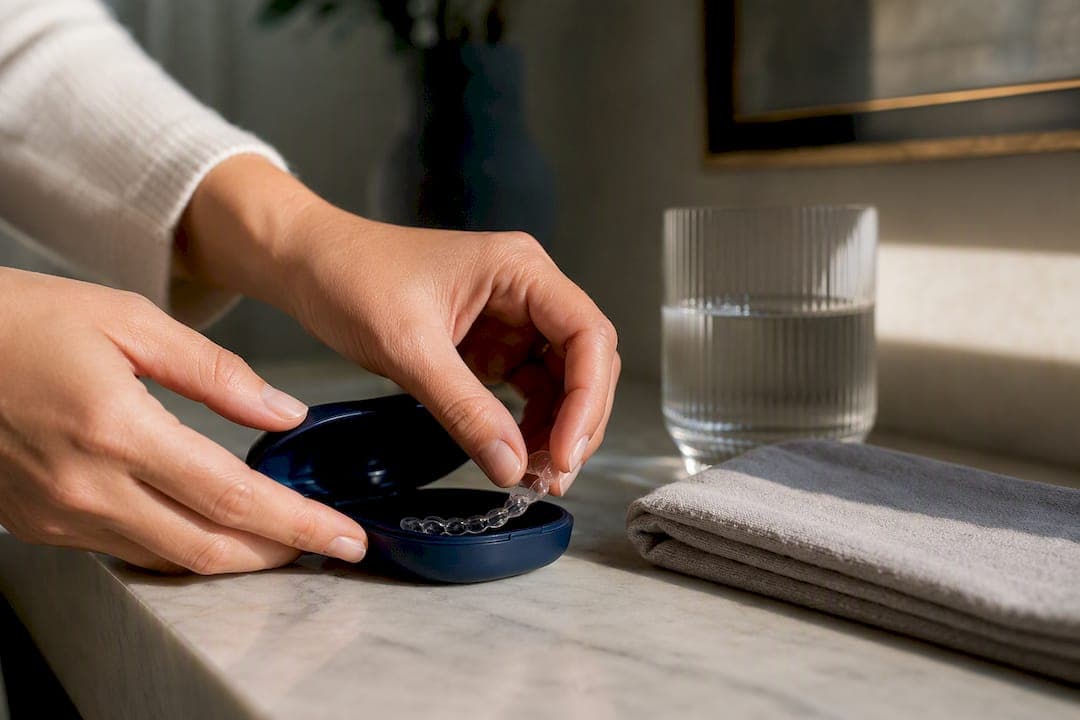
Yes, you need a retainer after Invisalign to protect your results and prevent relapse. Most clinicians prescribe full-time wear (removed only for eating and cleaning) for the first few months, then a shift to nightly wear for the long term. Your provider will choose between a removable or fixed retainer based on your bite, your original case, and how consistent you tend to be with wear.
TL;DR:
- Most patients need to wear retainers nearly full-time for the first three months and then transition to nightly wear for long-term stability.
- Fixed retainers are more durable and require careful cleaning, but removable options like Essix or Hawley retainers depend on patient habits and care.
- Teeth can shift gradually over time, so long-term retainer wear—potentially indefinitely—is essential to prevent relapse.
- Proper retainer cleaning involves rinsing, brushing with a soft toothbrush and mild soap, and avoiding heat sources that can warp plastic.
- If a retainer breaks, warps, or is lost, prompt action with your provider can prevent teeth from shifting within days.
Table of Contents
- What are the different types of retainers after Invisalign?
- How long do you need to wear retainers after Invisalign?
- How should you clean and store your retainers?
- What should you do if your retainer breaks, warps, or gets lost?
- Why trust this guidance on retainer care?
- What retainer advice actually deserves your attention
- Where to go for retainer repairs and replacements in Washington, DC
- Sources
- FAQ
What are the different types of retainers after Invisalign?
Clinicians generally choose from three retainer types, and the right one depends on your case and your habits. A systematic review of retention procedures found that both removable and fixed retainers carry tradeoffs, and most patients need some form of retention long-term.
- Essix or clear removable retainers look like your last Invisalign tray, fit closely over your teeth, and generally have a variable lifespan depending on wear and care, according to clinical care guidance. They are sensitive to heat and can warp if you grind your teeth at night.
- Hawley retainers use a metal wire and an acrylic base, which makes them more durable and easier to adjust or repair than clear trays.
- Bonded or fixed retainers are thin wires cemented behind the front teeth, usually the lower incisors, and provide continuous support without relying on the patient to remember to wear them, though they demand more careful cleaning.
Some clinicians combine a fixed lower retainer with a removable upper one to balance compliance and hygiene needs between the two arches, a strategy the American Association of Orthodontists notes is common for adult patients. Wearing your final Invisalign tray as a short-term retainer is possible in a pinch, but it is not built for long-term use and tends to wear out faster than a proper retainer.
How long do you need to wear retainers after Invisalign?
Retention follows a fairly predictable arc, though your provider will tailor the specifics to your case.
- The first 0 to 3 months call for near full-time wear, removed only to eat and clean your teeth, while the bone and soft tissue around your teeth stabilize.
- Months 3 through 12 typically bring a transition, often from all-day wear down to nights only, with checkpoints where your provider confirms your teeth are holding position.
- Beyond the first year, many patients continue wearing a retainer several nights a week or nightly, indefinitely, because teeth have a lifelong tendency to shift.
That "indefinitely" part surprises a lot of people, but it lines up with the evidence. A systematic review of orthodontic retention shows retention reduces relapse risk, and part-time removable wear can sometimes lead to slightly more relapse than fixed retainers, though full-time removable wear can be just as effective. Your actual timeline can shift based on your age, how severe your original misalignment was, whether you have periodontal disease, whether you grind your teeth, and any tooth loss.
How should you clean and store your retainers?
Good habits add months, sometimes years, to a retainer's life and keep your mouth healthy in the process.
- Rinse your retainer with lukewarm water every time you take it out, then brush it gently with a soft toothbrush and mild soap, since the American Association of Orthodontists specifically advises against toothpaste, which can scratch clear plastic.
- Once a week, soak your retainer in an effervescent cleaning tablet or a dilute hydrogen peroxide solution for the time listed on the product, then rinse thoroughly before wearing it again.
- If you have a fixed retainer, use a floss threader or interdental brushes daily to clean around the wire, and keep up with regular professional checks.
- Store removable retainers in their case whenever they are out of your mouth. Never wrap one in a napkin, where it can end up in the trash, and never leave it somewhere a pet can reach it.
Heat is the fastest way to ruin a clear retainer: hot water, a dishwasher, or a car dashboard can all warp the plastic beyond use, according to clinical care leaflets. Toothpaste and pet damage round out the most common, and most avoidable, causes of early failure.
Pro Tip: Keep a spare case in your bag or car so a retainer never ends up loose in a pocket or on a napkin between meals.
What should you do if your retainer breaks, warps, or gets lost?
Retainer problems are common, and how you respond matters more than the setback itself.
- If your retainer feels tight after a short gap in wear, that is often minor shifting. Keep wearing it as prescribed and call your provider if the pressure does not ease or causes real pain.
- If it is broken or visibly warped, stop wearing it immediately. A malformed retainer can do more harm than good, and NHS patient instructions recommend switching to a backup if you have one while you arrange a replacement scan or impression.
- If you lose a retainer, contact your provider quickly. Teeth can start shifting within days, and your clinician may suggest a temporary option, including your last Invisalign tray if they approve it.
- Persistent irritation, sores, or trouble keeping a fixed retainer clean are reasons to book an adjustment rather than waiting it out.
Why trust this guidance on retainer care?
This playbook draws on published retention research and patient guidance from the American Association of Orthodontists and NHS trusts, paired with the practical experience of a dental practice that handles aligner follow-up regularly. A dental practice led by Dr. Kambez Shukoor, a U.S. Navy veteran, performs exams, digital scans, and clear-aligner treatment in one Washington, DC location, and has built a base of positive reviews.
For patients dealing with a lost, broken, or ill-fitting retainer, some dental practices offer same-day appointments and digital scanning for replacements, along with hygiene checks for fixed retainers. Readers who want a second opinion on a retention plan or need a replacement made can contact their provider to schedule a visit.

What retainer advice actually deserves your attention

Most retainer advice focuses on brand names and cleaning gadgets, but the real variable is consistency, not the device itself. A Hawley retainer worn inconsistently fails the same way a clear tray does: teeth move regardless of which material sat against them last. The evidence backs this up. Full-time removable wear performs about as well as a fixed retainer, which tells you the appliance matters less than the habit around it.
Where common advice falls short is in treating retention as a phase that ends. It does not. Bone and soft tissue keep remodeling for years, and teeth keep drifting with age even without orthodontic history. If you take one thing from this article, let it be this: build retainer wear into your nightly routine the same way you brush your teeth, because the "forever" framing you hear from orthodontists is not overcaution. It is the honest cost of keeping a straight smile straight.
— Jake
Where to go for retainer repairs and replacements in Washington, DC
If your retainer needs replacing, cracked, warped, or gone missing, you do not need a referral chain to get a new one made. DC Implant & Cosmetic Dentistry performs exams, digital scans, and clear aligner follow-up in one location, with same-day appointments when your schedule is tight and a shifting bite will not wait.

The practice is built around in-house care from Dr. Kambez Shukoor, so a retainer check, a new impression, or a broader look at your bite happens without being sent elsewhere. If it has been a while since your last checkup, a routine visit through exams and cleanings is a practical way to catch a fit problem before it turns into a bigger one. Schedule a visit to get your retainer situation sorted before minor shifting becomes a bigger fix.
This article is general information, not a substitute for advice from a qualified doctor. Consult a qualified healthcare professional about your own circumstances before acting on anything here.
Sources
- Retention procedures for stabilising tooth position after treatment with orthodontic braces
- Retainer care — American Association of Orthodontists
- Care of your retainers (Queen Victoria Hospital leaflet)
FAQ
How long are you supposed to wear retainers after Invisalign?
Most patients wear their retainer nearly full-time for the first few months, then shift to nightly wear long-term. Your exact schedule depends on your case and how your teeth respond during checkups with your provider.
Do I need to wear retainers forever after Invisalign?
For most people, yes, in some reduced form, since teeth keep a lifelong tendency to shift even years after treatment. A systematic review of retention methods found that long-term retention meaningfully lowers the risk of relapse.
Can I wear my last Invisalign tray as a retainer?
You can use your final tray as a short-term stopgap if your clinician approves it, but it is not designed for long-term retention. Clear trays wear out with regular use, and a properly fitted retainer holds its shape and fit far longer.
How many retainers do you get after Invisalign treatment?
This varies by practice, since providers typically include one set of retainers as part of treatment and charge for replacements after that. Ask your provider directly what is included in your plan and what a replacement would cost if you lose or damage one.
What should I do if my retainer no longer fits?
Stop wearing it and contact your provider, since forcing a retainer that no longer fits can cause discomfort or damage. Your clinician can take a new scan or impression to make a replacement that matches your current bite, as outlined in NHS retainer guidance.