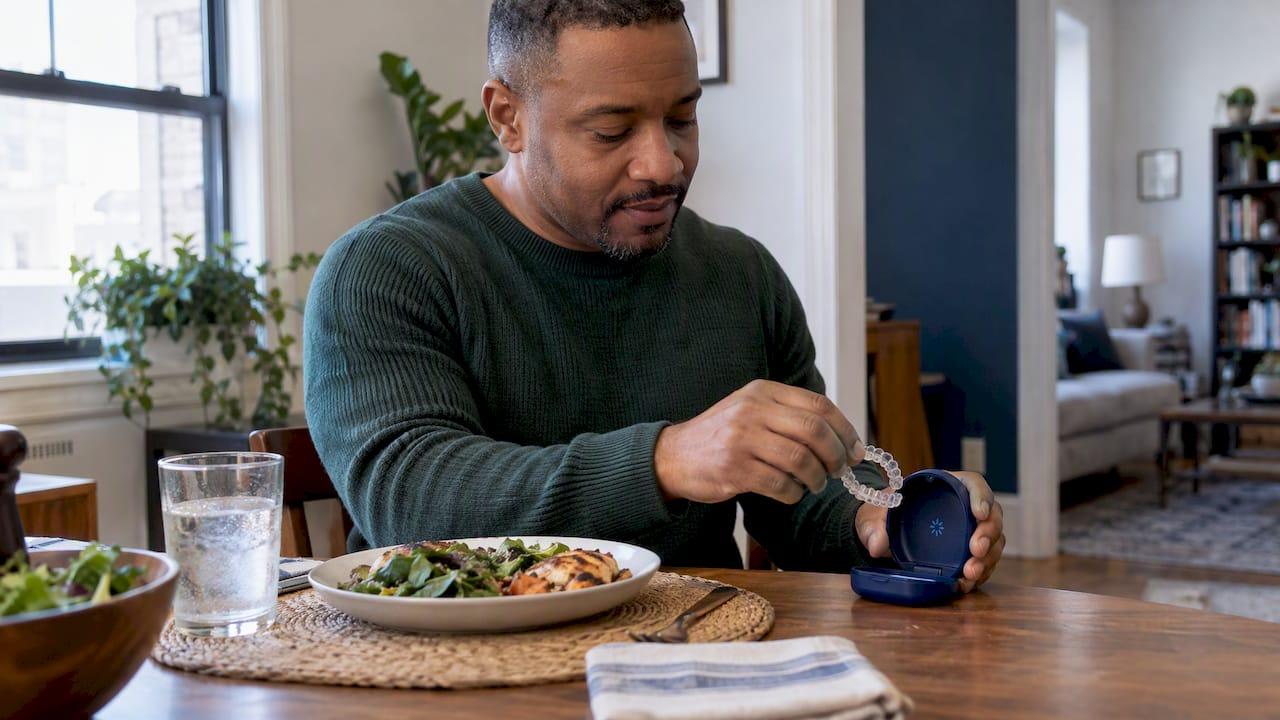
You can't eat with Invisalign aligners in. You take them out before every meal and snack, put them in their case, eat what you like, then brush and put them back. The only thing you can have with the trays in is cool or tepid water. Everything else in this guide is about making that routine easy to live with, so your teeth, your aligners and your treatment schedule all stay on track.
TL;DR
- Remove your aligners before eating or drinking anything except cool or tepid water, and keep them in their case while they are out.
- Because the trays come out, there are generally no food restrictions unless your dentist tells you otherwise. Skip chewing gum while you are wearing them.
- Brush and floss before putting the trays back. If you can't, rinse your mouth and the aligners with warm running water, then clean properly as soon as you can.
- Aim for 20 to 22 hours of wear a day, so put the trays back in promptly after each meal.
- Never wrap aligners in a napkin. Use the case, every time.
Table of Contents
- Why aligners come out for meals
- Your meal routine, step by step
- Protecting your wear time
- Foods: what you can eat and what to watch
- Drinks with Invisalign in
- Cleaning and storing aligners around meals
- Common mistakes at mealtime
- What if a tray cracks or goes missing?
- Our perspective: make the case your habit
- Thinking about clear aligners in Washington, DC?
- FAQ
- Sources
Why aligners come out for meals
Align Technology, the maker of Invisalign, is direct about this in its official patient instructions: remove the aligners for eating and drinking, with cool or tepid water as the one exception. There are three practical reasons behind that rule.
Chewing force. Aligners are thin, precisely shaped plastic. Biting down on food with them in can crack, loosen or distort them. A tray that has changed shape no longer pushes your teeth the way your treatment plan intended.
Trapped food and sugar. Plastic sitting snugly over your teeth holds whatever you eat or drink against the enamel. The instructions note that drinking with the trays in raises the risk of cavities and staining.
Heat. Hot drinks and hot water can warp the plastic. That is why even a quick sip of tea is a bad idea with the trays in.
The upside of the removable design is real. Invisalign's own guidance explains that, unlike fixed braces, aligners let you keep eating foods like crunchy salads and chewy bread, because the trays are out during meals. People wearing brackets and wires have lists of foods to avoid. With aligners, the discipline moves from what you eat to how you handle the trays.
Your meal routine, step by step
The routine takes about a minute once it is habit. Here is the sequence the manufacturer's instructions describe, with a few practical notes from the chair.
- Take the aligners out with clean hands. Start at the back teeth and work forward rather than pulling from the front, which can bend the tray.
- Put them straight into their case. The instructions say to store aligners in the supplied case whenever they are out. Wrapped in a napkin or tucked in a pocket is how trays end up in the trash.
- Eat and drink normally. No special menu is required.
- Clean your teeth. Brush and floss before reinserting the trays. Otherwise food particles get sealed against your teeth, which Invisalign says can contribute to decay or enamel discoloration.
- Rinse and reinsert. Rinse the aligners, then seat them firmly until they are fully on.
When you can't brush
Lunch at your desk, a restaurant, a long drive. The official guidance covers this: if brushing isn't possible right away, rinse your mouth and the aligners with warm running water, then clean properly as soon as you can. Many patients keep a travel toothbrush and a small tube of toothpaste in a bag or desk drawer so the fallback is rarely needed.
If you want a deeper look at keeping the trays themselves clean, see our guide to Invisalign cleaning.
Protecting your wear time
Taking aligners out for meals is not the problem. Leaving them out too long is. Invisalign recommends 20 to 22 hours of wear a day, which leaves only two to four hours for eating, drinking and cleaning.
That budget is more generous than it sounds, but it can disappear quickly if you graze. Here is a simple way to think about it:
| Habit | Time out of mouth | Verdict |
|---|---|---|
| Three meals, 30 to 40 minutes each, with brushing | Roughly 2 hours | Fits comfortably |
| Three meals plus two planned snacks | Roughly 2.5 to 3 hours | Still within budget if you reinsert promptly |
| Sipping coffee and nibbling all afternoon | Trays out for hours | Eats your wear time and keeps teeth exposed to sugar |
The estimates are our own arithmetic for illustration, not figures from the manufacturer. The point is the pattern: structured meals protect both your teeth and your schedule, while constant snacking forces a choice between taking the trays out repeatedly or eating with them in.
Some practical ways to stay inside the budget:
- Eat in defined meals. Plan two or three snacks at set times instead of all-day grazing.
- Put the trays back promptly. Invisalign advises replacing them after meals and snacks to maintain the recommended daily wear.
- Set a phone reminder if you tend to forget the trays after lunch. Forgotten aligners in the case are the most common reason patients fall behind.
- Keep a spare toothbrush where you eat most often, such as at work.
Our Invisalign timeline guide explains how treatment unfolds month by month, and why consistent wear in the early weeks matters so much. We also break down our clinicians' approach to the 30-minute rule for Invisalign for patients who want a clear guideline around meals.
Foods: what you can eat and what to watch
With the trays out, the official position is that there are generally no food restrictions unless your treating doctor says otherwise. That is a real change from braces. Still, a few foods deserve thought, mostly for the sake of your teeth and your aligners after you put them back.
Foods that are easy
Soft foods are simply the comfortable choice in the first days of a new tray, when your teeth feel tender. Bananas, yogurt, scrambled eggs, soup, pasta, cooked vegetables, mashed potatoes and smoothies (drunk with the trays out) all work well. If you want to understand why a new set feels sore and when it fades, our article on Invisalign pain and what peaks at 24 hours covers it.

Foods you can eat, but plan for
Crunchy apples, raw carrots, crusty bread and nuts are fine with the trays out. If you have attachments (small tooth-colored bumps bonded to certain teeth), hard or sticky foods can occasionally pop one off, so bite thoughtfully. Our guide on Invisalign attachments and care explains what to do if one comes loose.
Sticky foods such as caramel, toffee and gummy candy cling to teeth and grooves. You may eat them, but you will want to floss thoroughly before reinserting the trays.
Chewing gum
The manufacturer's instructions say to avoid chewing gum with aligners in, because it sticks to the plastic. Take the trays out first. Sugar-free gum between meals while the trays are out is a personal choice, but it still counts as time out of your mouth.
Foods that stain aligners
Clear plastic can pick up color. Invisalign identifies coffee, tea, red wine, cola, curry, soy sauce and balsamic vinegar as things that can stain the trays. The fix is simple: take the trays out first, and brush before reinserting. Residue left on your teeth is what transfers color to the plastic.
Drinks with Invisalign in
Water. Cool or tepid water is the one exception to the take-them-out rule. Sip it freely during the day.
Coffee and tea. Even unsweetened, these are hot, and heat can warp the trays. They can also stain. Take the aligners out, enjoy the drink, then rinse your mouth or brush before reinserting. If you drink coffee slowly over a morning, you are trading wear time for convenience, so consider finishing it in one sitting.
Sparkling water, juice, soda and sports drinks. These are not on the exception list. The instructions advise removing the trays for anything other than cool or tepid water to avoid cavities and staining. Sugar and acid held against the enamel by a tray is the worst-case combination for teeth.
Alcohol. Red wine in particular is a known stainer. Remove the trays, and brush before putting them back at the end of the evening. Avoid sleeping with sugary residue under the plastic.
Hot water and hot soup. Treat them like hot drinks: trays out first.

Cleaning and storing aligners around meals
The manufacturer's instructions say to clean aligners before each insertion with a soft-bristle toothbrush, water and a small amount of toothpaste, and rinse thoroughly. Store them in the supplied case whenever they are out, and hand-wash the case with soap and water. Two things not to do: don't use denture cleaners, and don't soak the trays in mouthwash.
A media summary of Invisalign's own process, from Healthline, describes a similar nightly rinse and gentle soft-brush routine using clear liquid soap. A general rule: if a product is colored or strongly flavored, think twice before putting it on your trays.
Between meals, a rinse in lukewarm water whenever you take the trays out keeps film from drying onto the plastic. Hot water is the enemy here as well.
Common mistakes at mealtime
- Eating with the trays in because you are in a hurry. One meal usually won't ruin treatment, but it can crack a tray or leave you with a warped fit.
- Wrapping aligners in a napkin. Restaurant staff throw them away more often than you would think. Use the case.
- Reinserting without brushing. This is the habit most likely to cause cavities and discoloration over a year of treatment.
- Sipping flavored drinks all day with the trays in. It feels harmless, but it keeps sugar pressed against the teeth.
- Using hot water to clean the trays. It can distort them.
- Skipping the case at home. Pets also like chewing aligners.
What if a tray cracks or goes missing?
Call your dentist's office the same day. Don't try to glue, trim or bend a cracked tray. Depending on where you are in treatment, you may be told to go back to your previous set, move on to the next one, or come in for a replacement. Our retainer care and same-day replacement guide covers what happens once active treatment ends, and the principle is the same: contact the practice promptly instead of waiting.
Our perspective: make the case your habit
After years of treating aligner patients, we see the same pattern. People rarely struggle with the food. They struggle with the handoffs: the tray that ends up in a pocket at a restaurant, the lunch where brushing never happens, the afternoon where the aligners stay out because the day got busy.
So we build treatment around habits, not rules. Before you start, we go over your normal day: when you eat, where you work, how often you travel. We put the plan in writing, with a clear treatment schedule, so you know what each stage asks of you. Because exams, imaging, aligner planning and general dentistry all happen in our office, and Dr. Kambez Shukoor, a U.S. Navy veteran, oversees your care, you are never passed between offices when a question comes up. If a tray cracks or a meal goes sideways, we offer same-day appointments so a small problem doesn't cost you weeks.
Our advice is practical. Keep the case in the same pocket or bag compartment every day. Keep a travel toothbrush at work. Treat the two-to-four-hour window as a budget and eat in meals rather than grazing. Do those three things and eating with Invisalign becomes the least stressful part of treatment.
— Jake
Thinking about clear aligners in Washington, DC?
If you're considering straightening your teeth and want to see what the day-to-day really looks like, we can walk you through it. At DC Implant & Cosmetic Dentistry, we offer clear aligners alongside exams, X-rays and cleanings, all in one Washington, DC location. We also offer financing options for higher-cost treatment. Book a consultation and we will explain your treatment plan in writing. For adults weighing it up, our overview of clear aligners for adults is a good starting point.
FAQ
Can you eat with Invisalign in?
No. Remove your aligners before eating and put them in their case. Biting and chewing with the trays in can crack or distort them, and food gets trapped against your teeth. Cool or tepid water is the only thing you can drink with them in.
Can you drink coffee or tea with Invisalign?
Take the aligners out first. Hot drinks can warp the plastic, and coffee and tea can stain it. Brush or rinse your mouth before putting the trays back, so residue doesn't sit against your teeth under the plastic.
Do I have to brush my teeth every time I eat?
Brushing and flossing before reinserting is the best practice, because trapped food can contribute to decay and discoloration. When you can't brush, rinse your mouth and the aligners with warm running water, then clean properly as soon as you can.
Are there foods I should avoid with Invisalign?
Generally no, as long as the trays are out when you eat. Avoid chewing gum with aligners in. If you wear attachments, be careful with very hard or sticky foods, and ask your dentist if you have specific concerns about your plan.
How long can aligners stay out for a meal?
The goal is 20 to 22 hours of wear a day, so the trays should be back in promptly after eating and brushing. A normal meal and cleaning routine fits easily inside that limit. Long gaps add up and can slow your treatment.
Sources
- Invisalign use and care instructions (patient IFU)
- Enjoy the foods you love with clear aligners | Invisalign
- 7 simple tips to help you maintain your Invisalign clear aligners
- How to Clean Invisalign: Tips, Prevention, and More | Healthline