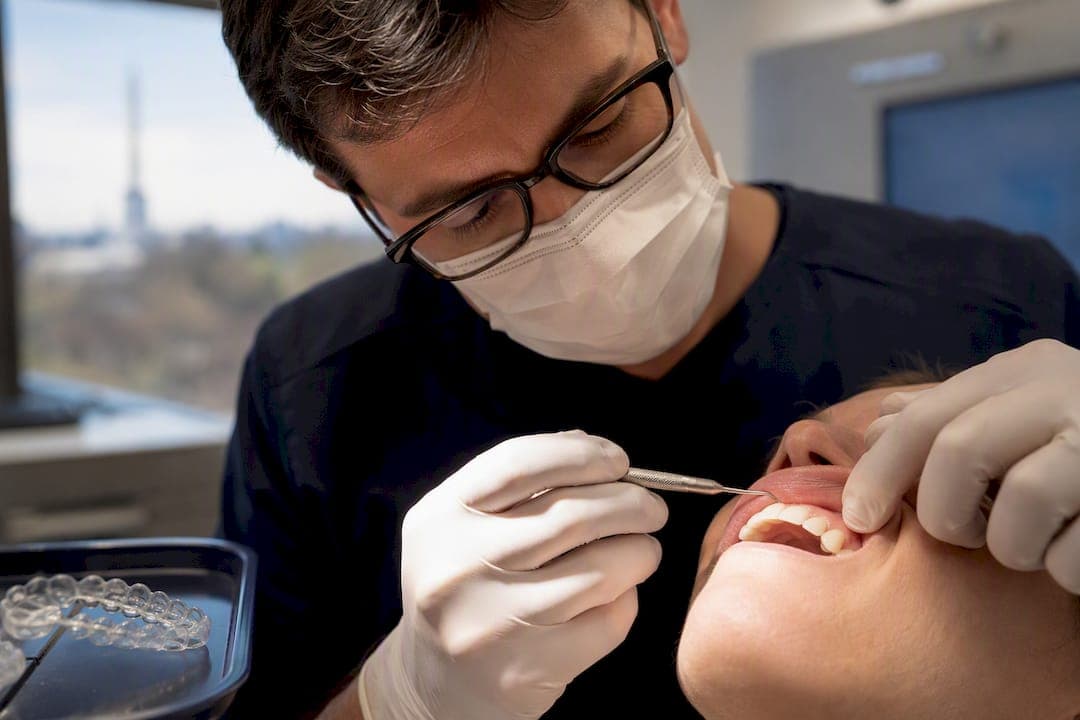
Invisalign attachments are small, tooth-colored composite bumps bonded to specific teeth so your aligners have something to grip. Officially called SmartForce attachments, they let aligner trays perform movements a smooth plastic shell alone can't manage, like rotating a tooth or pulling a root into position. They're temporary, usually removed once treatment finishes, and designed to blend in rather than stand out.
TL;DR:
- Attachments are usually between 4 and 12 per arch but can be more for complex cases, with placement tailored to individual tooth movements.
- They provide grip for aligners to rotate, pull, or push teeth, enabling movements that smooth plastic alone cannot achieve.
- Attachments are bonded using a quick, template-assisted process that typically takes around 30 minutes and involves no pain or numbing.
- While color-matched, attachments may be visible as small bumps, especially on front teeth, but providers can adjust placement for minimal visibility.
- Proper daily hygiene with thorough brushing, flossing, and avoiding stain-causing drinks helps prevent staining or plaque buildup around attachments.
Table of Contents
- What Do Invisalign Attachments Look Like, and What Types Exist?
- How Do Invisalign Attachments Work With Aligners?
- What Happens During the Attachment Placement Appointment?
- Will Invisalign Attachments Hurt?
- Are Invisalign Attachments Noticeable?
- Caring for Your Teeth and Attachments Every Day
- What Should You Do if an Attachment Falls Off?
- Removing Attachments and Choosing a Retainer
- A Dentist's-Eye View on Getting Attachments Right
- Ready to Talk About Clear Aligners and Attachments?
- Where to Learn More
- Sources
- FAQ
What Do Invisalign Attachments Look Like, and What Types Exist?
Attachments are built from composite resin, the same material dentists use for tooth-colored fillings, and shaped into shallow bumps roughly 1 to 3 millimeters across. They're color-matched to your enamel, so from a few feet away most people won't notice them at all.
Not every attachment does the same job. Beveled attachments have an angled face that helps with rotation, guiding a twisted tooth back into alignment. Others are built for extrusion or intrusion, meaning they pull a tooth down into the bite or push it up, depending on which direction the case calls for. Clinicians sometimes describe certain shapes as "optimized attachments," engineered for a specific tooth position rather than a generic bump.
Most adult cases use somewhere between 4 and 12 attachments per arch, though more complex bite corrections can call for additional ones. Your orthodontist or dentist decides placement based on your digital treatment plan, not a one-size formula. Two patients with similar-looking crowding could end up with very different attachment maps, because the underlying tooth movements aren't identical.
How Do Invisalign Attachments Work With Aligners?
A tooth is round. A plastic aligner tray is smooth. Put those two together and you get a real mechanical problem: there's nothing for the tray to grab onto if it needs to twist, tip, or pull a tooth in a direction gravity and the jaw aren't already helping with.
That's the gap attachments close. Once bonded on, an attachment gives the tray a raised edge to press against, converting the simple seating force of the aligner into a rotational or vertical push. Orthodontic clinicians describe this as turning a smooth tooth surface into a grippable handle, which is a fairly literal description of what's happening. Without that handle, the tray would just slide past the tooth instead of moving it.
Your treatment plan, mapped out digitally before any composite goes on your teeth, determines exactly where attachments go and what shape they take. If a tooth isn't moving on schedule partway through treatment, your provider can add or reposition attachments during a refinement stage rather than starting from scratch. That flexibility is part of why attachments show up mid-treatment sometimes, not just on day one.
What Happens During the Attachment Placement Appointment?
Placing attachments is quick, and it doesn't involve needles or numbing. Your dentist cleans and dries the tooth surface, then applies a mild etching gel that roughens the enamel just enough for the bonding agent to grip. A bonding liquid goes on next.
Here's the part that makes the process fast: rather than freehanding each bump, your provider uses a custom template tray, essentially a clear aligner pre-loaded with composite resin in the exact spots your treatment plan calls for. The template seats over your teeth, and a curing light hardens the composite in seconds, locking each attachment into its planned shape and position. Any excess resin gets trimmed and polished smooth.
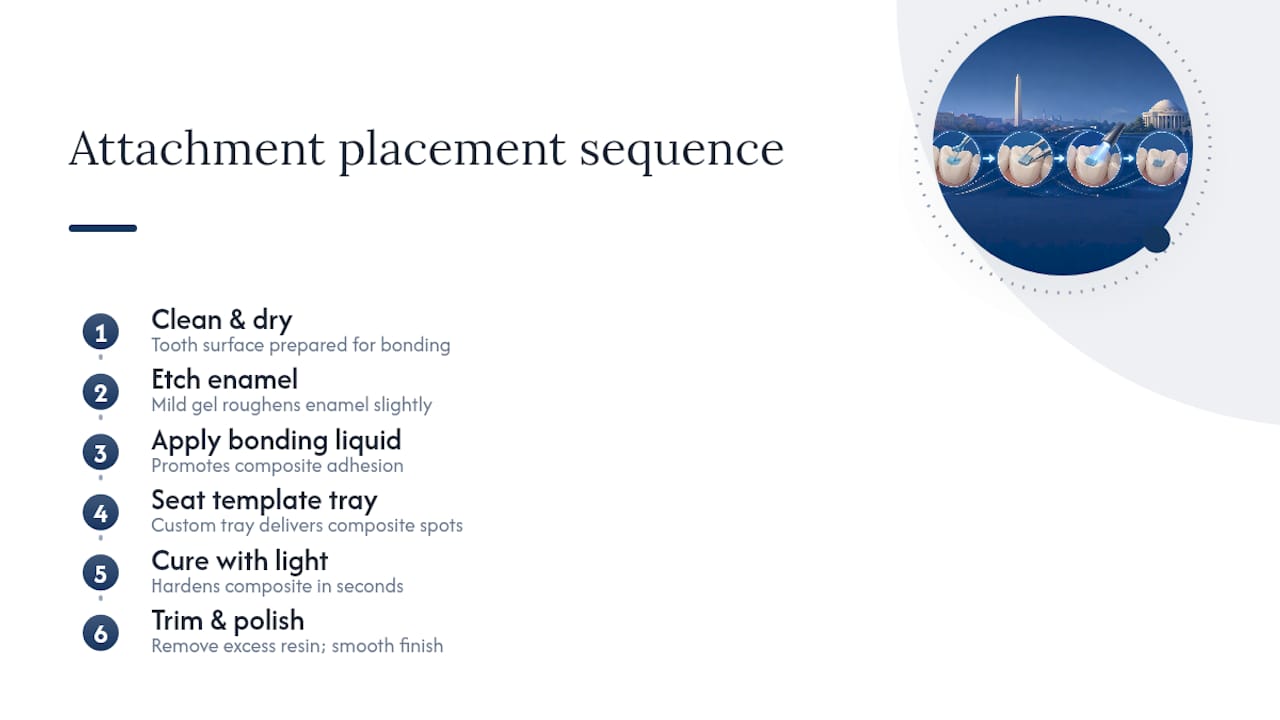
The whole appointment typically runs around 30 minutes, depending on how many attachments you're getting. If your treatment plan calls for refinements later, expect a shorter follow-up visit to add a few more.
Will Invisalign Attachments Hurt?
Most patients feel some mild pressure when a new tray seats over fresh attachments, but it's not what most people would call painful. The first one to three days tend to be when you notice it most, especially the first time you switch to a tray with a new attachment shape.
An over-the-counter pain reliever handles it for most people if there's any real discomfort. What you shouldn't ignore is sharp, localized pain that doesn't ease up after a couple of days. That's worth a call to your provider.
You'll also probably notice trays feel a little "snappier" going on and coming off once attachments are in place. That's normal. It's the attachments doing their job, gripping the tray rather than letting it slide freely.
Are Invisalign Attachments Noticeable?
Composite resin is color-matched to enamel, but "color-matched" doesn't mean invisible. Up close, especially under bright light or if someone's looking directly at your front teeth, attachments can be visible as small raised bumps.
Front teeth attachments get noticed more than ones on premolars or molars, simply because that's where people look when they look at your smile. Size, shade matching, and exact placement all affect how noticeable a given attachment is. Some providers can adjust attachment placement toward less visible surfaces on front teeth when the biomechanics allow it. If cosmetics are a real concern for you, raise it during your consultation. There's often more flexibility than patients assume, though the movement your case needs still comes first.
Caring for Your Teeth and Attachments Every Day
Attachments create more surface area where plaque and food debris can hide, so your hygiene routine needs to get a little more deliberate. Brush at least twice a day, floss daily, and use an interdental brush or floss threader around any attachment that's trapping debris your regular floss can't reach.
Rinse with water if you can't brush right after eating, and clean your aligner trays daily so you're not reintroducing bacteria every time you put them back in.
- Brush and floss thoroughly before reinserting trays, not just at bedtime
- Avoid dark drinks like coffee, red wine, or cola while trays are in, since composite can stain
- Steer clear of hard or sticky foods that can pop an attachment loose
- Clean trays with lukewarm water or a designated cleaning solution, never hot water
This is where the 30 minute rule comes in. Anything other than water should stay out of your mouth for a full 30 minutes before you put your aligners back in, and ideally you brush before reinserting them too. Skipping this is one of the most common reasons patients see staining or plaque buildup around attachments.
Pro Tip: Keep a travel toothbrush and mini floss picks in your bag or car. The biggest hygiene lapses happen when you're out and don't have anything on hand to clean up before putting trays back in.
What Should You Do if an Attachment Falls Off?
Attachments are bonded to survive normal biting and chewing, but they're not indestructible. Chewing gum, biting into something hard, or a tray that wasn't fully seated can pop one loose.
- Keep wearing your current aligner tray as scheduled, unless your provider tells you otherwise.
- Save the fragment if you can find it, though it's not usually necessary for the replacement.
- Call your dentist or orthodontist to let them know which tooth lost its attachment.
- Get it rebonded. This is a short visit. Most practices can rebond a single attachment in 5 to 10 minutes.
How urgent the fix is depends on which tooth is involved and where you are in treatment. An attachment doing heavy lifting on a rotation early in your plan matters more than one on a tooth that's already mostly aligned. Your provider will tell you whether it can wait until your next scheduled visit or needs sooner attention.
Removing Attachments and Choosing a Retainer
Once your active aligner treatment wraps up, attachments come off using a slow-speed polishing tool that gently removes the composite without touching the enamel underneath. A final polish restores the tooth's natural gloss, and the whole process is painless since you're not disturbing the tooth structure itself, just the bonded resin sitting on top of it.
Attachments typically come off before your final retainer scans, so your teeth are smooth and ready for an accurate impression. From there, retention becomes the priority. Teeth naturally drift back toward their old positions without something holding them in place, which is why a retainer isn't optional after aligner treatment.
Vivera retainers are clear, custom-molded trays similar to your aligners, while Essix retainers are a comparable clear option often used interchangeably. Hawley retainers use a plastic base with a visible wire across the front teeth, and some patients get a thin fixed wire bonded behind their lower front teeth for round-the-clock retention without any removable piece. Most providers recommend full-time wear for the first few months, then a shift to nights only for the long haul.
A Dentist's-Eye View on Getting Attachments Right
Patients tend to treat attachments as a cosmetic inconvenience, a small price paid for straighter teeth. That framing misses the more useful way to think about it: attachments are the difference between an aligner that shifts a tooth in the direction it's already inclined to move and one that can actually correct a stubborn rotation or pull a root where it needs to go. Skip or rush the attachment plan, and you risk a case that plateaus mid-treatment, requiring extra refinement trays to finish what should have worked the first time.
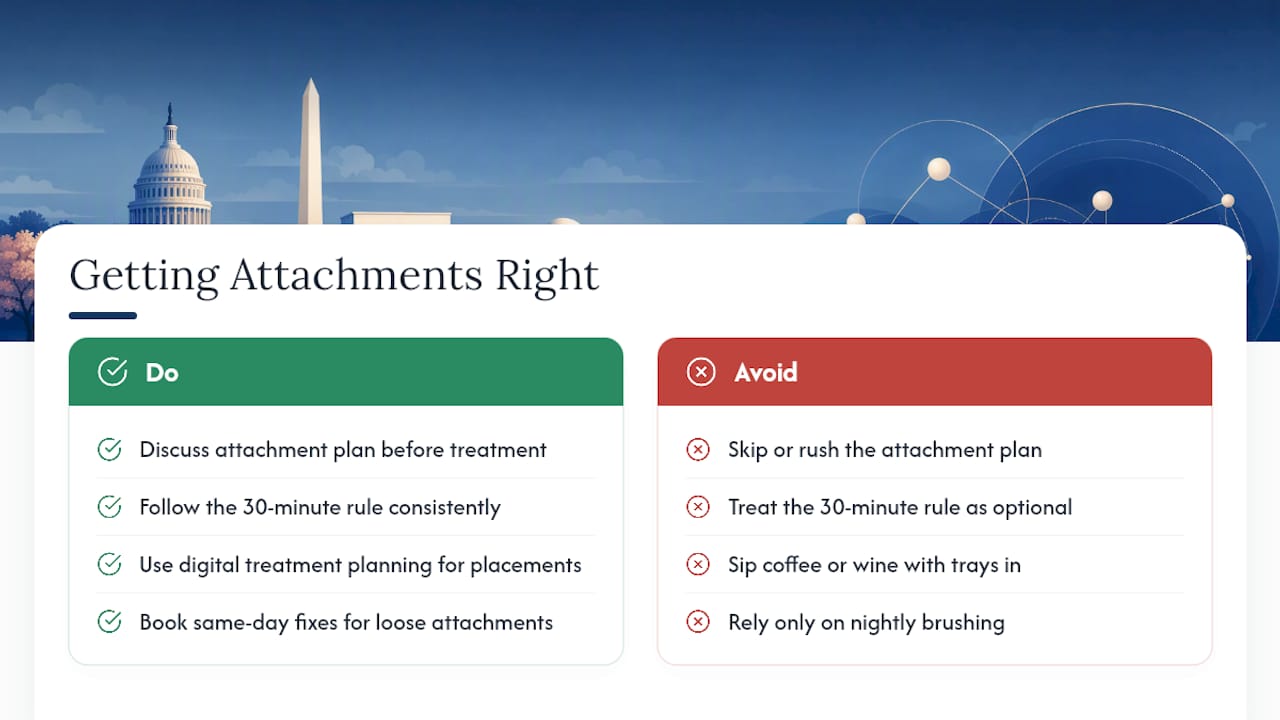
The bigger blind spot isn't the attachments themselves. It's hygiene discipline around them. Patients who nail their aligner wear time but treat the 30 minute rule as optional are the ones who show up at review appointments with visible staining around bonded areas, and that's an entirely preventable outcome. Composite resin isn't enamel. It picks up stain from coffee and wine faster than your natural teeth do, and no amount of brushing at night undoes six cups of coffee sipped through the day with trays back in every time.
Providers at the practice discuss the use and placement of attachments with patients before treatment starts, using digital treatment planning for precise shaping and placement. Same-day appointments help ensure quick fixes for loose attachments or treatment questions without long waits.
— Jake
Ready to Talk About Clear Aligners and Attachments?
This practice handles clear aligner treatment entirely in-house, from initial scans to final retainer fittings, avoiding referrals to other offices. Same-day appointments facilitate timely repairs of issues like loose attachments.

A clear aligner evaluation at our Washington, DC practice includes a digital scan of your teeth, a walkthrough of your projected treatment timeline, and an honest conversation about financing options if cost is a factor. Bring a list of any dental concerns you want addressed, along with your insurance information if you have coverage. Dr. Kambez Shukoor reviews your case personally and lays out a written plan before any composite touches your teeth. Call the office or book your evaluation online to get a date on the calendar.
Where to Learn More
For the manufacturer's own technical details on attachments, see Invisalign's official attachments page. The American Dental Association and American Association of Orthodontists publish general hygiene and retention standards worth bookmarking.
This article is general information, not a substitute for advice from a qualified doctor. Consult a qualified healthcare professional about your own circumstances before acting on anything here.
Sources
FAQ
Are Invisalign Attachments Really Necessary?
Not every case needs them, but most treatment plans involving rotation, extrusion, or root movement require attachments because a smooth aligner tray can't generate those forces alone.
What Is the 30-Minute Rule for Invisalign?
It means avoiding anything but water for 30 minutes before putting your aligners back in, giving your mouth time to clear food and drink residue that could otherwise get trapped against your teeth and attachments. Read the full breakdown of the 30 minute rule for specifics.
How Often Do Invisalign Attachments Fall Off?
It varies by patient and habits, but hard or sticky foods and gum chewing are the most common causes. When one does come off, rebonding is typically a quick in-office fix, often 5 to 10 minutes.
What Are the Different Types of Invisalign Attachments?
Shapes vary by the movement they're designed for, including beveled attachments for rotation and angled attachments for extrusion or intrusion. Your provider selects shape, size, and placement based on your specific treatment plan rather than a standard template.
Does DC Implant & Cosmetic Dentistry Offer Clear Aligner Treatment With Attachments?
Yes. DC Implant & Cosmetic Dentistry provides clear aligner treatment in-house, including digital planning, attachment placement, and follow-up adjustments, all under one roof in Washington, DC.