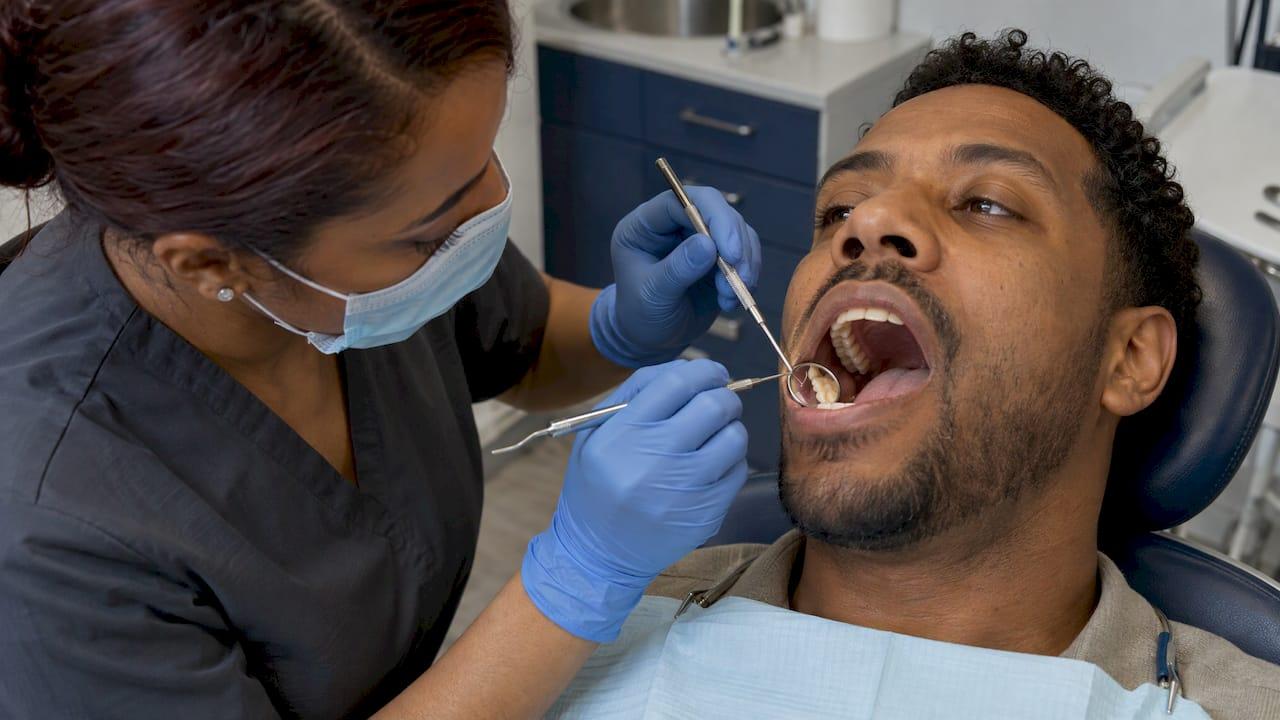
Cracked tooth syndrome is the name for the sharp, hard-to-pin-down pain that comes from a crack in a tooth too small to see easily. The classic sign is a zing when you bite down or let go of a bite, often with sensitivity to cold. The crack will not heal on its own, so the sooner a dentist examines the tooth, the better the chance of keeping it. Below, we cover what the condition is, how it is found, what to do in the meantime and how it is treated.
TL;DR
- Cracked tooth syndrome means pain from a small crack, often invisible, typically sharp when you bite or when you release the bite, and sensitive to temperature.
- A cracked tooth does not heal like a broken bone, and early diagnosis improves the odds of saving it, according to the American Association of Endodontists.
- Until your visit, an NSAID, a salt water rinse and an outside ice pack can ease pain and swelling, per the Cleveland Clinic.
- Treatment ranges from bonding to a root canal and crown, and in some cases extraction, depending on how deep and which way the crack runs.
- Swelling, fever or a pimple-like bump on the gum means infection may be developing and needs same-day attention.
Table of Contents
- What cracked tooth syndrome actually is
- Symptoms to watch for
- What causes a tooth to crack
- How a dentist finds a crack you cannot see
- What to do until you can be seen
- How cracked teeth are treated
- Our perspective
- What happens if you wait
- Treating a cracked tooth at DC Implant & Cosmetic Dentistry
- Preventing cracks
- FAQ
- Sources
What cracked tooth syndrome actually is
A tooth is built in layers. Hard enamel covers dentin, and under the dentin sits the pulp, the soft center with nerves and blood vessels. In cracked tooth syndrome, a fracture runs through some of those layers. It may stay in the crown, or it may travel toward or below the gum line. Because the crack can be thinner than a hair, it often does not show on an ordinary X-ray and you may not be able to see it in the mirror.
You will also see the condition called cracked cusp syndrome or split tooth syndrome. The labels overlap, and they describe a range of damage rather than one single problem. Some researchers point out that the term itself can mislead: a 2022 narrative review of cracked tooth treatment describes a crack as a potential cause of pulp and surrounding tissue disease, not a disease on its own. In practical terms, this means the crack is the starting point, and what matters is what it has done to the nerve and the supporting bone.
How it differs from a chipped or broken tooth
A chipped tooth loses a visible piece, usually from the edge. A broken tooth has lost a larger portion, often a whole cusp. A cracked tooth is still in one piece. The fracture sits in the structure and flexes slightly under bite pressure, which is why pain shows up when you chew rather than constantly. If a corner has actually come off, our guide to chipped tooth repair covers that situation.
Symptoms to watch for
Cracked teeth are tricky because the pain is often intermittent. You may go days without a problem, then feel a jolt on one particular bite. According to the Cleveland Clinic, symptoms can include:
- Sharp pain when you bite down
- Sensitivity to temperature changes or sweet foods
- If an abscess develops, persistent pain, swelling, fever, bad breath and swollen lymph nodes
A few patterns point toward a crack rather than a cavity:
- Pain on release. The sharp pain comes when you stop biting, as the crack closes back up.
- Hard to locate. You can tell the pain is in one side of your mouth but not which tooth.
- On and off. It comes and goes over weeks, and some foods or angles of chewing trigger it while others do not.
- A tooth with a history. The tooth has a large filling, a root canal or an old crown.
General sensitivity can have many causes, from worn enamel to gum recession. If cold is your main complaint, our article on tooth sensitivity causes and treatments helps you sort through the possibilities. When the pain is tied to biting, treat a crack as a likely suspect and get the tooth examined.
What causes a tooth to crack
The Cleveland Clinic lists aging, dental trauma, bruxism (grinding or clenching), hard foods and certain dental treatments among the common causes. The same source notes that people age 50 and older are more likely to have cracks. Several everyday situations stack the odds:
- Grinding and clenching. Many people do this in their sleep or under stress and never notice. Years of extra force wear and stress the enamel.
- Chewing hard things. Ice, hard candy, popcorn kernels and nut shells, or biting something unexpectedly hard.
- Large fillings. A big filling leaves less natural tooth to carry the bite. The Cleveland Clinic notes that a large filling or root canal, especially without a crown, can weaken a tooth and make a crack more likely.
- Trauma. A blow to the face, a sports injury or a fall.
- Temperature swings. Hot coffee followed by ice water is a common story patients tell, though in most cases a combination of factors is behind the crack.
If a filling or crown has recently come loose, that can be related. We wrote about what to do when you lose a filling and about a cracked crown, which is a slightly different problem from a crack in a natural tooth.
How a dentist finds a crack you cannot see
Diagnosis is partly detective work. A dentist will usually start with questions: which foods trigger the pain, how long it has been going on, whether you grind your teeth. Then comes the exam. The Cleveland Clinic says dentists may examine the tooth and gums, use a bite stick, transillumination or staining dye, and take X-rays or a cone beam CT scan. Periodontal probing can also reveal bone loss around the tooth, which can signal a deeper crack.
Here is what each tool does:
| Tool | What it helps show |
|---|---|
| Bite stick | Reproduces the pain when you bite on one cusp, helping isolate the tooth |
| Transillumination | A bright light shone through the tooth; cracks can interrupt the light |
| Staining dye | Settles into a crack so it becomes visible |
| X-rays or cone beam CT | Show bone changes, infection and related damage around the root |
| Periodontal probing | A narrow, deep pocket next to one tooth can point to a crack that has reached the root |
Because other problems feel similar, a dentist also rules things out. Delta Dental notes that conditions such as sinusitis, pericoronitis, or an endodontic or periodontal abscess may need to be excluded before a final diagnosis. That is one reason guessing at home rarely works, and why a thorough exam with imaging is worth having done.
What to do until you can be seen
Book the visit first. Then, for the hours or days before it, the Cleveland Clinic suggests these measures:
- Take an NSAID such as ibuprofen for pain and swelling, following the label. If you have kidney disease, stomach ulcers, are on blood thinners or are pregnant, ask your doctor or pharmacist which pain reliever is safe for you.
- Rinse gently with warm salt water.
- Put an ice pack on the outside of your cheek, never directly on the tooth.
Some common-sense extras: chew on the opposite side, avoid very hot, cold or hard foods, and skip anything sticky. If the tooth feels loose or part of it has broken off around a filling, keep the piece if you can and bring it along.
Watch for signs that this is more than a toothache. Facial swelling, fever, a bump on the gum, a bad taste or swollen glands suggest infection. Our guide to abscessed tooth symptoms explains when to seek same-day care and when to go to an emergency room. Trouble breathing or swallowing, or swelling that spreads toward the eye or neck, is an emergency room situation.
How cracked teeth are treated
There is no single fix, because cracks differ. A 2025 umbrella review of therapeutic approaches describes treatment as ranging from bonded restorations for minor cracks to root canal therapy, crowns, or extraction when the tooth cannot be restored. The choice depends on the direction and extent of the crack, the health of the pulp, whether the supporting gum and bone are involved, and how much healthy tooth remains.
| Situation | Typical approach |
|---|---|
| Minor crack in the enamel or just into dentin | Monitoring, or a bonded restoration |
| Crack in a tooth with a large filling | Replacing the filling with a crown to hold the tooth together |
| Crack that has reached the nerve | Root canal therapy, followed by a crown |
| Crack extending below the gum line | Extraction, then replacement with an implant, bridge or denture |
Why a crown is so often part of the plan
A crown wraps the tooth like a band, so the two halves cannot flex apart under chewing force. The umbrella review recommends full cuspal coverage after endodontic therapy as the clinical gold standard for cracked teeth. A study cited in a review on whether to treat cracked teeth is not the only evidence here, but the pattern is consistent: covering the tooth protects it. When you have a crown made, ask about the timeline. At our office, same-day crowns are one of the services we provide, and you can read more on our dental crowns page. If your insurance has waiting periods for crowns, our breakdown of dental insurance for crowns walks through how they usually work.
If a temporary crown is placed while a permanent one is made and it comes off, see what to do when a temporary crown falls off.
When the tooth cannot be saved
Not every crack can be repaired. The American Association of Endodontists states that if a crack extends below the gum line, the tooth cannot be saved and will need to be extracted. That is hard news, but it is not the end of the story. Removing a tooth that is cracked beyond repair stops the infection risk and clears the way for a replacement. Options include a single implant, an implant bridge, implant-supported dentures or conventional dentures, depending on how many teeth are involved and your goals. A bone graft is sometimes recommended after extraction to preserve the site.
Our perspective
Most people who come to us with a possible cracked tooth have waited. They assumed the zing would go away, or that it was a cavity, or that nothing could be done. The most useful thing we can tell you is that a crack is far easier to manage when it is small.
We do the work under one roof. The exam, the imaging, the filling or crown, the root canal and, if needed, the extraction and implant are all done in-house, so you are not passed from office to office while the tooth gets worse. Dr. Kambez Shukoor's background as a U.S. Navy veteran brings a calm, methodical approach to urgent problems, and we keep same-day appointments available for pain.
You also get a clear, written treatment plan before we begin. We believe you should know what is wrong, what each option involves and what the next step is, in plain language, so you can decide with confidence.
Jake
What happens if you wait
The risk of waiting is that the crack does not stay put. The Cleveland Clinic explains that bacteria can enter through the crack and reach the pulp, causing an abscess. Infection can then spread to the jawbone or facial tissues, and the crack itself can worsen or split the tooth, leading to tooth loss.
The American Association of Endodontists adds that a cracked tooth will not heal like a broken bone, and some cracks keep progressing even after treatment. Early diagnosis and treatment are important to saving the tooth and lowering the chance that the crack gets worse. In plain terms: a tooth that only needs a crown today may need a root canal in a few months and an implant after that.
Two more notes. First, pain that disappears is not proof of healing. If the nerve inside dies, the pain can stop while infection quietly continues. Second, a tooth that has been treated still needs follow-up, because some cracks can continue to separate. Keeping regular exams lets us catch changes early.

Treating a cracked tooth at DC Implant & Cosmetic Dentistry
If you are in Washington, DC and a tooth hurts when you bite, we can see you the same day. Our general dentistry services include exams and X-rays, fillings, same-day crowns, root canals and oral cancer screening. If a tooth cannot be saved, we handle extractions, bone grafting and implant placement at our implant and extraction page, so the whole plan stays in one practice. Financing options, including CareCredit and Lending Tree, are available for higher-cost treatment.

To get a painful tooth checked, call us or visit our site to request an appointment.
Preventing cracks
You cannot prevent every crack, but you can lower the odds. A review of cracked tooth syndrome lists good oral hygiene, healthy chewing habits, avoiding clenching and hard foods, and regular oral examinations as ways to prevent it. Here is how that looks day to day:
- Skip the ice and hard candy. Let ice melt, and do not use your teeth as tools to open packages.
- Address grinding. If you wake with a sore jaw or headaches, or a partner hears grinding, tell us. A custom night guard can spread the load.
- Protect heavily restored teeth. A tooth with a large filling may be a candidate for a crown before it cracks.
- Wear a mouthguard for sports.
- Keep your checkups. Exams and X-rays let us spot worn fillings, early cracks and signs of grinding before they cause pain.
FAQ
What happens if a molar cracks?
Molars carry most of your chewing force, so cracks there often hurt when you bite. The treatment depends on how far the crack goes. Many cracked molars are protected with a crown, some need a root canal first, and a crack that extends below the gum line means extraction, per the American Association of Endodontists.
Can a cracked tooth heal by itself?
No. The AAE explains that a cracked tooth does not heal like a broken bone. Pain may ease for a while, but the crack can keep spreading, so an exam is still worth having even if the discomfort fades.
How can I protect a cracked tooth until I see the dentist?
Take an NSAID if it is safe for you, rinse with salt water and use an ice pack on the outside of your cheek, as the Cleveland Clinic advises. Chew on the other side and avoid hot, cold and hard foods. If you notice swelling or fever, call right away.
Will a cracked tooth show up on an X-ray?
Often not. Cracks can be too fine for standard X-rays, which is why dentists also use a bite stick, a bright light, staining dye or a cone beam CT scan. X-rays are still useful for checking the bone and root for damage or infection.
Does a cracked tooth always need a crown?
Not always. Minor cracks may be monitored or bonded. Teeth with larger cracks, big fillings or root canal treatment are usually better protected by a crown. A dentist can tell you which applies after examining the tooth.
Sources
- Cracked Tooth (Fractured Tooth), Cleveland Clinic
- Cracked Teeth, American Association of Endodontists
- Treatment of cracked teeth: a comprehensive narrative review
- Saving the split: an umbrella review on therapeutic approaches
- Review of Cracked Tooth Syndrome: Etiology, Diagnosis and Treatment
- Cracked tooth: symptoms and diagnosis, Delta Dental