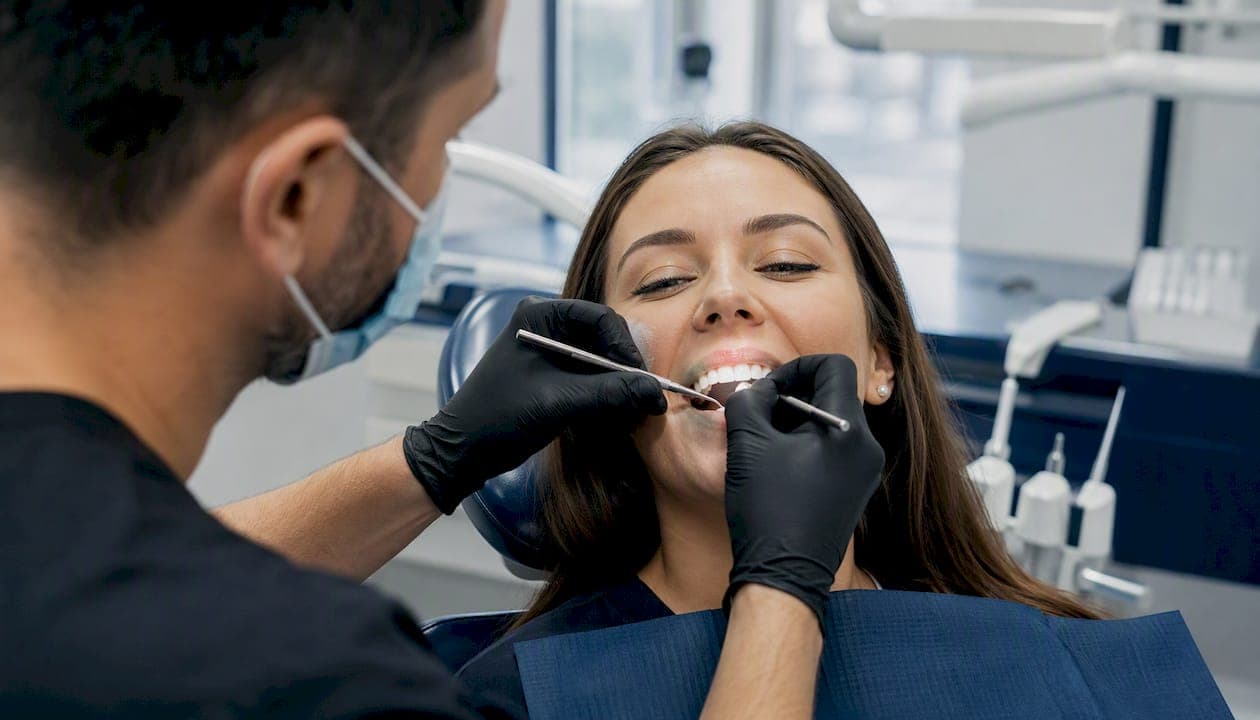
Most chipped teeth are not dental emergencies, but the right repair depends entirely on how deep the damage goes. A tiny enamel flake off a front tooth? Your dentist can likely polish or bond it in a single visit. A chip that exposes the soft pulp inside, causes sharp pain, or won't stop bleeding? That needs same-day care. Cleveland Clinic's clinical guidance places treatment options on a spectrum from simple polishing all the way to root canal therapy plus a crown, depending on severity.
Here is what to do right now:
- Protect the area. Press clean gauze on any bleeding spot. Cover a sharp edge with dental wax or a small piece of sugar-free gum so it doesn't cut your tongue or cheek.
- Save any large fragment. Drop it in a small container of milk or saline. Your dentist may be able to bond it back.
- Call your dentist today if you have throbbing pain, visible pink or red tissue inside the tooth, swelling, or bleeding that won't stop. For a small cosmetic chip with no pain, a regular appointment within a few days is fine.
The most likely repair by severity: polishing or enameloplasty for surface-only chips, composite bonding for small-to-moderate chips, a porcelain veneer for larger front-tooth damage, a dental crown for structural loss, and root canal therapy followed by a crown when the pulp is exposed.
Table of Contents
- What is a chipped tooth, and how does it differ from a crack?
- What causes a chipped tooth, and who is most at risk?
- How does a dentist diagnose the severity of a chip?
- What are your treatment options for a chipped tooth?
- What should you do immediately after chipping a tooth?
- How much does chipped tooth repair cost in the U.S.?
- How do you protect a repair and prevent future chips?
- Can you wait two weeks, or do you need emergency care today?
- How DC Implant & Cosmetic Dentistry handles chipped tooth repair
- Key Takeaways
- What people get wrong about chipped tooth repair
- Same-day chipped tooth repair at DC Implant & Cosmetic Dentistry
- Authoritative sources and further reading
What is a chipped tooth, and how does it differ from a crack?
A chipped tooth means a fragment of enamel, and sometimes the underlying dentin, has physically broken away. The NCBI Bookshelf on traumatic dental injuries classifies these injuries by depth: enamel-only, enamel-dentin, and enamel-dentin-pulp fractures. Each level changes what treatment is needed.
A crack is different. Cracks run vertically or diagonally through the tooth without removing material. You might feel pain when you bite, but nothing is visibly missing. Craze lines are the mildest version: hairline surface cracks in the enamel that cause no symptoms and rarely need treatment. A full fracture, by contrast, can split a tooth in two.
Location matters as much as depth. A chip on a front incisor is primarily a cosmetic problem, though it can still expose dentin and cause sensitivity. A chip on a molar affects chewing mechanics and can trap bacteria in ways that accelerate decay.
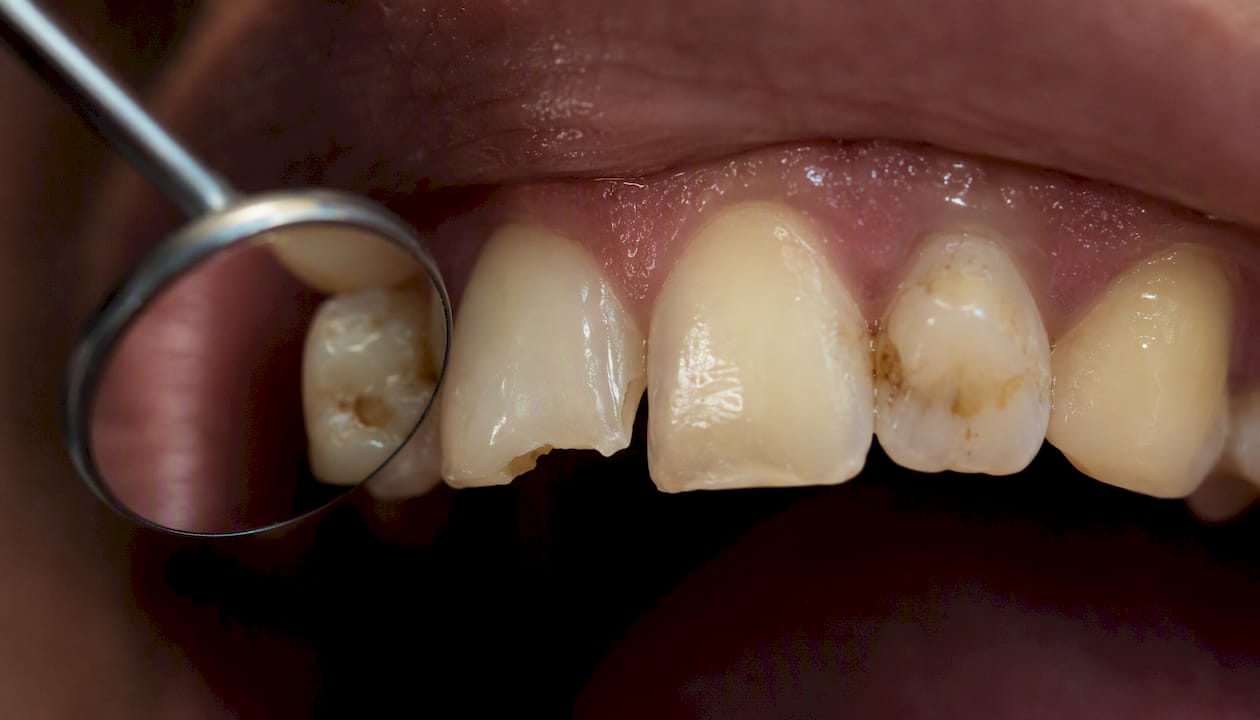
Pro Tip: Run your tongue along the damaged tooth. A rough or sharp edge almost always means enamel is gone. A tooth that hurts only when you bite, with no visible gap, is more likely a crack than a chip.
What causes a chipped tooth, and who is most at risk?
Enamel is the hardest substance in the human body, yet it is brittle. A single sharp impact can fracture it cleanly.
Common causes:
- Trauma: falls, sports collisions, car accidents, or a direct blow to the mouth
- Biting hard objects: ice, hard candy, popcorn kernels, pen caps, or fingernails
- Bruxism (nighttime tooth grinding), which wears and weakens enamel over time
- Decay that hollows out the tooth structure from the inside, leaving a thin shell
- Large existing fillings or restorations that alter how biting force is distributed
Risk factors that raise your odds:
- Age: enamel naturally thins over decades
- Prior large restorations or root canals (the tooth becomes more brittle)
- Acid erosion from frequent soda, citrus, or acid reflux
- Contact sports without a mouthguard
- Dry mouth, which reduces the protective effect of saliva
The ADA's MouthHealthy resource specifically flags chewing ice and hard candy as two of the most common dietary culprits for enamel fractures, a detail many patients don't connect to their chip until after the fact.
How does a dentist diagnose the severity of a chip?
The exam is usually quick but systematic. Your dentist isn't just looking at the chip itself; they're assessing how far the damage extends and whether the nerve is at risk.
What happens during the clinical exam:
- Visual inspection under magnification and dental lighting
- Probing the tooth and surrounding gum tissue for mobility or tenderness
- Checking the bite to see if the chip has altered how upper and lower teeth meet
- Pulp sensitivity testing (a cold stimulus or electric pulp tester) to confirm whether the nerve is alive and responding normally
- Percussion testing: tapping the tooth to detect pain that suggests root or ligament involvement
X-rays come into play when the chip is large, when pain is present, or when the dentist suspects root involvement. A periapical X-ray shows the full root and surrounding bone. If a fragment is missing and swallowed or inhaled, a chest X-ray may be ordered in rare cases.
Emergency visit vs. restorative consult:
- Emergency visit: controls pain, stabilizes the tooth, places a temporary restoration if needed, and rules out pulp exposure or root fracture. a couple of visits. Restorative consult (scheduled within days to a week): full exam, X-rays, treatment planning, and the definitive repair.
For a small cosmetic chip with no symptoms, some dentists handle diagnosis and bonding in the same appointment.
What are your treatment options for a chipped tooth?
The repair your dentist recommends follows directly from how deep the chip goes and which tooth is involved. Here is a full breakdown.
Treatment comparison
| Treatment | When it's used | Visits | Anesthesia | Lifespan | Approx. U.S. cost |
|---|---|---|---|---|---|
| Polishing / enameloplasty | Tiny enamel-only chip, smooth rough edge | 1 | None | Permanent | $100–$200 |
| Composite bonding | Small-to-moderate chip, front or back tooth | 1 | Local (sometimes none) | several years | $100–$400 per tooth |
| Direct filling | Posterior chip with dentin exposure | 1 | Local | 5–15 years | $150–$400 |
| Porcelain veneer | Larger front-tooth chip, cosmetic priority | a few visits | Local | many years | $900–$2,500 per tooth |
| Inlay / onlay | Moderate posterior chip, cusps involved | a couple of visits | Local | a long lifespan | $650–$1,200 |
| Dental crown | Large chip, structural loss, cracked tooth | a couple of visits | Local | a long lifespan | $1,000–$3,500 |
| Root canal + crown | Pulp exposed or infected | a couple of visits–4 | Local | Crown: 10 yrs | $1,500–$4,500 total |
| Extraction + implant | Tooth unsalvageable | multiple months | Local / sedation | Implant: lifetime | $3,000–$6,000 |
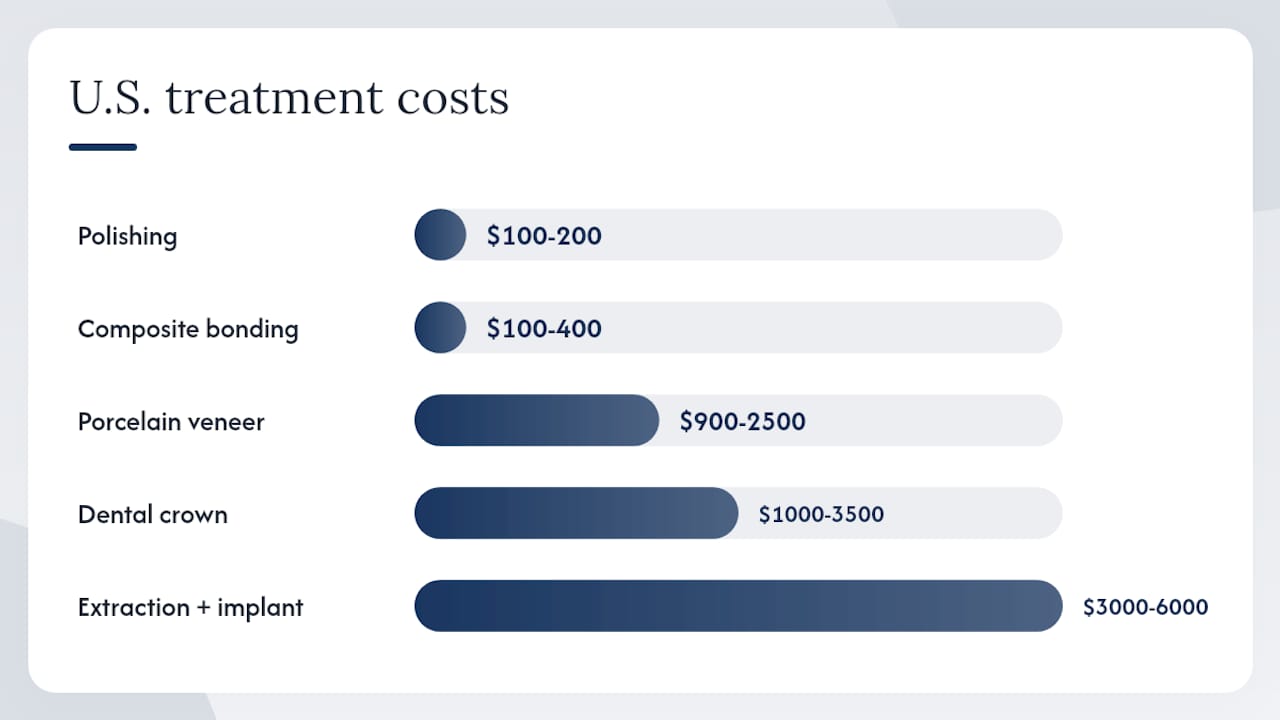
Cost ranges are consumer estimates; Aflac's dental cost data confirms that prices vary significantly by treatment type, provider, and region.
Bonding vs. veneer for front-tooth chips
Composite bonding is the faster, lower-cost choice for small-to-moderate front-tooth chips. The dentist etches the enamel, applies a tooth-colored resin, shapes it, and polishes it, all in one visit. The trade-off is longevity: bonding can stain and chip again within several years, whereas a porcelain veneer lasts many years and resists staining far better. Veneers require two or three visits and more enamel removal, so they're a bigger commitment.
Pro Tip: If the chip is smaller than a pencil eraser and your tooth is otherwise healthy, bonding is almost always the right first move. You can always upgrade to a veneer later. Going straight to a veneer on a small chip means removing healthy enamel you can never get back.
According to Dental Made Easy's procedural overview, most minor chips are resolved with composite bonding in a single appointment, which is why it remains the most common chipped tooth repair for front teeth.
For larger structural losses on back teeth, a dental crown is usually the right call. It caps the entire tooth, restoring both shape and chewing strength. If the pulp is involved, root canal therapy comes first, then the crown.
What should you do immediately after chipping a tooth?
Speed matters less than doing the right things. Here is the correct sequence.
- Control bleeding. Bite gently on clean gauze or a damp tea bag for 10–15 minutes. a couple of visits. Rinse with warm water. Clear away blood and debris. Don't use hydrogen peroxide on an open wound.
- Save any fragment. Place it in milk or saline, not water. Milk preserves cell viability and keeps the fragment usable longer.
- Cover sharp edges. Dental wax (available at most pharmacies) or a small piece of sugar-free gum pressed over the edge prevents cuts to your tongue and cheek.
- Manage pain. Over-the-counter ibuprofen or acetaminophen reduces pain and inflammation. A cold pack held against your cheek (never directly on the tooth) helps with swelling.
- Call your dentist. Even for a small chip, a same-day or next-day call lets the office triage your situation and schedule appropriately.
What NOT to do:
- Never use household super glue or craft adhesives to reattach a fragment. These are toxic in the mouth and can damage the tooth surface permanently.
- Don't try to file the sharp edge yourself with a nail file or emery board. You risk removing more enamel and exposing dentin.
- Avoid chewing on the damaged side until you've been seen.
HCMC Dental's temporary repair guide notes that over-the-counter dental cements are intentionally formulated to be weak so a dentist can remove them easily. They are a safe bridge to your appointment, not a permanent fix.
Pro Tip: Dental wax is sold at CVS, Walgreens, and most grocery store pharmacies for under $5. Keep a pack in your medicine cabinet. It's the single most useful item for any dental emergency short of a knocked-out tooth.
If your temporary crown breaks or comes off, the same logic applies: cover the prepared tooth with temporary cement from a pharmacy kit, avoid sticky or hard foods, and call your dentist the same day. Redent Klinik's guidance on broken temporary crowns confirms that prompt follow-up prevents sensitivity and reduces infection risk significantly.
How much does chipped tooth repair cost in the U.S.?
Cost is one of the first questions patients ask, and the honest answer is: it depends on the treatment, the tooth, and where you live.
U.S. cost ranges by treatment
| Treatment | Low end | Median estimate | High end |
|---|---|---|---|
| Polishing / enameloplasty | $100 | $150 | $200 |
| Composite bonding | $100 | $250 | $400 |
| Direct filling | $150 | $250 | $400 |
| Porcelain veneer | $900 | $1,500 | $2,500 |
| Dental crown | $1,000 | $1,750 | $3,500 |
| Root canal + crown | $1,500 | $2,500 | $4,500 |
| Extraction + implant | $3,000 | $4,500 | $6,000 |
Factors that push costs higher:
- Urban location (Washington, DC practices typically run above national averages)
- Posterior teeth, which require more material and technique
- Lab-fabricated restorations (veneers, crowns, onlays) vs. chairside bonding
- Sedation or general anesthesia
- Need for X-rays, CT scans, or additional diagnostic imaging
Insurance and financing
Most dental insurance plans cover restorative work (fillings, crowns) at a significant portion after the deductible, but classify veneers as cosmetic and exclude them entirely. If your chip is purely aesthetic and your dentist codes it as cosmetic, expect to pay out of pocket. Ask your dentist's billing team to submit a pre-authorization before treatment so you know your coverage before committing.
For larger repairs, CareCredit and Lending Club Patient Solutions both offer deferred-interest financing that many dental offices accept. DC Implant & Cosmetic Dentistry offers financing options to help patients manage the cost of crowns, implants, and multi-visit restorations. Always request a written treatment plan with itemized costs before your first restorative appointment.
How do you protect a repair and prevent future chips?
The repair is only as durable as the habits around it. Bonding, veneers, and crowns all have lifespans, and daily choices affect whether you hit the low end or the high end of those ranges.
Post-repair care:
- Avoid hard, crunchy, or sticky foods for at least 48 hours after bonding or a new crown. Composite resin needs time to fully set.
- Brush gently with a soft-bristle toothbrush. Abrasive whitening toothpastes scratch bonding resin and dull porcelain over time.
- Schedule a follow-up check at six weeks if you had a crown or veneer placed. The bite sometimes needs minor adjustment.
- Watch for signs of failure: sensitivity returning, a visible gap at the margin, or a rough edge where the restoration meets the tooth.
Prevention:
- If you grind at night, a custom night guard is the single most protective investment you can make. Over-the-counter guards exist, but a custom-fitted guard from your dentist distributes force more evenly and lasts longer.
- Wear a sport mouthguard for any contact activity, including basketball and cycling. The ADA's MouthHealthy guidance links hard food habits directly to enamel fracture risk, so cutting out ice-chewing and hard candy is a genuine preventive measure, not just generic advice.
- Keep up with biannual cleanings. Decay weakens tooth structure from the inside; catching it early prevents the kind of structural compromise that makes a tooth chip under normal biting pressure.
Pro Tip: Porcelain veneers and crowns don't stain the way natural enamel does, but the cement line at the margin can discolor. A professional polish at your regular cleaning appointment keeps that margin looking clean. Ask your hygienist to use a non-abrasive polishing paste on bonded or veneered teeth.
Can you wait two weeks, or do you need emergency care today?
The answer depends on one thing: whether the pulp is involved.
Go to emergency dental care the same day if you have:
- Intense, throbbing pain that doesn't ease with ibuprofen
- Visible pink or red tissue inside the broken tooth (exposed pulp)
- Swelling in the gum, jaw, or face
- Fever alongside tooth pain (possible abscess)
- Persistent bleeding that won't stop after 15–20 minutes of pressure
- A chip from a trauma that also caused head injury or jaw pain
Waiting a few days to a week is reasonable when:
- The chip is small, the edge is smooth or covered with wax, and there is no pain
- Sensitivity is mild and only triggered by temperature, not spontaneous
- The damage is purely cosmetic with no structural concern
Waiting two weeks or longer is risky when dentin is exposed. Dentin is porous. Bacteria travel through it toward the pulp faster than most patients expect. A chip that exposes dentin and causes even mild sensitivity can progress to pulp inflammation and, eventually, the need for a root canal if left untreated. The Cleveland Clinic notes that delaying care for dentin or pulp exposure increases the likelihood of infection and more extensive treatment.
- Small enamel chip, no symptoms: book within a week, use wax in the meantime. a couple of visits. Chip with dentin exposure, mild sensitivity: call within 24–48 hours.
- Chip with pain, visible pulp, or swelling: same-day emergency care.
How DC Implant & Cosmetic Dentistry handles chipped tooth repair
DC Implant & Cosmetic Dentistry, led by Dr. Kambez Shukoor (a U.S. Navy veteran), offers same-day appointments for dental emergencies in Washington, DC, including chipped and broken teeth. The practice handles the full range of repairs: composite bonding, porcelain veneers, dental crowns, and implant-based replacement when a tooth cannot be saved.
What to bring to your appointment:
- The saved tooth fragment (in milk or saline if possible)
- Your insurance card and a list of current medications
- Any recent dental X-rays, if you have them
- A written note of your symptoms: when the chip happened, pain level, and any sensitivity triggers
Typical patient journey for a chipped tooth:
- Arrival and intake: brief medical history review, symptom discussion
- Clinical exam and X-rays if indicated
- Same-visit bonding for simple chips, or a treatment plan and temporary restoration for more complex cases
- Follow-up appointment for crown, veneer, or implant placement as needed
With over 200 five-star reviews, the practice has built a track record for comfortable, efficient restorative care. Financing through CareCredit and Lending Club is available for larger treatments.
"A chipped tooth doesn't have to mean a long, complicated process. For most patients, we can assess the damage, discuss options, and complete the repair in a single visit. The goal is always to preserve as much of your natural tooth as possible while restoring both function and appearance." — DC Implant & Cosmetic Dentistry
Key Takeaways
Most chipped teeth are repaired with composite bonding in a single visit, but pulp exposure or structural loss requires a crown or root canal and demands same-day care.
| Point | Details |
|---|---|
| Urgency depends on pulp involvement | Pain, swelling, or visible red tissue inside the tooth means same-day emergency care, not a scheduled appointment. |
| Bonding fixes most chips fast | Composite bonding resolves the majority of small-to-moderate chips in one visit, typically for a moderate cost range. |
| Crowns handle structural loss | When a large portion of the tooth is gone or a crack runs deep, a dental crown restores both shape and chewing strength. |
| Delays worsen dentin-exposed chips | Exposed dentin lets bacteria reach the pulp; a chip that could have been bonded can become a root canal case within weeks. |
| DC Implant & Cosmetic Dentistry | Offers same-day chipped tooth repair in Washington, DC, from bonding to crowns, with financing options available. |
What people get wrong about chipped tooth repair
The most common mistake is treating every chip the same way: either panicking and rushing to an ER (which usually can't do the repair anyway) or dismissing it entirely because there's no pain. Both responses miss the actual decision point, which is whether dentin or pulp is exposed.
A small cosmetic chip on a front tooth with no sensitivity is genuinely low-urgency. You have a few days. Use wax, avoid hard foods, and call your dentist in the morning. But a chip that leaves a rough, sensitive surface, even without sharp pain, is already exposing dentin to bacteria. That's a within a short time call, not a "I'll get to it next month" situation.
The other thing patients underestimate is how fast and comfortable modern bonding actually is. Many people delay because they assume repair means multiple visits, drilling, and significant discomfort. For a straightforward chip, bonding is often done in under an hour with minimal or no anesthesia. The procedural overview from Dental Made Easy describes the process as exam, clean, bond, shape, polish. That's it. Waiting weeks to avoid a one-hour appointment is rarely worth the risk of a more involved repair later.
For parents dealing with a child's chipped tooth, the same triage logic applies. A practical guide to child chipped tooth care covers immediate steps and when to seek urgent care, and the core advice mirrors what adults need: save the fragment, protect the edge, and call the dentist.
Same-day chipped tooth repair at DC Implant & Cosmetic Dentistry
A chipped tooth in Washington, DC doesn't have to wait. DC Implant & Cosmetic Dentistry offers same-day appointments for broken tooth repair, from a quick bonding session for a small front-tooth chip to emergency evaluation for painful or structurally compromised teeth.
The practice covers every repair on the spectrum: composite bonding, cosmetic veneers and crowns, and implant-based replacement for teeth that can't be saved. Dr. Shukoor's team will assess the chip, walk you through your options with clear cost estimates, and complete straightforward repairs the same day whenever possible.
Bring your saved fragment, your insurance card, and a note of your symptoms. Financing through CareCredit is available for crowns, implants, and larger restorations. Call the office directly or book online to get your tooth assessed today.
Authoritative sources and further reading
These are the clinical and consumer resources used to inform this article. Each one is worth bookmarking if you want to go deeper on any specific treatment or emergency step.
- Chipped Tooth: Causes, Symptoms & Repair — Cleveland Clinic
- Traumatic dental injuries — NCBI Bookshelf
- How Does a Dentist Fix a Chipped Tooth? | Dental Made Easy
- Temporary Tooth Repair DIY: Safe Clinical Guide | HCMC Dental
- Temporary crown breaks: causes, risks, and what to do — Redent Klinik
- 9 foods that damage your teeth — MouthHealthy (ADA)
- How Much Does It Cost to Fix a Chipped Tooth Without Insurance? — Aflac