Dental insurance typically does cover crowns, but only as a "major restorative" service, which usually means the plan pays about half of the cost after your deductible, not the full bill. Waiting periods of six to twelve months and annual maximums commonly ranging around one to two thousand dollars often do more to shape your final cost than the coverage percentage itself. Before scheduling anything, ask your dentist's office to run a pre-determination so you know the real number, not the estimate on the insurance card.
TL;DR:
- Dental insurance typically covers crowns at around 50% after meeting the deductible, but often includes clauses like LEAT that limit reimbursements to the cheapest acceptable material.
- The actual cost of a crown ranges from $800 to $2,500, with insurance's share depending heavily on deductible, annual maximums, and whether the dentist is in-network.
- Waiting periods of six to twelve months and annual benefit caps can delay or reduce coverage, making pre-determination requests essential to avoid unexpected bills.
- In-house payment plans, discount plans, or using an HSA or FSA can help cover costs when insurance falls short or is restricted by policy limits.
- Confirm how your specific plan handles major restorative work, including waiting periods and pre-determination requirements, before scheduling any crowns.
Table of Contents
- Does Dental Insurance for Crowns Actually Cover the Procedure?
- What Crowns Actually Cost, With and Without Insurance
- Which Plan Type Actually Helps You Pay for a Crown?
- Timing Your Crown Around Waiting Periods and Benefit Years
- When Insurance Isn't Enough: Other Ways to Pay for a Crown
- Why Patients Get Burned by Crown Coverage, and What Actually Prevents It
- How to Get an Insurance Check and Crown Estimate Locally
- Sources
Does Dental Insurance for Crowns Actually Cover the Procedure?
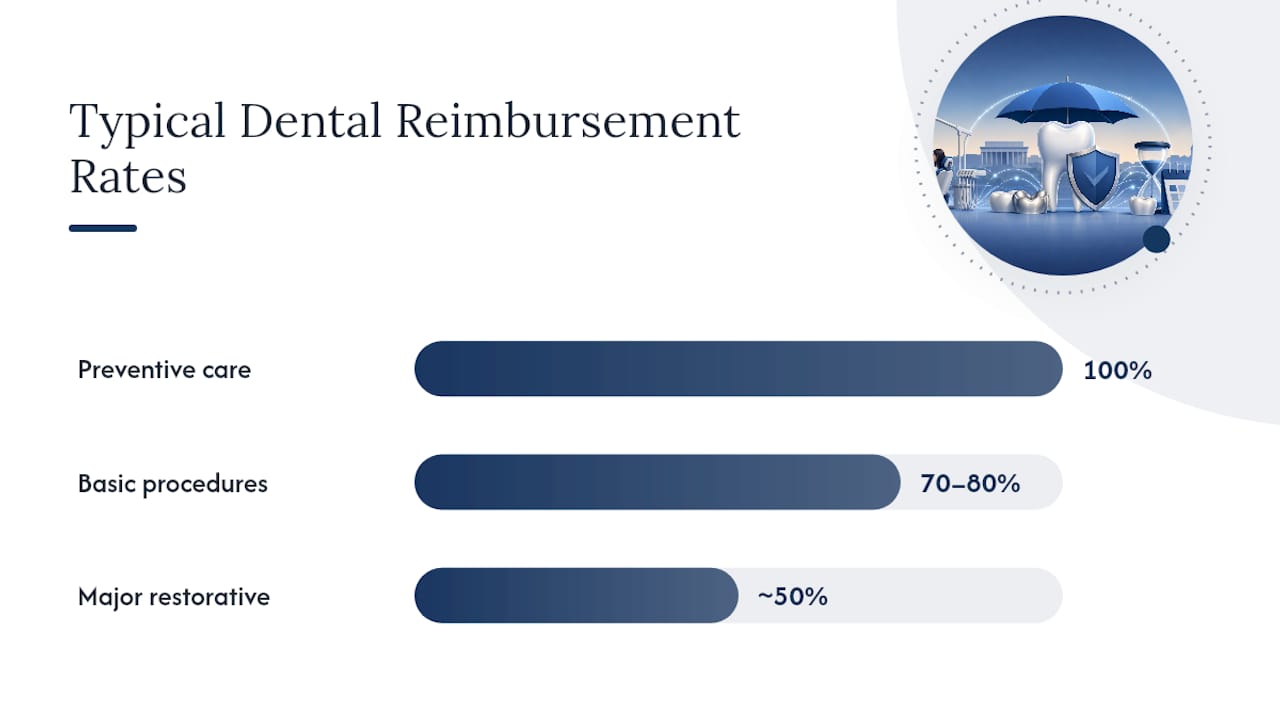
Crowns fall into the "major restorative" category on almost every dental plan, sitting below preventive care and basic procedures in how generously they get reimbursed. Preventive services like cleanings and exams usually get paid at 100%. Basic procedures such as fillings land around 70% to 80%. Major restorative work, including crowns, bridges, and dentures, typically gets reimbursed around 50% after you've met your deductible, according to Aflac's breakdown of crown coverage.
That percentage comes with strings attached. Insurers only pay when the crown is medically necessary, meaning the tooth is fractured, decayed beyond what a filling can fix, or structurally compromised after a root canal. A crown placed purely for cosmetic reasons, like reshaping a tooth that isn't damaged, usually gets denied outright.
Here's where a lot of patients get blindsided: many policies include a Least Expensive Alternative Treatment clause, or LEAT. This lets the insurer cap its payment at the cost of the cheapest acceptable material, even if you and your dentist choose porcelain or zirconia. You'd owe the difference out of pocket, as LegalClarity explains in its review of crown coverage limits.
Most plans also limit how often they'll pay for a replacement crown on the same tooth, commonly once every five to ten years.
- Preventive care: typically 100% covered
- Basic procedures: typically 70% to 80% covered
- Major restorative (crowns): typically around 50% covered, subject to LEAT limits
Pro Tip: Ask specifically whether your plan applies a LEAT clause before you pick a crown material. It's the single most common reason patients get an unexpected bill weeks after treatment.
What Crowns Actually Cost, With and Without Insurance
Crown prices swing widely depending on material, which tooth needs it, and where you live. A permanent crown typically runs between $800 and $2,500 in cash price, with out-of-network billing usually landing between $1,100 and $2,000. Molars often cost more than front teeth because they require more material and take longer to fit.
Here's how the math actually plays out with insurance.
- Total cost: $1,200
- Minus deductible: $1,150 remains
- Insurance pays 50%: $575
- You owe: $625
That's before factoring in your annual maximum. If you've already used part of your yearly benefit on a filling or cleaning earlier in the year, your remaining balance for the crown could be lower, pushing more of the $625 (or more) back onto you.
Staying in-network changes this equation. In-network dentists agree to discounted negotiated fees with the insurer, so the 50% coinsurance applies to a lower base price than it would out-of-network, where the dentist can bill their full rate and the insurer reimburses based on a smaller "usual and customary" figure.
Which Plan Type Actually Helps You Pay for a Crown?
Not all dental plans handle major restorative work the same way, and the differences matter more once you're staring at a $1,200 bill.
- PPO plans give you the most flexibility. You can see any dentist, though staying in-network lowers your cost, and PPOs almost always cover crowns at that standard 50% major-restorative rate.
- DHMO plans (Dental HMOs) charge lower premiums but require you to use a network dentist and often have fixed copays for crowns instead of percentage coinsurance, which can be cheaper or more expensive depending on the copay schedule.
- Indemnity plans let you go anywhere and reimburse based on a fee schedule, but they're increasingly rare and often carry higher premiums.
- Discount (savings) plans aren't insurance at all. They offer pre-negotiated reduced rates with no waiting period and no annual cap, which matters if you need a crown now.
If your priority is getting a crown soon, the waiting period matters more than the premium. A plan with no wait but a higher monthly cost can beat a cheaper plan that makes you wait a year.
Pro Tip: Before enrolling anywhere, ask three questions: what's the waiting period for major services, what's the annual maximum, and does the plan require pre-determination for crowns? Those three answers tell you more than the brochure ever will.
Timing Your Crown Around Waiting Periods and Benefit Years
Most standard plans impose a six to twelve month waiting period before they'll pay anything toward a crown. Some employer group plans waive this, and a handful of individual "no-wait" plans cover major work from day one, usually with a higher premium or a staged benefit that pays less in year one and more in year two.
Once you're past the waiting period, ask your dentist's office to submit a pre-determination request. The insurer reviews the proposed treatment and sends back a written estimate showing exactly what it will pay, including whether a LEAT clause applies. This step catches surprises before they become bills, not after.
- Confirm your waiting period status before scheduling
- Request a pre-determination and review the Explanation of Benefits it generates
- If you need a crown plus another major procedure, like a root canal referenced on this root canal treatment page, ask whether splitting the work across two benefit years lets you use two annual maximums instead of one
That last tactic is underused. If your plan resets every January, scheduling one procedure in December and the second in January can effectively double your available benefit for the same calendar cycle.
When Insurance Isn't Enough: Other Ways to Pay for a Crown
Plenty of readers land here because their insurance situation isn't working, whether that's a low annual maximum, a long waiting period, or no coverage at all. You've got real options beyond just paying full price.
Dental discount plans work differently from insurance. Instead of coinsurance and deductibles, you pay an annual membership fee and get a pre-negotiated discount, often 10% to 60% off, with no waiting period and no yearly cap. For someone who needs a crown next month, that structure can beat waiting out a standard policy.
- Use an HSA or FSA to pay with pre-tax dollars, which effectively discounts the crown by your tax rate
- Ask the dental office about in-house payment plans or financing like CareCredit
- Check community health centers or dental schools, which often charge reduced rates for the same procedure
Pro Tip: If your insurer applies a LEAT clause to a premium material, price out whether an FSA can cover the difference. It's often the cleanest way to get the crown you actually want without waiting for next year's benefits to reset.
Why Patients Get Burned by Crown Coverage, and What Actually Prevents It
Most of the confusion around crown coverage doesn't come from insurers hiding information. It comes from patients assuming "covered" means "paid for," when insurance language almost never works that way. A plan can advertise crown coverage on its brochure and still leave you with a $600 bill because of a deductible, a LEAT clause, and a partially used annual maximum stacking on top of each other.
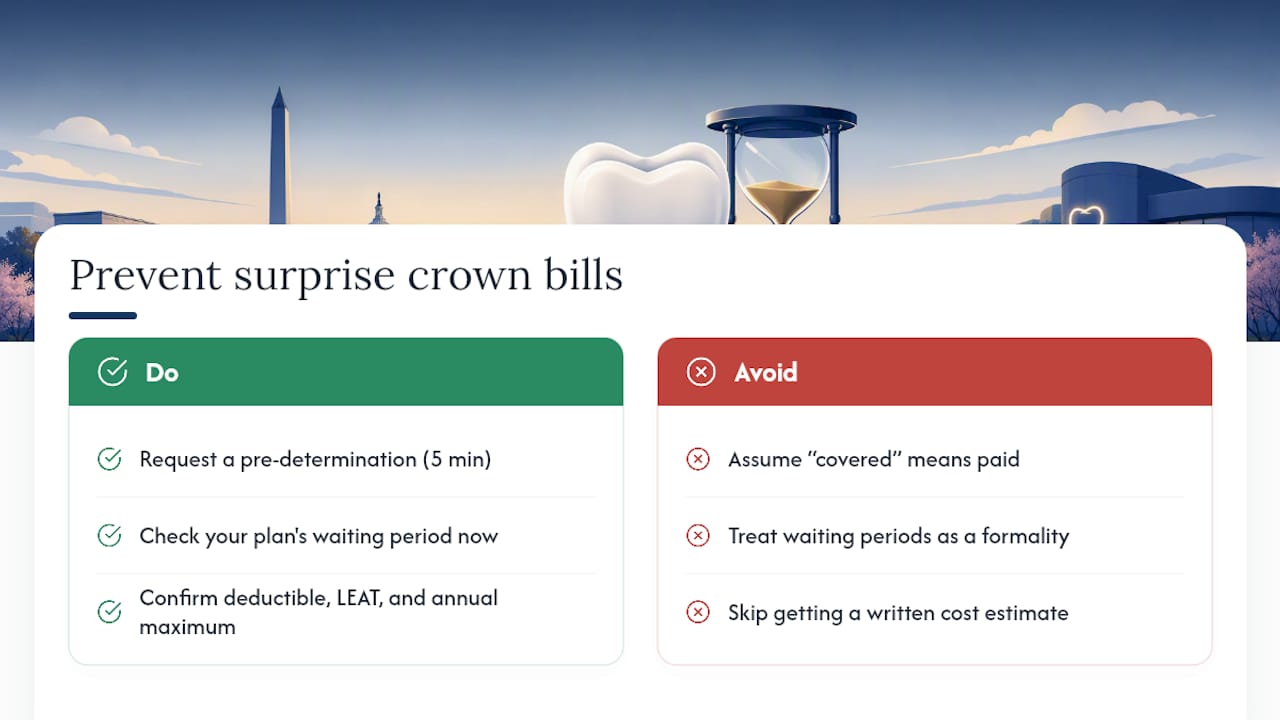
The bigger blind spot is timing. People treat waiting periods as a formality instead of a financial event. Six to twelve months of no coverage on major restorative work means a fractured tooth discovered in January might not get insurance help until the following year, and by then the tooth may need more than a crown. If you know a crown is likely in your future, checking your plan's waiting period status now, before a dental emergency forces the decision, is worth more than comparing premium prices.
The one habit that consistently protects patients is asking for a pre-determination before agreeing to treatment. It's a five-minute request that turns a guess into a written number, and it exposes LEAT restrictions and material limits while there's still time to make a different choice. Skip it, and you're trusting a brochure percentage instead of your actual policy's fine print.
— Jake
How to Get an Insurance Check and Crown Estimate Locally
If you're trying to figure out what a crown will actually cost before committing to anything, that's exactly the kind of question Dc-dentistry answers on the same visit, not weeks later. A local dental practice offers insurance benefit checks, pre-treatment estimates, and financing options including CareCredit for patients who need a crown and want clarity before saying yes.

The practice provides same-day consults for patients who need a crown evaluated quickly rather than waiting weeks for an opening. You can review material options and pricing on the dental crowns page, and if your case involves a damaged tooth that might need an implant instead of a crown, the dental implants page covers that alternative too. Coverage varies by plan, so an individualized estimate is the only way to know your real number. Call the office or book online to get your insurance checked and walk out with an actual cost, not a guess.
Sources
Coverage rules and cost figures in this article draw from insurer guidance including Humana's explanation of waiting periods, Aflac's coverage breakdown, and Delta Dental's cost data. For LEAT clauses and material limits, see LegalClarity's analysis. Discount plan comparisons come from Mutual of Omaha, and implant-related coverage context is available through Pounds Health Insurance.
This article is general information, not a substitute for advice from a qualified doctor. Consult a qualified healthcare professional about your own circumstances before acting on anything here.
- Understanding dental crown costs and insurance coverage (Delta Dental)
- Does dental insurance cover crowns? (Aflac)
- Does dental insurance cover crowns? Costs and limits (LegalClarity)
- Dental savings plan vs dental insurance (Mutual of Omaha)