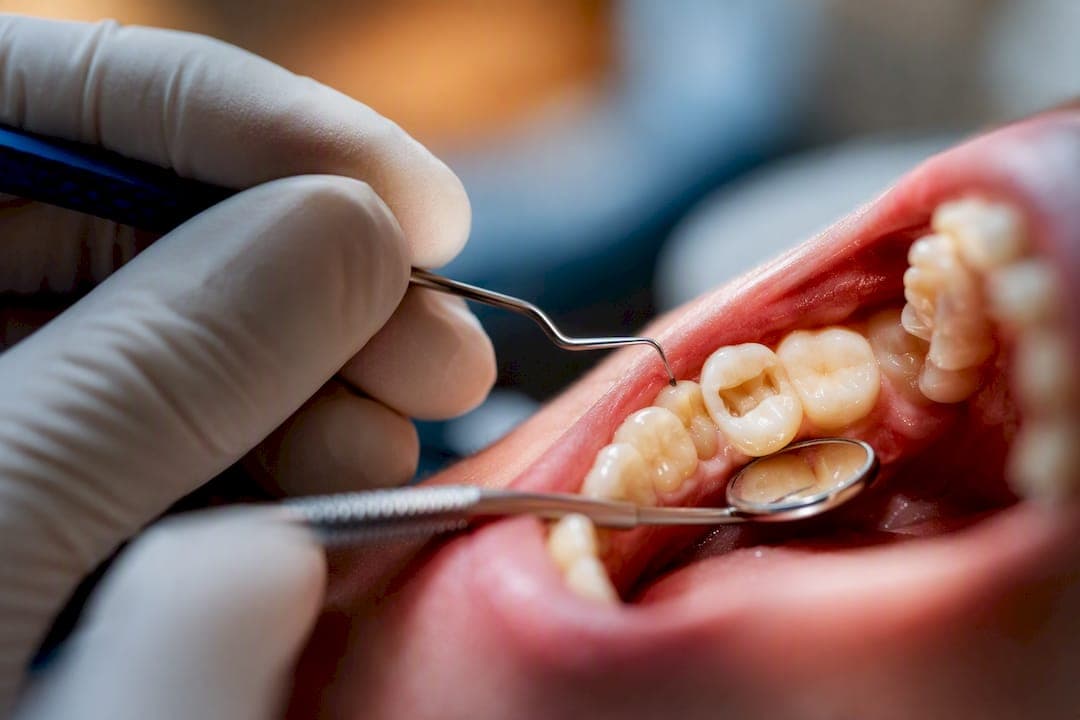
Call your dentist today and ask for a same-day or next-day slot. Until you're seen, keep the area clean, chew on the other side, and smooth any sharp edge with dental wax so it doesn't cut your cheek or tongue. Go straight to an emergency room only if you have severe pain, facial swelling, fever, uncontrolled bleeding, or a tooth that's actually broken, not just missing its filling.
TL;DR:
- A lost filling can be painless but still expose the tooth to decay or damage, so prompt dental evaluation is essential.
- Keep the area clean with gentle rinses, avoid chewing on that side, and protect rough edges with dental wax until treatment.
- Use pharmacy temporary filling kits and avoid household glues, as improper materials can interfere with proper dental repair.
- Most cases of missing fillings are not emergencies unless there is swelling, fever, bleeding, or signs of infection, which require immediate care.
- Regular checkups and good oral hygiene habits are vital for preventing future filling failures and maintaining dental health.
Table of Contents
- How to Tell if Your Filling Fell Out
- Step-by-Step Care for the First 24 to 48 Hours
- Temporary Fixes That Are Safe (and Ones That Aren't)
- Is a Lost Filling a Dental Emergency?
- Repair, Replace, or Something Bigger? Your Treatment Options
- Keeping Your Next Filling From Falling Out
- Why We Lean Toward Repair First
- Getting Same-Day Care When a Filling Falls Out
- Sources
How to Tell if Your Filling Fell Out
A lost filling isn't always obvious. Sometimes you feel a hard fragment in your mouth mid-meal. Other times you just notice something feels wrong and can't say exactly what.
Run your tongue over the tooth and check for these signs:
- A visible hole, pit, or divot where the filling used to sit
- A rough or jagged edge that catches on your tongue or the inside of your cheek
- Food getting packed into the tooth in a way it never did before
- A change in how your teeth meet when you bite down
- Sharp sensitivity to cold, heat, or sweets, or sudden pain when you bite
Here's the part that catches people off guard: you can lose a filling and feel absolutely nothing. No pain doesn't mean no risk. The nerve inside a tooth can be exposed or under threat without sending any warning signal, which is exactly why dentists don't treat "it doesn't hurt" as a green light to wait.
If you find the actual filling fragment, rinse it off and keep it in a small container or a folded tissue. Bring it with you. It rarely gets reused, since old filling material doesn't bond reliably to a tooth a second time, but it helps your dentist see exactly what came out and how much tooth structure is exposed.
Step-by-Step Care for the First 24 to 48 Hours
The first two days matter more than any other stretch of this process. What you do (and don't do) in that window decides whether this stays a simple fix or turns into something bigger.
- Call your dental office first, before anything else. Describe what happened, when it happened, and whether you're in serious pain. Most practices will fit you in faster than you'd expect for exactly this kind of problem.
- Rinse with warm salt water. Mix about half a teaspoon of salt into a cup of warm water and swish gently. This clears debris without irritating the exposed area the way mouthwash with alcohol can.
- Brush carefully around the site. Soft bristles, gentle pressure. You're removing food particles, not scrubbing.
- Manage pain with over-the-counter medication. Ibuprofen or acetaminophen, taken as directed on the label, handles most discomfort. A cold compress against the outside of your cheek helps with any swelling.
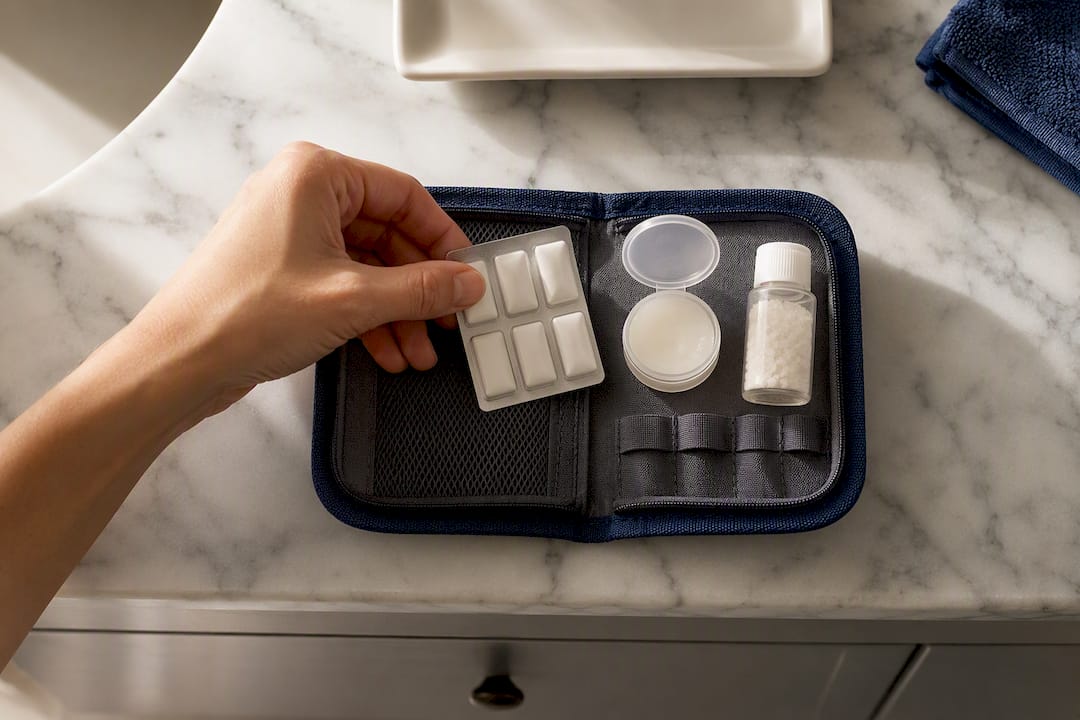
- Protect the tooth from sharp edges. Dental wax, sold at almost any pharmacy, presses over the rough spot and stops it from cutting soft tissue. Sugar-free gum works in a pinch if you have nothing else.
- Avoid chewing on that side entirely. Stick to soft foods, room temperature or mildly warm, until you're seen.
Dental authorities like Colgate back this exact sequence: call promptly, rinse, keep the area clean, and treat any pharmacy product as a bridge to your appointment, not a fix.
Pro Tip: Keep a small dental first-aid kit at home with sugar-free gum, dental wax, and a travel-size bottle of salt. When a filling comes out at 9 p.m. on a Friday, you won't be scrambling.
Temporary Fixes That Are Safe (and Ones That Aren't)
Pharmacies stock temporary filling kits designed for exactly this situation, and they work well as a short-term seal. Follow the package directions closely. These products fill the gap, keep debris out, and reduce sensitivity, but they're not built to last and they're not a substitute for a real restoration.
What's safe to use while you wait:
- Pharmacy temporary filling material, applied exactly as directed on the box
- Dental wax molded gently over a sharp edge
- Sugar-free gum as a backup barrier if wax isn't available
- A small dab of clove oil on the tooth for pain relief, used sparingly since it's potent and can irritate soft tissue if overused
What you should never reach for is any kind of household glue or adhesive. Super glue and similar products are toxic if swallowed and they bond in ways that interfere with a dentist's ability to clean and repair the tooth properly, a point dental guidance from sources like Dental makes explicitly.
Temporary measures typically hold for a few days to about a week if you're careful. Push past that window and the exposed tooth structure is more likely to pick up new decay or crack further, especially if you're not strict about avoiding that side when you eat.
Is a Lost Filling a Dental Emergency?
Most of the time, no. A missing filling with mild sensitivity and no swelling is uncomfortable, not dangerous, and it can usually wait for a same-day or next-day dental appointment rather than a trip to the ER.
That changes fast if you notice any of these:
- Facial swelling that's spreading or getting worse by the hour
- Difficulty breathing or swallowing
- A fever alongside tooth pain
- Bleeding that won't stop with gentle pressure
- Visible pus or a bad taste that suggests active infection
- A sharp edge that's actively cutting into your cheek or tongue
An oral health data brief from the CDC shows just how common dental restorations are among American adults, which is a reminder that a failed filling is a routine event in dentistry, not a rare crisis. Still, if you're dealing with the red flags above, an emergency room can control infection, manage swelling, and get you on antibiotics or pain medication when needed. What an ER generally can't do is examine the tooth with dental X-rays or place any kind of definitive restoration, since that requires a dentist's chair and equipment. Think of the ER as a stopgap for the body's reaction to the problem, not a repair shop for the tooth itself, according to guidance from practices like SmilesCare.
Repair, Replace, or Something Bigger? Your Treatment Options
Your dentist starts with a clinical exam, often paired with an X-ray, to see exactly how much tooth structure is left and whether decay has crept underneath the old filling. Bite testing tells them whether the opposing tooth is hitting the area in a way that's causing damage.
From there, the decision usually breaks down like this:
- Simple repair. If the defect is small and localized, with no widespread decay around it, many dentists lean toward smoothing or patching the area rather than pulling the whole filling and starting over. Clinical literature on restoration repair versus replacement supports this repair-first approach specifically because it preserves more of your natural tooth.
- Standard replacement filling. When the original filling has failed but the surrounding tooth structure is otherwise healthy, a straightforward new tooth filling usually does the job.
- Onlay or crown. If a large portion of the tooth is compromised, or the walls of the tooth are too thin to support a standard filling, a crown or onlay covers and reinforces what's left.
- Root canal treatment. If bacteria have reached the nerve, which can happen when a lost filling goes unaddressed for too long, a root canal removes the infected tissue and saves the tooth. According to Healthline, this kind of escalation is one of the main reasons dentists push for prompt care after a filling comes out.
- Extraction. In cases where decay or fracture has destroyed too much of the tooth to save, removal followed by an implant or bridge becomes the realistic path forward.
Timelines vary, but a typical arc runs from an urgent visit within a day or two, to a replacement filling completed that same appointment in straightforward cases, up to several weeks if a crown needs to be fabricated or a root canal is required first. Costs scale the same way: a standard filling replacement sits at the low end, crowns and root canals cost meaningfully more, and extractions followed by implants represent the largest investment. Ask your office for a written estimate before treatment starts. Many practices, including tooth decay repair options, work with financing programs that spread out the cost of bigger procedures.
Keeping Your Next Filling From Falling Out
Fillings fail for a handful of predictable reasons: new decay forming at the edge of the old filling, everyday wear and tear, grinding your teeth at night, or a hard bite on something you shouldn't have chewed. The American Dental Association points to hygiene and monitoring as the two biggest levers you actually control.
- Brush twice daily with fluoride toothpaste, paying extra attention to where the filling meets your natural tooth
- Floss carefully around every restoration, not just the teeth around it
- Ask about a night guard if you grind your teeth or wake up with a sore jaw
- Skip the ice chewing, hard candy, and popcorn kernels that put unnecessary stress on old fillings
- Keep up with regular checkups so your dentist can catch a cracked margin before it becomes a missing filling
Why We Lean Toward Repair First
The instinct in a lot of dental offices used to be "when in doubt, replace it." That's changing, and for good reason. Every time a dentist drills out an old filling and starts fresh, some amount of healthy tooth structure goes with it, even when the drilling is precise. Do that enough times over a person's life and you end up with a tooth that's mostly restoration and barely any original enamel left to work with.
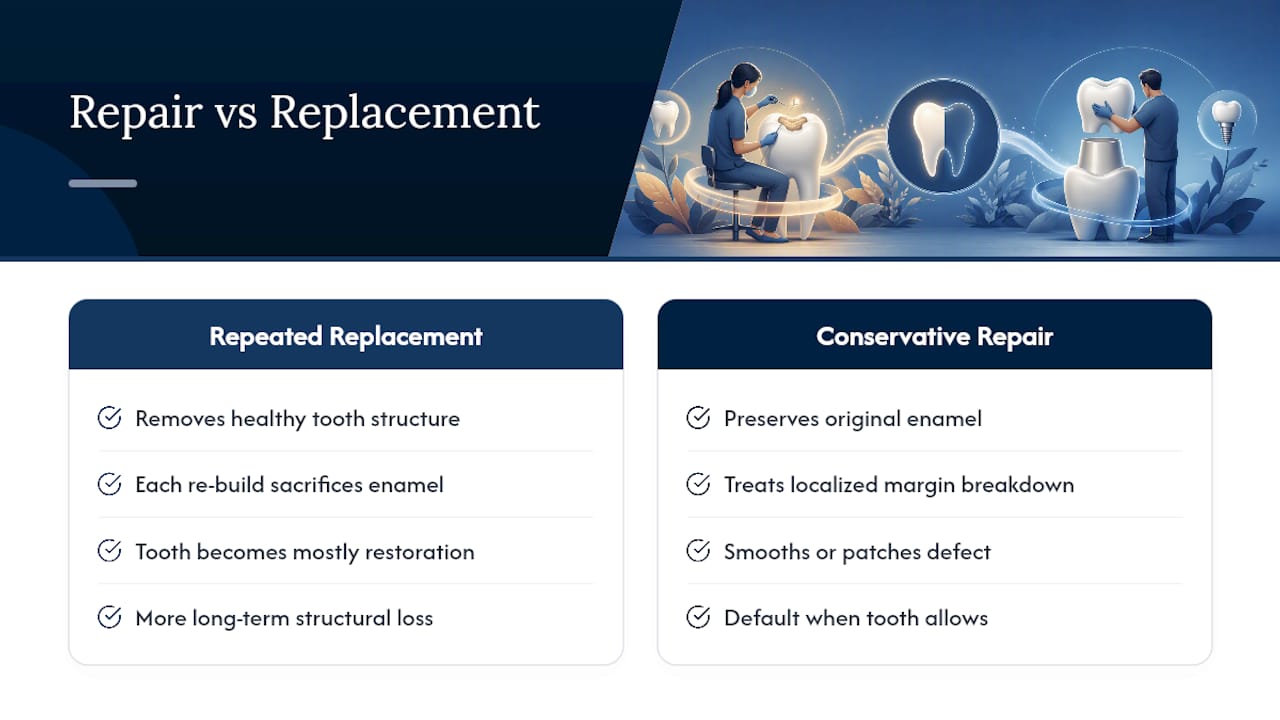
What gets underestimated is how often a "failed" filling is actually just a small marginal breakdown, not a total collapse. A dentist who takes the time to look closely, check the margins, and assess whether the defect is truly localized can often smooth or patch the area instead of removing everything and rebuilding from scratch. That's not a lesser treatment. It's the more conservative one, and conservative is usually the right instinct in dentistry unless the evidence points somewhere else.
Where I part ways with a lot of generic advice online is the idea that any lost filling can just sit until it's convenient. It can't, not safely. The absence of pain tells you nothing about what's happening under the surface. The right move is the boring one: get looked at quickly, let a professional actually assess the damage, and trust that repair over replacement is the smarter default when the tooth allows for it.
— Jake
Getting Same-Day Care When a Filling Falls Out
If a filling just came out, the fastest path to relief is a same-day visit, and some dental practices are built around providing this service. Same-day appointments can help you avoid waiting a week with a temporary wax patch and uncertainty.

When you call, mention when the filling came out, whether you're in pain, and whether you can see or feel a rough edge, that helps the team prepare for your visit before you even walk in. At the urgent visit, expect a clinical exam, an X-ray to check for decay or nerve involvement, and either a same-visit replacement filling or a temporary protective measure while a crown or other restoration is planned. The dental team aims to preserve your natural tooth structure whenever the clinical picture supports it rather than defaulting to a full rebuild. Financing options may be available if a crown, root canal, or dental implant ends up being the right next step. Call today to get on the schedule before a small problem turns into a bigger one.
Sources
- Repair versus replacement of dental restorations (PMC article)
- What to do if your filling falls out — Colgate
- What to do if your filling falls out — Healthline
- Tooth decay — MouthHealthy (ADA)