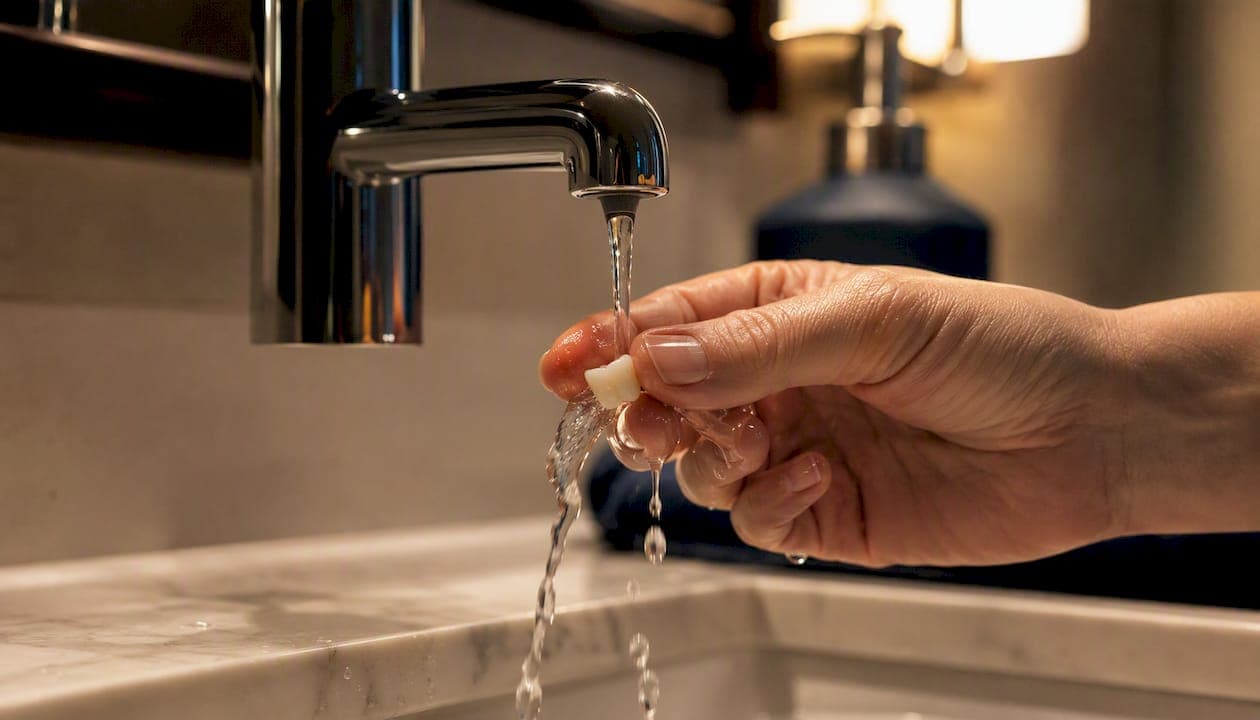
If your temporary crown fell off, retrieve it, rinse it gently, and call your dentist for a same-day appointment. That is the short version. The longer version matters too, because what you do in the next hour can protect your prepared tooth, prevent sensitivity, and keep your permanent crown timeline on track.
According to Boise Family Dental Care, dental crowns are made each year in the U.S., and temporary crowns are a standard part of that process. They are cemented with intentionally weaker material so your dentist can remove them easily at your next visit. That design is also why they occasionally come off ahead of schedule.
Here is what to do right now:
- Find the crown. Check your mouth, napkin, food, or the floor.
- Rinse it. Warm water only. No scrubbing.
- Inspect it. Look for cracks, chips, or missing pieces.
- Protect the tooth. Avoid chewing on that side entirely.
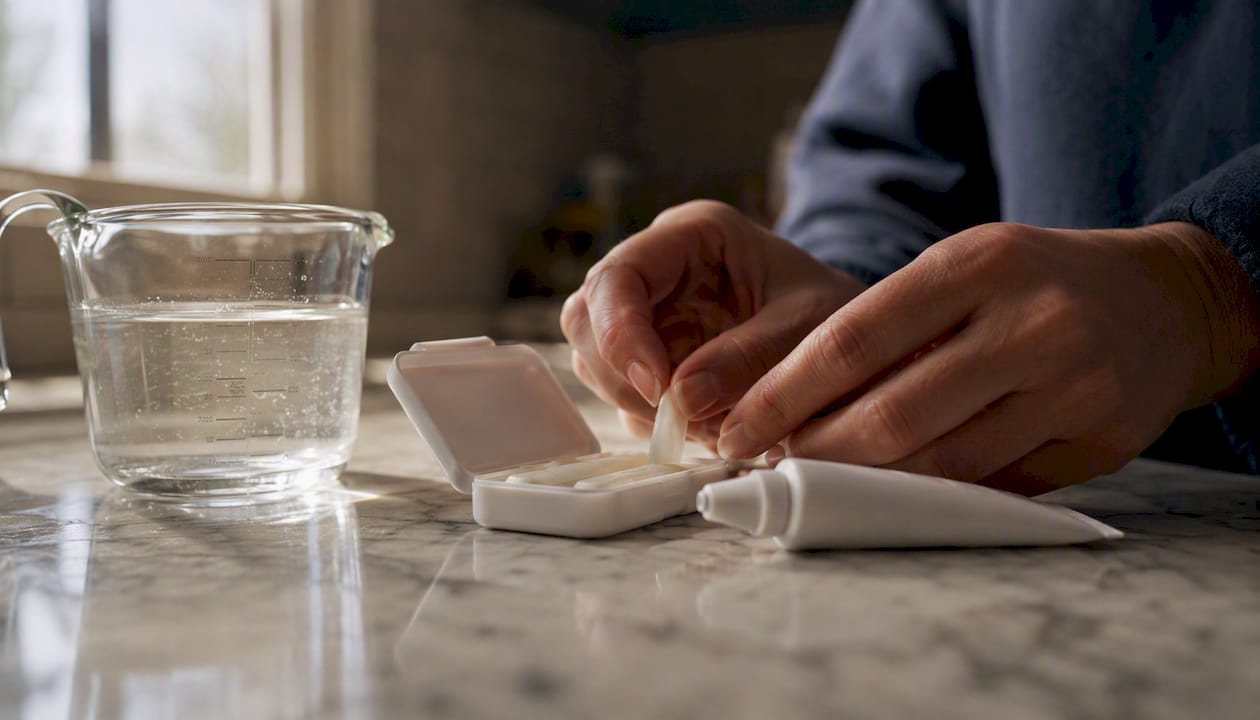
- Try a temporary re-seat only if the crown is intact and you have pharmacy dental cement or denture adhesive on hand.
- Call your dentist. Same-day or next-day care is the goal. DC Implant & Cosmetic Dentistry offers same-day appointments for exactly this situation.
A lost temporary crown is almost never a medical emergency, but leaving the prepared tooth exposed for more than 24–72 hours raises real risks: sensitivity, infection, and shifting that can affect how your permanent crown fits.
Table of Contents
- What should you do the moment your temporary crown falls off?
- How do you protect the exposed tooth and manage pain?
- When is a fallen temporary crown actually a dental emergency?
- How long can you wait, and what does re-cementation cost?
- Why do temporary crowns fall off, and how can you prevent it?
- How DC Implant & Cosmetic Dentistry can help you today
- Key Takeaways
- The part most people skip
- Same-day crown care at DC Implant & Cosmetic Dentistry
What should you do the moment your temporary crown falls off?
Stay calm. A temporary crown coming off is one of the more common dental surprises, and the steps are straightforward.
- Stop what you are doing and locate the crown. Check your mouth first. If you were eating, check your food and the table. If you feel it in your mouth, do not swallow it. Spit carefully into your hand or a napkin.
- Rinse the crown with warm water. No soap, no toothpaste, no scrubbing. A gentle rinse removes debris without damaging the fit surface.
- Rinse your mouth with warm water. This clears food particles from the exposed tooth and surrounding tissue.
- Inspect the crown carefully. Hold it under good light. Look for cracks, fractures, or missing pieces. A crown that is intact can often be temporarily re-seated. A broken one needs to be stored and brought to your appointment.
- If the crown is broken or you cannot re-seat it safely, store it. Place it in a small zip-lock bag or a clean container. Gardena Dental Group recommends keeping broken pieces clean and dry and bringing everything to your appointment.
- Protect the exposed tooth. If the tooth feels sharp or rough, a small piece of orthodontic wax pressed gently over the edge will reduce irritation to your tongue and cheek.
- Call your dentist. Do this before attempting any reattachment. Many offices will walk you through the next steps over the phone.
Pro Tip: If you think you may have swallowed the crown, do not panic. A swallowed crown typically passes without harm. If you experience difficulty breathing, chest pain, or throat discomfort, that is a different situation — go to an emergency room immediately, as the crown may be in your airway rather than your digestive tract.
Quick do/don't list:
- Do NOT use superglue, Krazy Glue, or any household adhesive inside your mouth.
- Do NOT chew on the side where the crown came off.
- Do NOT ignore severe pain, swelling, or bleeding.
- Do rinse gently and keep the area clean.
- Do bring the crown (or its pieces) to your appointment.
Using temporary dental cement (step-by-step)
- Dry the inside of the crown with a clean tissue or cotton ball.
- Dry the prepared tooth as much as possible. Saliva reduces adhesion significantly.
- Apply a small amount of cement to the inside of the crown. Do not overfill.
- Seat the crown carefully over the tooth. Press down gently and bite down slowly to seat it fully.
- Wipe away any excess cement that squeezes out around the edges.
- Wait the time listed on the product label before eating or drinking.
Using denture adhesive
Follow the same dry-and-seat process above. Denture adhesive provides a lighter hold than cement, so be especially careful about chewing on that side.
Before you sleep tonight, remove the temporary crown. Wearing it overnight raises the risk of accidentally swallowing or inhaling it. Store it in a clean container and replace it in the morning. Klement Family Dental explicitly advises removing temporary crowns before sleeping for this reason.
Pro Tip: Only use products labeled for oral use — temporary dental adhesive or denture fixative. Household glues are not sterile, can bond permanently to tooth structure, and may cause chemical burns to soft tissue. The risk is not worth it.
Never use:
- Superglue or cyanoacrylate adhesives
- Epoxy or craft glue
- Nail glue
- Any product not specifically labeled for dental or oral use
For a detailed comparison of crown glue products and their safety considerations, pharmacy-grade options consistently outperform improvised household alternatives on every safety measure.
How do you protect the exposed tooth and manage pain?
The prepared tooth under a temporary crown has had enamel removed. Without the crown in place, it is vulnerable to temperature sensitivity, pressure, and bacterial exposure. These steps reduce discomfort and lower infection risk while you wait.
Daily care:
- Eat soft foods only: yogurt, mashed potatoes, scrambled eggs, soup, bananas.
- Drink room-temperature beverages. Hot coffee and ice water will both trigger sharp sensitivity on an exposed prepared tooth.
- Brush gently around the area with a soft-bristled toothbrush. Do not skip brushing — bacteria accumulate fast on an unprotected tooth.
- Floss carefully. Slide floss out sideways rather than pulling up through the contact, which can dislodge a re-seated crown.
- Chew exclusively on the opposite side of your mouth.
Pain and sensitivity management:
Over-the-counter ibuprofen (Advil, Motrin) or acetaminophen (Tylenol) can reduce both pain and inflammation. Follow the dosing instructions on the label. A warm saltwater rinse (half a teaspoon of salt in eight ounces of warm water) two to three times daily helps keep the area clean and can reduce minor gum irritation. Topical oral analgesics like Orajel can numb the area briefly, though they wear off quickly.
Do not attempt to self-prescribe antibiotics. If you suspect infection, that is a reason to call your dentist today, not a reason to reach for leftover medication.
Pro Tip: Press a small piece of orthodontic wax over any sharp tooth edge that is irritating your tongue or cheek. It will not fix anything structurally, but it makes the hours before your appointment significantly more comfortable.
When is a fallen temporary crown actually a dental emergency?
Healthline confirms that a fallen temporary crown is usually not a medical emergency. That said, certain signs mean you should call your dentist immediately rather than waiting for a routine appointment.
Call your dentist the same day if you notice:
- Moderate to severe tooth pain that does not respond to OTC pain relievers
- Swelling in your gum, jaw, or face
- A bad taste, foul odor, or visible pus near the tooth
- Fever above 100.4°F alongside dental pain
- Persistent bleeding from the exposed tooth area
- The crown broke and left a sharp fragment that is cutting your soft tissue
Go to an emergency room if:
- You have difficulty breathing or swallowing after losing the crown (possible inhalation)
- Facial swelling is spreading rapidly toward your eye or throat
- You cannot control bleeding
For guidance on what an ER can and cannot do for dental issues, the short answer is that ERs can manage pain and infection but cannot re-cement a crown. A dental office is always the right first call for crown-related issues.
Most dental practices, including those with after-hours lines, will triage your situation over the phone and tell you whether to come in urgently or wait until morning.
How long can you wait, and what does re-cementation cost?
Timeline guidance:
- Same day or next day: the standard recommendation for any lost temporary crown, even without symptoms.
- Within 24–72 hours: acceptable if the tooth is asymptomatic, the crown is re-seated with temporary cement, and you are eating carefully.
- Sooner than 24 hours: if you have pain, sensitivity to temperature, visible damage to the tooth, or the crown cannot be re-seated.
Leaving a prepared tooth exposed beyond a few days creates real downstream problems. The tooth can shift slightly, neighboring teeth can drift, and the gum tissue can change shape. Any of these can affect how your permanent crown fits, potentially requiring new impressions and additional lab work.
What your dentist will typically do:
- Clean the tooth and the crown, check the fit, and re-cement the temporary with fresh material.
- If the temporary is broken beyond use, fabricate or place a new temporary.
- If the permanent crown is nearly ready, they may accelerate the timeline and place it directly.
Cost in the U.S.:
Re-cementing a temporary crown is often a quick procedure, and many dentists include it within the overall crown treatment fee. When billed separately, re-cementation typically runs in the range of $50–$150 depending on the practice, region, and whether a new temporary needs to be made. If your permanent crown requires new impressions due to tooth movement, lab fees add to that figure. Call your insurer before your appointment to confirm whether recementation is covered under your existing crown procedure or billed as a separate service.
Why do temporary crowns fall off, and how can you prevent it?
Common causes:
- Temporary cement is weaker by design. It has to be, so your dentist can remove the temporary cleanly at your next visit.
- Sticky or chewy foods: caramel, taffy, gummy vitamins, dried fruit, chewing gum.
- Hard foods: ice, hard candy, crusty bread, nuts.
- Improper flossing technique (pulling up instead of sliding out).
- Tooth grinding or clenching (bruxism), which puts repeated lateral force on the crown.
- A long gap between the temporary placement and the permanent crown appointment.
Prevention habits:
- Avoid sticky and hard foods for the entire duration you are wearing the temporary.
- Use the sliding floss technique every time, without exception.
- If you grind your teeth at night, ask your dentist about a night guard before your permanent crown is placed.
- Schedule your permanent crown appointment as soon as it is available. The longer the temporary stays in, the higher the chance it loosens.
- Follow any specific care instructions your dentist gave you at placement.
Pro Tip: Temporary cements are intentionally formulated to release under moderate force. That is a feature, not a flaw. Knowing this helps you understand why even careful patients sometimes lose a temporary, and why the solution is always professional re-cementation rather than a stronger home fix.
How DC Implant & Cosmetic Dentistry can help you today
When a temporary crown comes off, the last thing you want is to spend an afternoon on hold or be told the next available slot is next week. DC Implant & Cosmetic Dentistry in Washington, DC offers same-day appointments for urgent dental situations exactly like this one. Dr. Kambez Shukoor, a U.S. Navy veteran with over 200 five-star reviews, leads a practice built around responsive, high-quality restorative care.
What to bring to your appointment:
- The temporary crown or any broken pieces (in a clean bag or container)
- Any original packaging if you still have it
- A list of current medications
- Your insurance card and a photo ID
- Notes on when the crown came off and any symptoms you have noticed
The practice handles the full crown process from temporary placement through permanent restoration, so if your situation requires new impressions or an accelerated timeline to your permanent crown, that can be addressed in the same visit. Financing options through CareCredit and Lending Tree are available for patients who need them.
For urgent scheduling, contact DC Implant & Cosmetic Dentistry directly. Same-day slots fill quickly, so call as early in the day as possible.
Key Takeaways
A temporary crown falling off is manageable at home for a short time, but professional re-cementation within 24–72 hours is the only safe long-term solution.
| Point | Details |
|---|---|
| Retrieve and rinse first | Find the crown, rinse with warm water, and inspect for cracks before doing anything else. |
| Use only dental-grade adhesives | Temporary dental cement or denture adhesive from a pharmacy; never superglue or household glue. |
| Protect the exposed tooth | Eat soft foods, avoid temperature extremes, and chew on the opposite side until your appointment. |
| Know the emergency signs | Swelling, fever, pus, or breathing difficulty after losing the crown means call your dentist or go to the ER today. |
| Dc-dentistry offers same-day care | DC Implant & Cosmetic Dentistry in Washington, DC sees urgent crown cases the same day, with financing available. |
The part most people skip
Most of the advice you will find about a lost temporary crown focuses on the reattachment step. That makes sense. But the part that actually determines your outcome is what happens in the 24 hours after: whether you call your dentist promptly, whether you protect the tooth carefully, and whether you resist the urge to "wait and see" because the tooth stopped hurting.
Prepared teeth are vulnerable in ways that are not always obvious. The enamel has been shaped down, the dentin is closer to the surface, and the margin where the crown meets the gum is open to bacteria. A temporary crown that has been off for three or four days can allow enough tooth movement to change the fit of your permanent crown. That means new impressions, more lab time, and a longer treatment timeline.
The good news is that this situation is genuinely common and genuinely fixable. Dentists handle re-cementation quickly, often in a single short visit. The steps above will keep you safe and comfortable until you get there. The only real mistake is waiting too long.
Same-day crown care at DC Implant & Cosmetic Dentistry
A temporary crown that has come off needs professional attention, not a permanent workaround. DC Implant & Cosmetic Dentistry gives Washington, DC patients a direct path to same-day care: no weeks-long wait, no being triaged to the bottom of the schedule because it is "just a temporary."

Dr. Shukoor's team handles re-cementation, new temporaries, and the full path to your permanent crown restoration in one location. If your situation turns out to need more than a quick re-cement, whether that is a new temporary, accelerated permanent placement, or a broader cosmetic or restorative conversation, that conversation happens in the same visit. Financing through CareCredit and Lending Tree means cost does not have to be the reason you wait. Call the office first thing in the morning to secure a same-day slot, or book online through the DC Implant & Cosmetic Dentistry website.
This article is for general informational purposes only and does not constitute professional dental or medical advice. Confirm your specific situation with a licensed dentist or qualified healthcare provider.