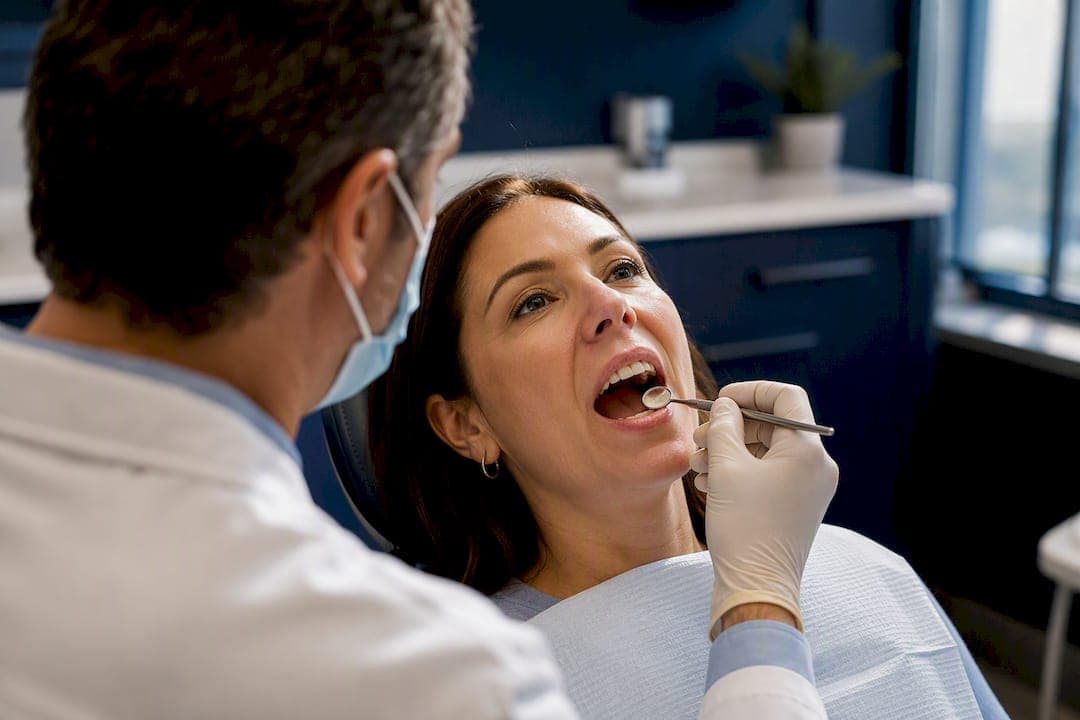
If your crown feels loose or has come off, avoid chewing on that side, save the crown if you have it, and skip any household glue. Call your dentist today for urgent advice. If you notice severe pain, swelling, bleeding, or any trouble breathing or swallowing, treat it as a dental emergency and seek immediate care.
TL;DR:
- A loose crown often shifts or causes new sensitivity without pain, and bacteria underneath can lead to decay if not promptly addressed.
- Immediate actions include stopping chewing on that side, saving the crown, and avoiding household glues, with a temporary cement kit as a short-term fix.
- Causes of loosening include cement wear, decay, trauma, or bruxism, with permanent crowns being more durable than temporary ones that are intentionally weak.
- Emergency treatment is necessary if severe pain, swelling, bleeding, or trouble breathing occurs, while worsening sensitivity or bad odor warrants urgent dental care.
- Most loose crowns can be re-cemented or replaced in a same-day appointment to prevent more extensive and costly dental problems later.
Table of Contents
- How Do You Know If a Dental Crown Is Loose?
- What Should You Do Right Now to Protect the Tooth?
- Why Do Dental Crowns Come Loose?
- Is a Loose Crown a Dental Emergency?
- What Happens at the Dentist Visit?
- How Can You Prevent a Crown From Loosening Again?
- What DC Implant & Cosmetic Dentistry Sees With Loose Crowns
- Get Your Loose Crown Fixed Without the Wait
- Sources
How Do You Know If a Dental Crown Is Loose?
A loose dental crown rarely announces itself with pain right away. More often, you notice something feels off before you can put your finger on why. The most common signs include:
- Rocking or shifting when you bite down, sometimes with a faint clicking sound
- A changed bite where your teeth don't meet the way they used to
- New sensitivity to hot, cold, or sweet foods on that specific tooth
- A bad taste or odor near the crown, which often signals bacteria have worked their way underneath
- Food trapping repeatedly in the same spot, or gum irritation and slight recession around the edge of the crown
A crown that moves, clicks when you bite, or triggers new sensitivity usually means it's no longer sealed properly, and that gap gives bacteria a direct path to the tooth underneath, according to the Cleveland Clinic.
You can safely check for looseness yourself with a mirror and clean fingers: look for visible gaps between the crown and gum line, gently press on the crown with your tongue (not a sharp object), and note whether the sensation is a slight wiggle or a full separation. Do not poke at it with a fork, toothpick, or fingernail trying to test how loose it is. That can push it further off or damage the exposed tooth structure. Before you call the dentist, jot down what you noticed and when, since that detail helps the office judge how urgently you need to be seen.
What Should You Do Right Now to Protect the Tooth?
Once you suspect a loose or dislodged crown, the next hour matters more than you might think. Here's the order of operations:
- Stop chewing on that side. Shift your bite to the opposite side of your mouth immediately, even for water and soft foods.
- Retrieve the crown if it has fallen out. Rinse it gently with water, don't scrub it, and place it in a small container or zip-top bag rather than a tissue you might toss.
- Bring the crown to your appointment. Many crowns can be re-cemented onto the same tooth if both the crown and the tooth underneath are intact, according to Healthline.
- Use temporary measures only if needed. A pharmacy temporary dental cement kit (often labeled for denture or crown repair) can hold a crown in place for a day or two following the package instructions, though it's strictly a short-term fix and not a substitute for a dentist's visit, per Dental.
- Manage sharp edges. If the exposed tooth or crown edge feels rough against your tongue or cheek, a small piece of dental wax or sugar-free gum pressed over it can prevent irritation until you're seen.
What you should never do matters just as much. Skip super glue or any household adhesive entirely. These products are toxic if swallowed and can make it significantly harder for your dentist to clean and re-cement the crown properly later, according to SmilesCare. Don't try to force the crown back into place with pressure, and don't probe the socket or gum tissue with tweezers, pins, or anything sharp.
Pro Tip: Keep a small dental repair kit (temporary cement, wax, sugar-free gum) in your bathroom cabinet or travel bag. A loose crown always seems to happen on a Friday night or during a trip, and having these on hand buys you real comfort until the office opens.
If your crown came off as a temporary rather than your final restoration, see our guide on a temporary crown falling off for steps specific to that situation.
Why Do Dental Crowns Come Loose?
Crowns don't fail randomly. A handful of mechanical and biological reasons tend to be behind it:
- Cement breakdown. The bonding agent holding the crown simply wears down over years of normal chewing forces, especially on crowns placed a decade or more ago.
- New decay under the margin. Cavities can form at the edge where the crown meets the natural tooth, quietly eating away at the support structure until the crown loses its foundation.
- Fractured tooth structure or a broken post. If the tooth underneath cracks, or a supporting post loosens, the crown above it has nothing stable to grip.
- Trauma or biting something hard. Ice, popcorn kernels, and pen caps are frequent culprits.
- Bruxism (chronic grinding). Persistent nighttime grinding puts repeated stress on crown margins, and cement washout, hard biting, and bruxism together account for many of the loosening cases dentists see, according to research reviewed in the Journal of the American Dental Association.
It's also worth knowing the difference between temporary and permanent crowns here. Temporary crowns are intentionally held with weaker cement so they can be removed easily when your permanent one is ready, which is exactly why they dislodge more easily than a final restoration, per Dental. If a permanent crown you've had for years suddenly comes loose, that's usually a sign of decay or cement failure worth investigating with an X-ray. If the crack runs deeper into the tooth itself, our page on a cracked crown tooth walks through that specific scenario.
Is a Loose Crown a Dental Emergency?
Not every loose crown needs an emergency room visit, but some situations do demand same-day attention. Here's how to sort urgent from immediate:
Seek emergency care right away if you have:
- Severe or worsening pain
- Facial swelling or fever
- Bleeding that won't stop
- Difficulty breathing or swallowing, or a real risk of choking on a loose crown
Call your dentist today (same day) if you notice:
- New or worsening sensitivity to temperature
- A bad taste, odor, or visible drainage near the tooth
- A visible gap between the crown and gum
- A piece of the natural tooth broke off along with the crown
Waiting matters more than most people assume. Once bacteria get into the gap left at the crown margin, decay and infection can spread quickly, raising the odds you'll need a root canal or even an extraction instead of a simple recementing, according to Riverside Cosmetic Dentist. It's also worth confirming with your dentist whether it's the crown that's loose or the underlying tooth or implant itself, since that distinction changes how quickly you need care, per Dr. Brett Langston. If you notice a natural tooth feels loose too, read our guide on why an adult tooth loosening is never normal.
What Happens at the Dentist Visit?
Your dentist starts with a clinical exam and X-rays to see what's really going on beneath the surface. That imaging helps determine whether the crown can simply be re-cemented, whether the tooth needs to be rebuilt first, or whether an entirely new crown is the better route, since delaying that evaluation raises the risk of more extensive treatment later, according to MedlinePlus.
From there, treatment typically follows one of a few paths:
- Re-cementing the existing crown. This works when the crown itself is intact and undamaged, and the tooth underneath shows no new decay or fracture. It's the fastest and least expensive fix.
- Rebuilding the tooth, then fitting a new crown. If decay has eaten away supporting structure, your dentist may need to build up the tooth with filling material or a core before a new crown fits properly.
- Root canal or extraction. If the nerve is infected or the tooth has fractured below the gum line, more involved treatment becomes necessary, sometimes followed by an implant.
Many crowns that came off intact can actually be reused after a thorough cleaning, which speeds up the repair and keeps costs down compared to fabricating a new one, according to Healthline. Timing depends heavily on which path you're on: same-day digital crown systems can design and mill a replacement crown in a single visit, while a lab-made crown typically requires a temporary crown and a second appointment one to two weeks later. Our page on what to expect from a same-day crown breaks down that process in more detail.
Cost tends to track complexity. Re-cementing an existing crown is usually the simplest, lowest-cost visit, while rebuilding a tooth, root canal therapy, or an implant-based replacement involves more time, more materials, and a higher price tag. If your fit or margin is compromised by gum tissue covering too much of the tooth, your dentist might also discuss crown lengthening to expose enough healthy structure for a secure new crown.
How Can You Prevent a Crown From Loosening Again?
Prevention comes down to a few consistent habits, most of which take less than five extra minutes a day.
- Floss carefully around the crown margin using a gentle up-and-down motion rather than snapping the floss down hard, and consider an interdental brush for tighter spaces.
- Brush twice daily with fluoride toothpaste, paying particular attention to the gum line where the crown meets your natural tooth.
- Skip the ice chewing, hard candy, and using your teeth as tools to open packages or hold objects.
- Address bruxism head-on. If you grind your teeth at night, a custom night guard significantly reduces the repeated force on crown margins, and your dentist can also check whether a bite adjustment would help.
- Keep up with regular checkups. Routine exams let your dentist spot early margin decay or cement wear long before it turns into a loose crown.
Pro Tip: If you already know you grind your teeth, mention it at every dental visit, not just when you get a new crown. Bruxism tends to worsen with stress, and a night guard fitted years ago may no longer match your current bite.
What DC Implant & Cosmetic Dentistry Sees With Loose Crowns
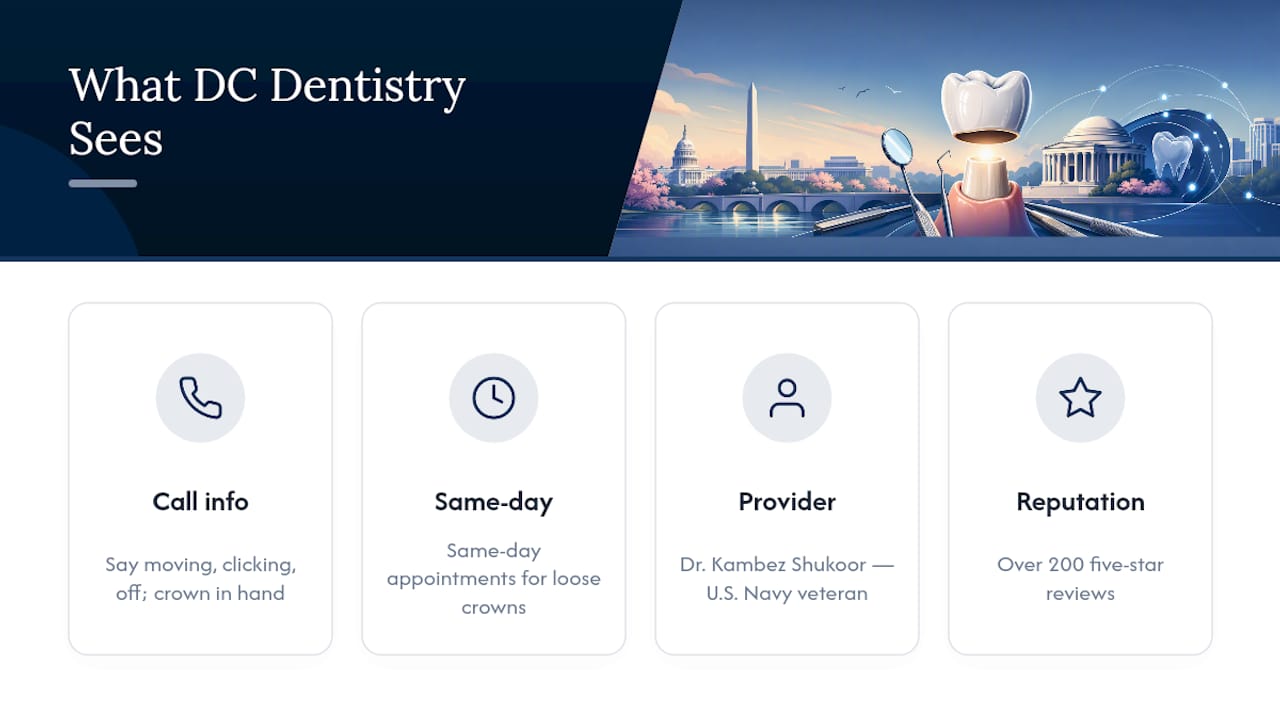
Loose crowns rarely wait for a convenient time to happen, which is why same-day appointments matter. Dc-dentistry sees this exact situation regularly. Dr. Kambez Shukoor, a U.S. Navy veteran, leads a practice built around advanced dental technology and the kind of practical, unhurried care reflected in over 200 five-star reviews.
When you call, be ready to describe what you're feeling: is the crown moving, clicking, or fully off? Do you have the crown in hand? Any pain, swelling, or bad taste? That information helps the front desk triage your case correctly and get you into a chair faster. If you want more detail on what a full crown restoration involves before your visit, our dental crown page covers the materials and process.
— Jake
Get Your Loose Crown Fixed Without the Wait
A loose crown left untreated for even a few days can turn into a bigger, more expensive problem, but you don't have to sit with that risk until you find an opening weeks out. Dc-dentistry offers same-day appointments specifically because dental issues like this don't operate on a convenient schedule, and getting a crown re-cemented or rebuilt quickly is almost always simpler and cheaper than waiting until decay sets in.

Dr. Kambez Shukoor's team handles everything from a straightforward re-cementing to a full rebuild with a same-day digital crown, all under one roof with the diagnostic technology to tell you exactly what your tooth needs. If your case has progressed to where the tooth can't be saved, the practice also provides dental implant options as a permanent replacement path. Call the office today, describe your symptoms, and let them know whether you saved the crown. That one phone call is usually all it takes to get you seen before the problem gets worse.
Sources
- Cleveland Clinic — Dental crowns
- Healthline — Crown fell out: what to do now
- Dental
- JADA — literature on restorative failure and occlusal forces