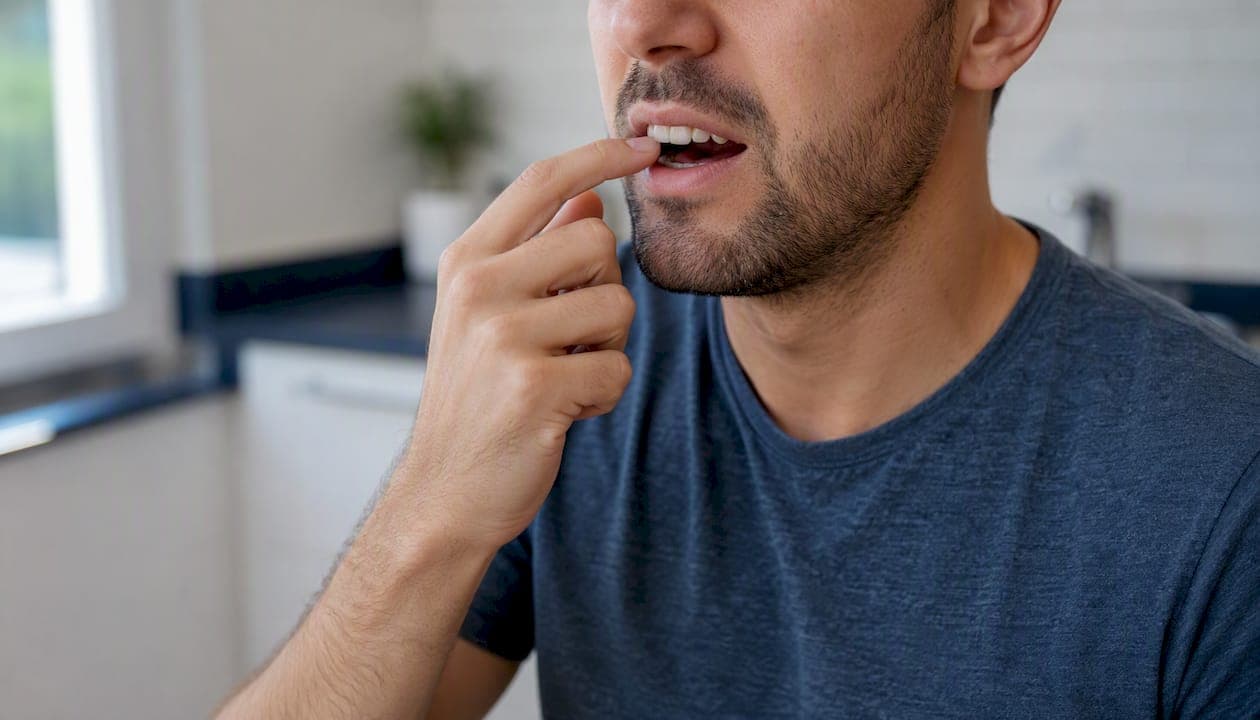
A loose permanent tooth is a warning sign, not a quirk of aging, and it deserves a call to your dentist rather than a "wait and see" approach. How fast you need to move depends on why it's loose.
-
Same-day or emergency: trauma, a knocked-out tooth, spreading swelling, fever, or a tooth that suddenly shifted.
-
Within 24 to 48 hours: noticeable pain, drainage, or a tooth that's gotten looser over the past few weeks.
-
Routine but prompt: slow, gradual loosening with no pain, likely tied to gum disease.
Trauma and infection move fast, so your response has to match. For a knocked-out tooth, the 30 to 60 minute window after the injury gives you the best odds of saving it through reimplantation.
Pro Tip: Call the dental office before you do anything else. A five-minute phone triage often changes what you do in the next hour.
Key Takeaways
Early professional assessment is the single biggest factor in whether a loose adult tooth can be saved, and delay narrows every treatment option available.
| Point | Details |
|---|---|
| Loose adult teeth are abnormal | Any mobility in a permanent tooth signals an underlying problem that needs evaluation. |
| Triage by cause and speed | Trauma and infection need same-day care; gradual loosening needs prompt, not emergency, attention. |
| The 30 to 60 minute window matters | Knocked-out teeth reimplanted quickly have far better long-term odds. |
| Diagnosis drives treatment | Mobility grading, probing depths, and X-rays determine whether stabilization or extraction fits best. |
| Dc-dentistry offers same-day evaluation | Emergency visits, splinting, periodontal care, and implant replacement are all available in one Washington, DC location. |
Table of Contents
- What "Loose Tooth Adult" Symptoms Actually Mean
- How Do You Know If a Tooth Is Actually Loose?
- Common Causes of Adult Tooth Loosening
- When Is a Loose Tooth a Dental Emergency?
- What to Do Right Now for a Loose Adult Tooth
- How Dentists Diagnose a Loose Tooth
- Can a Loose Tooth Be Saved?
- Treatment Options From Conservative to Surgical
- How to Protect Your Teeth From Future Loosening
- If You Need Prompt Care, Here's How We Help
- Sources
What "Loose Tooth Adult" Symptoms Actually Mean
A healthy tooth has a tiny amount of natural flex, almost imperceptible, thanks to the periodontal ligament that anchors it to bone. When a tooth rocks, tips, or shifts position, that's mobility, and it means the ligament, the bone, or the gum tissue supporting the tooth has been compromised.
- Periodontal: gum disease has eaten away at the bone.
- Trauma: a blow or impact damaged the ligament or root.
- Occlusal: grinding or a bad bite is overloading the tooth.
- Systemic: a health condition or medication is affecting bone or healing.
Pro Tip: Baby teeth are supposed to loosen and fall out. Permanent teeth are not built that way, so any looseness in an adult tooth points to a specific, identifiable problem.
How Do You Know If a Tooth Is Actually Loose?
Check gently with a clean fingertip, applying light pressure from the side. Do not wiggle it with your tongue or try to move it repeatedly. Repeated manipulation stretches the ligament further and can accelerate the damage that's already happening.
Watch for these accompanying signs, since they tell you what's driving the mobility:
- Bleeding gums when you brush or floss
- Swelling, redness, or a bad taste that won't go away
- Pus or drainage near the gumline
- A bite that suddenly feels "off" or teeth that don't meet the way they used to
- Increased sensitivity to hot, cold, or pressure
Sudden onset after an injury points to trauma. Gradual loosening over weeks or months almost always points toward gum disease, the most common cause of adult tooth mobility. A tooth can be loose without hurting at all, and advanced bone loss can be well underway before pain ever shows up. If you notice fever, spreading facial swelling, or active drainage, treat that as urgent regardless of how the tooth itself feels.
Common Causes of Adult Tooth Loosening
Gum disease tops the list by a wide margin. It attacks the bone and ligament supporting your teeth, and nearly half of American adults over 30 have some form of it, which makes it the single biggest driver of adult tooth mobility.
- Periodontal disease: bacterial infection destroys bone and connective tissue over months or years.
- Trauma: a fall, sports injury, or car accident can partially dislodge a tooth instantly.
- Bruxism: chronic grinding or clenching applies repeated force that stretches the ligament and wears down supporting bone.
- Root infection or abscess: untreated decay can spread into the root, undermining the tooth from the inside out.
- Bite or restoration problems: a high filling, a poorly fitted crown, or recent orthodontic movement can put uneven pressure on one tooth.
- Systemic factors: diabetes, osteoporosis, certain medications, and pregnancy-related gum changes can all weaken the tissues holding teeth in place.
Less common culprits include a failing root canal, problems with an adjacent implant or bridge, and autoimmune conditions that affect connective tissue.
Loose teeth can be silent. A tooth can look and feel stable enough to ignore for months while bone loss quietly progresses underneath the gumline, which is exactly why symptoms alone are an unreliable guide.
When Is a Loose Tooth a Dental Emergency?
Some situations need same-day attention, no exceptions. Watch for:
- A tooth that's been fully knocked out (avulsed)
- Severe, unrelenting pain
- Swelling that's spreading toward your eye, neck, or throat
- Fever alongside dental pain
- Pus or persistent drainage
- Bleeding that won't stop with steady pressure
- A visibly fractured tooth or jaw
- Difficulty breathing or swallowing
Timing genuinely determines the outcome here. For an avulsed tooth, reimplantation attempted within 30 to 60 minutes gives the best shot at long-term success, and care within 24 hours is the outer limit for a reasonable prognosis.
Think of it as three lanes: trauma calls for an emergency dentist immediately, infection with facial swelling or fever calls for urgent same-day care, and difficulty breathing or swallowing means the emergency room, not the dental chair.

Pro Tip: Save your dentist's after-hours number in your phone now, before you need it. In a trauma situation, the ten minutes you'd spend searching for a number matters.
What to Do Right Now for a Loose Adult Tooth
Call your dentist first. While you're waiting for your appointment, rinse gently with warm salt water, stick to a soft diet, and avoid chewing on the affected side.
If a tooth has been knocked out, handle it only by the crown, never the root, and don't scrub or scrape it. Rinse it briefly if it's dirty, then store it in milk or your own saliva and get to a dentist immediately.
Don't:
- Wiggle the tooth to "test" it repeatedly
- Try to push it back into place or splint it yourself
- Eat hard, sticky, or crunchy foods
- Place aspirin directly against the gum (it can burn tissue)
Over-the-counter pain relievers can hold you over, but antibiotics require a clinician's evaluation. Homemade fixes, from super glue to dental wax bought online, routinely make things worse and can turn a salvageable tooth into an extraction.
Pro Tip: If you're unsure whether your situation is urgent, call anyway. Most offices can tell within a two-minute conversation whether you need to come in today.
How Dentists Diagnose a Loose Tooth
- History review: recent trauma, grinding habits, medications, and chronic conditions like diabetes.
- Mobility grading: dentists classify movement from Grade 1 (slight) to Grade 3 (the tooth moves in every direction, including vertically).
- Periodontal probing: measuring pocket depths around the tooth; healthy depths run 1 to 3 millimeters, and deeper pockets signal bone loss.
- X-rays: periapical and bitewing images show bone level and root condition; a CBCT scan may follow if a fracture is suspected.
- Pulp testing: checks whether the nerve inside the tooth is still alive.
- Bite evaluation: identifies whether uneven contact is overloading the tooth.
A trauma visit moves faster: the dentist will assess the socket, reposition the tooth if needed, and splint it to neighboring teeth the same day.
Can a Loose Tooth Be Saved?
Often, yes, especially when it's caught early. Prognosis hinges on how much bone still supports the tooth, whether infection or a fracture is present, how quickly you got care, and factors like smoking or uncontrolled diabetes.
Dentists weigh several things when deciding whether a tooth is worth saving:
- Remaining bone height on X-rays
- Mobility grade of 2 or lower (Grade 3 often points toward extraction)
- No sign of root fracture
- Pocket depths that haven't progressed too far
- Whether the underlying cause, like bruxism, can be controlled
Smoking and unmanaged diabetes both reduce the odds of long-term success after treatment, even when the initial stabilization goes well. Early assessment is the single biggest factor within your control. Waiting rarely helps and often narrows your options.
| Factor | Effect on Prognosis |
|---|---|
| Timing of care | Earlier evaluation preserves more treatment options |
| Mobility grade | Grade 1 to 2 is more salvageable than Grade 3 |
| Bone level | More remaining bone means a better long-term outlook |
| Smoking/diabetes | Both slow healing and reduce treatment success |
Treatment Options From Conservative to Surgical
Most cases start with the least invasive option and escalate only if needed.
Conservative care:
- Improved home hygiene and professional cleanings
- Scaling and root planing to remove bacteria below the gumline
- Localized antibiotics placed directly in periodontal pockets
- Occlusal adjustment or a custom night guard for bruxism-related mobility
Stabilization:
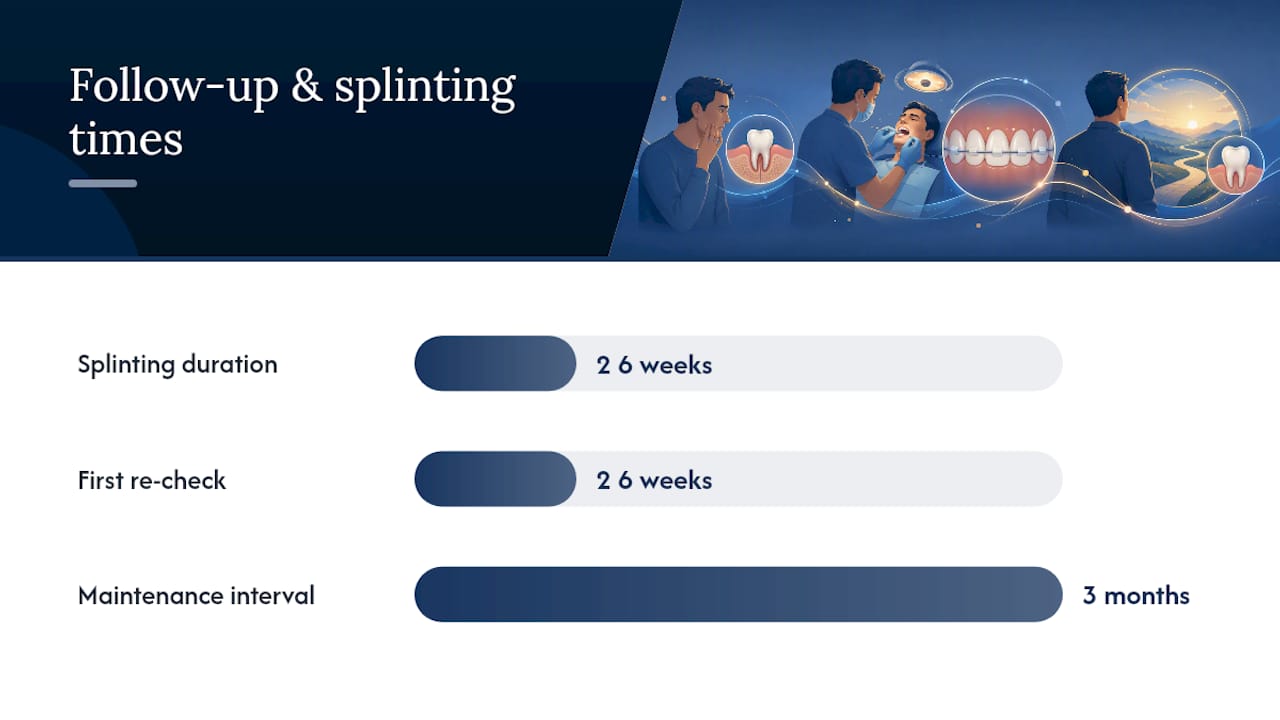
- Splinting the loose tooth to its neighbors, typically for 2 to 4 weeks after trauma
- Bite adjustments to remove uneven pressure
- Temporary bonding to reinforce the tooth while deeper treatment happens
Endodontic and surgical care:
- Root canal therapy if the nerve is infected or dying
- Flap surgery, bone grafting, or guided tissue regeneration for advanced periodontal bone loss, usually handled by a periodontist
Extraction and replacement: when bone loss is too extensive or the tooth has fractured below the gumline, extraction becomes the most predictable path forward. Replacement options include a single-tooth implant, an implant-supported bridge, or a removable partial denture, depending on how many teeth are affected.
Stabilization isn't a one-time fix. A splinted tooth can hold steady for years, but only if the disease that loosened it in the first place gets controlled and the patient sticks with more frequent periodontal maintenance afterward.
Most stabilized teeth get re-checked at 2 to 4 weeks, then again at three-month intervals if periodontal disease is the underlying cause.
How to Protect Your Teeth From Future Loosening
Daily habits matter more than any single dental visit. An electric toothbrush combined with interdental brushes or floss removes plaque more thoroughly than brushing alone, and an antibacterial rinse can help if you've had gum disease before.
- Quit tobacco, since it's one of the strongest predictors of poor healing
- Keep diabetes well controlled with your physician
- Wear a mouth guard during contact sports
- Treat bruxism with a night guard and stress management
- Discuss osteoporosis medications with both your physician and dentist
If you've had periodontal disease, cleanings every three to four months catch problems earlier than the standard six-month schedule. Calcium and vitamin D support healthy bone generally, though they're not a substitute for treating an active infection.
Pro Tip: Set a phone reminder to gently check tooth stability once a month with a clean finger. Catching a change at month one beats catching it at month six.
A Dentist's Perspective on Loose Teeth
Every loose tooth deserves the same response: get it looked at fast, because timing changes what's possible. Stabilization works, but only when patients follow through with home care and periodontal maintenance afterward. Practices offering same-day evaluation exist for exactly this reason, since the gap between "I noticed it Tuesday" and "I got seen Tuesday" often decides the outcome.
If You Need Prompt Care, Here's How We Help
A loose tooth doesn't wait for a convenient time, and neither should your evaluation. Dc-dentistry offers same-day appointments in Washington, DC, specifically so a loose or injured tooth gets assessed within hours, not weeks, which is often the difference between saving a tooth and losing it.

Our diagnostic workup includes X-rays and mobility grading to pinpoint exactly what's causing the movement, followed by whichever treatment fits: scaling and root planing, splinting, periodontal surgery, or, when a tooth can't be saved, a single-tooth implant or implant-supported bridge to replace it predictably. Financing options are available for larger treatment plans, and Dr. Kambez Shukoor's team works to make emergency visits as low-stress as possible.
Skip the online fixes and the temptation to leave it alone. Call Dc-dentistry today to get a loose tooth evaluated before the window for saving it closes.
Sources
- Fractured, loosened, or knocked-out teeth — MSD Manuals
- First aid: Tooth loss — Mayo Clinic
- Loose Tooth in Adults: Causes, Symptoms, & Treatment — Healthline