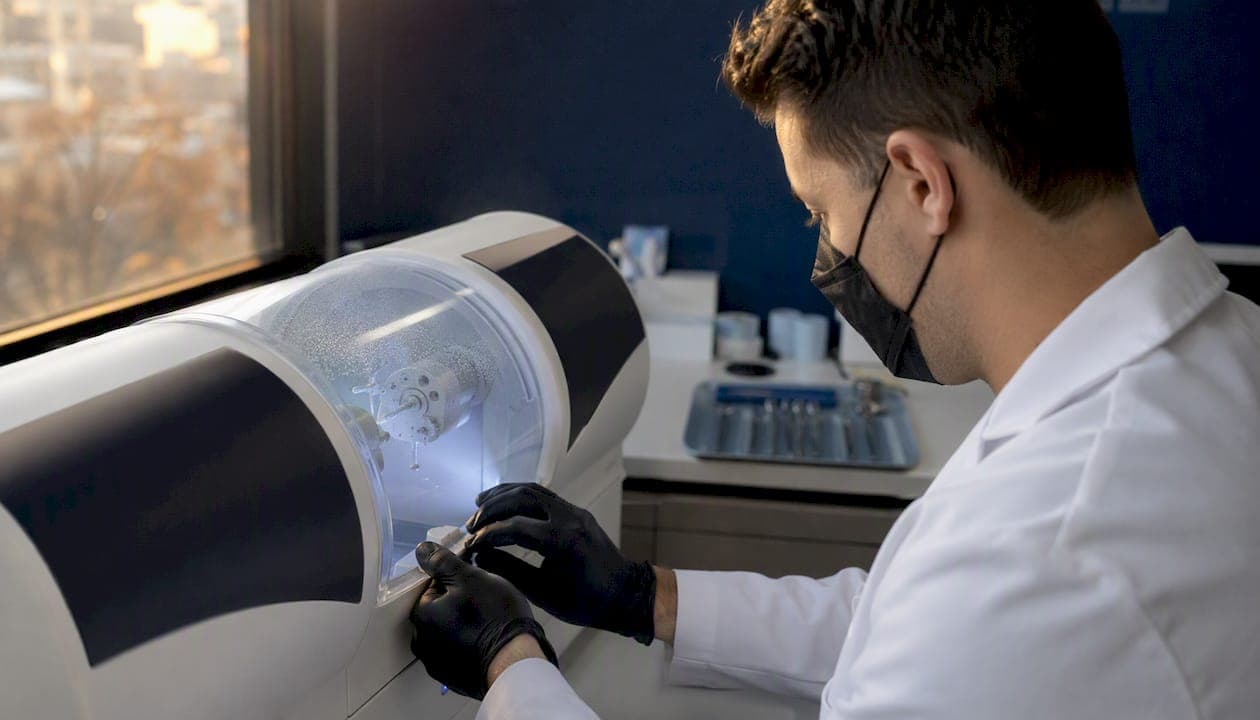
Yes, you can get a permanent crown in a single appointment. Same-day crowns are real, widely available, and for most patients with a straightforward restorative need, they work just as well as a lab-made crown. The technology that makes it possible is chairside CAD/CAM: an intraoral scanner captures a digital impression of your prepared tooth, software designs the crown on-screen, and an in-office milling machine carves it from a ceramic block while you wait. No temporary crown. No second appointment. No impression trays.
Here is what that means in practice:
- One appointment, typically 2–3 hours from check-in to cementation
- Digital impressions instead of messy putty trays
- No temporary crown and no risk of it falling off between visits
- Permanent ceramic restoration placed the same day
One caveat worth knowing upfront: not every dental office has the equipment, and not every clinical situation qualifies. Complex esthetic front-tooth cases and deep subgingival fractures sometimes still need a lab.
Key Takeaways
Same-day crowns are a clinically sound, time-efficient option for most single-tooth restorations when the practice has chairside CAD/CAM equipment and the dentist has meaningful experience with the system.
| Point | Details |
|---|---|
| One-visit convenience is real | Chairside CAD/CAM lets most patients receive a permanent crown in 2–3 hours with no temporary crown needed. |
| Cost range in the U.S. | Same-day crowns typically run $1,200–$2,500 per tooth; most insurance plans cover them similarly to lab crowns. |
| Material choice matters | Zirconia suits molars for strength; IPS e.max offers better translucency for front teeth but may extend appointment time. |
| Longevity depends on maintenance | Clinical studies show survival rates comparable to lab crowns when preparation quality and oral hygiene are strong. |
| Dc-dentistry offers same-day crowns in Washington, DC | Dr. Shukoor's practice combines in-office CAD/CAM, financing options, and over 200 five-star reviews for predictable results. |
Table of Contents
- What is a same-day crown and how does the CAD/CAM process work?
- Who is a good candidate for a same-day crown?
- What does a same-day crown appointment actually look like?
- How do same-day crown materials compare?
- What are the real benefits and drawbacks of same-day crowns?
- How much does a same-day crown cost, and what does insurance cover?
- How long do same-day crowns last, and how do you care for them?
- Why DC Implant & Cosmetic Dentistry is worth considering for same-day crowns
- When same-day crowns are the smart choice
- Book a same-day crown appointment at DC Implant & Cosmetic Dentistry
- Sources
What is a same-day crown and how does the CAD/CAM process work?
CEREC stands for Chairside Economical Restoration of Esthetic Ceramics. It is the original and most widely recognized chairside CAD/CAM platform, developed by Dentsply Sirona, and it has been in clinical use for decades. The term "CEREC crown" is often used interchangeably with "same-day crown," though other CAD/CAM systems exist.
The workflow has four core steps:
- Digital scan: An intraoral scanner captures a precise 3D model of the prepared tooth and surrounding teeth. No impression material required.
- CAD design: The dentist uses chairside software to design the crown, checking margins, contacts, and occlusion on-screen before milling begins.
- In-office milling: A chairside mill carves the crown from a pre-shaded ceramic block. Milling time varies by material, from a few minutes for composite and hybrid ceramics to roughly five minutes for zirconia in super-fast modes.
- Finishing and sintering: Some materials, particularly high-strength zirconia, require a post-mill sintering furnace to reach full density. This step adds time but produces a stronger result.
According to clinical workflow documentation, the full same-day crown process typically takes 60–90 minutes of active chair and machine time, though total appointment length with prep and cementation usually runs closer to 2–3 hours. Supported materials include zirconia, lithium disilicate (IPS e.max), and hybrid ceramics.
Pro Tip: Ask the office which specific milling unit and scanner they use. A practice running current-generation equipment, such as a Primescan intraoral scanner or Primemill unit, will generally produce more accurate fits than one using older hardware.
Who is a good candidate for a same-day crown?
Most patients needing a single-tooth crown are reasonable candidates. The clinical criteria that favor same-day treatment:
- Single tooth with sufficient remaining structure for a crown preparation
- Fracture or decay that does not extend deep below the gumline
- Stable bite with no severe grinding or clenching that would require complex occlusal planning
- Tooth anatomy the intraoral scanner can capture cleanly (most posterior teeth qualify easily)
Some situations call for caution or a traditional lab crown instead:
- Deep subgingival cracks that the scanner cannot fully capture may need crown lengthening before any crown is placed. If that procedure is required, a same-day crown on the same visit is usually not possible.
- Complex esthetic front-tooth cases where layered porcelain, custom staining, or a ceramist's hand-work is needed to match adjacent teeth precisely. A single-block milled crown can look excellent, but it cannot replicate the depth and translucency a skilled lab ceramist produces for a visible front tooth.
- Cases requiring specialist referral, such as a tooth that needs endodontic treatment first. A root canal procedure typically precedes crown placement, and depending on timing, same-day placement may or may not be feasible in one visit.
- Offices without in-house milling equipment simply cannot offer same-day crowns, regardless of the clinical picture.
Pro Tip: Before booking, ask two questions: "Do you have an in-office mill?" and "How many same-day crowns do you place per month?" A dentist who places them regularly has worked through the learning curve on fit, shade, and occlusion adjustments.
What does a same-day crown appointment actually look like?
The appointment is longer than a typical dental visit, but you leave with a finished crown. Here is the typical sequence:
- Check-in and X-rays (10 minutes). Baseline radiographs confirm the tooth's root and bone status before prep begins.
- Local anesthesia and tooth preparation (15–30 minutes). The dentist removes decay or old restorative material and shapes the tooth to accept a crown. This is the same prep as a traditional crown.
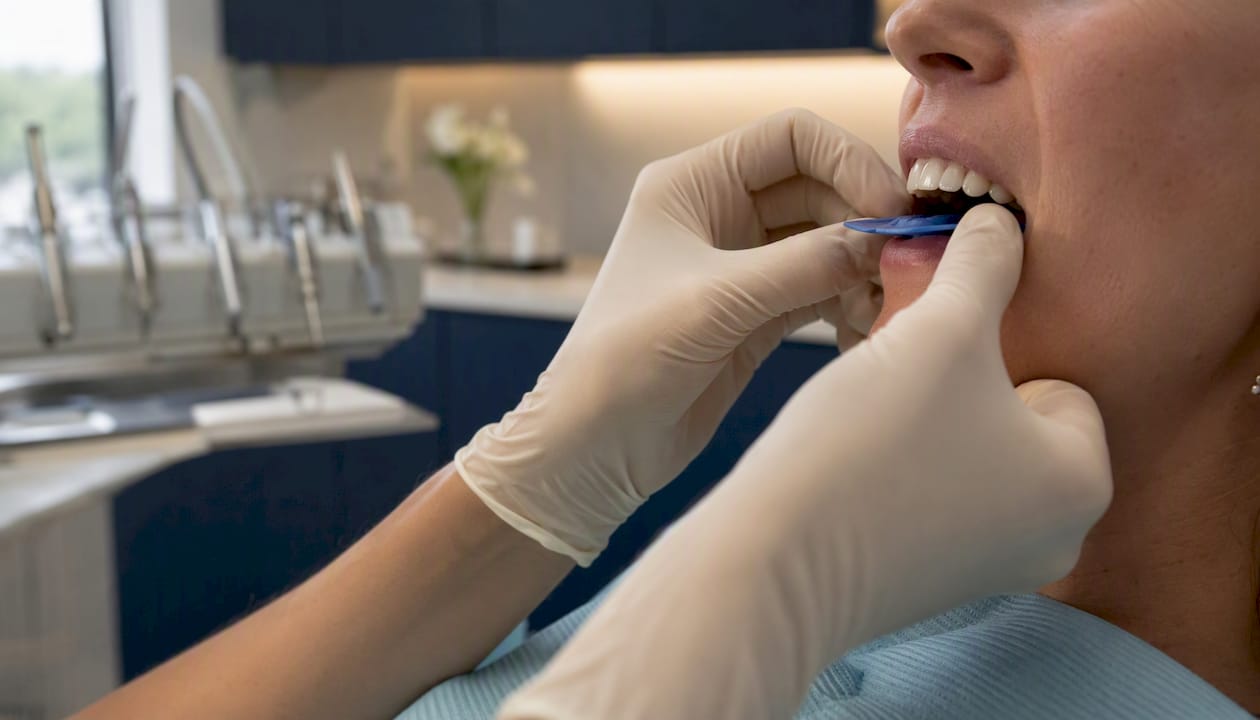
- Intraoral digital scan (5–10 minutes). The scanner wand passes over the prepared tooth and adjacent teeth. You see the 3D model build on-screen in real time.
- CAD design and clinician review (10–20 minutes). The dentist designs the crown digitally, checking margins and contacts. Some offices have a dedicated design technician; others have the dentist handle this step.
- Milling and finishing (5–45 minutes, material-dependent). The mill carves the crown while you wait. If sintering is required, this step extends the wait. Most offices have a comfortable waiting area, and you can read, watch something, or simply rest.
- Try-in, adjustment, and cementation (15–30 minutes). The crown is tried in, checked for fit and bite, adjusted if needed, and bonded permanently.
During the milling wait, you are typically numb and comfortable. Sedation options (nitrous oxide, oral sedation) are available at many practices for patients who find the extended appointment stressful. No temporary crown is needed because the permanent restoration is placed before you leave.
Common intra-appointment checks your dentist performs: bite verification with articulating paper, proximal contact tightness, shade match against adjacent teeth, and margin seating confirmation.
Pro Tip: If you have sensitivity to noise, ask about noise-canceling headphones during the milling phase. The mill is audible, and most offices are happy to accommodate.
How do same-day crown materials compare?
Material choice affects how long the milling takes, how the crown looks, and how it holds up over time. The three main options for chairside-milled crowns are zirconia, lithium disilicate (IPS e.max), and hybrid ceramics.
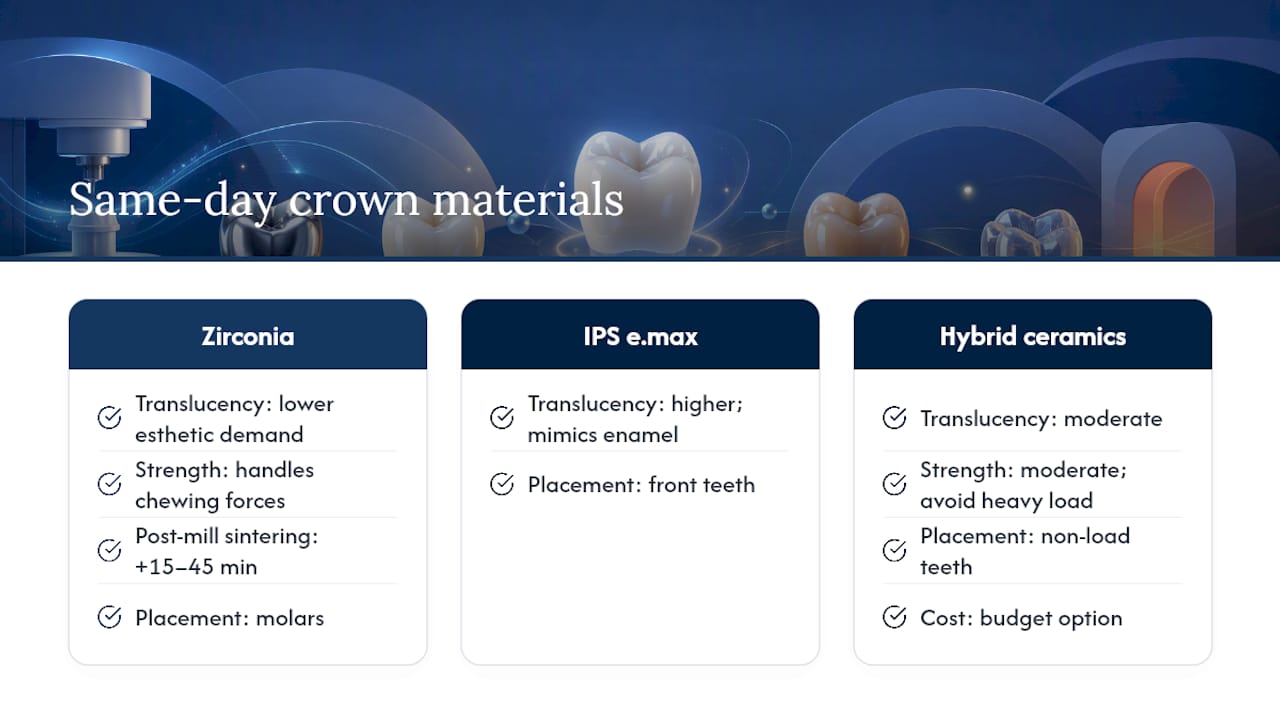
Dentsply Sirona's material documentation confirms that material selection affects translucency, strength, and whether post-mill sintering is required. Zirconia's sintering step can add 15–45 minutes to the appointment, depending on the furnace and the sintering program used.
For molars, zirconia is a common choice. It handles chewing forces well and has generally lower esthetic demands. For front teeth, IPS e.max is frequently preferred because its translucency better mimics natural enamel. Hybrid ceramics are a reasonable middle ground for patients where cost is a primary concern and the tooth is not under heavy occlusal load.
Pro Tip: If your dentist recommends zirconia for a front tooth, ask specifically about the translucency grade of the block being used. Multilayer zirconia blocks produce a more natural gradient than monolithic high-strength blocks.
What are the real benefits and drawbacks of same-day crowns?
The principal benefit is straightforward: one appointment, one set of injections, and no temporary crown to worry about. Eliminating the temporary crown removes a real clinical risk. Temporaries can dislodge, fracture, or allow sensitivity in the weeks between prep and final placement. Skipping that phase entirely is not just convenient; it is clinically cleaner.
Clinical follow-up data shows acceptable survival rates for chairside-milled ceramic restorations, with long-term success depending more on preparation quality, occlusion management, and patient maintenance than on whether the crown was milled in-office or made in a lab.
The drawbacks are real but manageable:
- Not universally available. The workflow requires capital investment in scanning and milling equipment plus training. Not every dental office offers same-day crowns, and experience with the system matters for fit and color accuracy.
- Slightly higher cost in many practices, reflecting equipment amortization and staff training.
- Color-matching limitations for complex esthetic front-tooth cases where a lab ceramist's layering work would produce a more lifelike result.
For posterior teeth and patients who value time above all else, the trade-offs are minor. For a highly visible front tooth where esthetic precision is the priority, the conversation with your dentist deserves more nuance.
How much does a same-day crown cost, and what does insurance cover?
Same-day crowns in the U.S. commonly range in the mid-thousands of dollars per tooth, and many dental insurance plans now treat them similarly to traditional lab crowns for coverage purposes.
A few cost realities to understand:
- Same-day crowns often cost moderately more than a comparable lab crown at the same practice, reflecting equipment and training overhead. The overall cost difference is frequently modest, not extremely high.
- Annual maximums apply. Most dental plans cap annual benefits at $1,000–$2,000. If you have already used benefits earlier in the year, your out-of-pocket share rises accordingly.
- Pre-authorization is worth requesting for crowns over $1,500. It tells you exactly what your plan will pay before the appointment, not after.
- FSA and HSA funds can be applied to crown costs. Crowns are a qualified medical expense under both account types.
- Financing options such as CareCredit and Lending Tree allow patients to spread the cost over monthly payments, often with promotional interest-free periods.
Pro Tip: Ask the front desk for an itemized treatment estimate that separates the crown preparation fee, the material fee, and any same-day technology premium. This makes it easier to compare your plan's allowable amount against each line item and understand your actual out-of-pocket cost.
How long do same-day crowns last, and how do you care for them?
Daily care for a same-day crown is identical to caring for a natural tooth. Brush twice daily, floss once daily, and use a non-abrasive toothpaste. For the first 24–48 hours after placement, avoid very hard or sticky foods while the cement fully sets.
A short checklist of when to call your dentist:
- The crown feels loose or moves when you bite
- Your bite feels noticeably high or uneven after the numbness wears off
- Persistent sensitivity to temperature beyond 2–3 weeks post-placement
- A visible chip or crack in the crown material
- Pain or pressure around the tooth that does not resolve
Lifespan depends on several factors. Oral hygiene is the biggest variable. Patients who brush and floss consistently and attend regular cleanings get more years from any crown. Bruxism (nighttime grinding) accelerates wear on ceramic restorations; a custom night guard extends crown life significantly. Material choice matters too: zirconia tends to outlast hybrid ceramics under heavy occlusal load. Regular dental visits allow the dentist to catch early signs of wear, marginal breakdown, or recurrent decay before they compromise the crown.
Clinical studies show that the quality of the tooth preparation and how well the patient manages their bite and hygiene predict longevity more reliably than whether the crown came from a chairside mill or a dental lab.
Why DC Implant & Cosmetic Dentistry is worth considering for same-day crowns
DC Implant & Cosmetic Dentistry in Washington, DC, combines chairside technology with the clinical experience that makes same-day crowns predictable rather than just fast. Dr. Kambez Shukoor, a U.S. Navy veteran, leads the practice with a focus on precision and patient comfort across a full range of restorative and cosmetic dental services.
What the practice offers for patients considering a same-day crown:
- In-office CAD/CAM capability with same-day appointment availability
- Crown lengthening when additional tooth structure exposure is needed before crown placement, handled in-house
- Financing options including CareCredit and Lending Tree for patients managing out-of-pocket costs
- Over 200 five-star reviews reflecting consistent patient satisfaction with both outcomes and the appointment experience
The practice also offers dental crowns as part of a broader restorative menu that includes implants, root canals, and full-mouth reconstruction, so patients with more complex needs can have multiple concerns addressed by the same team.
When same-day crowns are the smart choice
Same-day crowns make the most sense for patients who have a clear restorative need on a posterior tooth, limited scheduling flexibility, and no clinical complications that would require a ceramist's custom work. A molar with a fractured cusp, a premolar with decay too large for a filling, a tooth that has just had a root canal: these are the cases where a chairside-milled crown is not a compromise. It is the right tool.
Where I would push back on the same-day option is a highly visible front tooth for a patient who cares deeply about the esthetic result. A skilled lab ceramist can layer porcelain in ways that no single milled block replicates. The difference is subtle in most lighting conditions, but it exists, and patients who are particular about their smile deserve that honest conversation.
The practical advice I would give anyone researching this: bring a short question list to your consult. Ask what milling system the office uses, how many same-day crowns they place monthly, and what their remake policy is if the fit or shade is not right after placement. A dentist who answers those questions confidently and specifically is one who has earned the right to do the procedure.
Book a same-day crown appointment at DC Implant & Cosmetic Dentistry
If you are ready to skip the two-appointment wait and get a permanent crown in a single visit, DC Implant & Cosmetic Dentistry offers same-day appointments with in-office CAD/CAM technology in Washington, DC. Dr. Shukoor's team handles everything from the initial scan through final cementation in one sitting, with financing through CareCredit and Lending Tree available for patients managing cost.
To book, call the practice directly or use the online scheduling option on the website. Bring your dental insurance card, a list of current medications, and any recent X-rays from another provider if you have them. If you have questions about whether your specific tooth qualifies for same-day treatment, the front desk can often answer that before you arrive. For patients exploring broader restorative options, the practice also offers dental implants in Washington, DC for teeth that cannot be saved with a crown.
Sources
- CEREC Crown Benefits, Cons, Costs, Procedure, and Alternatives
- CEREC product topics | Dentsply Sirona
- Same-Day Crowns with CEREC: How Chairside CAD/CAM Works | Digital Dentistry
- Same-Day vs Traditional Crowns: 2026 Cost & Coverage Guide - Cerec Tips
- Dental
This article is general information, not a substitute for advice from a qualified doctor. Consult a qualified healthcare professional about your own circumstances before acting on anything here.