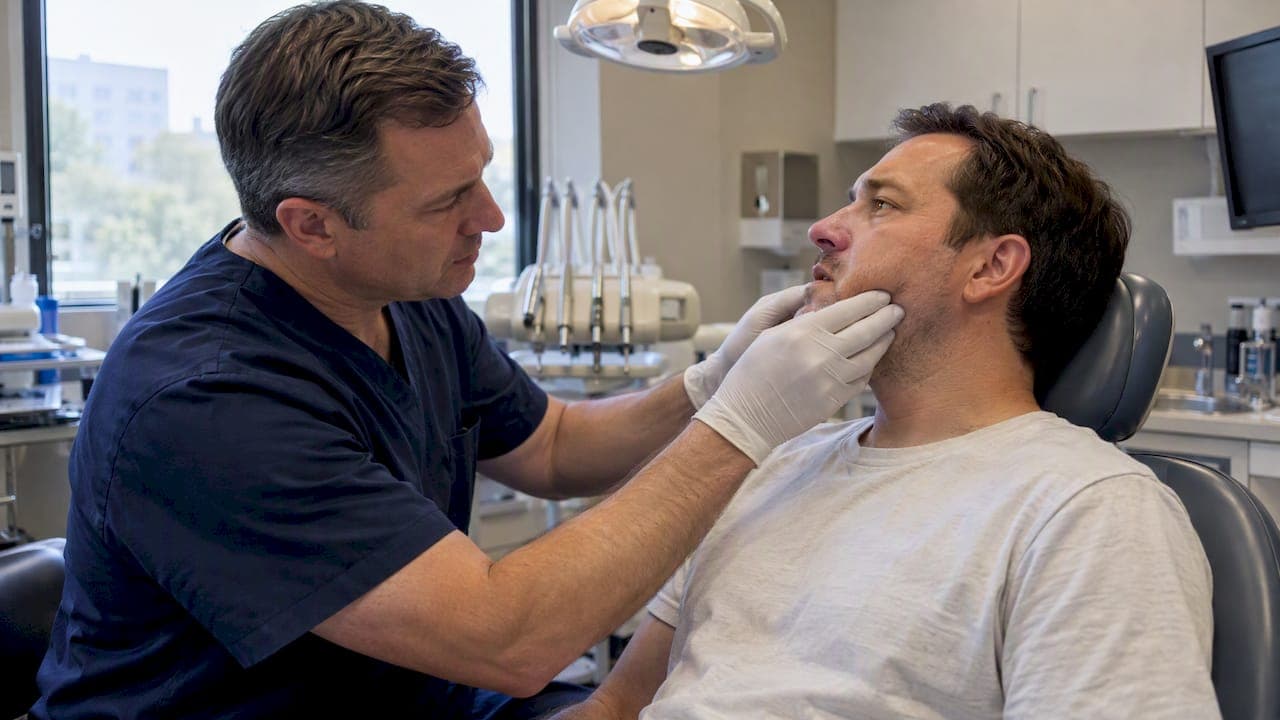
A severe, constant, throbbing toothache with local gum swelling or a pimple-like bump is most often an abscessed tooth. If you also have trouble breathing, swallowing, or speaking, or a high fever, treat it as an emergency and get care immediately. Without those red flags, contact a dentist right away for diagnosis and treatment, since an abscess will not resolve by itself.
TL;DR:
- When a gum bump drains and pain suddenly eases, the infection remains active; arrange dental treatment because pressure relief does not remove bacteria.
- Seek emergency care for trouble breathing, swallowing, or speaking, rapidly growing facial or floor of mouth swelling, high fever, confusion, or a racing heart.
- Without emergency signs, seek same day dental evaluation; dentists use exams and X rays, then treat the source with drainage, root canal therapy, or extraction.
- Use warm salt water rinses and labeled acetaminophen or ibuprofen for comfort, avoid chewing on the affected side, and never lance or pack gum swelling yourself.
Table of Contents
- Signs and Symptoms: What an Abscessed Tooth Feels Like
- What Causes a Tooth Abscess
- Red Flags That Mean the Infection May Be Spreading
- How Dentists Diagnose an Abscess
- Definitive Treatments and the Role of Antibiotics
- Immediate Self-Care Before You See a Dentist
- How We Handle Urgent Dental Infections
- What Gets Overlooked About Abscess Symptoms
- If You Need Urgent Care, Here's How to Reach Us
- FAQ
- Sources
Signs and Symptoms: What an Abscessed Tooth Feels Like
The hallmark of a dental abscess is pain that does not let up. It is usually severe, constant, and throbbing, though some people describe it as sharp, gnawing, or shooting, and it often radiates to the ear, jaw, or neck according to Mayo Clinic. Biting down or chewing on the affected side typically makes it worse, and sensitivity to hot or cold can linger well past normal.
Beyond the pain itself, several other signs tend to show up together:
- A swollen, red gum near the tooth, sometimes with a pimple-like bump that drains pus
- A persistent bad taste or bad breath, especially after drainage occurs
- A loose or tender feeling in the affected tooth
- Swollen lymph nodes in the neck and a low-grade fever
A tooth abscess typically looks like a red, swollen bump that may spread to surrounding bone and teeth if left untreated, according to Cleveland Clinic.
One detail catches a lot of people off guard: if the abscess ruptures on its own, the pain can suddenly ease. That relief feels like recovery, but it is not. Rupture releases pressure, not the infection itself, and the bacteria causing it are still active and capable of spreading deeper into the jaw or neck according to Mayo Clinic. Treating a quiet mouth as a solved problem is one of the more common and costly mistakes people make with this condition.
What Causes a Tooth Abscess
Most abscesses trace back to deep, untreated tooth decay that has worked its way down into the pulp, the nerve and blood vessel tissue at the tooth's core. Once bacteria reach that tissue, infection and pus formation tend to follow.
Other common causes include:
- A cracked or injured tooth that opens a path for bacteria to reach the pulp
- Gum (periodontal) infections that track down along the root surface
- A previous root canal or dental restoration that becomes reinfected over time
Poor oral hygiene, prior dental trauma, and delaying care when a cavity or crack first appears all raise the odds of an abscess forming.
Red Flags That Mean the Infection May Be Spreading
Most abscesses are painful but manageable with prompt dental care. A smaller number signal something more dangerous: infection pushing into deeper tissue spaces near the airway. Knowing the difference changes where you go for help.
Call emergency services or go to the nearest emergency room if you notice any of the following:
- Difficulty breathing, swallowing, or speaking
- Facial, jaw, or floor-of-mouth swelling that is increasing quickly or looks asymmetrical, especially if it's lifting the tongue or lip
- A high fever, confusion, or a racing heart rate
- Severe difficulty opening your mouth, or swelling in the neck that limits movement
Emergency care is required immediately when infection threatens the airway or shows systemic spread, a standard reflected in guidance from the NHS. If none of these are present, the right move is still urgent, same-day dental care rather than a wait-and-see approach. Our guide on what the ER can and can't do for a dental emergency walks through that distinction in more detail.
How Dentists Diagnose an Abscess
At an urgent visit, a dentist usually starts with a clinical look at the area, checking for swelling, redness, drainage, any visible sinus tract, and discoloration of the tooth itself. Tapping on the tooth (percussion) and pressing on the surrounding gum (palpation) help pinpoint exactly which tooth is the source, and a pulp vitality test can show whether the nerve inside is still alive.
Dental x-rays, specifically periapical images, are the standard next step and typically show a dark area, or radiolucency, at the root tip where infection has eaten into bone. In more complex cases, a dentist may order a CBCT scan for a three-dimensional view, which helps when planning surgery or assessing how far an infection has traveled, a workflow consistent with guidance from the NCBI clinical review on dental infections. Some visits include immediate pain relief through local anesthesia or drainage, with lab testing added only when systemic illness is suspected.

Definitive Treatments and the Role of Antibiotics
Clearing an abscess means removing the source of infection, not just calming the symptoms. The core treatments are:
- Root canal therapy, which removes infected pulp tissue and seals the tooth so it can often be saved
- Incision and drainage, used when pus has collected and needs an immediate outlet
- Extraction, reserved for teeth too damaged or infected to repair
Antibiotics play a supporting role rather than a central one. The ADA's chairside guidance on antibiotics for dental pain and swelling is clear that definitive dental treatment is required to resolve an abscess, with antibiotics reserved for cases involving fever, facial swelling, or a weakened immune system. Our breakdown of when antibiotics for a tooth infection actually help covers this in more depth.
Pro Tip: Antibiotics can quiet symptoms for a few days, but the infection typically returns once the course ends unless the tooth itself is treated.
Deep-space infections that spread toward the neck or threaten the airway call for oral surgery or hospital-level care rather than a routine dental appointment.
Immediate Self-Care Before You See a Dentist
While you arrange a visit, a few conservative steps can ease discomfort without masking a worsening problem.
- Rinse gently with warm salt water several times a day to soothe the area; this is comfort care only, not treatment, per Mayo Clinic
- Take acetaminophen or ibuprofen as directed on the label, or as a provider advises, to manage pain
- Avoid chewing on the affected side and skip very hot, cold, or sugary foods and drinks
- Call for an urgent dental appointment as soon as symptoms appear, and escalate to emergency services if any red flags develop
Pro Tip: Never try to lance, drain, or pack a swollen gum yourself, and don't place topical antibiotics into the socket. These approaches can push infection deeper and delay the care that actually resolves it. Our guide to severe toothache relief right now covers more ways to manage pain safely until you're seen.
How We Handle Urgent Dental Infections
When a patient calls with abscess symptoms, our priority is getting them seen the same day, not scheduled weeks out, following urgent drainage recommendations as described in Drenaj abces dentar: pași de urgență și tratament complet. Same-day appointments let us examine the tooth, take x-rays, and confirm a diagnosis on the spot, then move straight into pain control and a treatment plan, whether that means drainage, a root canal, or an extraction. Our team brings urgency and precision to every urgent visit, prioritizing thorough care.
What Gets Overlooked About Abscess Symptoms
Most advice on abscess symptoms focuses on the dramatic moment: the swollen face, the unbearable throb. What gets underplayed is the quiet stretch before that, mild sensitivity to cold, a tooth that feels slightly tender when you bite, a faint ache that comes and goes. Those early signals are often the best chance to catch an infection before it becomes a crisis, yet they rarely trigger a dental visit because they don't feel urgent.
The other blind spot is the false reassurance of symptom relief. Pain dropping sharply after a gum boil ruptures feels like good news, and that is exactly what makes it risky: people skip the dental visit because they feel better, while the infection is still there. If there's one thing worth prioritizing, it's treating any gum swelling or persistent tooth tenderness as reason enough to get examined, long before the pain becomes severe enough to send you to an emergency room.
— Jake
If You Need Urgent Care, Here's How to Reach Us
Abscess symptoms rarely wait for a convenient time, so we keep same-day appointments open for exactly this kind of situation. A same-day visit typically includes:
- A same-day exam and x-rays to confirm the diagnosis
- Immediate pain control and, when needed, drainage
- Definitive treatment on-site, including root canal therapy or extraction

We also work with patients on insurance coverage and financing options when a procedure comes with a bigger price tag. If you're dealing with swelling, throbbing pain, or a gum bump that won't go away, call our office or book through our main booking page today, and we'll get you seen before it gets worse.
This article is general information, not a substitute for advice from a qualified doctor. Consult a qualified healthcare professional about your own circumstances before acting on anything here.
FAQ
Can a tooth abscess go away on its own?
No, a dental abscess will not resolve without treatment, even if the pain temporarily eases after it drains. The bacterial infection remains active and can spread to the jaw, neck, or bloodstream if the source tooth isn't treated, according to Mayo Clinic.
What is the first stage of a tooth abscess?
The earliest stage usually involves localized pain, sensitivity to hot or cold, and mild tenderness around one tooth, before swelling or pus formation sets in. Left untreated, this can progress quickly to the more severe throbbing pain and gum swelling most people associate with an abscess, per the NHS.
What are the symptoms of a tooth infection spreading to the body?
Signs that an infection has moved beyond the tooth include fever, swollen lymph nodes in the neck, fatigue, and in severe cases, facial swelling or difficulty breathing and swallowing. These systemic signs call for urgent medical and dental evaluation, since they can indicate the infection is tracking toward deeper tissue spaces, per the NHS.
What can be mistaken as a tooth abscess?
Gum disease and TMJ disorders can both cause pain, swelling, or tenderness that feels similar to an abscess but stems from different problems. A dentist distinguishes between them using a clinical exam, percussion testing, and x-rays, since the treatment for each condition is different. Our piece on early signs of gum disease explains how that condition tends to present.
Sources
- Dental abscess - NHS
- Tooth abscess - Symptoms & causes - Mayo Clinic
- ADA chairside guide: antibiotics for dental pain and swelling
- Abscessed tooth - Cleveland Clinic