
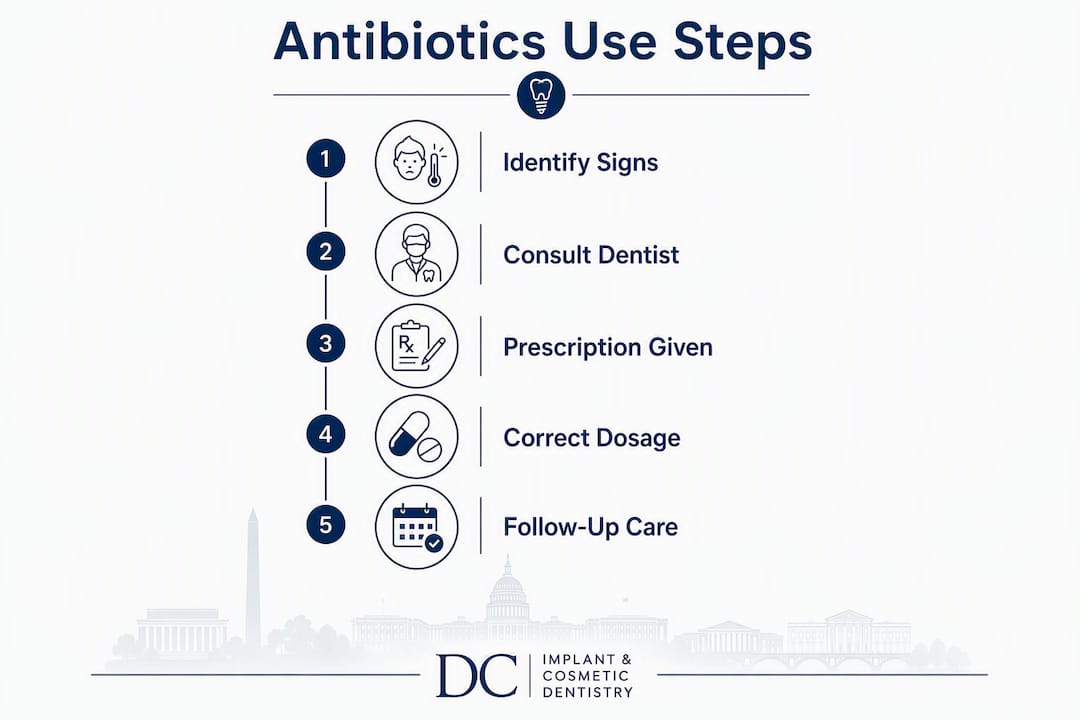
Antibiotics for a tooth infection are appropriate when the infection has spread beyond the tooth itself, producing systemic signs like fever, malaise, or rapidly expanding swelling. When a dentist can perform definitive treatment right away, such as draining an abscess, doing a root canal, or extracting the tooth, antibiotics are usually not needed at all. When they are indicated, ADA guidance points to amoxicillin or penicillin VK as the standard first-line choices. For patients with a penicillin allergy, azithromycin or clindamycin (used cautiously) are the typical alternatives.
The short version:
- Antibiotics ARE indicated when you have fever, spreading facial swelling, difficulty swallowing, or other signs the infection has gone systemic.
- Antibiotics are NOT a substitute for the dental procedure that actually removes the infection source.
- First-line drugs: amoxicillin 500 mg three times daily or penicillin VK 500 mg four times daily, typically for 3–7 days.
- Penicillin allergy alternatives: azithromycin or clindamycin (clindamycin carries serious risks and should be reserved for specific scenarios).
Table of Contents
- What is a tooth abscess and how do antibiotics fit in?
- Which antibiotics are used for dental infections?
- When do dentists actually prescribe antibiotics for a tooth infection?
- How to take antibiotics if your dentist prescribes them
- What are the risks and side effects of dental antibiotics?
- What do ADA and CDC guidelines say about dental antibiotic use?
- How quickly should antibiotics work for a tooth infection?
- When should you call your dentist or go to the ER?
- Key Takeaways
- The case for treating the source, not just the symptoms
- Dc-dentistry can treat your tooth infection in Washington, DC
- Useful sources
What is a tooth abscess and how do antibiotics fit in?
A dental abscess forms when bacteria invade the pulp of a tooth, usually through deep decay, a cracked tooth, or a failed restoration. The pulp tissue dies, bacteria multiply, and pus accumulates at the root tip (periapical abscess) or in the surrounding gum tissue (periodontal abscess). The result is the classic combination of throbbing pain, swelling, and sometimes fever.
Antibiotics address the bacterial spread into surrounding tissues and the bloodstream. They do not drain the pus, remove the dead pulp, or eliminate the bacterial reservoir inside the tooth. That is the job of definitive, conservative dental treatment (DCDT): incision and drainage, root canal therapy, or tooth extraction when the tooth cannot be saved. The ADA's evidence summary is direct on this point: antibiotics are reserved for systemic signs, not as a routine add-on to every dental infection.
While you are waiting for your appointment, pain management matters. For inflammation-driven tooth pain, ibuprofen typically outperforms acetaminophen because it targets the prostaglandin pathway driving the swelling. Alternating ibuprofen and acetaminophen can improve control when either alone falls short, per Cleveland Clinic guidance. Choose based on your medical history: avoid ibuprofen with uncontrolled hypertension, bleeding risk, or significant kidney disease, and avoid acetaminophen if you have serious liver disease.
Pro Tip: If you are unsure whether your symptoms warrant antibiotics, look for systemic signs: fever above 100.4°F, swelling that is spreading toward your eye or neck, or difficulty swallowing. Those are the red flags that change the calculus.
Which antibiotics are used for dental infections?
The choice of antibiotic depends on whether you have a penicillin allergy, whether first-line therapy has already failed, and whether anaerobic bacteria are likely driving the infection. The ADA chairside guide provides the dosing framework most U.S. dentists follow.
| Antibiotic | Typical Dose & Duration | Common Side Effects | Best Suited For |
|---|---|---|---|
| Amoxicillin | 500 mg three times daily, 3–7 days | Nausea, diarrhea, rash | First-line; no penicillin allergy |
| Penicillin VK | 500 mg four times daily, 3–7 days | Nausea, rash | First-line alternative to amoxicillin |
| Azithromycin | 500 mg day 1, then 250 mg once daily on days 2–5 | GI upset, QT prolongation risk | Penicillin allergy (mild/moderate) |
| Clindamycin | 300 mg four times daily, 3–7 days | Diarrhea, C. difficile risk | Penicillin allergy (when others unavailable) |
| Metronidazole | 500 mg three times daily, 7 days | Metallic taste, nausea | Adjunct for anaerobic coverage |
| Amoxicillin-clavulanate | 500/125 mg twice daily, 3–7 days | GI upset, diarrhea | First-line failure; broader coverage needed |
A few things worth knowing beyond the table:
- Amoxicillin vs. augmentin: Amoxicillin covers most oral pathogens in a straightforward abscess. Amoxicillin-clavulanate (Augmentin) adds beta-lactamase inhibition, making it useful when the infection has not responded to amoxicillin alone or when mixed flora is suspected. It is not a first-line choice for uncomplicated cases.
- Clindamycin carries a specific warning. The ADA chairside guide explicitly cautions that clindamycin should be reserved for situations where safer alternatives are not available, due to a higher rate of Clostridioides difficile colitis compared to other options.
- Metronidazole is rarely used alone for dental infections. It is most useful as an add-on to amoxicillin when anaerobic bacteria are a concern, particularly in more complex or persistent infections.
When do dentists actually prescribe antibiotics for a tooth infection?
The 2019 evidence-based clinical practice guideline is clear: routine antibiotics are not recommended for symptomatic irreversible pulpitis or many pulpal and periapical conditions when definitive dental treatment is immediately available. The decision hinges on whether the infection is localized or systemic.
Antibiotics are indicated when you have:
- Fever (typically above 100.4°F) or general malaise
- Rapidly expanding facial or neck swelling
- Difficulty breathing or swallowing
- Swollen lymph nodes in the neck
- Signs of spreading cellulitis beyond the immediate area of the tooth
- Systemic compromise (immunosuppression, uncontrolled diabetes, etc.)
Antibiotics are generally NOT indicated when:
- The abscess is localized and definitive dental treatment is available right away
- There is no fever, no spreading swelling, and no systemic signs
- The dentist can drain the infection or begin root canal treatment at the same visit
The decision logic is straightforward: if your dentist can treat the source today, the procedure takes priority and antibiotics may not be needed at all. If definitive care is delayed, or if you show systemic signs, antibiotics become part of the plan alongside urgent referral.
How to take antibiotics if your dentist prescribes them
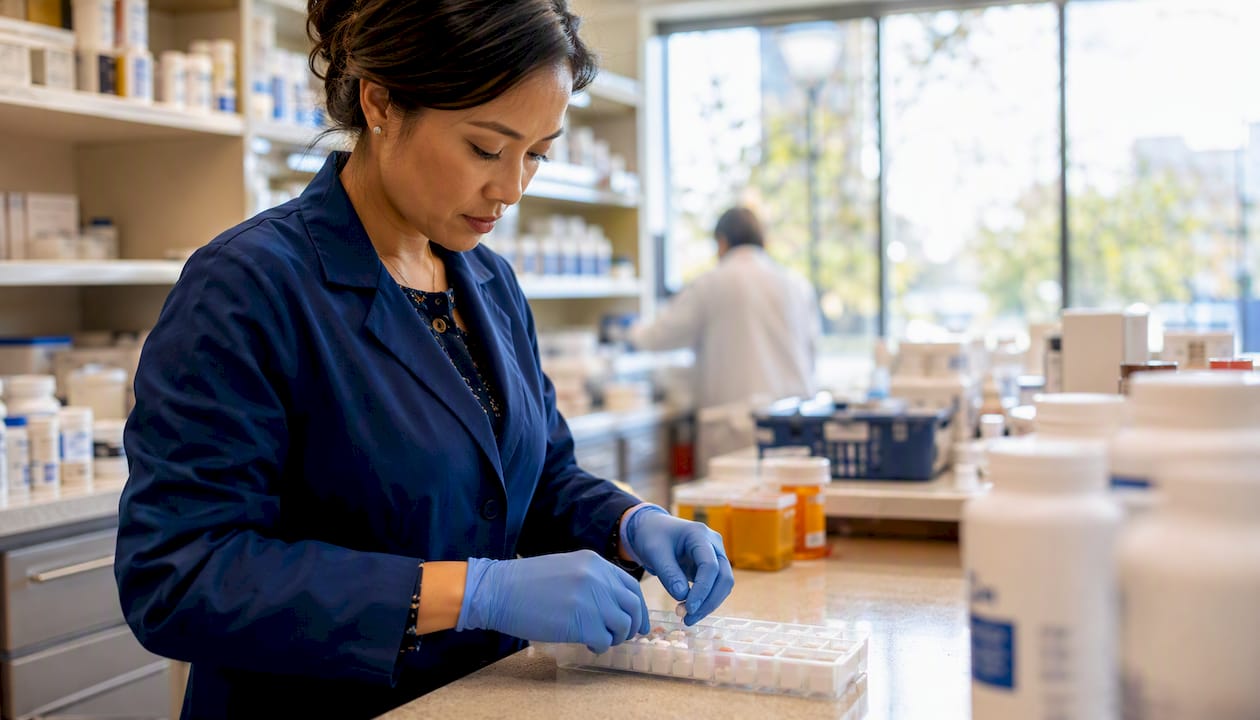
Dosing for the most common dental antibiotics follows the ADA chairside guide ranges summarized in the table above. Duration is typically 3–7 days for most agents, with metronidazole often prescribed for a full 7 days.
| Drug | Timing with food | Missed dose guidance |
|---|---|---|
| Amoxicillin | Can be taken with or without food | Take as soon as you remember; skip if next dose is close |
| Penicillin VK | Best on an empty stomach | Same as above |
| Azithromycin | With or without food | Take same day if remembered; do not double up |
| Clindamycin | With food to reduce GI upset | Take as soon as remembered; do not double |
| Metronidazole | With food; avoid alcohol entirely | Take as soon as remembered; avoid alcohol throughout course |
One guideline point that surprises most patients: CDC dental stewardship guidance allows stopping antibiotics 24 hours after complete resolution of systemic signs, rather than finishing a preset 7-day supply. This applies when you are being re-evaluated by your dentist and they confirm the systemic signs have cleared. Do not stop on your own without that confirmation.
Your dentist should schedule a reassessment at roughly 72 hours to confirm the infection is responding and to arrange definitive dental care if it has not already been completed.
Pro Tip: Metronidazole and alcohol are a genuinely dangerous combination, not just a mild caution. Even small amounts of alcohol can trigger severe nausea, vomiting, and flushing. Avoid alcohol for the entire course and 48 hours after the last dose.
What are the risks and side effects of dental antibiotics?
Most people tolerate a short course of amoxicillin or penicillin VK without significant problems. GI side effects (nausea, loose stools, mild cramping) are the most common complaint across the class and usually resolve on their own. Taking the antibiotic with food helps with most of them.
The more serious risks to know:
- Allergic reactions: Hives, facial swelling (angioedema), or throat tightening after the first dose are signs of a hypersensitivity reaction. Stop the drug and call your dentist immediately. Anaphylaxis (throat closure, severe drop in blood pressure) is a medical emergency; call 911.
- C. difficile colitis: Clindamycin carries a meaningfully higher risk of C. difficile infection than other dental antibiotics. Symptoms include severe, watery diarrhea, abdominal cramping, and fever. If this develops, stop the antibiotic and seek medical care promptly.
- Drug interactions: Metronidazole interacts with warfarin (increases bleeding risk) and with alcohol. Azithromycin can prolong the QT interval, which matters if you take other QT-prolonging medications. Always tell your dentist your full medication list.
What do ADA and CDC guidelines say about dental antibiotic use?
The short answer: both organizations want dentists to prescribe far fewer antibiotics than they currently do. Guideline reviews have found that 30–85% of dental antibiotic prescriptions are suboptimal or not clinically indicated, which is a striking range that reflects how variable prescribing habits have been across practices.
The CDC's dental antibiotic stewardship checklist translates this into practical steps: use narrow-spectrum agents first (amoxicillin before amoxicillin-clavulanate), prescribe for the shortest effective duration (3–7 days), reassess at 72 hours, and consider delayed prescriptions when DCDT is not immediately available but the risk of progression is low.
Delayed prescriptions, a written or electronic script the patient fills only if symptoms worsen, are a legitimate stewardship tool. They avoid unnecessary antibiotic exposure while giving patients a safety net.
Pro Tip: If your dentist does not prescribe antibiotics for a localized abscess they are treating that day, that is not an oversight. It is evidence-based practice. Ask them to explain the plan; a good dentist will.
How quickly should antibiotics work for a tooth infection?
Systemic signs typically respond faster than local ones. Fever and malaise often improve within 24–48 hours of starting antibiotics. Facial swelling and localized pain take longer, sometimes several days, and may not fully resolve until the dental procedure is completed.
What to watch for:
- Improvement by 48–72 hours: Fever down, swelling stable or reducing, feeling less unwell. This is the expected trajectory.
- No improvement or worsening by 72 hours: This requires urgent re-evaluation. The antibiotic may not be covering the causative organism, or the infection may have progressed to a space that needs surgical drainage.
- Swelling spreading toward the eye or neck: Do not wait for the 72-hour mark. Seek emergency care the same day.
Definitive dental treatment is what closes the loop. A root canal removes the infected pulp; an extraction removes the entire tooth and its bacterial reservoir. Either way, the procedure is what produces lasting resolution, not the antibiotic course alone.
When should you call your dentist or go to the ER?
Some symptoms mean the infection has moved beyond what outpatient antibiotics alone can manage. Recognize these red flags and act on them immediately.
Go to the emergency room or call 911 if you have:
- Difficulty breathing or swallowing
- Drooling because swallowing is too painful
- Swelling extending to the floor of the mouth, neck, or below the jaw
- High fever (above 103°F) that is not responding to medication
- Trismus (inability to open your mouth) combined with rapidly worsening swelling
- Confusion, extreme weakness, or signs of sepsis
Call your dentist urgently (same day) if you have:
- Fever with facial swelling, even if you can still swallow
- Swelling that has visibly increased over a few hours
- Pulsating pain that is not controlled by over-the-counter medication
- Any tooth infection signs that appeared or worsened after starting antibiotics
When you call, tell the triage staff: when symptoms started, whether you have fever, whether swallowing or breathing is affected, and whether you have already started antibiotics.
Key Takeaways
Antibiotics for a tooth infection are indicated for systemic signs like fever and spreading swelling, not for every localized abscess, and they must always be paired with definitive dental treatment that removes the infection source.
| Point | Details |
|---|---|
| Antibiotics have a narrow indication | Prescribe only when systemic signs (fever, spreading swelling, malaise) are present or DCDT is unavailable. |
| First-line drugs are amoxicillin or penicillin VK | Typical dose: amoxicillin 500 mg three times daily or penicillin VK 500 mg four times daily for a few days as needed. |
| Definitive dental treatment is required | Antibiotics reduce spread but do not remove the infected tissue; a root canal, drainage, or extraction is needed for full resolution. |
| Clindamycin carries serious risks | Reserve clindamycin for specific penicillin-allergy scenarios due to elevated C. difficile risk. |
| Dc-dentistry offers same-day urgent evaluations | Washington, DC patients can book a same-day appointment for abscess assessment, drainage, root canal, or extraction. |
The case for treating the source, not just the symptoms
There is a persistent gap between what patients expect from antibiotics and what the evidence actually shows. People in pain want a prescription because it feels like action. And dentists, under time pressure and patient expectations, have historically obliged at rates the data now shows were far too high.
The stewardship movement is not about being stingy. It is about recognizing that a 5-day course of amoxicillin for a localized abscess that a dentist could drain in 20 minutes is not just unnecessary. It is a missed opportunity to actually fix the problem, and it contributes to resistance patterns that affect everyone.
What I find most underappreciated in the public conversation about dental infections is the speed at which a localized abscess can become a life-threatening deep space infection. The anatomical pathways from a lower molar to the floor of the mouth, and from there to the neck and mediastinum, are short. Most people who end up in the ICU with Ludwig's angina did not think their toothache was serious enough to act on quickly. That is the real argument for urgent dental evaluation, not just antibiotics.
If you have systemic signs, get seen today. If you have a localized abscess, get the procedure done. Either way, the answer is a dentist's chair, not a pharmacy counter.
Dc-dentistry can treat your tooth infection in Washington, DC
A tooth infection that has reached the point of systemic signs needs more than a prescription. It needs a dentist who can evaluate the abscess, drain it if needed, and perform the root canal or extraction that removes the source on the same visit.
Dc-dentistry, led by Dr. Kambez Shukoor, a U.S. Navy veteran with over 200 five-star reviews, offers same-day urgent appointments in Washington, DC. The practice performs in-office incision and drainage, root canal therapy, and extractions, and for patients who lose a tooth to infection, dental implant options are available to restore full function. Financing through CareCredit and Lending Tree is available for procedures that require it. Call the office or book online to request a same-day evaluation. Do not wait for a localized infection to become a systemic one.
Useful sources
The guidance in this article reflects current evidence-based practice in the United States. Your dentist will tailor treatment to your individual health history, medications, and clinical findings.
- ADA: Antibiotics for Dental Pain and Swelling — ADA evidence summary on when antibiotics are and are not indicated for common dental conditions.
- ADA Chairside Guide: Antibiotics for Dental Patients — Specific dosing ranges, duration guidance, and allergy alternatives used in U.S. dental practice.
- CDC Dental Antibiotic Stewardship Checklist — Practical prescribing checklist covering narrow-spectrum selection, duration, follow-up, and stopping rules.
- 2019 Evidence-Based Clinical Practice Guideline on Antibiotic Use for Urgent Dental Management — Systematic review and panel recommendations on antibiotic use for pulpal and periapical conditions.
- Cleveland Clinic: Acetaminophen vs. Ibuprofen — Consumer-facing comparison of OTC pain relievers, including guidance on inflammation-driven dental pain.
- WebMD: Acetaminophen vs. Ibuprofen — Side effect profiles and safety precautions for both common pain relievers.