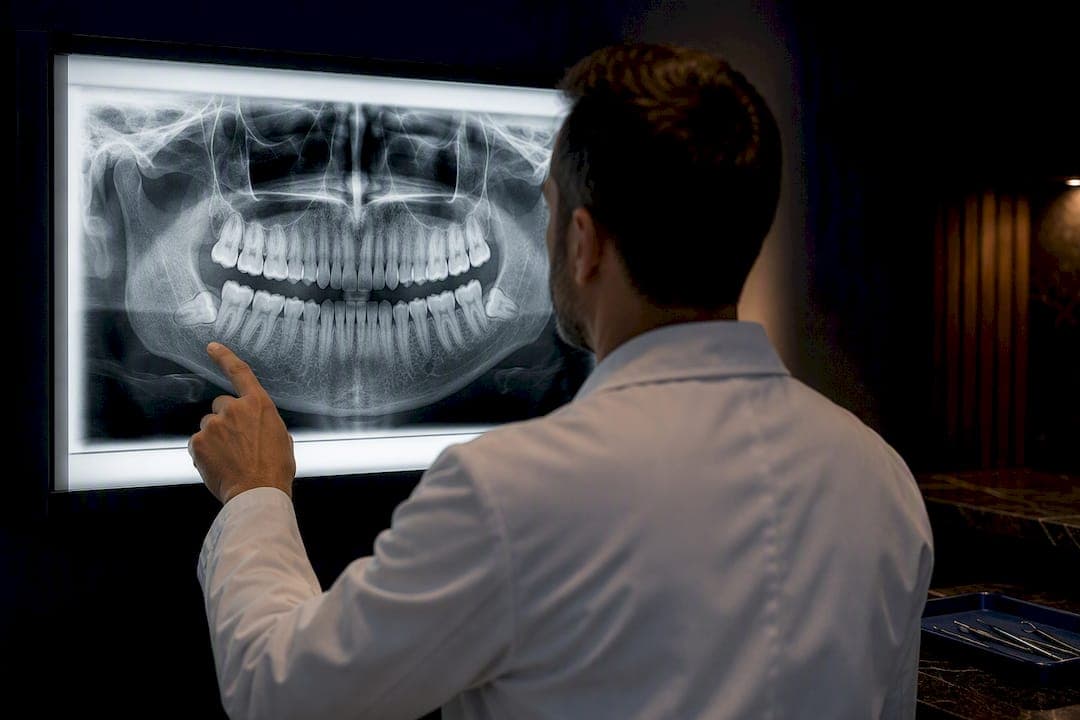
Wisdom tooth pain almost always traces back to one of two things: a tooth pushing through crowded space with nowhere to go, or an infected flap of gum tissue trapping food and bacteria. Start with ice, a saltwater rinse, and an NSAID, then book a dental exam within a day or two. If you develop fever, swelling that spreads toward your neck, or trouble breathing or swallowing, skip the home remedies and get emergency care immediately.
TL;DR:
- Fever, spreading swelling, or difficulty breathing and swallowing require immediate emergency care and should not be managed at home.
- Home remedies like ice, saltwater rinses, and NSAIDs effectively reduce pain and swelling during the first 24 to 48 hours.
- Persistent pain, pus, bad taste, or bleeding after 24 to 48 hours warrant prompt dental evaluation and possible antibiotic treatment or extraction.
- Wisdom tooth infections can progress into deep tissue spaces if untreated, with symptoms worsening rapidly, especially in immunocompromised individuals.
- Routine checkups and X-rays help identify problematic wisdom teeth before they cause pain or infection, reducing the need for urgent interventions.
Table of Contents
- Symptoms of Wisdom Tooth Pain: What's Actually Going On
- Home Remedies for Tooth Pain That Actually Work
- When to See a Dentist for Wisdom Teeth Pain
- Professional Treatment Options and Recovery Timeline
- Preventing Future Wisdom Tooth Problems
- How DC Implant & Cosmetic Dentistry Handles Wisdom Tooth Emergencies
- Why Most Advice on Wisdom Tooth Pain Misses the Point
- Get Same-Day Relief for Wisdom Tooth Pain in DC
- Sources
Symptoms of Wisdom Tooth Pain: What's Actually Going On
Wisdom teeth, the third molars in the very back of your mouth, typically break through the gums sometime during late adolescence. Many people have a jaw that's too small to fit them comfortably, which often causes wisdom teeth to become impacted, angled sideways, or stuck halfway through the gum line.
That partial eruption creates a perfect trap door for bacteria. When food and plaque collect under a loose gum flap over the tooth, you get pericoronitis, a localized infection that's the single most common reason people end up searching for wisdom tooth pain relief in the first place.
Common symptoms include:
- Dull, throbbing jaw pain that worsens when you chew
- Red, swollen, or bleeding gums around the back molar
- A persistent bad taste or breath that brushing doesn't fix
- Trouble opening your mouth all the way (dentists call this trismus)
- Swelling that extends toward the cheek or jawline
Not every wisdom tooth causes trouble. Plenty erupt cleanly and never hurt. But once you notice pus, a foul taste, or swelling localized right around one back tooth, pericoronitis is the likely diagnosis, and it tends to flare up in cycles rather than resolve on its own.
Home Remedies for Tooth Pain That Actually Work
While you wait for a dental appointment, a few short-term steps can knock the edge off the pain without doing any harm.
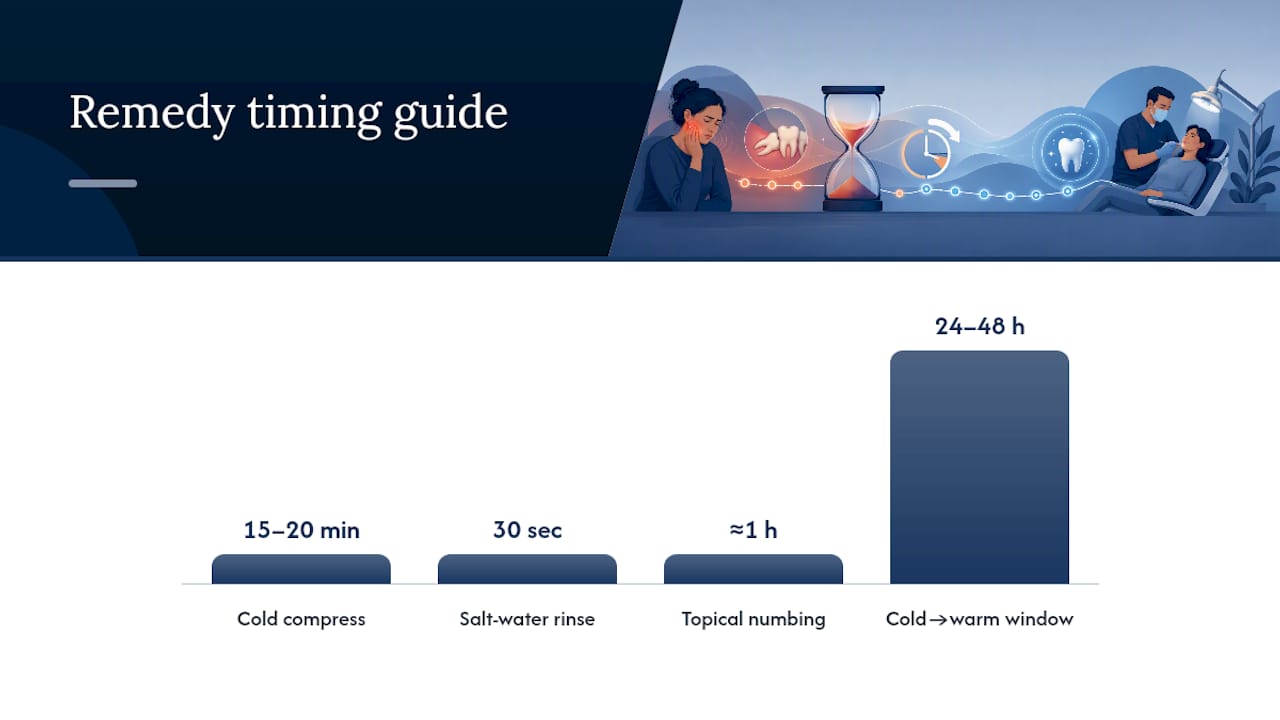
- Ice first, heat later. Apply a cold compress to the outside of your jaw for 15 to 20 minutes at a time during the first 24 to 48 hours to bring swelling down. After that window, switch to warm compresses, which improve blood flow and can ease lingering stiffness.
- Rinse with warm salt water. Mix about half a teaspoon of salt into a cup of warm water and swish for 30 seconds, three to four times a day. Salt water helps flush bacteria and debris out of the gum flap without irritating the tissue the way alcohol-based mouthwash can.
- Take an NSAID, not just acetaminophen. Ibuprofen and similar NSAIDs reduce the inflammation driving the pain, not just the sensation of it. Follow the label dosing, and skip NSAIDs if you have a bleeding disorder, stomach ulcers, or kidney issues, in which case acetaminophen is the safer choice.
- Use topical benzocaine or clove oil sparingly. Both can numb the area for an hour or so. They're a stopgap, not a treatment, and benzocaine shouldn't be used in large amounts or by anyone with a known sensitivity.
- Change what and how you eat. Stick to soft foods, chew on the opposite side, and avoid nuts, popcorn, and anything that lodges in tight spaces.
Pro Tip: Smoking doesn't just slow healing, it actively raises your risk of complications like dry socket if extraction is eventually needed, so cutting back now saves you pain later.
If you'd rather see a fuller breakdown of these steps, DC Implant & Cosmetic Dentistry has a detailed guide to toothache relief, and this step-by-step home care resource covers similar ground from a different angle.
When to See a Dentist for Wisdom Teeth Pain
Home care buys you time. It doesn't fix an infected gum flap or an impacted tooth, and waiting too long on the wrong symptoms can turn a routine problem into an emergency.
Get to an emergency room or urgent care immediately if you notice:
- Fever, chills, or feeling generally sick along with tooth pain
- Swelling that spreads down your neck or under your jaw
- Trouble breathing or swallowing
- Pain that's rapidly getting worse over a few hours
- Trismus severe enough that you can barely open your mouth
Call a dentist within a day or two, rather than waiting for your next routine visit, if you have:
- Severe pain that hasn't eased after 24 to 48 hours of home care
- Pus, a persistent foul taste, or bad breath that won't go away
- Bleeding from the gums that doesn't stop
At an urgent dental visit, expect an exam and X-rays to see exactly how the tooth is positioned, followed by irrigation to clean out the infected area if pericoronitis is confirmed. Depending on severity, that's paired with antibiotics or a referral for extraction. Left untreated, pericoronitis can progress into deeper tissue spaces near the airway, which is exactly why the fever and swelling checklist above isn't optional.
Professional Treatment Options and Recovery Timeline
Mild pericoronitis often resolves with in-office debridement: a dentist cleans out the bacteria and debris trapped under the gum flap, then gives you antiseptic rinse instructions to keep it that way. Antibiotics come into play specifically when there's evidence the infection is spreading beyond the local site, not as a default for every sore wisdom tooth.
When a tooth is impacted, recurrently infected, or simply never going to erupt properly, extraction is usually the more durable fix. It's typically done as outpatient oral surgery under local anesthesia or light sedation, and most people are back to normal activity within a few days.
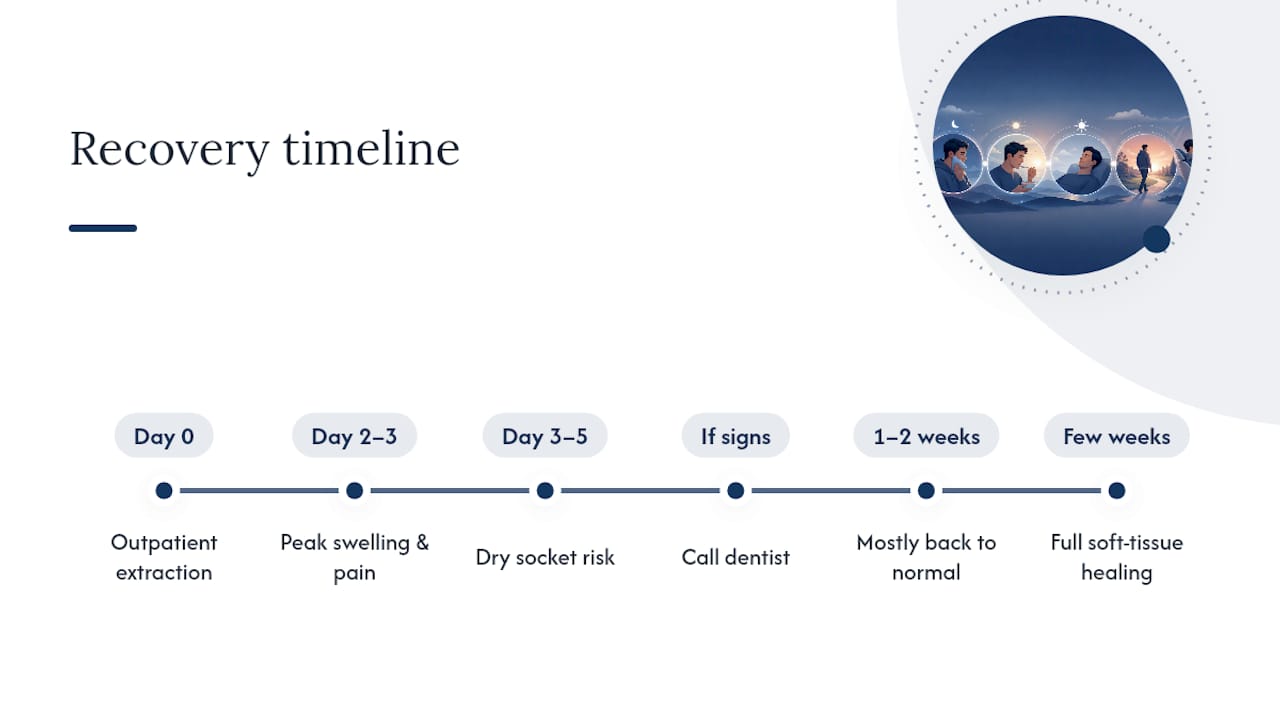
Recovery by the numbers: Swelling and discomfort peak around day two to three after extraction, then steadily improve. Most patients feel largely normal within one to two weeks, though full soft-tissue healing can take a few weeks longer.
The complication to watch for is dry socket, which happens when the blood clot protecting the extraction site gets dislodged. It shows up most often in the first three to five days and causes a sharp, radiating pain that's very different from normal post-surgical soreness. Avoiding straws, spitting, and smoking during that window is the single best way to prevent it.
Call your dentist back if you notice a fever that develops after surgery, pain that gets worse instead of better after day three or four, or numbness in the lip or chin that doesn't resolve, which can signal nerve irritation. More on what recovery and staged treatment look like is covered in DC Implant & Cosmetic Dentistry's wisdom tooth removal guide.
Preventing Future Wisdom Tooth Problems
You can't stop a wisdom tooth from being crowded, but you can cut down how often it flares up.
- Rinse the back of your mouth with an antiseptic mouthwash daily once a wisdom tooth starts erupting, targeting the gum flap specifically.
- Brush at an angle that actually reaches your last molar. Most people brush right past it.
- Get routine checkups and X-rays. That's how a dentist decides whether a wisdom tooth needs to come out before it ever causes a problem, rather than after.
- Avoid smoking, stay hydrated, and steer clear of sticky or hard foods that pack into that back corner of your mouth.
More detail on daily care habits that support this lives in DC Implant & Cosmetic Dentistry's oral hygiene guide.
How DC Implant & Cosmetic Dentistry Handles Wisdom Tooth Emergencies
The workflow is straightforward: a clinical exam paired with digital X-rays to see exactly where the tooth sits and whether infection has spread, followed by same-day triage. If it's a localized flap infection, that often means cleaning and rinse instructions on the spot. If it's impacted or recurrently infected, extraction gets scheduled without the usual weeks-long wait.
Dr. Kambez Shukoor, a U.S. Navy veteran, leads that process, and the practice has built over 200 five-star reviews largely on getting people seen fast when they're in real pain.
Patients who show up in acute pain rarely need a long workup. They need an accurate read on whether this is infection or impaction, and a same-day plan for either.
Bring a list of current medications and your insurance card if you have one. Same-day scheduling means urgent cases don't sit in a queue behind routine cleanings.
Why Most Advice on Wisdom Tooth Pain Misses the Point
Most articles on this topic bury the one thing readers actually need: a clear decision tree. They'll explain what pericoronitis is in exhaustive detail, then leave you guessing whether your specific swelling qualifies as "get to an ER" or "wait for a callback."
Here's my take. The severity hierarchy matters more than the diagnosis itself. Whether it's impaction or infection driving your pain barely changes what you do in the first 24 hours; ice, salt water, an NSAID. What changes everything is whether fever or spreading swelling shows up, because that's the line between a dentist's office and an emergency room.
The other place conventional advice falls short is timing. People wait a week hoping pain will resolve on its own, when 24 to 48 hours of no improvement is already the signal to call. Pericoronitis doesn't reliably self-resolve, it cycles. A quiet week rarely means it healed. It usually means it's regrouping.
Prioritize the red flags first, home care second, and diagnosis a distant third. That order saves people from both unnecessary ER visits and, more often, from waiting too long on infections that needed same-day attention.
— Jake
Get Same-Day Relief for Wisdom Tooth Pain in DC
A general urgent care visit can rule out a medical emergency, but it can't clean out an infected gum flap or pull a problem tooth. DC Implant & Cosmetic Dentistry offers same-day appointments specifically for this: an exam, digital X-rays, and either in-office debridement or a scheduled extraction depending on what your tooth actually needs.

Call ahead with your symptoms and how long they've lasted, that helps the team prioritize you if it sounds urgent. Bring your insurance card if you have one; the practice also works with financing options like CareCredit and Lending Tree for anyone facing extraction or oral surgery costs out of pocket. With over 200 five-star reviews behind Dr. Kambez Shukoor's practice, you're not gambling on an unknown provider while you're already in pain. If pain has you searching for answers right now, book a same-day evaluation and get a straight answer on what's actually happening in your mouth.
This article is general information, not a substitute for advice from a qualified doctor. Consult a qualified healthcare professional about your own circumstances before acting on anything here.