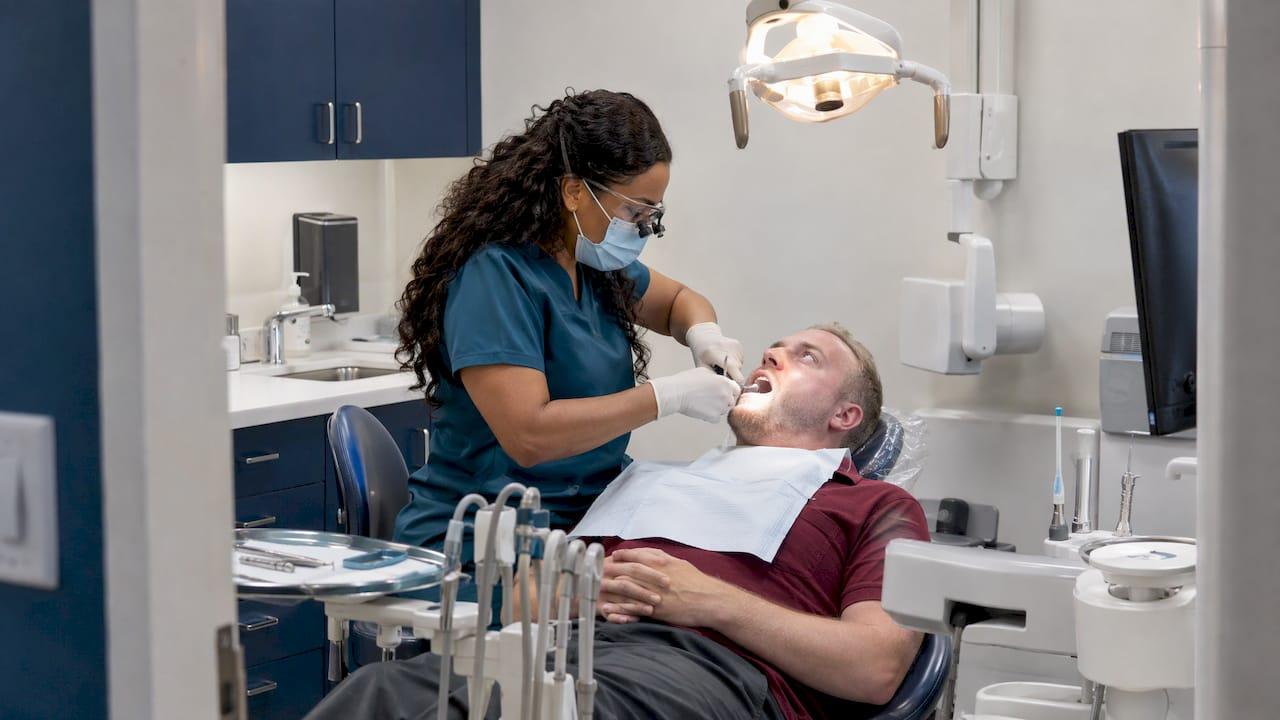
Yes, dentists do same-day extractions. If a tooth is infected, broken beyond repair or loose enough to be a risk, many offices can examine it, image it and remove it in a single visit. Whether that is the right call depends on the tooth, the infection and your health history. At DC Implant & Cosmetic Dentistry in Washington, DC, we offer same-day appointments, and exams, imaging and extractions all happen in our office.
This guide explains when a same-day extraction is appropriate, what happens during the appointment, what drives the price, and how to care for the site afterward.
TL;DR
- A same-day extraction is possible when the tooth is clearly not savable and the dentist can safely remove it at the visit. Complex cases may need a specialist.
- Severe pain, facial swelling, a badly cracked tooth or a nonsalvageable infected tooth are the usual reasons to call the same day.
- The visit follows a set order: exam and X-ray, numbing, removal, gauze, and written aftercare.
- Cost depends on whether the extraction is simple or surgical, plus imaging and any bone grafting or replacement. Ask for a written treatment plan before you start.
- After the extraction, protect the blood clot for the first 24 hours: no swishing, spitting, straws or smoking.
Table of Contents
- Do dentists do same-day extractions?
- When a tooth problem is an emergency
- What happens during a same-day extraction appointment
- How much does a same-day extraction or emergency dentist cost?
- Aftercare: the first 24 hours and the first week
- What to do about the gap
- Our perspective
- Need a tooth looked at today?
- FAQ
- Sources
Do dentists do same-day extractions?
They do. A general dentist can often remove a tooth the same day it is diagnosed, especially when the tooth is visible above the gumline and the roots are straightforward. The more complicated the tooth, the more planning it needs.
The Cleveland Clinic notes that providers prefer to save a natural tooth whenever possible. Extraction is usually recommended for a fractured tooth, advanced gum disease, an impacted tooth, crowding or severe decay. It also says more complex cases are usually referred to oral and maxillofacial surgeons or periodontists.
That last point is why the word "same-day" has limits. It describes how fast you are seen, not a promise that every tooth comes out in one sitting. A good office examines first, then tells you plainly whether the tooth can come out today and what happens next.
What decides whether it can happen today
- The tooth itself. A fully erupted tooth with a clear path is a different job from a tooth broken at the gumline or an impacted wisdom tooth.
- Imaging. An X-ray shows root shape, nearby nerves and sinuses, and the bone around the tooth. Without it, nobody should start.
- Infection. Swelling and abscesses are treated as urgent. Our guide to abscessed tooth symptoms and when to seek same-day care or the ER explains the warning signs.
- Your health. Medications, medical conditions and allergies shape how the visit is planned. Tell the office about all of them when you call.
- Your plan for the empty space. If you want an implant later, the way the tooth is removed and whether the socket is protected with bone grafting both matter.
When a tooth problem is an emergency
Not every sore tooth needs to come out today. The Cleveland Clinic's dental emergency guidance lists these as emergencies: severe toothache, a badly cracked tooth, a knocked-out or extruded tooth, a dental abscess with swelling of the face and jaw, a lost or broken restoration and severe soft tissue injury. It treats a dull or mild toothache, a small chip or crack, broken braces and minor soft tissue injuries as non-emergencies.

For extraction specifically, the Merck Manual Professional Edition names a significant infection in a nonviable, nonsalvageable tooth, and marked tooth mobility from infection, gum disease or trauma that creates a risk of aspiration.
Signs to call the same day
- Throbbing pain that keeps you awake or does not ease with over-the-counter pain relievers
- Swelling in the cheek, jaw or face
- A bad taste or a pimple-like bump on the gum
- A tooth that has cracked below the gumline or has become loose
- A tooth knocked out of its socket (see what to do in the first 60 minutes)
If swelling spreads toward your eye or neck, or you have trouble breathing or swallowing, go to an emergency room. Our article on what an ER can and cannot do for a dental emergency explains why you will usually still need a dentist afterward. While you wait for your visit, our steps for severe toothache relief right now can help you stay comfortable.
What happens during a same-day extraction appointment
The exact steps vary by tooth, but the visit follows a predictable order.
- Short history and exam. You describe your symptoms and the dentist reviews your medications, allergies and medical history. The dentist checks the tooth, the gums and the surrounding area.
- X-rays. Imaging confirms the tooth cannot be saved and shows how the roots sit. At our practice, thorough imaging and up-front treatment planning are part of how we work.
- Your options and the plan. If the tooth can be restored, the dentist should say so. If it cannot, you hear what the removal involves and what comes after. We give clear, written treatment plans.
- Numbing. The area is numbed with a local anesthetic. You may feel a brief pinch from the injection, then pressure rather than pain during the procedure.
- Removal. In a simple extraction, the dentist loosens a visible tooth and lifts it out. In a surgical extraction, the gum may be opened and the tooth sectioned or bone adjusted, and stitches may be placed.
- Gauze and instructions. You bite on gauze to control bleeding and leave with written aftercare steps and a plan for follow-up.
Most people drive themselves home after a local anesthetic, but plan the rest of the day to be quiet. If your case calls for a surgical approach or deeper sedation, ask in advance whether you will need a ride.
Simple versus surgical extraction
| Simple extraction | Surgical extraction | |
|---|---|---|
| Typical tooth | Fully visible, intact crown | Broken at the gumline, impacted or with curved roots |
| Approach | Loosen and lift out | Gum opened, tooth may be sectioned |
| Stitches | Usually not needed | Often placed |
| Same-day likelihood | High, if imaging is clear | Depends on complexity and the infection |
| Recovery | Typically shorter | Typically longer, with more swelling |
How much does a same-day extraction or emergency dentist cost?
The honest answer is that the price depends on the tooth. We do not publish fixed prices for extractions, because the right quote comes after the exam and X-ray. Here is what moves the number up or down:
- Simple or surgical. Surgical extractions take more time and skill, and they cost more.
- Imaging. An exam and X-rays are usually part of an emergency visit.
- Emergency timing. Some offices add fees for after-hours care. Ask when you call.
- What comes next. A bone graft to preserve the socket, an implant, a bridge or a denture is billed separately from the removal.
- Insurance and financing. Dental plans often cover part of a medically necessary extraction, depending on your plan. We offer financing options, including CareCredit and Lending Tree, for higher-cost care.
When you call any office, ask for the cost of the exam, X-ray and extraction before you sit down, and for a written estimate if the plan includes more than one step. Our written treatment plans are built for exactly that.
How prices work in other countries
Because readers come to this guide from around the world, a few reference points outside the US show how much the setting matters. In England, NHS charges rose on 1 April 2026 to £27.90 for Band 1, £76.60 for Band 2, which includes extractions, and £332.10 for Band 3, according to Going Private UK. The same source puts private extractions at one national provider between £80 and £155. For emergencies, DentistCost.co.uk reports private simple emergency extractions at £150 to £250 in the UK (£200 to £400 in London) and surgical ones at £250 to £500 (£400 to £700 in London), with out-of-hours rates typically 50% to 100% higher. These are UK figures and do not translate to US prices.
Aftercare: the first 24 hours and the first week
Healing starts with a blood clot in the socket. Protecting it is the main job for the first day.
The first hours
The Merck Manual recommends biting on a tightly folded, slightly dampened gauze pad for 3 to 4 hours after the extraction, changing pads every 30 to 60 minutes at first. So the answer to "how long should I bite on gauze" is: several hours in total, with fresh pads early on, not a single pad you leave in place. If your dentist gives different instructions for your case, follow those.

The first 24 hours
To protect the clot and prevent dry socket, the same source says not to swish, spit, suck on anything or drink from a straw for 24 hours, and to avoid smoking for a week if possible. After 24 hours, gentle warm salt water rinses may begin.
Days 2 to 7
- Swelling may peak around day 3 or 4, and light bleeding or oozing can continue for several days, according to the Merck Manual.
- The same source advises arranging a follow-up with a dentist in 1 to 2 days.
- Eat soft, cool foods at first and chew on the other side.
- Keep brushing your other teeth, and keep the site clean as your dentist instructs.
For a longer timeline, see our day-by-day extraction aftercare guide. If you had a wisdom tooth removed, the wisdom teeth recovery timeline covers what is different.
When to call us
Call the office if pain gets worse several days after the extraction instead of better, if bleeding will not slow with firm gauze pressure, or if you notice a foul taste, fever or spreading swelling. Our guide to dry socket symptoms helps you tell a normal ache from one that needs a visit.
What to do about the gap
A missing tooth does not have to stay missing. Planning the replacement before the extraction gives the best chance of a smooth result, because the way the socket is handled can affect later options. Our article on extraction healing and implant timing explains how bone healing affects when an implant can go in.
We can discuss several routes: a single implant, an implant bridge, implant-supported dentures or a conventional bridge or crown. For several teeth, we also offer Teeth in a Day and All-on-4 options. Which one fits depends on your bone, your gums and your goals, and we decide that from your imaging, not a guess.
Our perspective
Most people who call about a same-day extraction are in pain and short on time. They do not want a lecture. They want to know whether the tooth can be saved, whether it can come out today, and what it will cost.
That is why we keep everything under one roof. Exams, imaging, extractions, bone grafting and implants all happen in our Washington, DC office, so you are not bounced between providers while a tooth hurts. When the work is done in one place, the plan for the empty space can be made before the tooth comes out, not after.
Dr. Kambez Shukoor is a U.S. Navy veteran, and his military medical experience shapes how we work: calm triage, thorough imaging, and a plan that is written down. Every patient leaves knowing what we found, what we recommend and what each step involves.
If your tooth can be saved, we will say so. If it cannot, we will take it out gently and help you think ahead to what comes next.
Jake
Need a tooth looked at today?
We offer same-day appointments for urgent dental problems at our Washington, DC practice. You will get an exam, imaging and a clear written plan, and if extraction is the right answer, we can talk through timing and replacement options. See our extraction and implant services or read more about dental extractions in Washington, DC.

If cost is a concern, ask us about financing through CareCredit or Lending Tree when you call. Our main site has our contact details.
FAQ
Do dentists do same-day extractions?
Yes, many do, particularly for a tooth that cannot be saved and is straightforward to remove. Complex cases, such as deeply impacted teeth, may be referred to an oral surgeon or periodontist, according to the Cleveland Clinic. Call the office, describe your symptoms and ask whether they hold same-day slots.
How long should I bite on gauze after an extraction?
The Merck Manual recommends 3 to 4 hours with a tightly folded, slightly dampened pad. Change it every 30 to 60 minutes at first. If bleeding continues after that, call your dentist.
Is a same-day extraction painful?
The area is numbed first, so most patients feel pressure instead of pain. You may notice a brief pinch from the injection. Soreness and swelling afterward are expected, and swelling may peak on day 3 or 4.
What should I avoid after an extraction?
For the first 24 hours, do not swish, spit, use a straw or suck on anything, and avoid smoking for a week if possible, per the Merck Manual. These habits can dislodge the clot and cause dry socket. After 24 hours, gentle warm salt water rinses are fine.
How much does an emergency tooth extraction cost?
It depends on whether the extraction is simple or surgical, the imaging needed and what you plan to do afterward. Ask for an estimate before treatment, and ask about insurance and financing. We provide a written treatment plan so you know the steps in advance.
Sources
- Tooth Extraction: Surgery & Healing, Cleveland Clinic
- What Is a Dental Emergency and Where To Go for Care, Cleveland Clinic
- How To Do an Emergency Tooth Extraction, Merck Manual Professional Edition
- Does Health Insurance Cover Dental?, Going Private UK
- Emergency Dentist Cost UK 2026, DentistCost.co.uk