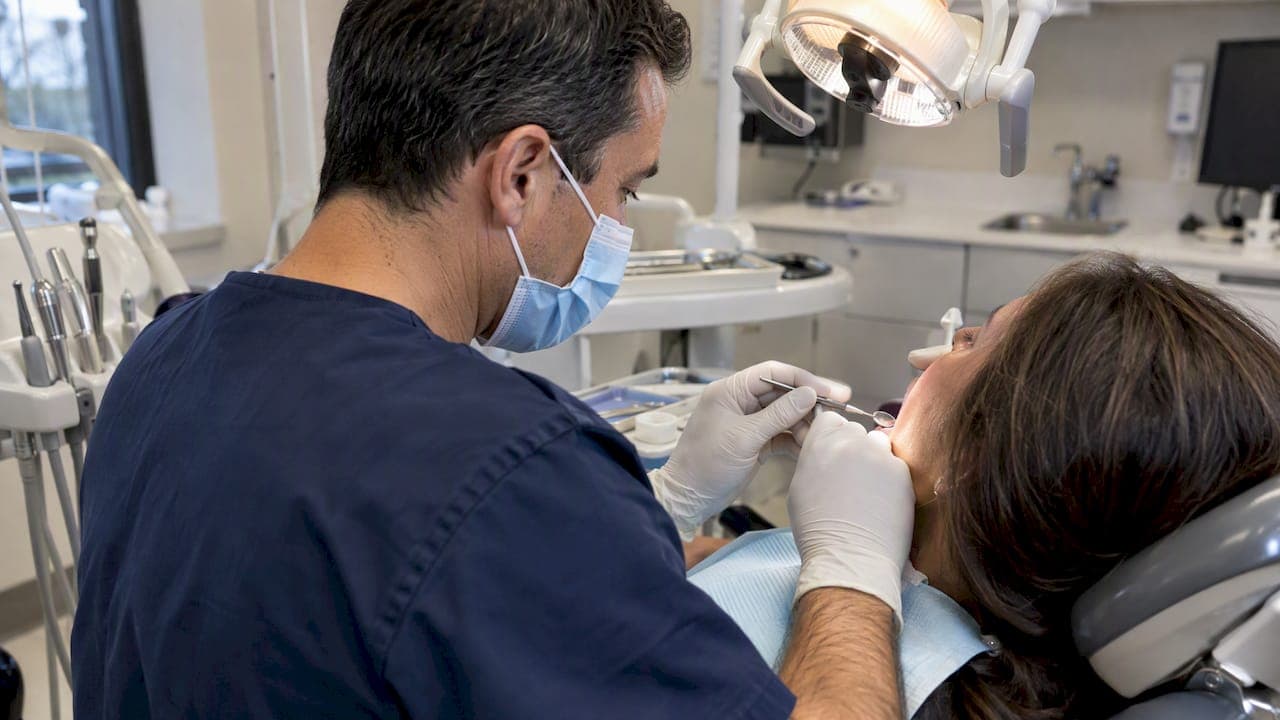
If you have severe, throbbing pain one to three days after an extraction and the socket looks empty, with no dark clot, you are likely dealing with dry socket. It is intensely painful, and it usually needs a dentist to control the pain. Call your dentist promptly. Go to the ER if swelling makes breathing or swallowing hard.
TL;DR:
- Normal soreness should ease daily; pain that rebounds around day two or three, radiates toward the ear, or resists medication warrants a dentist call.
- Fever above 100.4°F, swelling that worsens after day three, or pus suggests infection and needs prompt dental care; breathing or swallowing difficulty requires emergency care.
- A dentist can rinse the socket and place a dressing for pain; repeat changes may be needed, while antibiotics are reserved for spreading infection.
- Avoid smoking, nicotine, straws, spitting, and vigorous rinsing during early healing, and follow your dentist’s instructions to protect the clot.
- Smoking, lower wisdom tooth removal, difficult extraction, oral contraceptives, and poor oral hygiene raise risk; ask your dentist about chlorhexidine rather than starting it yourself.
Table of Contents
- What are the typical dry socket symptoms?
- How can you tell dry socket from normal healing?
- When should you call your dentist or go to the ER?
- What will a dentist do to treat dry socket?
- What raises your risk, and how do you prevent dry socket?
- What does dry socket recovery look like?
- Our clinical view: why quick care matters
- FAQ
- Sources
What are the typical dry socket symptoms?
Dry socket is about pain that does not behave the way healing pain should. These are the signs to look for:
- Severe, worsening throbbing pain that starts about one to three days after the tooth comes out.
- Pain that spreads from the socket to your ear, eye, temple, or neck on the same side.
- An empty-looking socket where a dark clot should sit, sometimes with visible bone or pale tissue.
- A bad taste or foul smell that gentle rinsing does not clear.
- Pain that over-the-counter medicine barely touches, far beyond what you expected from the extraction.
- A slight fever, which can happen. A high fever points toward infection instead.
MedlinePlus lists severe pain one to three days after extraction, an empty socket with a missing clot, a bad taste, bad breath, and a slight fever among the symptoms. The Mayo Clinic adds that bone may be visible inside the socket and that the odor tends to persist.
Pain that does not respond to pain relievers is the signal to contact your dentist, because that pattern separates dry socket from ordinary soreness.
How can you tell dry socket from normal healing?
Timing and direction of the pain tell you most of what you need. After a routine extraction, a clot forms and soreness should gradually fade. Each day should feel a little better than the last.

With dry socket, that curve breaks. Pain that was easing starts climbing again, or it arrives late and hits hard around day two or three. The clot that should protect the bone has been lost or disrupted.
Use these checks:
- Direction of pain: steadily improving points to normal healing. Rebounding or intensifying pain points to dry socket.
- Character of pain: dull soreness at the site is expected. Deep throbbing that radiates toward the ear or temple is not.
- What you see: a dark clot sitting in the socket is reassuring. An open, pale socket is concerning.
- Trapped food versus bone: food debris can be rinsed or lifted out gently. Exposed bone cannot be removed, and it looks pale and solid.
If you cannot decide what you are looking at, trust the pain pattern over the mirror. Mouths are hard to inspect, and a phone call costs you nothing.
When should you call your dentist or go to the ER?
Match your response to what you are feeling:
- Call your dentist promptly if you have severe or worsening pain after extraction, a persistent bad taste or odor, or you can see the clot is gone.
- Contact your dentist promptly if prescribed pain control is not working, or if a dressing keeps falling out.
- Watch for infection instead of dry socket. The MSD Manual notes that infection brings swelling that worsens after day three, fever above 100.4°F (38°C), and pus or discharge from the site.
- Seek immediate emergency care for spreading facial swelling, difficulty breathing or swallowing, a high fever, or rapidly worsening infection signs. If you suspect an abscess, our guide to abscessed tooth symptoms explains when same-day or emergency help is the right call.
- Prepare for the call. Have your extraction date, when the pain started and how it has changed, the medications you are taking, and any fever or swelling ready to report.
What will a dentist do to treat dry socket?
Treatment is mostly about getting you comfortable while your body finishes healing. Dry socket is self-limiting, meaning it eventually heals on its own, but the pain is often intense enough that clinical relief is needed. Expect a visit that looks like this:
- An exam to confirm the clot is gone, clear out debris, and rule out retained tooth fragments.
- Irrigation of the socket, followed by an intra-socket dressing, often containing eugenol, to control pain. Merck Manuals describes this as palliative care.
- Local anesthetic when needed for immediate relief during the procedure.
- Dressing changes as directed by your dentist until the pain subsides.
- Pain medicine such as NSAIDs or acetaminophen to supplement the dressing.
- Antibiotics only when needed, meaning signs of spreading infection. They are not routine for dry socket alone.
Pro Tip: Do not scrape or probe the socket at home. Clinicians advise against curetting because it can aggravate bone exposure and slow healing.
Eugenol-based dressings can occasionally irritate tissue, so tell us about any allergy or sensitivity beforehand.
What raises your risk, and how do you prevent dry socket?
Some people are more likely to lose the clot. Common risk factors include smoking, lower wisdom tooth extractions, difficult or traumatic extractions, oral contraceptives, and poor oral hygiene.
Smoking deserves special attention. Nicotine and the suction of inhaling both work against a fresh clot.
Short prevention steps for the first days:
- Skip smoking and nicotine during early healing, and ask your dentist how long to avoid them.
- Avoid straws, spitting, and vigorous rinsing during early healing, and follow your dentist’s instructions.
- Bite on gauze exactly as instructed, and replace it when told to.
- Eat soft foods away from the extraction site, and keep brushing the rest of your mouth gently. If a decayed wisdom tooth was the reason for your extraction, this guide to decayed wisdom teeth covers simple hygiene habits.
- Keep your follow-up appointment, even if you feel fine.
Some dentists recommend a chlorhexidine rinse before or after surgery when it is indicated. We do not suggest using it for everyone, so ask your provider before adding it.
The Mayo Clinic's symptom guidance is clear that an empty socket with visible bone is the sign to act on, not wait out.
What does dry socket recovery look like?
Dry socket usually announces itself within the first few days after extraction. That window is why vigilance during early healing matters.
Once you have treatment, relief tends to come quickly. Pain generally improves over several days, though you may need repeat dressing changes until it settles. Think of the dressing visits as the treatment, not a sign that something went wrong.
Full socket remodeling takes much longer. The tissue and bone keep rebuilding for weeks to months, even after the pain is gone. For a wider picture of that process, see our guide to tooth extraction healing and implant timing.
Return to your dentist if symptoms fail to improve after appropriate local care, or if new signs appear such as fever, spreading swelling, or discharge.
Our clinical view: why quick care matters
Waiting out dry socket rarely pays off. Dry socket hurts in a way ordinary healing does not, and the painful phase gets shorter once a dressing is in place. We offer same-day appointments and manage post-extraction pain in our office, and you can read about our tooth extraction care before you call.
Bring the extraction date, a list of your medications, any allergies (eugenol especially), and photos of the socket if you can take them. Then come back for every dressing change. Those visits are what close the painful window.
— Jake
This article is general information, not a substitute for advice from a qualified doctor. Consult a qualified healthcare professional about your own circumstances before acting on anything here.
FAQ
How can you tell if a dry socket is forming?
Watch for pain that gets worse instead of better around day two or three. An empty-looking socket, a bad taste, or pain spreading toward your ear are the other early signs. Call your dentist if you notice them.
Will a dry socket heal on its own?
Yes, dry socket is self-limiting and eventually heals without treatment. The pain is often intense enough that a dentist's dressing is the practical way to get relief in the meantime.
What are the riskiest days for dry socket?
Symptoms most commonly begin on day two or three, though they can start as early as day one. The initial few days are when protecting the clot matters most.
How do I know it's dry socket and not normal healing?
Normal soreness fades day by day. Dry socket pain rises or rebounds, throbs, spreads toward your ear or temple, and often comes with an empty, open-looking socket.
Sources
- Dry socket - Symptoms and causes - Mayo Clinic
- Dry socket: MedlinePlus Medical Encyclopedia
- Postextraction Problems - Dentistry - MSD Manual Professional Edition
- Merckmanuals