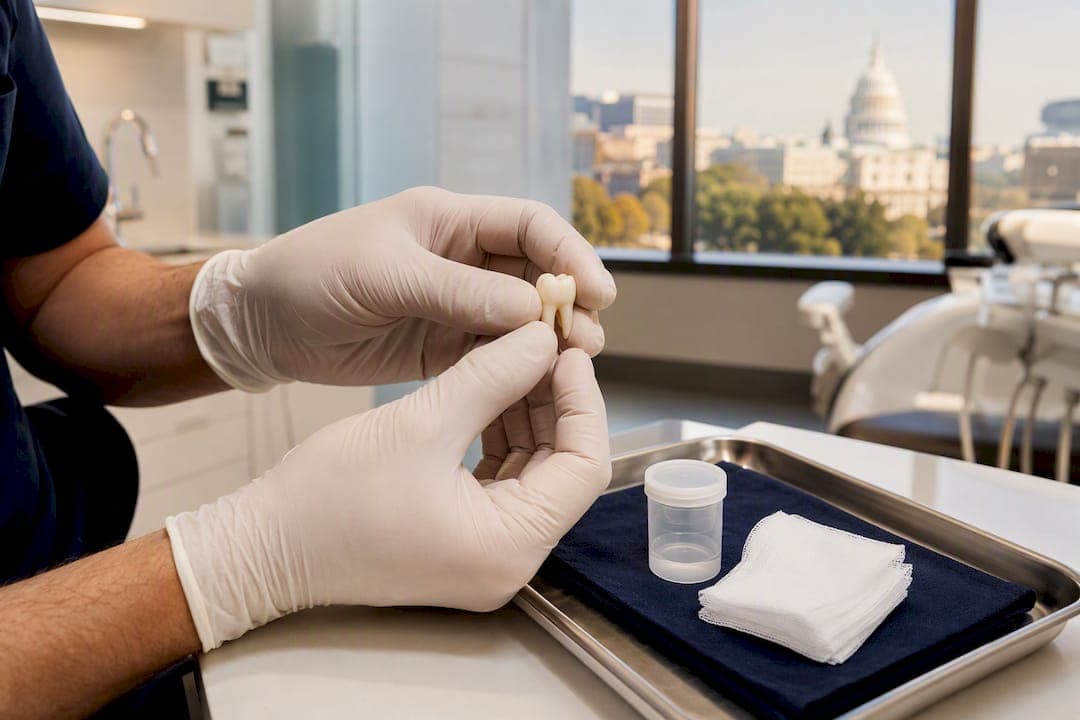
A knocked out tooth is a dental emergency, and your best shot at saving it depends on reinserting it into the socket right away, or storing it correctly and getting to a dentist as soon as possible within a short critical time window. Handle the tooth only by the crown, rinse it for no more than 10 seconds if it's dirty, and act fast. Every minute outside the mouth lowers the odds.
TL;DR:
- Reinsertion of the tooth at the scene offers the highest chance of long-term survival, especially if done within 30 to 60 minutes of injury.
- When replantation isn't possible, storing the tooth in Hank's Balanced Salt Solution or cold milk significantly improves the likelihood of successful reattachment.
- Most cases require follow-up procedures such as splinting, root canal therapy, or replacement options like implants if the tooth cannot be saved.
- Handling the tooth correctly by only touching the crown and avoiding root contact or drying is crucial for periodontal ligament cell viability.
- Immediate actions, including reinsertion or proper storage and timely dental care, outweigh general advice like using milk or waiting for professional help.
Table of Contents
- What To Do Immediately After a Tooth Gets Knocked Out
- What's the Best Way to Store a Knocked-Out Tooth?
- What Happens at the Emergency Dental Visit?
- Never Replant a Baby Tooth
- Managing Pain, Bleeding, and Deciding Where To Go
- Will the Tooth Survive, and What If It Doesn't?
- What a Same-Day Emergency Visit Looks Like
- Why Most People Get the First Ten Minutes Wrong
- Get Same-Day Emergency Care for a Knocked-Out Tooth
- Sources
- FAQ
What To Do Immediately After a Tooth Gets Knocked Out
Speed and technique both matter here, and it helps to know exactly what to do before panic sets in.
- Find the tooth and pick it up by the crown. Never touch the root. The periodontal ligament fibers clinging to the root surface are fragile, and fingers can crush the cells your dentist needs intact.
- Rinse only if visibly dirty, and for no more than 10 seconds, using milk, saline, or your own saliva. Plain water works only if nothing else is available. Never scrub the root or dry it with a towel.
- Reinsert the tooth into its socket facing the correct direction, then bite down gently on a piece of gauze or a clean cloth to hold it in place.
- If it doesn't stay put or you can't get it back in, don't force it. Move straight to storage and transport instead of losing time.
- Control bleeding with steady, direct pressure on the socket, apply a cold compress to any swelling on the outside of the face, and call an emergency dentist or head to urgent dental care immediately.
Pro Tip: Keep the tooth moist at all costs. A tooth that dries out for even a few minutes loses viable periodontal ligament cells, and that single detail often decides whether replantation succeeds.
What's the Best Way to Store a Knocked-Out Tooth?
When reinsertion isn't possible, the medium you store the tooth in matters almost as much as how fast you move. Ranked by how well they preserve the periodontal ligament:
- HBSS (Hank's Balanced Salt Solution), the gold standard, found in tooth-preservation kits.
- Cold milk, widely recommended because it keeps periodontal ligament cells viable far better than tap water.
- Saline solution, a solid backup if milk isn't around.
- Saliva, holding the tooth inside your cheek (never a child's) or spitting into a container.
Skip tap water and never let the tooth sit dry. Households with kids in contact sports may want to keep a Save-A-Tooth style kit on hand for exactly this scenario. Whatever medium you use, the clock still runs: outcomes are best when the tooth is treated within a short critical time window and decline sharply after around two hours.
What Happens at the Emergency Dental Visit?
Once you're in the chair, the dentist moves fast and follows a fairly predictable sequence.
- A quick exam and x-ray to check root condition, socket integrity, and rule out jaw or facial fractures.
- Repositioning the tooth into the socket if it wasn't already reinserted, followed by a flexible splint bonded to neighboring teeth to hold it steady, typically for about two weeks.
- Antibiotics and sometimes a tetanus check, especially if the injury happened outdoors or involved dirt or debris.
- A follow-up schedule at roughly 1, 3, and 6 months to track healing and root stability.
- In most cases, root canal therapy a week or two later, since pulp necrosis is common after an avulsion even when the tooth reattaches successfully.
If the tooth has been out too long, is fractured beyond repair, or the socket is too damaged, your dentist may recommend against replantation and start planning restorative options like an implant or bridge instead.
Never Replant a Baby Tooth
If a child loses a primary tooth, resist the urge to put it back. Replanting a baby tooth risks damaging the permanent tooth forming underneath it. Rinse it gently, bring it along, and call a pediatric dentist. Seek emergency medical care right away if the trauma was severe or breathing seems affected.
Managing Pain, Bleeding, and Deciding Where To Go
Direct pressure with clean gauze usually stops socket bleeding within a few minutes. A cold compress against the cheek limits swelling and takes the edge off the pain. Acetaminophen or ibuprofen handles most discomfort, but skip aspirin if bleeding hasn't fully settled, since it thins the blood further.
Not every case belongs at the dental clinic first: if there's airway compromise or breathing seems affected, follow infant choking first aid steps and seek emergency care immediately. Go straight to the emergency room if there's airway compromise, a suspected jaw fracture, bleeding that won't stop after 10 to 15 minutes of firm pressure, or any sign of a broader injury from a fall or collision. Dentoalveolar trauma frequently travels with other facial injuries, so a swollen jaw or a knocked-out tooth from a serious impact deserves a broader medical check, not just a dental one.
Will the Tooth Survive, and What If It Doesn't?
Time decides almost everything here. A tooth reinserted within 30 to 60 minutes has a real shot at long-term retention. Wait past 60 minutes and the odds drop noticeably; past two hours, most cases shift toward salvage and future planning rather than expecting the tooth to hold permanently.
Even in successful replantations, treatment rarely stops at the splint.
- Root canal therapy follows in the vast majority of cases.
- Dentists monitor for root resorption with periodic x-rays for months, sometimes years.
- If the tooth can't be saved, replacement options include a dental implant, a fixed bridge, or a partial denture, usually planned once the socket has healed enough to support them.
What a Same-Day Emergency Visit Looks Like
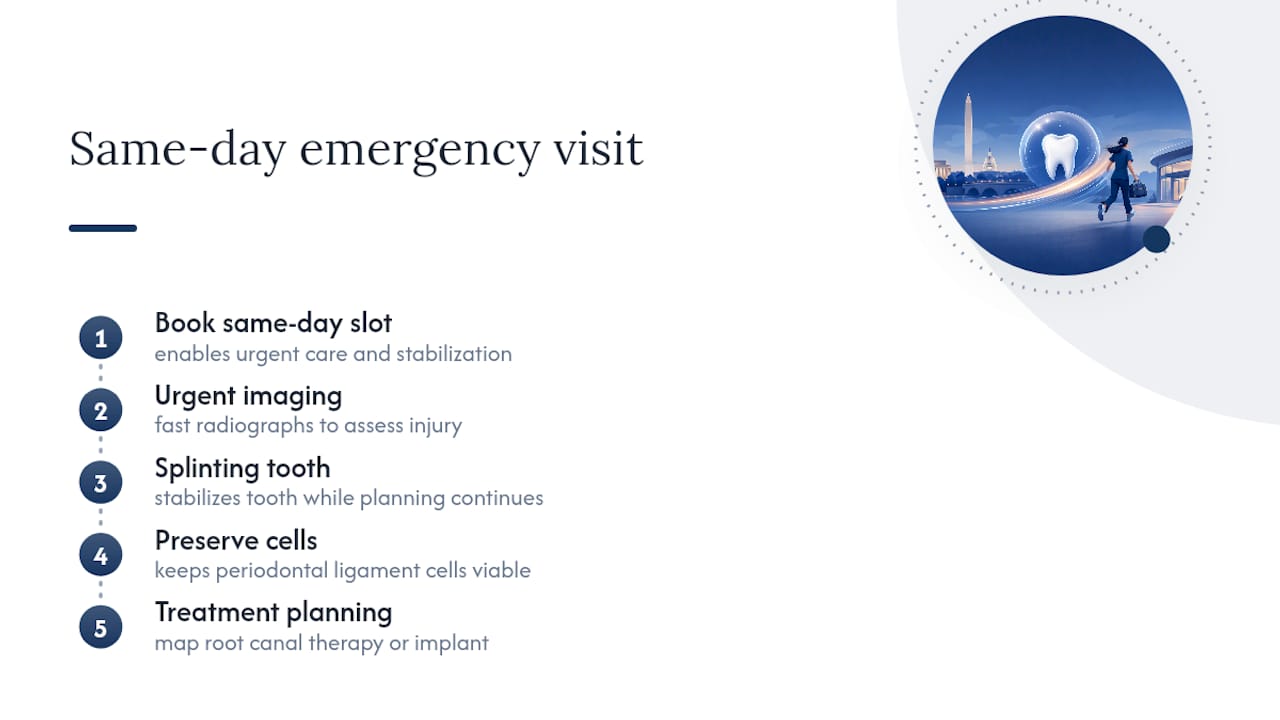
Dr. Kambez Shukoor, a U.S. Navy veteran leading care at Dc-dentistry, sees knocked-out teeth often enough to know that speed and stabilization go hand in hand. Same-day emergency slots mean urgent imaging and splinting happen fast, keeping periodontal ligament cells viable while the team maps out whether root canal therapy or an implant makes more sense long term.
Why Most People Get the First Ten Minutes Wrong
Most advice about a knocked-out tooth focuses on what happens at the dentist's office. That's backwards. The dentist can't undo damage that already happened before you walked in. What actually determines whether a tooth survives is what you do in the first ten minutes, and the research on this is oddly underused in mainstream advice: immediate reinsertion at the scene protects periodontal ligament fibers better than any storage medium ever could, including milk.
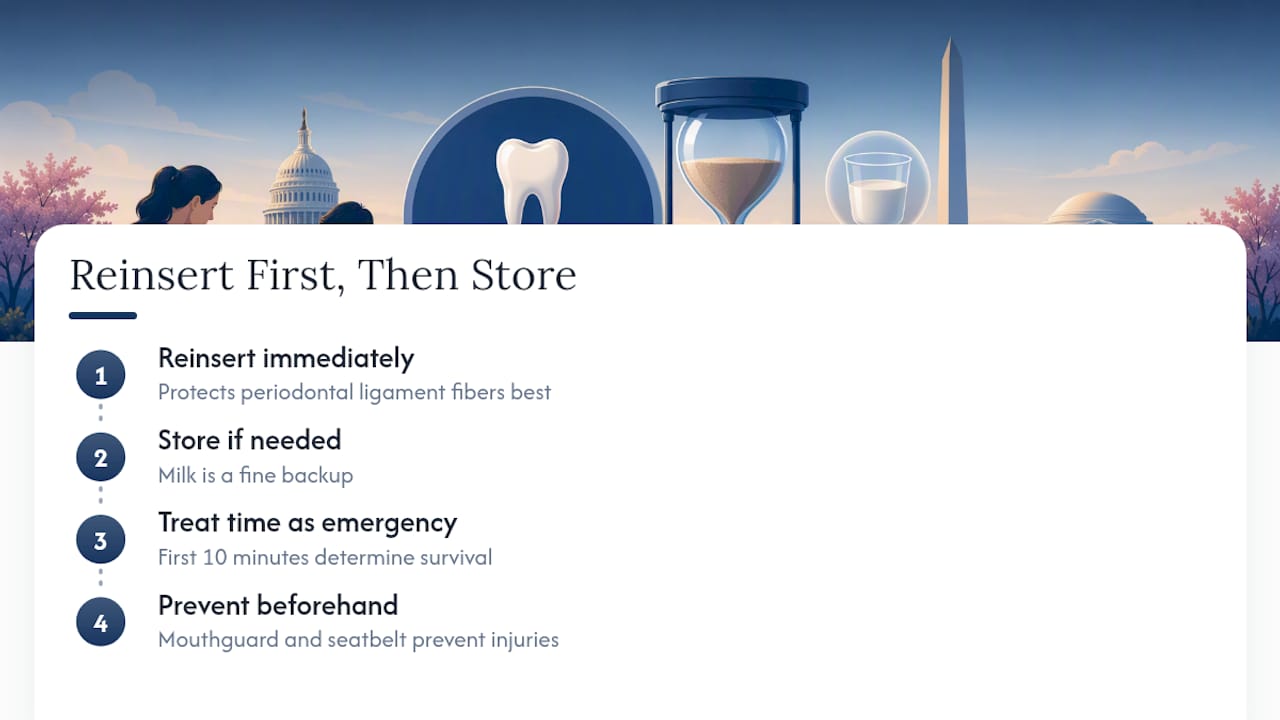
The conventional wisdom treats milk as the hero of tooth avulsion, and it's a fine backup. But leading with "grab some milk" instead of "try to put the tooth back in first" undersells the single action that matters most. If you're squeamish about reinsertion, understand that a dentist would still rather remove and resplint a slightly misaligned tooth than work with one that sat dry for 20 minutes.
Prioritize in this order: reinsert if you can manage it calmly, store properly if you can't, and treat the clock as the real emergency, not just the injury. A mouthguard during contact sports and a seatbelt in the car prevent most of these situations before they start. That's the boring advice nobody wants, but it works better than any storage kit ever will.
— Jake
Get Same-Day Emergency Care for a Knocked-Out Tooth
Same-day emergency appointments are available locally, helping avoid long waits when a displaced or knocked-out tooth needs prompt care.

Walk in with the tooth stored in milk, saline, or a preservation kit, and the team moves straight into urgent imaging and splinting to protect the periodontal ligament while planning next steps, whether that's root canal therapy, extraction, or long-term replacement. If the tooth can't be saved, Dc-dentistry's dental implant options fill the gap without the wait, and financing through CareCredit or Lending Tree covers the cost of restorative work when insurance doesn't stretch far enough. Bring the tooth and any insurance information you have, and contact a dental office directly to seek same-day care.
Sources
This guidance draws on the International Association of Dental Traumatology's clinical guidelines, Cleveland Clinic, the NHS, the Merck Manual, MedlinePlus, and Mayo Clinic, the primary clinical references for dental avulsion care.
This article is general information, not a substitute for advice from a qualified doctor. Consult a qualified healthcare professional about your own circumstances before acting on anything here.
- Avulsed Tooth (Knocked Out Tooth): What to Do — Cleveland Clinic
- Knocked-out tooth — NHS
- First aid: Tooth loss — Mayo Clinic
FAQ
How Long Can a Tooth Last Outside the Mouth Before It's Too Late?
The best outcomes happen when the tooth is reinserted within 30 to 60 minutes; survival odds drop sharply after that and become poor past the two-hour mark.
How Do You Fix a Knocked-Out Tooth?
Pick it up by the crown, rinse it gently for no more than 10 seconds if dirty, and reinsert it into the socket, biting down on gauze to hold it steady until you reach a dentist.
What Should I Do if I Can't Reposition a Knocked-Out Tooth?
Store it in cold milk, saline, or your saliva, avoid tap water and drying, and get to an emergency dentist as fast as possible, ideally within the hour.
How Much Does It Cost To Replace a Knocked-Out Tooth?
Costs vary depending on whether replantation, root canal therapy, or an implant is needed; Current pricing and financing options vary and can be found on the provider's website.