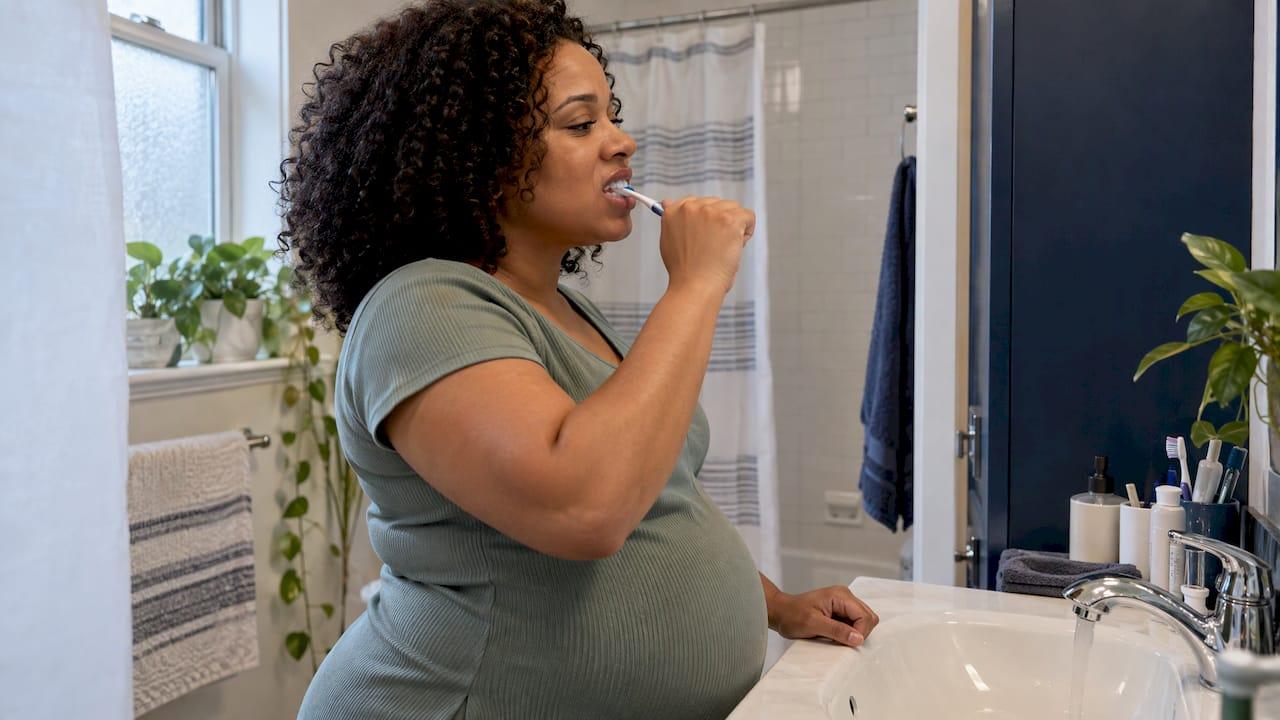
Pregnancy gingivitis is gum inflammation triggered by pregnancy hormones acting on plaque along the gumline. It shows up as red, swollen, tender gums that bleed when you brush or floss. It is very common, it is usually reversible, and the best response is a professional cleaning and exam during pregnancy plus a steady home routine. In our Washington, DC office, same-day appointments are available, so bleeding gums do not have to wait weeks for an answer.
TL;DR
- Pregnancy gingivitis affects an estimated 60% to 75% of pregnant women and often starts around the second month.
- Hormones change how your gums react to plaque. Removing that plaque, at home and in the dental chair, is what calms the inflammation.
- Dental care, including X-rays and local anesthesia, is considered safe throughout pregnancy.
- Gingivitis is the mild stage of gum disease. Left alone, it can progress to periodontitis, which involves the bone.
- Book a visit if bleeding is persistent, gums are very swollen, a lump appears, or you have pain.
Table of Contents
- What pregnancy gingivitis is and why it happens
- When pregnancy gingivitis starts
- Gingivitis vs. periodontitis: the stages of gum disease
- A daily routine that keeps gums calm
- Can you see a dentist while pregnant?
- Pregnancy tumors on the gums
- Does gum inflammation affect the baby?
- Is gingivitis reversible after delivery?
- When to book a visit
- Our perspective
- Get your gums checked at DC Implant & Cosmetic Dentistry
- FAQ
- Sources
What pregnancy gingivitis is and why it happens
Gingivitis is the earliest stage of gum disease: inflamed gums with no loss of the bone that holds your teeth. Regular gingivitis and the pregnancy kind look the same. What differs is the trigger.
According to the Florida Department of Health, plaque left along the gumline combined with higher estrogen and progesterone can cause red, swollen, tender gums that bleed easily. Plaque is the sticky film of bacteria that builds on teeth every day. The American Dental Association explains that pregnancy hormones change how your gums respond to that plaque, so an amount you tolerated before can now cause a reaction.
The Scottish Dental Clinical Effectiveness Programme adds that hormonal and immune-response changes can start or worsen gingivitis. Pregnancy does not make your teeth dirtier. It makes your gums more reactive to the plaque that is already there.
Symptoms to look for
- Gums that bleed when you brush or floss, sometimes only slightly
- Gums that look red or puffy instead of firm and pale pink
- Tenderness along the gumline
- A new bad taste or breath that does not clear after brushing
Some bleeding is considered normal during pregnancy, according to Massachusetts' 2024 oral health guidelines. Normal does not mean ignore. It means the gums are asking for better plaque control and a professional look.
When pregnancy gingivitis starts
Timing varies, but the pattern is consistent. The Florida Department of Health says it commonly begins in the second month and lasts until birth. The Public Health Agency of Canada describes it as arising between months three and nine. A 2025 narrative review reports that it can begin in the first trimester, is most often noticed in the second, and peaks in the third.

So if you are searching for bleeding gums in the second trimester, you are right in the typical window. Swollen gums in the third trimester are also expected. The question is not whether it is common, but whether it is being managed.
Gingivitis vs. periodontitis: the stages of gum disease
Many readers arrive asking about the stages of gum disease. In plain terms there are two main ones.
| Gingivitis | Periodontitis | |
|---|---|---|
| What is affected | Gums only | Gums and the bone supporting the teeth |
| Typical signs | Red, swollen, bleeding gums | Painful chewing, loose teeth, gums pulling back |
| Reversible? | Usually, with consistent cleaning | Can be controlled with treatment, but lost bone does not simply return on its own |
The National Institutes of Health describes gingivitis as the mild, early stage that can usually be reversed with daily brushing and flossing. If it is untreated, it can spread to the bones around the teeth and become periodontitis, which can make chewing painful or teeth loose. The same page notes that pregnancy-related hormonal changes can raise gum-disease risk.
That is why gingivitis progression matters. The stage you are in now is the easiest to fix. Our page on early signs of gum disease walks through what to watch for, and if gum problems are already past the mild stage, our periodontal disease care is the next step.
A daily routine that keeps gums calm
The basics matter most here, and the American Dental Association's pregnancy guidance is specific:
- Brush twice a day for two minutes with a soft-bristled brush and fluoride toothpaste. Aim the bristles at the gumline, where plaque collects, and use gentle strokes. Scrubbing hard irritates tender gums further.
- Clean between your teeth once a day. Floss or another interdental cleaner removes plaque a brush cannot reach. Bleeding in the first days is a sign of inflammation, not a reason to stop. The Massachusetts guidelines tie daily flossing to reduced gum bleeding.
- Eat regular meals and limit frequent sugary snacks, which feed plaque bacteria.
- Keep your dental visits, covered below.
If you have morning sickness
Vomiting bathes your teeth in stomach acid. The ADA and Massachusetts guidelines both advise against brushing right away. Instead, rinse with a cup of water mixed with a teaspoon of baking soda to neutralize the acid, then wait an hour before brushing. That protects enamel, and it keeps your gums from being scrubbed while teeth are temporarily softened.
What about swollen gums that feel sore?
Gum pain in pregnancy usually comes from the same plaque-driven inflammation. The most useful relief is removing the plaque that is causing it, with careful brushing, daily interdental cleaning and a professional cleaning. If pain is sharp, constant, or comes with facial swelling or fever, call a dentist the same day. A 2025 expert consensus says acute dental pain can receive emergency management in early pregnancy, emergency treatment can be performed in late pregnancy, and prompt treatment of dental infections is essential.
Can you see a dentist while pregnant?
Yes, and you should. Massachusetts' guidelines recommend dental visits at least every six months and state that dental care throughout pregnancy, including X-rays and local anesthesia, is safe. If you are wondering about imaging, our guide to dental X-ray safety in pregnancy covers it in detail.
What a pregnancy-aware visit includes
For pregnancy gingivitis, the Scottish guidance describes professional removal of plaque, calculus (hardened plaque, often called tartar) and deposits below the gumline, more frequent recall visits where needed, and a later reassessment. The ADA notes that dentists may also recommend more frequent cleanings or an antimicrobial rinse.
That is the heart of treatment. A professional cleaning reaches deposits that home care cannot, and that is what lets the gums settle even while hormones stay high. Our dental cleanings and exams are performed in-house, and same-day appointments mean you can be seen when symptoms start rather than after they have worsened.
Comfort in the chair
In the third trimester, lying flat for a long time can be uncomfortable. The Scottish guidance advises avoiding prolonged periods flat in the dental chair where possible. Tell your dental team how far along you are so they can keep appointments short and position you comfortably.
Timing for other dental work
Routine care and treatment of problems that cause pain or infection should not be postponed. Elective cosmetic work is a different matter, and many people plan it for after the baby arrives. If whitening is on your mind, read our notes on teeth whitening during pregnancy. When you are ready afterward, this overview of professional teeth whitening helps you plan.
Pregnancy tumors on the gums
Some people notice a distinct red, raised, easily bleeding lump on the gum during pregnancy, often called a pregnancy tumor. The name sounds alarming, but it refers to a localized overgrowth of inflamed gum tissue linked to plaque and hormones, not to cancer. Do not try to treat it yourself. Have any new gum lump examined, especially if it bleeds, interferes with eating, or does not shrink. Our team also performs oral cancer screenings as part of general dentistry, so a lump gets a proper look.
Does gum inflammation affect the baby?
This is the question behind many searches, so here is the measured answer. The Public Health Agency of Canada says untreated gingivitis may progress to periodontitis, an infection and inflammation of the gums and supporting bone. It notes associations with preterm delivery and low birth weight, while saying the causal pathway is not fully understood. The 2025 expert consensus likewise reports associations between maternal periodontal disease and outcomes including preterm birth, low birth weight and gestational hypertension.
The practical message is reassuring: healthy gums are a goal you can act on. Mild gingivitis that is caught and cleaned is the stage where treatment is simplest. Mention your pregnancy and any bleeding to your obstetric provider too, and keep both teams informed.
Is gingivitis reversible after delivery?
Usually yes. The Public Health Agency of Canada says pregnancy-related gum problems generally disappear after childbirth, and advises contacting an oral-health professional if they continue. The Scottish guidance stresses reassessment instead of assuming resolution, particularly because breastfeeding may extend the condition.
So plan a check-up after delivery. If your gums are still red or bleeding a few weeks postpartum, that is a signal to have them evaluated, not to wait it out. Bring your children along when it suits you: our children's oral health page explains how we care for the youngest patients, so the whole family can be on one routine.
When to book a visit
Schedule a dental appointment promptly if you notice any of these:
- Gums bleed every time you brush or floss
- Swelling that is increasing, or gums that look dark red or shiny
- A lump on the gum
- Persistent bad breath or taste
- Loose teeth or gums pulling away from teeth
- Tooth or gum pain, especially with facial swelling or fever
The Florida Department of Health advises seeing a dental professional for signs of gum disease, and that includes you if you are pregnant.
Our perspective
Most pregnant patients who come to us about bleeding gums are worried they did something wrong. They did not. Hormones change the rules for a few months, and the answer is a clear plan, not guilt.
What we care about is that the plan is written down and that one team carries it out. Our exams, cleanings, gum care and, when needed, restorative work all happen in one office, so you are not passed from place to place while you are tired and expecting. Dr. Shukoor's military medical background shaped how we approach this: careful imaging when it is appropriate, a clear treatment plan up front, and no surprises.
If your gums are inflamed, do not wait for delivery to deal with them. A professional cleaning during pregnancy is the step that makes the biggest difference, and we make room for same-day visits so symptoms do not drag on.
Jake
Get your gums checked at DC Implant & Cosmetic Dentistry
If your gums are bleeding or swollen, our general dentistry team can examine them, clean away plaque and calculus, and give you a clear, written plan for the rest of your pregnancy. We offer exams, X-rays, cleanings and gum disease care in one Washington, DC location, with same-day appointments available.

When your pregnancy is behind you and you want to go further, we also offer teeth whitening, porcelain veneers and clear aligners, all under the same roof. Financing options are available for higher-cost treatment.
FAQ
Is bleeding gums during pregnancy normal?
Some bleeding is common and is considered normal, since hormones make gums react more strongly to plaque. Even so, it is a sign of inflammation that responds well to better cleaning and a professional visit. Bleeding that is heavy, constant or accompanied by pain deserves prompt attention.
When do gums start bleeding in pregnancy?
For many people it starts around the second month, and it is often most noticeable in the second trimester. It can persist through the third trimester until birth. Timing differs from person to person.
Can pregnancy gingivitis go away on its own?
It often improves after delivery, but it should not be left untreated until then. Gingivitis that is not managed can progress to periodontitis. Cleaning during pregnancy keeps inflammation down, and a post-delivery check confirms your gums have fully recovered.
Is it safe to have a dental cleaning while pregnant?
Yes. Massachusetts' guidelines say dental care throughout pregnancy, including X-rays and local anesthesia, is safe. Tell your dental team how far along you are so they can plan your visit for comfort.
How is gingivitis different from gum disease?
Gingivitis is the early, mild stage of gum disease and affects only the gums. Periodontitis is the advanced stage, where infection reaches the bone that supports the teeth. Gingivitis is usually reversible, which is why early care matters.
Sources
- Pregnancy Oral Health, Florida Department of Health
- Oral health and pregnancy, Public Health Agency of Canada
- Effects of Pregnancy on Oral Health: A Narrative Review, PubMed Central
- Gum Disease, National Institutes of Health
- Oral Health Practice Guidelines for Pregnancy and Early Childhood, Massachusetts, 2024
- Expert consensus on oral health in pregnancy, 2025
- Pregnancy, Scottish Dental Clinical Effectiveness Programme
- Pregnancy Dental Concerns, MouthHealthy (ADA)
- Pregnancy, American Dental Association