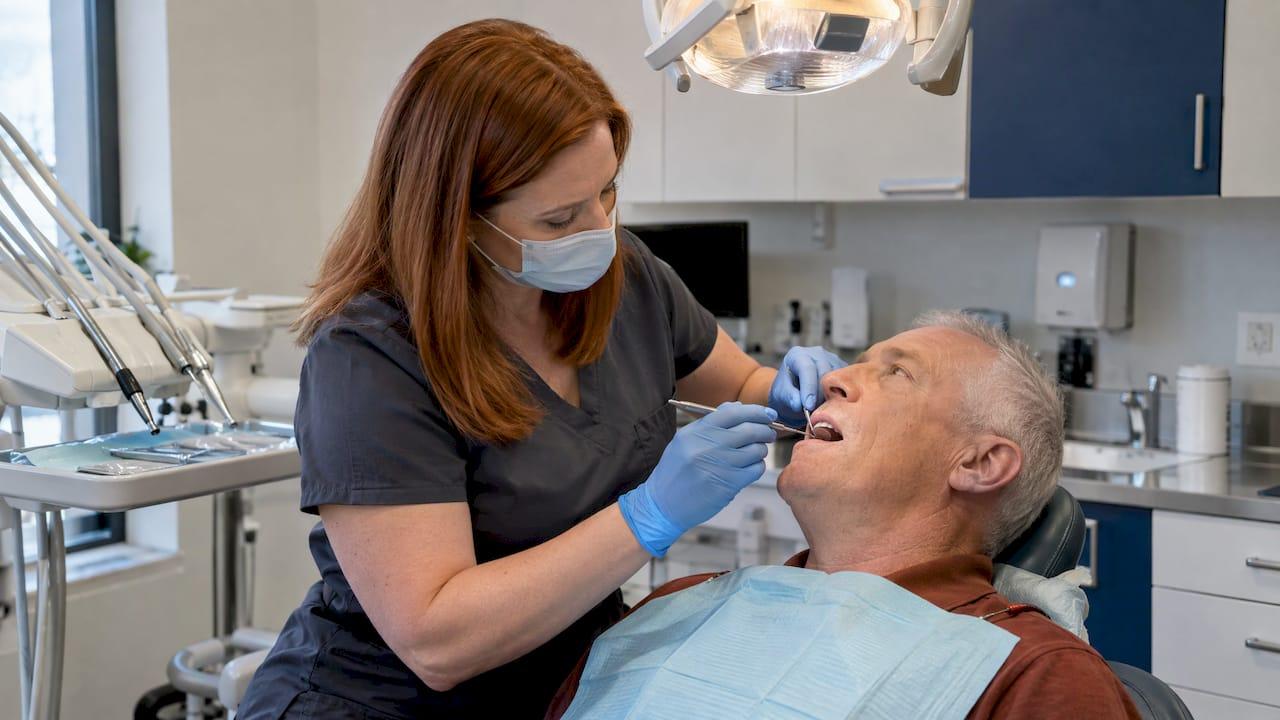
A loose dental bridge is a problem to have looked at within days, not weeks. A bridge is a fixed replacement for a missing tooth, held in place by cement on the teeth beside the gap. When that cement fails, the teeth underneath are exposed to bacteria, and decay can start quickly. At our Washington, DC practice, we offer same-day appointments and do exams, imaging, crowns, bridges and implants in-house, so a loose bridge can be examined and treated without referrals or hand-offs.
This guide explains how to tell a bridge is loose, what to do today, what to avoid, when it becomes an emergency, and what your dentist can do about it.
TL;DR
- A bridge that moves, clicks, tastes bad or feels different when you bite should be examined soon, even if it does not hurt.
- Do not glue it back yourself. Keep the bridge if it comes out, eat soft food on the other side, and call a dentist.
- Cement loss on one end can hide behind the other end, so decay under a bridge often goes unnoticed until it is advanced.
- Depending on what the exam and X-rays show, a bridge may be cleaned and recemented, repaired, or replaced, sometimes with an implant-supported bridge.
- Swelling, fever, severe pain or a hard knock to the face call for urgent care the same day.
Table of Contents
- How to tell your dental bridge is loose
- Why bridges come loose
- What to do right now if your bridge is loose
- What not to do
- When a loose bridge is an emergency
- What a dentist checks and what happens next
- How long a bridge should last
- What a replacement can cost
- Loose bridge, loose crown or loose implant crown?
- Our approach to a loose bridge
- Our perspective on loose bridges
- FAQ
- Sources
How to tell your dental bridge is loose
The obvious sign is movement: you press on the bridge with a finger or your tongue and it shifts. But many loose bridges do not announce themselves that clearly. Watch for:
- A bridge that feels higher, lower or "different" when your teeth meet.
- A clicking sensation or slight rocking when you chew.
- A bad taste or odor near the bridge, which can mean bacteria are collecting under it.
- Sensitivity to hot, cold or sweets on one of the anchor teeth.
- Sore or bleeding gums around the bridge.
- Food packing under the bridge that never used to.
The Cleveland Clinic advises scheduling a dental appointment if a bridge is loose or cracked, or if you have pain when chewing, tooth sensitivity, or sore or bleeding gums.
Why you may not notice at all
A bridge is anchored to the teeth on either side of the gap, called abutment teeth. Each anchor is capped with a crown that is part of the bridge. If cement lets go on only one anchor, the other can still hold the whole bridge firmly in place, so it feels solid while one tooth is sitting uncovered and collecting plaque.
A 2015 study in BDJ Open describes exactly this: cement failure on one end can be disguised by the retention of the other end. It also cites earlier research in which 12.6% of patients had a loose fixed prosthesis retainer nobody had diagnosed, and another investigation in which 41% of patients were unaware their retainer was loose until a dentist told them. That is why routine exams matter for anyone with a bridge, and why a hint of movement is worth a call.
Why bridges come loose
There is usually a reason, and finding it matters more than simply putting the bridge back.
Cement breakdown. Dental cement does not last forever. Over years, saliva, chewing forces and bacteria can break down the seal at the edge of the crown. The BDJ Open study notes that loosening from cement loss is a common complication of fixed bridges.
Decay under an anchor crown. Once the seal is lost, bacteria move in. The same study explains that loss of retention leads to further cement dissolution, plaque buildup and rapid decay of the tooth underneath, which is often impossible to restore by the time the loosening is noticed. Sometimes the decay came first and loosened the bridge. Either way, the anchor tooth needs to be checked before anything is recemented.
Grinding and clenching. Bruxism, the habit of grinding or clenching teeth, often during sleep, puts repeated overload on a bridge. A 2017 review in PMC on parafunctional habits finds that bruxism can dislodge or damage bridges and shorten their life. It also notes that gold and ceramic materials are generally preferred over resin for patients who grind because they resist wear and damage better. If you wake with jaw soreness or a partner hears you grinding, tell your dentist.
Gum recession or bone changes. When gums or bone around an anchor tooth shrink, the crown margin changes and the fit can loosen.
A fracture. A cracked anchor tooth or a cracked bridge framework can make the whole restoration move.
Trauma. A fall, a sports hit or biting something hard can break the bond or damage the teeth underneath.

Age of the bridge. The BDJ Open study reports a 10-year survival rate of 72% for fixed bridges placed in UK general dental services. That is a figure from one country's data, but it shows why a bridge that is a decade old or more deserves regular checks. The ADA also points out that restoration failure has many causes, not material alone.
What to do right now if your bridge is loose
- Call a dentist and ask for the earliest appointment. Say the bridge is loose. Do not wait to see whether it tightens up; cement does not heal itself.
- Stop chewing on that side. Biting on a loose bridge can crack it or the anchor teeth.
- Eat soft foods. Soup, yogurt, eggs and mashed vegetables are easy on the area. Skip sticky, chewy and hard foods.
- Keep it clean. Brush gently, rinse with warm salt water, and clean around the bridge without forcing floss under it.
- Cover sharp edges. Dental wax from a pharmacy can smooth a rough edge that is irritating your tongue or cheek.
- Use an over-the-counter pain reliever as directed on the label if you are sore, and only if it is safe for you. If you take blood thinners or have other health conditions, ask your doctor or pharmacist first.
If the bridge has come out completely
Keep it. Rinse it gently, store it in a clean container, and bring it to your appointment. Do not try to wear it for the day. If the anchor teeth are exposed and sensitive, avoid very hot or cold food and drinks.

A bridge that has fallen out is more urgent than a loose one, because the prepared teeth underneath are exposed. Call the same day. A temporary bridge that loosens is handled the same way: it is a short-term piece, and your dentist can secure or replace it quickly.
What not to do
- Do not use household glue. Superglue and similar products are not made for the mouth, can irritate tissue, and can lock the bridge in a position that does not fit. A bridge with glue on it is also harder for your dentist to clean up and reseat accurately.
- Do not use a pharmacy temporary cement as a long-term fix. It is meant to cover a gap of a day or two, not to replace an exam.
- Do not keep chewing normally. Even if the bridge seems to hold, a bridge with one loose end can hide decay.
- Do not wait it out for weeks. The longer an anchor tooth is uncovered, the greater the chance it will decay beyond repair.
- Do not try to pull it off. Forcing a bridge can break the tooth under it.
When a loose bridge is an emergency
Most loose bridges are urgent but not life-threatening. Seek care the same day if you have:
- Severe or throbbing pain.
- Facial swelling, a bump on the gum or a bad-tasting discharge, which can point to infection.
- A fever along with dental pain.
- A bridge that fell out and left a broken tooth or sharp, exposed edges.
- A recent blow to the face or mouth, with teeth that feel loose or out of place.
If swelling spreads toward your eye or neck, or you have trouble breathing or swallowing, go to an emergency room or call 911. That is a medical emergency, not a dental appointment.
For everything else in the list, we keep same-day appointments available, so you do not have to spend a weekend with a bridge in a cup.
What a dentist checks and what happens next
A good visit answers one question: why did it loosen? Treating the bridge without answering that leads to a repeat.
The exam
Your dentist will test how each end of the bridge moves, look at the margins where the crowns meet your teeth, and check the gums for inflammation. X-rays show whether there is decay under the anchor crowns, bone loss, or an infection at the root. If grinding is suspected, the wear pattern on your teeth and the bite will be assessed. We take thorough imaging up front and put the plan in writing, so you see what is found and what each option involves before any work begins.
Option 1: Clean and recement
If the bridge and the anchor teeth are sound, the bridge can be removed, the teeth and the inside of the crowns cleaned, and the bridge cemented back. This is the simplest outcome, and it is possible when the loosening was caused by cement wear alone and there is no decay.
There is one catch, and it is why this should be done in a dental chair. The BDJ Open study notes that if one retainer has come loose, the prosthesis should be removed so the uncemented tooth does not develop recurrent decay. Pressing a bridge back on without cleaning underneath can seal bacteria in.
Option 2: Repair
Some problems can be fixed without starting over: a small chip, a worn edge, or an anchor tooth that needs a filling before the bridge is reseated. If decay is caught early, the tooth is treated and the bridge goes back on. Your dentist will tell you whether the existing bridge still fits well enough to be worth saving.
Option 3: Replace
A bridge usually needs replacement when an anchor tooth has decayed too far, a tooth has fractured, the framework is cracked, or the fit is poor. Replacement may mean new crowns on the anchor teeth and a new bridge, a root canal on an anchor tooth first, or another way of replacing the missing tooth altogether.
For a missing tooth, one such option is an implant-supported replacement, which does not rely on neighboring teeth for support. If you have lost a bridge that depended on a tooth that cannot be saved, it is worth asking about implant bridges or a single dental implant. Implants have their own care needs: a 2024 review in PMC reports survival rates of 92.8% to 97.1% and notes that overload from grinding is a main cause of bone loss around implants, so a night guard is often discussed for people who clench.
Can a bridge be recemented more than once?
Sometimes, but a bridge that keeps coming loose is telling you something: a poor fit, decay, or a bite problem. Recementing again and again without addressing the cause usually only delays a replacement while the anchor teeth are put at risk.
How long a bridge should last
There is no single number. The BDJ Open data above gives 72% survival at 10 years for bridges in UK general practice. Studies of other bridge types give different results; for example, a 2002 clinical study of fiber-reinforced composite bridges found 95% survived between 2.77 and 4.30 years in people without severe grinding habits. Material, how many teeth the bridge spans, your bite, your gums and how well you clean under it all play a role.
What you can control:
- Clean under the bridge daily with a floss threader, interdental brush or water flosser, as your dentist or hygienist shows you.
- Keep up with exams and cleanings so cement wear and early decay are caught on X-rays.
- Treat grinding. A custom night guard protects bridges and implants alike.
- Avoid using your bridge to open packages or bite very hard foods.
What a replacement can cost
Costs vary by city, materials and the number of teeth. The 2017 PMC review cited above reports average costs of $3,800 for a three-unit bridge and $7,000 for a four-unit bridge, which is a figure from 2017 and a general reference, not a quote. Ask for a written estimate that lists each step, including any root canal, build-up or extraction. We provide clear written treatment plans, and financing through CareCredit and Lending Tree is available for higher-cost treatment. Insurance coverage varies by plan, so check your benefits for crowns and bridges.
Loose bridge, loose crown or loose implant crown?
The words are often mixed up, and the fix depends on which you have.
- A bridge spans a gap and is attached to teeth on both sides. See above.
- A single crown that moves is a similar cement problem on one tooth; our guide to a loose dental crown explains how it is handled, and we offer same-day crowns.
- An implant crown that wobbles may have a loose screw or a problem in the gum and bone around the implant. Read about an implant crown that feels loose and when to call.
- A natural tooth that is loose is a different issue altogether, covered in what to do about a loose adult tooth.
Our approach to a loose bridge
If your bridge is loose, you can book an exam with us in Washington, DC and start with a clear picture of what is happening under it. Exams, X-rays, fillings, root canals, same-day crowns, bridges, extractions, bone grafting and implants are all performed in our office, so a loose bridge that turns out to need an anchor tooth treated does not mean being passed between offices. Dr. Kambez Shukoor, a U.S. Navy veteran, leads the practice, and we put every treatment plan in writing.
See our general dentistry services for exams and restorations, or our page on dental implants if you are weighing a longer-term replacement.

If the bridge has fallen out or you are in pain, call and ask for a same-day visit.
Our perspective on loose bridges
A loose bridge is rarely just a loose bridge. In our experience of how bridges work, the cement is the part you can see failing, but the question that matters is what is happening on the teeth underneath. That is why we start with imaging and a full look at each anchor tooth before talking about gluing anything back.
We believe the best outcome comes from one team handling the whole problem. When the exam, the X-rays, the filling or root canal, the new crown and, if needed, the implant are all done in the same office, the plan stays consistent and you are not left explaining your history to a second practice while a tooth sits exposed.
We also think patients deserve to see the plan on paper: what is wrong, which options exist, and what each involves. For people who clench or grind, we talk about protecting the next restoration, not only fixing this one.
Jake
FAQ
How do I know if my dental bridge is loose?
You may feel it shift when you press on it, notice a click when you chew, or taste something unpleasant near it. Sensitivity, sore gums and food packing under the bridge are other clues. A bridge can also be loose at one end without feeling it, so a dental exam with X-rays is the way to be sure.
Can a dental bridge be recemented?
Often yes, if the bridge is intact and the anchor teeth are healthy. The dentist removes the bridge, cleans the teeth and crowns, checks for decay and then cements it again. If decay or a fracture is found, the tooth is treated first or the bridge is replaced.
Can a dental bridge be replaced if it falls out?
Yes. If the original can be reused, it may be recemented after the teeth are cleaned and checked. If not, a new bridge or another option such as an implant-supported restoration can replace it. Keep the old bridge and bring it with you.
How long does a dental bridge last?
It depends on the materials, the number of teeth it spans, your bite and your daily cleaning. One UK study of fixed bridges reported a 10-year survival rate of 72%. Regular exams and treating teeth grinding give a bridge the best chance of lasting.
Is a loose bridge a dental emergency?
It is urgent, and it becomes an emergency with severe pain, facial swelling, fever or an injury to the mouth. A bridge that has come out entirely should also be seen the same day. Swelling that spreads or trouble breathing or swallowing means going to an emergency room.
Sources
- Cleveland Clinic: Dental Bridges
- BDJ Open (2015): resonant frequency analysis of fixed bridge retainers
- PMC (2017): Parafunctional Behaviors and Its Effect on Dental Bridges
- PMC (2024): Peri-Implantitis
- American Dental Association: Materials for Indirect Restorations
- Clinical evaluation of fiber-reinforced fixed bridges (2002)