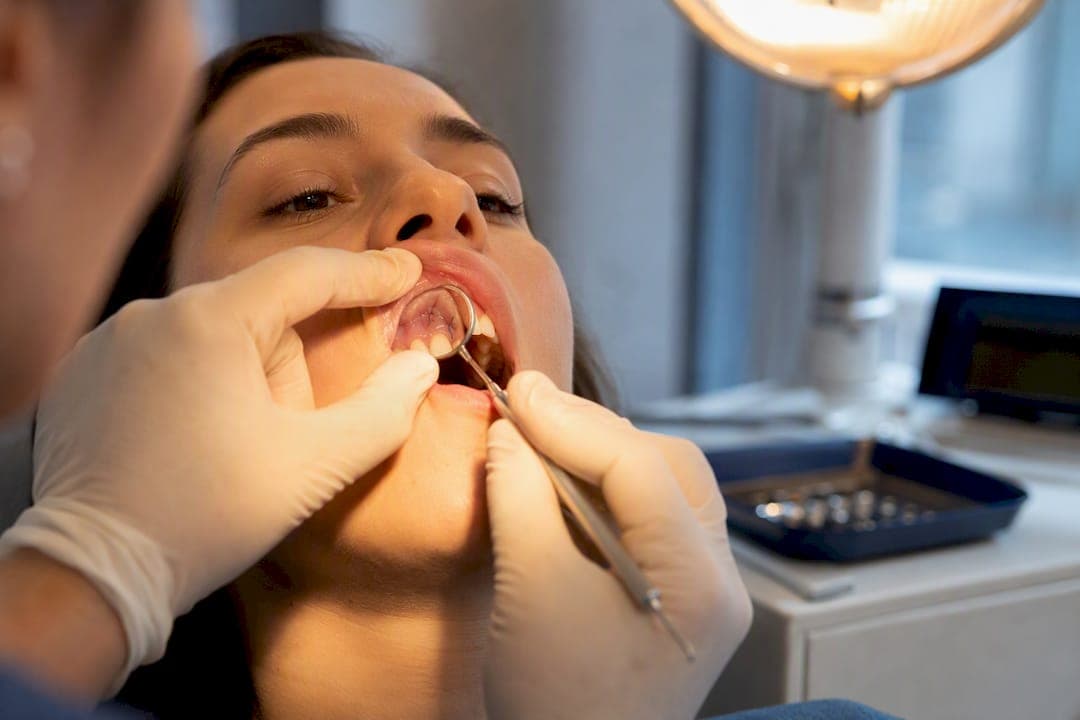
Most dental stitches dissolve or get removed within 3 to 14 days, though some synthetic materials take longer. Right now, the single most important thing you can do is leave them alone. Don't poke, pull, or probe with your tongue or fingers, skip straws and smoking, and start gentle saltwater rinses after the first 24 hours. Call your dentist for heavy bleeding, spreading swelling, fever, or exposed bone.
TL;DR:
- Resorbable sutures like chromic gut and Vicryl Rapide typically dissolve within 7 to 14 days, while non-resorbable stitches require manual removal after about a week.
- Factors such as saliva pH, infection, medication, and mechanical friction can accelerate or slow suture dissolution and healing.
- Most stitches loosen or fall out naturally between days 7 and 14, with minimal discomfort, unless there is increasing pain, bleeding, or other signs of complications.
- Proper post-op care includes gentle brushing, saltwater rinses, avoiding straws, smoking, and poking the site to prevent dislodging stitches and promote healing.
- Contact your dentist promptly if stitches fall out early with heavy bleeding, pain worsens after day 3, or visible signs of infection or tissue issues appear.
Table of Contents
- Types of Dental Stitches and How Long They Really Last
- Why Do Some Stitches Dissolve Faster Than Others?
- What Should You Feel Day by Day After Getting Stitches?
- How Do You Care for Stitches in Your Gums Every Day?
- What Should You Eat and How Active Can You Be?
- When Should You Call Your Dentist About Stitch Problems?
- What Does Your Dentist Actually Check at Your Follow-Up?
- What I'd Tell a Friend Nervous About Their Stitches
- Ready for Your Post-Op Check or a New Procedure?
- Where This Guidance Comes From
- Sources
- FAQ
Types of Dental Stitches and How Long They Really Last
Not all stitches are built the same, and the material your dentist chose determines a lot about what you should expect over the next two weeks. Dentists generally pick between two categories: resorbable (dissolvable) and non-resorbable (the kind that need to be removed at a follow-up visit).
Resorbable sutures break down through a natural process called hydrolysis, where saliva and enzymes slowly dissolve the material. Non-resorbable sutures, usually silk, polyester, or PTFE, stay intact until a dentist physically removes them, typically at a follow-up appointment scheduled 7 to 14 days after surgery.
Here's how the common materials break down in terms of timing, based on oral surgery suturing guidance from NCBI Bookshelf:
- Chromic gut: dissolves in roughly 7 to 10 days, holding tensile strength for about the first 5 days.
- Vicryl Rapide: provides about 50% wound support at day 5 and fully absorbs by around day 42, according to Healthline's breakdown of dissolvable stitches.
- Standard Vicryl (coated polyglactin): holds strength for about 28 days, with complete absorption often taking 56 to 70 days.
- Synthetic PGA: typically hydrolyzes fully within 21 to 28 days in the oral environment.
- Polydioxanone (PDS): a monofilament that retains around 70% of its tensile strength for two weeks, making it a common choice where longer support is needed.
- Silk and polyester: non-resorbable, removed manually once the wound has closed enough.
The procedure you had usually predicts the material. A straightforward tooth extraction often uses chromic gut or Vicryl Rapide because the socket heals fast and doesn't need long-term support. Implant surgery, where the gum tissue needs to stay closed under more tension while the bone integrates, tends to favor standard Vicryl or PDS. Gum grafts, which involve moving soft tissue from one site to another, often use finer, longer-lasting sutures because that graft needs steady support for weeks, not days.
Your dentist chooses the material based on how much mechanical force the site will face and how long the tissue needs to stay closed, matching suture strength to the actual chewing and flap tension at that spot, not just habit.
Why Do Some Stitches Dissolve Faster Than Others?
The timelines above are averages, not guarantees. Several things push your healing faster or slower than the textbook number, and understanding them helps you tell normal variation from a real problem.
Your oral environment plays a bigger role than most people realize. Saliva pH, whether the site gets infected, and even the specific spot in your mouth all affect how quickly hydrolysis happens. A suture sitting where your tongue constantly brushes against it will often loosen faster than one tucked against your cheek, simply from repeated mechanical friction.
Systemic health factors matter too. Conditions like GERD introduce more acidic exposure into the mouth, which can speed up how fast resorbable material breaks down. On the other end, medications like corticosteroids or anything that suppresses your immune system can slow overall tissue healing, even if the suture itself dissolves on schedule. This mismatch, fast-dissolving stitch but slow-healing tissue underneath, is one reason dentists ask about your medication list before surgery.
Suture construction matters as much as chemistry. Monofilament sutures (a single, smooth strand) tend to resist bacterial buildup better and often hold their strength more predictably than braided sutures, which have more surface area where bacteria and debris can collect. Clinical technique, including which knot the surgeon uses and how tightly it's tied, also affects how soon a stitch starts to feel loose.
Then there's the behavioral side, the part actually within your control:
- Poking or flicking the stitch with your tongue or a finger loosens the knot early.
- Smoking introduces heat, chemical irritation, and suction that all work against the wound.
- Aggressive rinsing or spitting can physically dislodge a suture before it's ready to go.
- Chewing directly on the surgical site adds mechanical stress the stitch wasn't meant to handle yet.
Pro Tip: If you take medication for reflux or an autoimmune condition, mention it at your pre-op visit. Dentists sometimes adjust the suture material choice specifically because of how a patient's medication list affects healing speed.
What Should You Feel Day by Day After Getting Stitches?
Healing follows a fairly predictable arc, and knowing the shape of it takes a lot of the guesswork out of the first two weeks.
- Hours 0 to 48: Your body is forming and stabilizing a blood clot at the site. This is the most fragile window. Avoid any rinsing beyond what your dentist specifically allows, since forceful swishing can dislodge the clot and the stitch holding tissue over it.
- Days 3 to 7: Soreness typically peaks around day 2 or 3, then eases steadily. Mild throbbing, tightness around the stitch, and some sensitivity to temperature are all normal here.
- Days 7 to 14: This is when many dissolvable sutures start to loosen or fall out on their own. You might notice a small piece of thread in your mouth or on your pillow, this is usually the suture doing exactly what it's designed to do.
A loose thread on its own, especially past day 7, is rarely an emergency. According to patient guidance on dissolving timelines, an early loose stitch is generally not a concern as long as pain and swelling are trending down rather than up.
Not concerning: mild soreness, slight thread fraying, a small piece of dissolving suture in your mouth, faint metallic taste from minor oozing.
Worth a call: pain that gets worse after day 3 instead of better, a stitch that comes out fully within the first 48 hours accompanied by bleeding, or any visible gap where the wound edges have pulled apart. For a broader sense of what normal extraction healing looks like beyond the stitch itself, see this guide to tooth extraction healing timelines.
How Do You Care for Stitches in Your Gums Every Day?
Good stitches in gums care isn't complicated, but it does require some precision in the first week. Here's the routine that actually matters.
Brushing without disturbing the site
Use a soft-bristled brush for the entire healing period, not just around the stitches. For the first 24 to 48 hours, avoid brushing directly over the surgical site entirely, brush everywhere else as normal. After that window, you can gently brush around the stitch itself using light, short strokes. Don't scrub. The goal is removing plaque from nearby teeth without dragging bristles across the wound.
Rinsing the right way
Skip rinsing altogether for the first 24 hours; even swishing water can dislodge a fresh clot. Once that window passes, saltwater rinses become your best tool. Mix half a teaspoon of salt into 8 ounces of warm water and rinse gently, letting the liquid move around passively rather than swishing hard, then let it fall out rather than spitting forcefully. Do this 2 to 3 times a day, especially after meals.
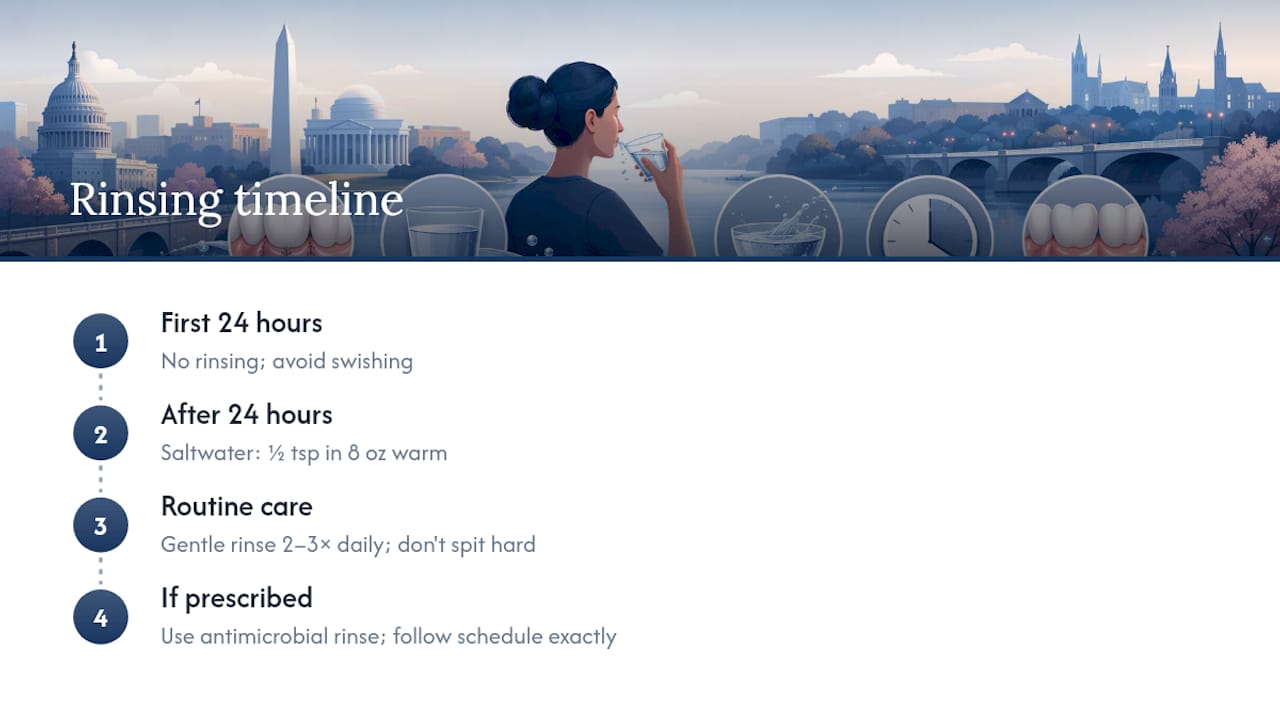
If your dentist prescribed an antimicrobial rinse like chlorhexidine, follow that schedule exactly as given rather than substituting saltwater for it. The two serve different purposes: saltwater reduces general bacterial load and soothes tissue, while prescription rinses target infection risk more directly.
Oxford Health NHS Foundation Trust's post-op guidance echoes this same order of operations: avoid forceful rinsing for the first day, then introduce gentle saltwater rinsing once the initial clot has stabilized.
Managing pain and minor bleeding
Some oozing and mild discomfort is completely normal for the first day or two. Here's how to handle it:
- Cold compress: apply to the outside of your cheek in 15 to 20 minute intervals during the first 24 hours to control swelling.
- Gauze pressure: if bleeding restarts, fold clean gauze into a pad, place it directly over the site, and bite down firmly for 20 to 30 minutes without checking on it repeatedly.
- OTC pain relief: acetaminophen or ibuprofen (if your dentist hasn't restricted it) usually handles typical post-op soreness.
- Prescribed medication: take exactly as directed, don't skip doses hoping to "tough it out," since staying ahead of pain is easier than catching up to it.
The behavioral rules that make or break healing
A short list of don'ts prevents most avoidable complications:
- No straws for at least a week; suction can dislodge both clots and stitches.
- No smoking or vaping during the healing window, ideally longer.
- No vigorous spitting, even when rinsing.
- No poking the area with your tongue, a finger, or a toothpick, no matter how tempting that loose thread feels.
Pro Tip: Keep a small mirror handy and check the site once a day in good light rather than constantly running your tongue over it. Visual checks satisfy curiosity without the physical disturbance that tongue-poking causes.
A simple first-week checklist
For quick reference, here's what a normal week looks like laid out simply:
| Day | Rinsing | Brushing | Watch for |
|---|---|---|---|
| 1 | None | Avoid site, brush elsewhere | Clot forming, mild oozing |
| 2 to 3 | Gentle saltwater, 2 to 3 times | Soft brush around site | Peak soreness, some swelling |
| 4 to 7 | Saltwater plus prescribed rinse if given | Normal gentle brushing | Swelling receding, less discomfort |
| 7 to 14 | Continue as needed | Full normal brushing | Stitch loosening or falling out |
What Should You Eat and How Active Can You Be?
Diet and activity choices directly affect whether your stitches stay put or come loose ahead of schedule.
Soft foods do the heavy lifting for the first several days. Smoothies (skip the straw), yogurt, mashed potatoes, scrambled eggs, oatmeal, and blended soups all deliver nutrition without demanding much chewing near the surgical site. Keep temperatures lukewarm rather than hot or icy, since extreme temperatures can irritate healing tissue and increase sensitivity.

Steer clear of anything crunchy, sticky, spicy, or acidic for at least the first week. Chips, nuts, and crusty bread can physically catch on a stitch or lodge in a socket. Sticky candy or caramel can pull at the wound edges. Spicy and acidic foods, citrus, hot sauce, vinegar-based dressings, irritate exposed tissue and can sting enough to make eating miserable.
Activity matters just as much as food. Skip strenuous exercise for at least 3 to 4 days, since raising your heart rate and blood pressure can increase bleeding risk at the site. Alcohol should wait until you're off any prescribed pain medication and the wound has meaningfully closed, usually a week at minimum, since alcohol can interfere with clotting and irritate tissue directly. Nicotine in any form, cigarettes, vaping, or chewing tobacco, delays healing and raises complication risk substantially, so the longer you can hold off, the better your outcome.
If you're flying soon after surgery, know that cabin pressure changes can occasionally cause discomfort at a fresh extraction or graft site, particularly within the first few days. It's rarely dangerous, but it's worth mentioning to your dentist if you have travel booked close to your procedure date. For readers looking for more detailed guidance on early post-surgical eating, this practical post-implant diet guide covers phase-by-phase food choices that align closely with what most oral surgeons recommend.
When Should You Call Your Dentist About Stitch Problems?
Most stitch issues resolve on their own, but a few situations need a phone call rather than a wait-and-see approach.
- A stitch feels loose or you see thread in your mouth. If it's past day 5 to 7 and your pain and swelling are improving, this is usually just the material dissolving as intended. Rinse gently with saltwater and avoid touching it. Don't pull.
- You're bleeding more than a slow trickle. Apply firm gauze pressure for 20 to 30 minutes first. If bleeding continues heavily after that, call your dentist rather than waiting it out.
- A whole stitch falls out within 24 to 48 hours of surgery, especially with fresh bleeding. This is different from a day 10 loose thread. Early, complete loss combined with bleeding warrants a same-day call.
The clear red flags that mean "call now, don't wait" include pain that gets worse after day 3 instead of easing, fever above 100.4°F, swelling that's spreading rather than plateauing, visible bone at the site, or a persistent foul taste or odor that doesn't improve with rinsing. It's worth separating this from dry socket, a related but distinct complication tied to blood clot loss rather than the stitch itself; the ADA's overview of dry socket notes that smoking and straw use are the biggest behavioral triggers, which is exactly why those habits show up twice in this article's don't list.
When you call, give specifics: which tooth or area, how many days post-op you are, a pain rating, whether swelling is increasing or stable, and a photo if you can get one in decent light. That level of detail lets your dentist triage over the phone and decide whether you need to come in today or can monitor at home. If symptoms point toward something urgent, same-day evaluation is standard practice at most oral surgery offices; see this guide on recognizing wisdom tooth pain red flags for a sense of what that evaluation typically involves.
Non-resorbable stitches follow a different rule entirely: don't try to remove them yourself, even once the wound looks closed. A clinician needs to snip and pull them out, usually at a scheduled visit 7 to 14 days after surgery. If a long tail is irritating your cheek or tongue before that appointment, your dentist can often just trim the excess thread rather than removing the whole stitch early.
What Does Your Dentist Actually Check at Your Follow-Up?
A lot of generic aftercare advice skips the parts that experienced clinicians actually look for, so here's what tends to get overlooked.
A leading clinician at the practice built an approach around one principle from military medicine: review the full picture before assuming a symptom is routine. That means checking a patient's medication list for anything that speeds absorption or slows healing, asking about reflux or GI conditions that raise oral acidity, and confirming whether a non-resorbable suture actually needs a scheduled removal date rather than leaving it to chance.
A few things worth doing before you even feel a problem:
- Write down every medication and supplement you're taking and mention it at your post-op check, even ones that seem unrelated to dental care.
- If you have GERD or frequent acid reflux, flag it specifically, since increased oral acidity can shift how fast resorbable sutures dissolve.
- Confirm at discharge whether your sutures are resorbable or need a removal appointment, and get that date on the calendar before you leave.
- Save your dentist's direct contact information somewhere accessible, not buried in an old text thread, so you're not searching for it during a stressful moment.
- Take a baseline photo of the healing site around day 3 to 4, so if something changes later, you have a comparison point to show your dentist.
Same-day appointment availability is offered specifically for moments like a loose stitch that's causing worry or a bleeding episode that needs quick eyes on it. The practice has handled many post-op calls and prioritizes fast, in-person reassurance, with imaging and treatment history on file in-house to avoid delays waiting on records from elsewhere.
What I'd Tell a Friend Nervous About Their Stitches
Here's the thing most people get wrong about gum stitches: they treat a loose thread like a five-alarm fire when, in the overwhelming majority of cases, it's just biology doing exactly what it's supposed to do. The material dissolves, the knot lets go, a little piece ends up on your pillow. That's not failure. That's the plan working.
Where I'd push back on conventional aftercare advice is the obsession with "keeping it clean" to the point of over-handling the site. Rinsing five or six times a day, poking at it to check if it's still there, brushing too aggressively because you're anxious about infection, all of that does more harm than the bacteria you're trying to avoid. Clean but undisturbed beats obsessively managed every time.
The piece that actually deserves more attention is the medication and health history angle. Reflux, autoimmune conditions, steroid use, these change your timeline in ways a generic pamphlet never mentions. If your healing feels off compared to what you read online, it's often not because something went wrong. It's because your body chemistry isn't the textbook average, and that's worth a phone call, not a Google spiral.
— Jake
Ready for Your Post-Op Check or a New Procedure?
If you're mid-recovery from an extraction, implant, or gum graft and something about your stitches doesn't feel right, or you just want a professional set of eyes on healing that's going fine but making you nervous, DC Implant & Cosmetic Dentistry offers same-day appointments specifically for situations like this.

The practice performs the full range of care in-house, from tooth extractions and bone grafting to oral surgery follow-up and implant repair, so there's no waiting on referrals or records transfers when you need a quick answer. The clinic culture is built on thorough imaging and clear treatment plans rather than guesswork, with patients consistently valuing same-day accessibility when post-op questions arise.
If you're not currently in recovery but noticing ongoing issues with gum health, the practice's general dentistry services cover everything from routine exams to fillings so small problems don't turn into surgical ones. Bring a list of your current medications and, if you have one, a photo of the area in question. Call or book online to get a same-day evaluation on the calendar.
Where This Guidance Comes From
The care steps in this guide draw on suturing and material science documented in the NCBI Bookshelf's oral surgery suturing reference, practical aftercare protocols from Oxford Health NHS Foundation Trust and Harvard School of Dental Medicine, and patient-facing timeline explainers from Healthline and DentistDecoded. Together, they cover the clinical mechanics and the everyday practical questions patients actually ask.
This article is general information, not a substitute for advice from a qualified doctor. Consult a qualified healthcare professional about your own circumstances before acting on anything here.
Sources
- Oral Surgery Suturing — NCBI Bookshelf
- Care of the mouth after a surgical procedure — Oxford Health NHS Foundation Trust
- Oral Surgery Post-Operative Instructions — Harvard School of Dental Medicine
- Dissolvable Stitches After Tooth Extraction | Healthline
FAQ
Can I brush my teeth if I have stitches in my mouth?
Yes, you should keep brushing your teeth during recovery, just avoid the surgical site directly for the first 24 to 48 hours. After that, use a soft-bristled brush and gentle strokes around the stitch itself, while brushing everywhere else in your mouth normally from day one.
Can dental stitches be left in too long?
Non-resorbable stitches left in well past the typical 7 to 14 day removal window can start irritating surrounding tissue or trapping bacteria, so it's worth keeping that follow-up appointment rather than skipping it. Resorbable stitches rarely cause problems by lingering, since they're designed to dissolve fully, though standard Vicryl can take up to 70 days for complete absorption.
Is getting stitches removed from your gums painful?
Most patients describe stitch removal as a quick tugging or pressure sensation rather than genuine pain, since the tissue has typically healed enough by the follow-up visit that nerve sensitivity is much lower. It usually takes just a few minutes in the dental chair with no anesthesia required.
What helps mouth stitches dissolve faster?
Nothing you do will meaningfully speed up the chemical process of hydrolysis, but keeping the area clean with gentle saltwater rinses and avoiding smoking or excessive tongue contact prevents unnecessary delays. Reflux and certain medications can naturally shift dissolving speed, which is why mentioning your health history to your dentist matters more than any home remedy.
When should I worry about a loose stitch after dental surgery?
A loose stitch past day 5 to 7 with improving pain and swelling is normal and rarely a concern. Worry if a stitch comes out entirely within the first 24 to 48 hours alongside fresh bleeding, or if pain and swelling get worse instead of better as the days pass.