
Digital Smile Design (DSD) is a clinical planning process that builds a realistic digital preview of your proposed smile from photos, video, and 3D scans, so you can see and approve the look before any irreversible dental work starts. It replaces guesswork with a shared, visual plan between you, your dentist, and the lab. The result is fewer surprises and a much clearer idea of what your finished smile will actually look like.
TL;DR:
- Digital Smile Design primarily benefits complex cases involving multiple procedures like implants, veneers, and orthodontics, rather than simple whitening or minor corrections.
- Accurate planning depends heavily on high-quality input, such as consistent photography, video, and intraoral scans, which are essential for reliable digital simulations.
- The mock-up trial phase is crucial, as it reveals functional and speech issues that software alone cannot predict, and adjustments often occur at this stage.
- Treatment timeline varies from weeks for straightforward cases to several months for comprehensive reconstruction, with costs integrated into the overall treatment plan rather than billed separately.
- The success of DSD relies on patient feedback during mock-up evaluation, which ensures design adjustments before irreversible work begins.
Table of Contents
- What Digital Smile Design Actually Is and Why It Exists
- The Digital Smile Design Process, Step by Step
- The Tools That Make an Accurate Preview Possible
- Why Digital Smile Design Actually Benefits Patients
- Who Digital Smile Design Actually Works Best For
- What to Expect for Timing and Cost
- Where the Digital Preview Has Limits
- How DC Implant & Cosmetic Dentistry Applies Digital Smile Design
- The Part of Digital Smile Design Nobody Talks About
- Ready to See Your New Smile Before You Commit to It
- Sources
- FAQ
What Digital Smile Design Actually Is and Why It Exists
Digital Smile Design got its start as a way to fix a real communication gap in cosmetic dentistry. Before DSD, patients approved treatment plans based on verbal descriptions and, at best, a few flat photos. Dentists and lab technicians made judgment calls about tooth shape and proportion largely on their own. DSD software closed that gap by turning facial photography, video, and 3D scan data into a layered visual plan that everyone involved can review before a single tooth gets touched.
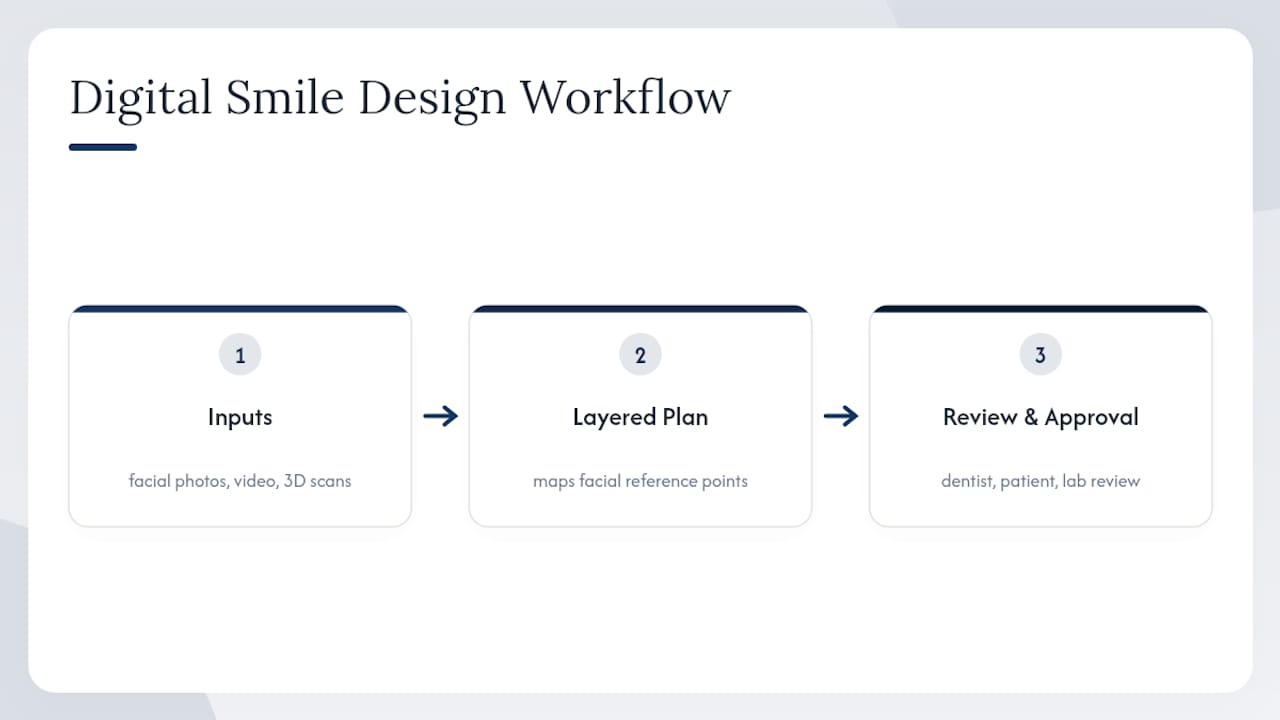
The core idea is facially driven planning. Rather than designing a smile around the teeth alone, DSD software maps it against your face: the midline, the smile arc, how your lips move when you talk and laugh, and how much tooth shows at rest versus during a full smile. These facial reference points determine tooth shape, length, and proportion in a way that a mold or a single photo never could.
That facial framework also makes DSD a genuine communication bridge. A dentist can show a patient two or three versions of a new smile side by side, get real feedback on the ones that feel too big, too white, or too uniform, and send the approved version straight to the lab as a digital blueprint. That single shared file replaces pages of written notes and reduces the chance of a lab building something the patient never actually agreed to.
Orthodontic smile design uses the same underlying logic. Clear aligner cases run through comparable facial analysis so tooth movement lines up with lip support and smile arc, not just crowding correction. Whether the plan involves clear aligners, veneers, or a mix of both, the facial map stays the reference point from the first photo to the final fitting.
The Digital Smile Design Process, Step by Step
A DSD case moves through a defined sequence, and knowing the order helps you understand what each appointment is actually for.
- Consultation and design brief. Your dentist asks what bothers you about your current smile, what you want to change, and what you want to keep. This conversation shapes every decision that follows.
- Standardized photography and video. The clinic captures a set of reference images, typically frontal, profile, full smile, and retracted views showing the teeth alone, plus a short video clip. The video matters because it captures how your lips and smile move dynamically, something a static photo cannot show.
- Intraoral scanning and bite records. A digital scanner captures a 3D model of your teeth and gums, replacing the old goofy impression trays. Bite records document how your upper and lower teeth meet.
- Digital analysis and simulation. The photos, video, and scans get imported into DSD software, where your dentist builds a layered simulation overlaying a proposed new smile onto your actual face and teeth.
- Patient review and feedback. You see the simulation and give direct input: bigger, smaller, whiter, more natural. This is the point where adjustments are cheap and easy, long before any lab work begins.
- Mock-up trial in the mouth. Once you approve a design, the clinic creates a temporary mock-up you can actually wear, usually made from a resin or composite material placed over your existing teeth.
- Phonetic and functional checks. With the mock-up in place, your dentist checks how you pronounce F and S sounds, how your lips rest, and whether your bite feels normal.
- Final approval and lab fabrication. Only after you sign off does the lab begin fabricating the permanent restorations, whether that's veneers, crowns, or another final product.
- Clinical delivery. The finished restorations get placed, checked against the approved design, and adjusted as needed.
That mock-up step deserves extra attention. It is often the moment patients realize a design that looked perfect on screen needs a small tweak in real life, because a mock-up reveals phonetic and functional issues that a 2D image simply cannot show.
The Tools That Make an Accurate Preview Possible
DSD accuracy depends entirely on the quality of the inputs. Standardized photography and video, taken from consistent angles and distances, keep the facial measurements reliable across every stage of planning.
The other core technologies include:
- Intraoral scanners that capture a precise 3D digital model of your teeth and gums without the mess of traditional impression material. If you're curious how these devices actually work, the mechanics behind intraoral scanner accuracy explain why they've largely replaced old-style trays.
- Bite registration tools that record how your upper and lower teeth align, feeding directly into the digital simulation.
- DSD simulation software, which ranges from simple 2D overlay templates to full 3D CAD/CAM platforms that let a dentist manipulate tooth shape, color, and position digitally.
- 3D printers and CAD/CAM lab systems that turn the approved digital design into a physical mock-up or final restoration, often within the same practice.
- Cone-beam CT (CBCT) imaging, added selectively for implant cases or when a dentist needs to assess bone structure before finalizing a plan.
Not every case needs every tool. A single-tooth whitening consult might only involve photography and a basic 2D mockup. A full-mouth rehabilitation combining implants, veneers, and orthodontics will likely use the entire stack, including CBCT. The technology scales to the complexity of the case, not the other way around.
Why Digital Smile Design Actually Benefits Patients
The single biggest shift DSD creates is turning the patient from a passive recipient of treatment into an active participant in designing it. You get a real vote on tooth shape, length, and proportion during the design phase, not after the fact.
That involvement pays off in several concrete ways:
- Clearer informed consent. You approve a specific visual design, not a vague verbal description, before any irreversible work happens.
- Higher case acceptance. Patients who can see and adjust their future smile are more likely to move forward with treatment they fully understand.
- Fewer remake cycles. Labs work from an approved digital blueprint instead of interpreting written notes, which cuts down on costly redos.
- Better interdisciplinary coordination. On cases involving an orthodontist, periodontist, and restorative dentist, everyone works from the same digital file.
A narrative review of restorative dentistry practices found that DSD meaningfully improves communication between patient, dentist, and lab, and that this improved alignment translates directly into higher case acceptance. Separate clinical literature also points to a quieter benefit: DSD resolves esthetic decisions digitally before any tooth is prepared, which saves chairside time and reduces the number of adjustment visits needed later.
Pro Tip: Bring reference photos of smiles you like, and photos of your own smile from a few years back if you have them. Both give your dentist a faster, more concrete starting point than verbal descriptions alone.
Who Digital Smile Design Actually Works Best For
DSD suits patients with realistic goals and teeth or gums that are either healthy or already scheduled for treatment before cosmetic work begins. Active decay, untreated gum disease, or bite problems typically need to be addressed first, since building a cosmetic plan on top of unresolved dental disease undermines the whole point of predictable results.
A good DSD candidate is willing to sit through the mock-up stage and give honest feedback rather than rubber-stamping the first design shown. That back-and-forth is where the real value gets captured.
Common treatments that use DSD include:
- Porcelain veneers and composite bonding
- Professional teeth whitening as part of a broader smile plan
- Crown and bridge work on visible front teeth
- Orthodontic and clear aligner treatment
- Dental implants, particularly in the smile zone
- Full-mouth rehabilitation combining several of the above
DSD delivers the most value on multidisciplinary or irreversible cases. A single whitening treatment barely needs it. A full-mouth reconstruction involving implants, veneers, and orthodontic movement absolutely does, because that's where miscommunication between specialists causes the most expensive mistakes.
What to Expect for Timing and Cost
A first DSD consultation for photos, scans, and an initial preview usually takes around 20 to 30 minutes on top of a standard exam. That appointment covers the standardized photography, the intraoral scan, and often a first-pass digital simulation you can react to on the spot.
Total timeline depends heavily on case complexity:
- Simple cases (whitening plus a few veneers) can move from consult to final delivery in a matter of weeks, largely limited by lab fabrication time.
- Complex cases involving orthodontics or implants can take several months, since tooth movement and bone healing operate on biological timelines no software can speed up.
Cost is usually not billed as a separate DSD fee. It typically gets folded into your overall cosmetic treatment quote, with materials and the extent of lab work driving the final number far more than the digital planning itself. A few practical moves speed things along: finishing any whitening before final shade-matching, addressing basic hygiene issues early, and coming to the first visit with a clear sense of your priorities.
Where the Digital Preview Has Limits
A DSD simulation is a planning tool, not a photographic guarantee. It shows a well-informed projection of what's achievable, built from your actual facial measurements and dental anatomy, but several biological factors can shift the final outcome slightly from the screen version.
Material optics play a role: porcelain and composite reflect light differently than a rendered image, especially under different lighting. Soft tissue can shift as gums heal after any periodontal work, and bite relationships sometimes change subtly once new restorations are in place. This is exactly why careful case selection matters, and why a minimally invasive approach is preferable whenever the case allows it, preserving healthy tooth structure rather than reshaping more than necessary.
Documented approval at each stage protects both patient and dentist. It also sets clear expectations for the follow-up visits where minor bite or shade adjustments sometimes happen after initial delivery.
How DC Implant & Cosmetic Dentistry Applies Digital Smile Design
Dc-dentistry builds its cosmetic dentistry treatment plans around the same records-to-mock-up sequence outlined above: standardized photography and scanning, digital simulation, an in-mouth mock-up you can actually evaluate, and final fabrication only after you approve the design.
The practice's service mix lines up directly with common DSD applications, including veneers, clear aligners, dental implants, and same-day restorative options like Teeth in a Day. Appointment availability means a first DSD consultation can be scheduled without extended delays. An experienced dentist leads treatment planning, and the practice has a patient base with numerous positive reviews, indicating consistent follow-through from initial design to final result. Patients considering a multidisciplinary plan can browse real outcomes in the smile gallery before booking.
The Part of Digital Smile Design Nobody Talks About
Most explanations of DSD focus on the software and the wow factor of seeing your future smile on a screen. That's the easy part to market and the least interesting part clinically. The step that actually determines whether you'll be happy with the result is the mock-up trial, the unglamorous phase where you're walking around with temporary material in your mouth, testing how it feels to talk and smile in public.
Conventional coverage of DSD tends to undersell that stage, treating it as a formality between the digital design and the final restorations. It isn't. It's the only point in the entire process where biology gets a vote alongside aesthetics, and where a design that looked flawless on a monitor sometimes needs a quiet adjustment before it becomes permanent.
If you're evaluating a practice for DSD, ask specifically how much time they build in for mock-up feedback, not just how advanced their scanning software is. The software creates the preview. The mock-up is where you actually find out if the preview was right.
— Jake
Ready to See Your New Smile Before You Commit to It
If you're comparing routes to a new smile, whether that's a DIY whitening kit, a mail-order aligner company, or a traditional dentist working from photos alone, the practical advantage of an in-office DSD consultation is that you see your specific face and teeth mapped digitally before agreeing to anything permanent. No mail-order kit or app can run a mock-up trial in your actual mouth.

At your first visit, bring reference photos of smiles you like, a short list of concerns about your current teeth, and any records from prior dental work. The practice offers timely appointments, so you can often move from consultation to a digital preview in a single visit, and financing options may be available for larger treatment plans. If porcelain veneers, bonding, or a broader smile overhaul are on your mind, the smile makeover page walks through what a full DSD-guided plan looks like from start to finish. Book a consultation and see your options mapped out before you decide on anything.
This article is general information, not a substitute for advice from a qualified doctor. Consult a qualified healthcare professional about your own circumstances before acting on anything here.
Sources
FAQ
What Is Digital Smile Design?
Digital Smile Design is a planning process that uses photos, video, and 3D scans to build a digital preview of your proposed smile, which you review and approve before any permanent dental work begins.
How Much Does Digital Smile Design Cost?
DSD is rarely billed as a separate fee; it's typically bundled into your total cosmetic treatment quote, with materials and lab work driving most of the cost.
How Much Does a Digital Dental Impression Cost?
Digital impressions from an intraoral scanner are usually included in the overall exam or treatment fee rather than charged separately, since most modern practices use scanning as their standard record-taking method.
How Long Does Digital Smile Design Take?
The initial photo and scanning appointment takes about half an hour, while the full process from consultation to final restorations can take several weeks to several months depending on case complexity.