Teeth whitening costs run from $5 for a tube of whitening toothpaste to $1,000 or more for a single in-office session, and the right pick depends on your budget and your deadline. For a slow, low-cost improvement, over-the-counter (OTC) strips or LED kits work fine. For the best long-term value, dentist-issued custom trays usually win because you only pay for gel refills after the first purchase. If you need dramatic change fast, in-office whitening is the only route that gets you there in a single visit. Whitening is elective, so expect to pay out of pocket, though financing can spread the cost out.
TL;DR:
- Custom tray whitening typically costs between $150 and $600 initially, with refill gels totaling $30 to $80, and delivers results comparable to one in-office visit over time.
- In-office whitening sessions range from $300 to over $1,000 and produce six to eight shades of whitening in a single 60 to 90-minute visit, making it the fastest method.
- The cost of whitening varies significantly by location, with major metros like New York and Los Angeles charging more due to higher overhead and demand.
- Professional whitening generally offers faster results and better uniformity, but custom trays are more cost-effective long-term if maintenance is continued over several years.
- For a complete three-year cost estimate, include initial exams, possible sensitivity treatments, recurring gel refills, and potential multiple visits, as these add to the total expenses beyond the first quote.
Table of Contents
- How Much Does Teeth Whitening Cost by Method?
- Professional Whitening vs. At-Home: Which Delivers Better Value?
- What Makes One Whitening Quote Higher Than Another?
- Does Insurance Cover Teeth Whitening Costs?
- How Do You Budget for Whitening and Choose the Right Option?
- What DC Implant & Cosmetic Dentistry Sees in Practice
- Does Teeth Whitening Cost More in Some Cities Than Others?
- What's the Full Cost of a Realistic Whitening Plan?
- How Long Does the Whitening Process Take From Start to Finish?
- Is Speed or Long-Term Value the Better Priority?
- Ready to Get an Accurate Whitening Quote?
- Where This Cost Data Comes From
- Sources
How Much Does Teeth Whitening Cost by Method?
Every whitening method trades speed against price, and the gap between the cheapest and most expensive option is wider than most people expect.
Whitening toothpaste runs $5 to $15 and works almost entirely on surface stains from coffee, wine, and tobacco. It won't touch deeper discoloration, and most people see only a shade or two of change after several weeks of daily brushing.
Whitening strips cost $20 to $70 per box and use a lower concentration of hydrogen peroxide than professional products. Expect one to three shades of improvement over one to two weeks, with results lasting a few months before touch-ups are needed.
At-home LED kits sit between $30 and $300 depending on the brand and whether they include replacement gel cartridges. The blue or violet light itself doesn't do much of the whitening; the peroxide gel is still doing most of the work, but the light can speed the reaction slightly, as explained in Your Guide to Safe Tooth Whitening at Home.
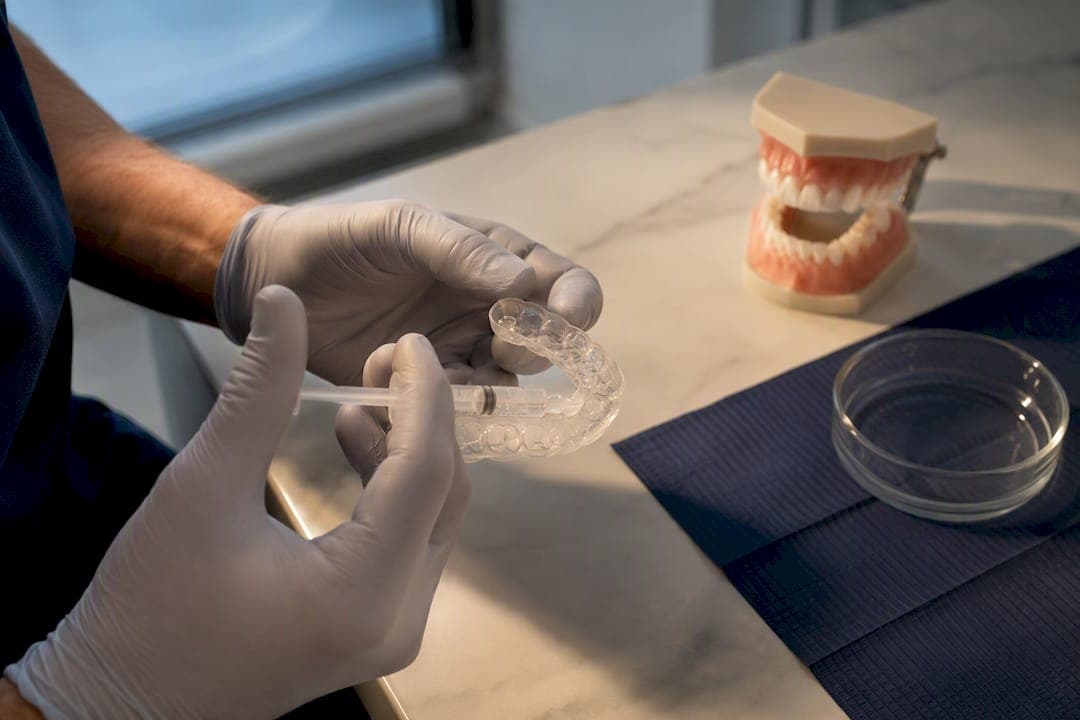
Dentist-supplied custom trays are where the math starts to favor a slightly bigger upfront spend. Custom trays typically cost between $150 and $600 for the initial fitting, molds, and starter gel supply, usually using carbamide peroxide (10% to 20%) or hydrogen peroxide gel at lower concentrations than in-office formulas. Because the tray is custom molded to your teeth, the gel sits evenly against enamel instead of pooling or missing spots, which is a common problem with one-size-fits-all OTC trays. After the initial cost, refill gel syringes run $30 to $80 and typically last several months of touch-up use. Custom trays often deliver results comparable to a single in-office visit over a longer timeline, and because the tray itself is reusable, your ongoing cost is just the gel.
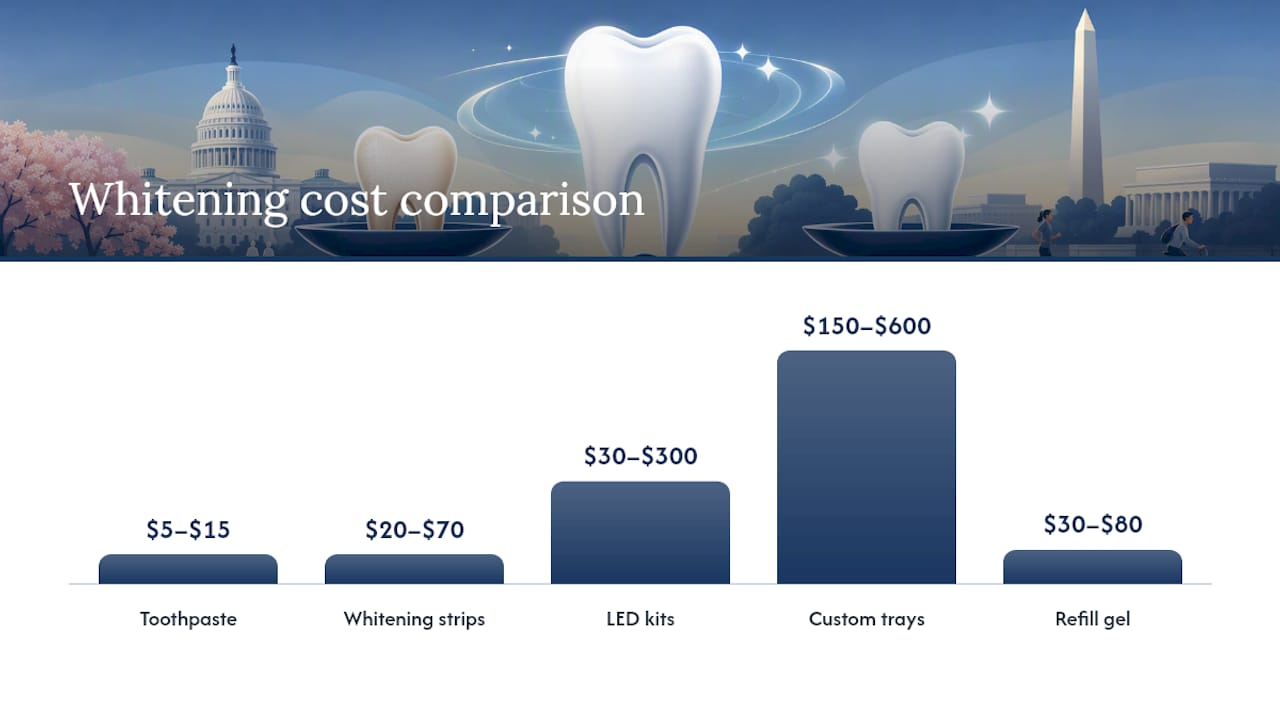
In-office professional whitening is the fastest and most expensive route. A single session typically runs $300 to $1,000 or more, depending on the protocol used, and can produce six to eight shades of change in one appointment lasting 60 to 90 minutes. Common branded systems like Zoom and Opalescence Boost use higher-concentration hydrogen peroxide gel, sometimes activated with a curing light or laser, which is why in-office treatment moves faster than any take-home option. Multi-visit protocols, often recommended for heavier intrinsic staining, push the total cost toward the higher end of that range.
Special cases carry their own pricing logic:
- Internal (non-vital) bleaching for a single darkened tooth, usually the result of an old root canal, is billed per tooth rather than per arch and tends to cost more per tooth than standard whitening because it requires a separate procedure inside the tooth.
- Combination protocols, where a dentist pairs custom trays for gradual whitening with one in-office boost before a big event, cost more than either method alone but balance speed against a lower total price than repeated in-office visits.
- Per-arch pricing shows up often in quotes: whitening just the upper arch (the teeth people see most when smiling) costs less than treating both arches, and understanding how staining forms in the first place helps explain why a dentist might recommend one arch over two.
Professional Whitening vs. At-Home: Which Delivers Better Value?
The price difference between professional and at-home whitening comes down to two things: peroxide concentration and fit. In-office gels use a stronger peroxide formula applied under controlled conditions, which is why clinical literature on whitening links higher concentrations to faster shade change and a greater short-term sensitivity risk. A custom tray molded to your teeth spreads gel evenly across enamel; a generic OTC tray or strip often misses edges near the gumline, leaving uneven results.
Here's how the trade-offs typically break down:
- Speed: in-office wins outright, often finishing in one visit versus two to four weeks for trays or strips.
- Cost per shade over time: custom trays usually pull ahead after the first year, since you're only buying gel refills.
- Sensitivity risk: higher with in-office and higher-strength trays; dentists can offset this with desensitizing gel or a staggered schedule that spreads treatment over more, shorter sessions.
- Uniformity: professional fitting reduces gaps and gel pooling that cause blotchy results with drugstore kits.
If you're testing the waters on a tight budget, an OTC strip trial is a reasonable starting point, especially for mild surface staining. If you have deeper staining, a wedding in six weeks, or you've tried OTC products without much change, going straight to custom trays or an in-office visit saves you from paying twice.
Pro Tip: Ask your dentist about staggering in-office sessions across two shorter visits instead of one long one. It often cuts sensitivity without sacrificing much of the final shade result.
What Makes One Whitening Quote Higher Than Another?
Two dentists in the same city can quote wildly different prices for what sounds like the same service, and the reasons are rarely random.
- Location and metro premiums: practices in major metros like New York, San Francisco, and Washington, DC tend to charge more than suburban or rural general dentistry offices for the identical branded protocol.
- Practice specialization: cosmetic-focused clinics often price higher because their staff time and equipment are dedicated to aesthetic work rather than general checkups.
- Scope: whitening a single arch costs less than both, and internal bleaching billed per tooth adds up fast if multiple teeth need it.
- Bundled versus add-on services: some quotes include the exam, cleaning, and desensitizing treatment; others charge separately for each, so a "cheaper" quote can end up costing more once the extras appear.
- Promotions: new-patient bundles or seasonal whitening specials can meaningfully lower the entry price, so it's worth asking directly rather than assuming the sticker price is final.
Does Insurance Cover Teeth Whitening Costs?
Standard dental insurance almost never covers whitening because it's classified as a cosmetic, elective procedure rather than a medically necessary one. A small number of plans offer a discount allowance toward cosmetic treatments, so it's worth calling your insurer directly rather than assuming coverage either way.
Since out-of-pocket payment is the norm, a few tools can soften the hit:
- FSA or HSA funds can often be applied if whitening is bundled with another eligible procedure; check your plan's specific rules.
- CareCredit and similar third-party financing let you split the cost into monthly payments.
- Payment plans offered directly through a dental practice spread larger cosmetic costs over several months.
- Dental discount plans (membership-based, not insurance) can knock a percentage off cosmetic procedures at participating offices.
One thing many patients miss: the quote you get on day one rarely includes gel refills or a sensitivity treatment down the line. Comparing quotes on a three-year cost projection, not just the initial visit price, shows a very different picture between providers.
How Do You Budget for Whitening and Choose the Right Option?
Before booking anything, get answers to five questions: how many shades of change to expect, the exact product name and peroxide percentage being used, whether an exam or cleaning is bundled into the quote, what the sensitivity management plan looks like, and how much a gel refill costs down the road.
Comparing quotes gets easier once you calculate a rough multi-year total rather than judging on sticker price alone:
- Budget DIY path: whitening strips or toothpaste, roughly $40 to $100 total for a year of maintenance.
- Mid-range plan: custom trays with annual refills, often landing between $200 and Costs for whitening treatments depend on various factors including location, method, and practice type over three years once refill gel is factored in.
- Premium fast plan: one in-office session plus an occasional touch-up kit, typically Costs for whitening treatments depend on various factors including location, method, and practice type to $1,200 depending on how many visits are needed.
If you have a wedding, interview, or photo shoot on the calendar, prioritize speed and book in-office treatment early enough to manage any sensitivity before the event. If there's no deadline, custom trays usually deliver the better long-term value.
Pro Tip: Ask your dentist for the total three-year cost, not just today's invoice. A cheaper first appointment can quietly cost more once refill gel and touch-ups are added in.
What DC Implant & Cosmetic Dentistry Sees in Practice
Patients often ask the same question up front: what's the real cost once refills and touch-ups are counted? The dental team typically walks patients through both custom trays and in-office options during a consultation, matching the recommendation to timeline and stain type rather than defaulting to the fastest or priciest choice. The approach leans on straightforward comparisons over upselling. Specific shade outcomes and pricing vary by case, so a direct consultation remains the only reliable way to get numbers that apply to your teeth.
Does Teeth Whitening Cost More in Some Cities Than Others?
Where you live changes your whitening bill more than most people realize. Dental cost aggregators consistently show higher averages in major metros such as New York, Los Angeles, and Washington, DC, compared to states across the Midwest and South. A single in-office session that costs Costs for whitening treatments depend on various factors including location, method, and practice type in a smaller Midwestern city can easily run $700 or more at a cosmetic-focused practice in a high-cost metro.
The reason isn't just rent. Metro practices tend to carry higher overhead across staff wages, equipment, and lease costs, and cosmetic-focused clinics in competitive markets often price toward the top of the national range because demand supports it. General dentistry offices in the same city, by contrast, frequently price whitening lower since it's a smaller share of their overall business.
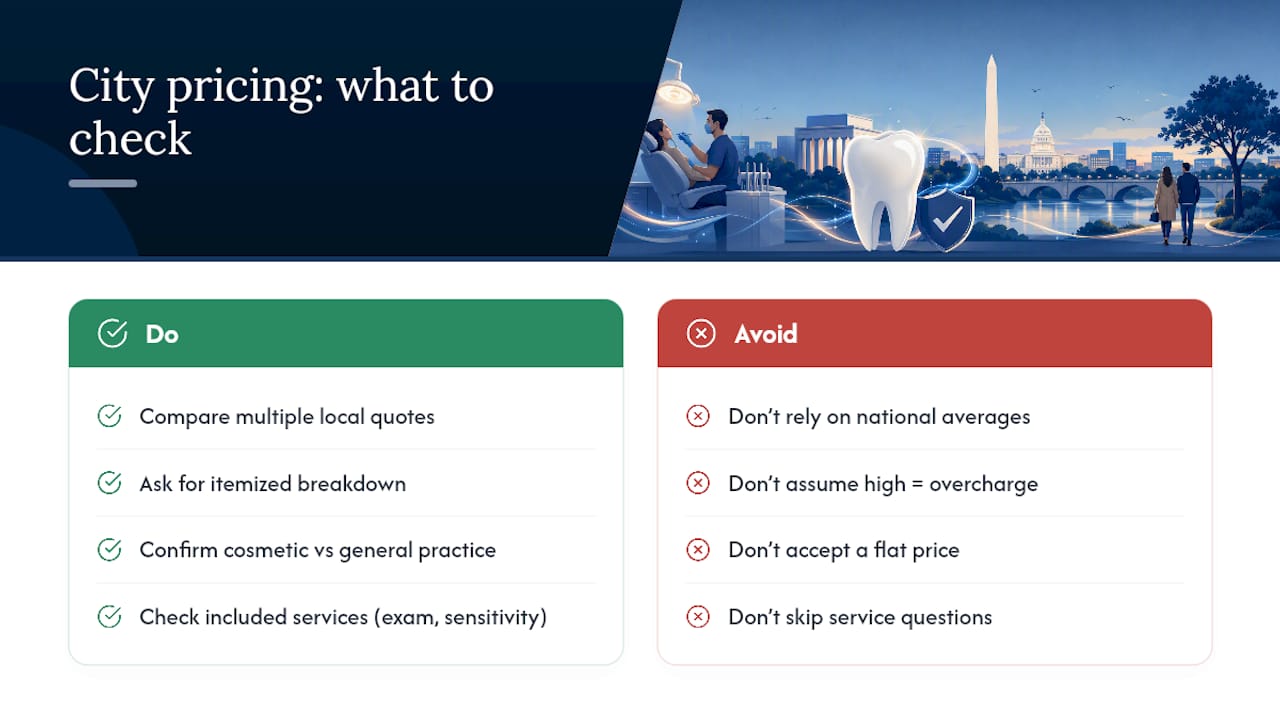
This is exactly why comparing multiple quotes within your own metro area matters more than comparing national averages. A quote that looks high against a national figure might actually be standard for your city, while a quote that looks like a bargain might be skipping the exam or sensitivity treatment that a competing office includes. Ask each office for an itemized breakdown rather than a single flat number, and factor in whether cosmetic dentistry is a core specialty or a side offering at each practice you're considering.
What's the Full Cost of a Realistic Whitening Plan?
A single price point rarely tells the whole story, because most patients end up combining more than one step to get a result that lasts.
A typical budget-conscious plan starts with an exam and cleaning (often $100 to $250 if not already covered by insurance), followed by custom trays ($150 to $600) and one or two gel refills in the first year ($30 to $80 each). That puts a realistic first-year total in the $280 to $960 range, with future years costing only the refill price since the trays are reusable.
A faster plan built around in-office treatment looks different. Add the exam and cleaning, a single in-office session ($300 to $1,000+), and a take-home touch-up kit for maintenance ($30 to $80), and the first-year total often lands between $430 and $1,330. Patients with deeper intrinsic staining sometimes need a second in-office visit, which pushes the total higher.
Add-ons that frequently get left out of an initial quote include desensitizing treatment for sensitive teeth, a follow-up appointment to check shade retention, and touch-up gel for maintaining results past the first year. None of these are usually optional if you want the whitening to hold, so it's worth asking upfront whether they're bundled into the quoted price or billed separately once treatment starts.
How Long Does the Whitening Process Take From Start to Finish?
The timeline depends heavily on which method you choose, but every path starts the same way: an initial consultation and exam to rule out cavities or gum issues that whitening gel could aggravate.
From there, an in-office plan moves fastest. Consultation and treatment can often happen in the same visit or within a week, with visible results the same day and full color stabilization within 24 to 48 hours as any dehydration-related whiteness settles.
Custom trays take longer to show final results but require less time per session. After the fitting appointment, trays are usually ready for pickup within one to two weeks. Most patients wear trays 30 to 60 minutes daily and see noticeable change within one to two weeks, with the full result settling in around three to four weeks of consistent use.
OTC strips and toothpaste sit on the slowest end. Strips typically show initial change within a week but need one to two weeks of daily use for the full effect, and toothpaste can take several weeks to months of use before any real difference shows.
Across every method, results aren't permanent. Custom trays generally hold their result for one to three years with occasional refill touch-ups, and staining habits (coffee, red wine, tobacco) shorten that window if left unmanaged.
Is Speed or Long-Term Value the Better Priority?
The whitening industry sells speed, and speed sells well: a dramatic before-and-after in one visit is an easy thing to market. But the research and cost data both point somewhere less flashy. Custom trays, priced correctly and maintained with periodic refills, usually beat single in-office visits on cost per shade over a multi-year horizon.
That doesn't mean in-office whitening is a bad deal. It's the right call when you have a hard deadline and no time to build up gradual results. The mistake is treating speed and value as the same decision. Most people default to whichever option their dentist mentions first, when the smarter move is asking for both a same-day price and a three-year cost estimate before committing.
The sensitivity conversation deserves more attention too. Higher-concentration gels move faster but carry a real, documented sensitivity trade-off. A good provider should offer a plan for that, not just a stronger gel and a shrug.
— Jake
Ready to Get an Accurate Whitening Quote?
Reading cost ranges online only gets you so far; your actual price depends on your staining, your goals, and your timeline. DC Implant & Cosmetic Dentistry's teeth whitening service in Washington, DC offers same-day appointments, so you can get a real quote and a same-visit start instead of waiting weeks for a consultation slot.

If cost is your main concern, ask directly about financing during your visit. The practice's payment plan options let you spread the cost of whitening, or a broader smile makeover that pairs whitening with veneers or bonding, across manageable monthly payments instead of one upfront bill. Ask about current new-patient offers when you call, since bundled pricing can bring the entry cost down further. Schedule a consultation, get your exact shade goals and pricing on the table, and decide from there whether trays, in-office treatment, or a combination plan fits your budget.
Where This Cost Data Comes From
Pricing ranges draw on Delta Dental's coverage guidance, Real Dental Costs and ToothCostGuide national surveys, PubMed clinical literature on sensitivity, and ADA whitening safety resources.
This article is general information, not a substitute for advice from a qualified doctor. Consult a qualified healthcare professional about your own circumstances before acting on anything here.
Sources
- Real Dental Costs — Teeth whitening cost in 2026
- ToothCostGuide — Teeth whitening cost 2026: $20–$800 across options
- PubMed — clinical literature on tooth whitening effectiveness and sensitivity
- American Dental Association — Whitening