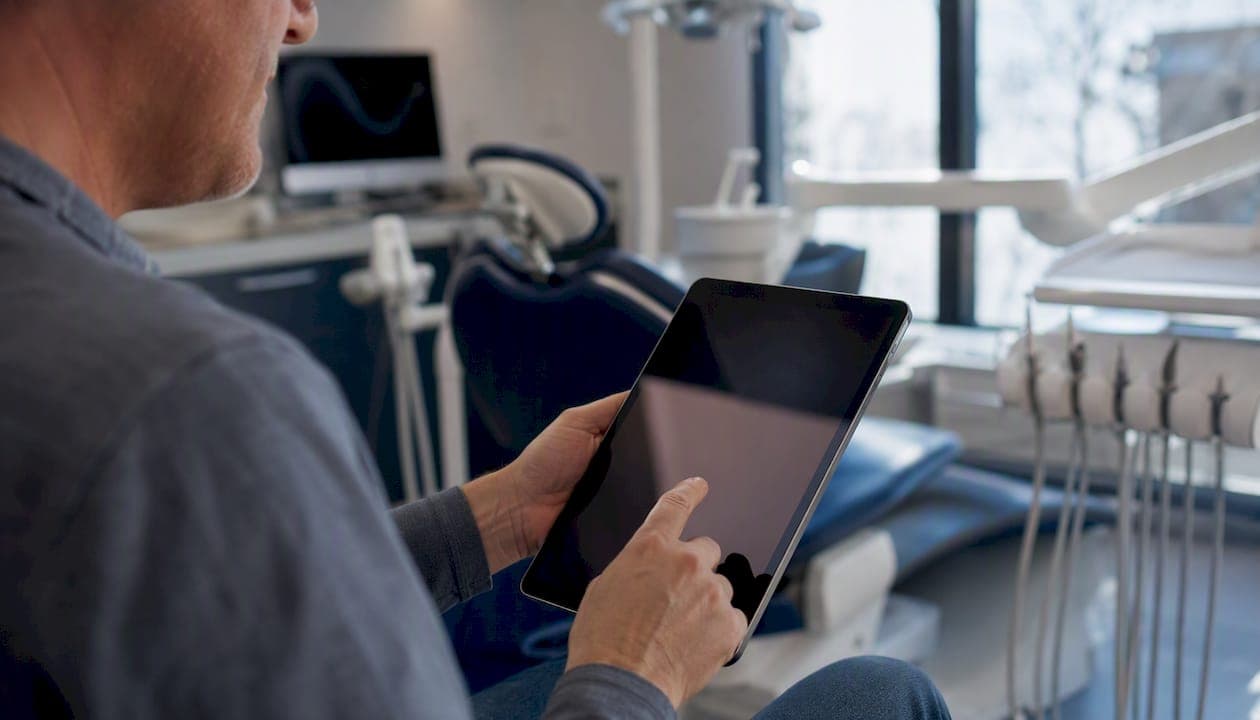
Most patients who walk away from a treatment recommendation aren't refusing care — they're refusing a bill they can't pay in one shot. The good news: dental payment plans in the U.S. come in several workable forms, and at least one will fit almost any budget or credit situation.
Your main options are:
- In-office payment plans — best when the practice offers them and the balance is manageable
- Healthcare credit cards (like CareCredit) — best for promotional 0% APR on purchases of $200 or more
- Point-of-sale patient lenders — best for higher approval odds and same-day decisions
- Personal loans — best for predictable fixed payments over 36–84 months with no deferred-interest risk
- Traditional credit cards — best for small balances you can pay off fast
- HSA/FSA funds — best when you have pre-tax dollars available and want zero interest
- Dental discount plans — best when you need multiple services and lack insurance
The fastest path to starting treatment is calling the practice directly. DC Implant & Cosmetic Dentistry in Washington, DC, can walk you through in-office options and connect you with third-party prequal tools before your first appointment. Call or book online to get the process moving today.
Key Takeaways
Dental payment plans work best when you match the option to your credit profile, treatment cost, and monthly budget before signing anything.
| Point | Details |
|---|---|
| Start with a soft prequal | Check estimated terms before any hard credit pull to protect your score. |
| Watch for deferred interest | Unpaid balances after a promo period trigger retroactive charges; true 0% loans don't. |
| Personal loans offer predictability | Fixed rates over 36–84 months mean no surprise interest and a set payoff date. |
| High approval options exist | Point-of-sale lenders advertise approval rates up to around 85–90% for patients with limited credit. |
| Dc-dentistry offers in-practice financing | Same-day appointments and third-party prequal support mean you can start treatment fast in Washington, DC. |
Table of Contents
- How do dental payment plans actually work?
- What types of dental financing options are available?
- How do you pick the right plan for your situation?
- What do monthly payments actually look like?
- How do you apply, and what documents do you need?
- Why do dental practices offer financing?
- How Dc-dentistry helps patients start treatment with financing
- What most financing advice gets wrong about dental payment plans
- Dc-dentistry makes financing part of the appointment, not an afterthought
- Sources
How do dental payment plans actually work?
The process is simpler than most patients expect. It runs in five steps: you get a treatment estimate, choose a financing option, apply or prequalify, receive an approval decision, and then make monthly payments while the practice gets paid.
The step that trips people up most is the credit check. There are two kinds. A soft prequalification lets you see estimated terms and approval odds without any impact on your credit score — most third-party lenders and healthcare credit cards offer this online in minutes. A hard credit pull happens when you formally accept a loan or card; it typically drops your score by a few points temporarily. Always start with a soft prequal so you can compare options before committing.
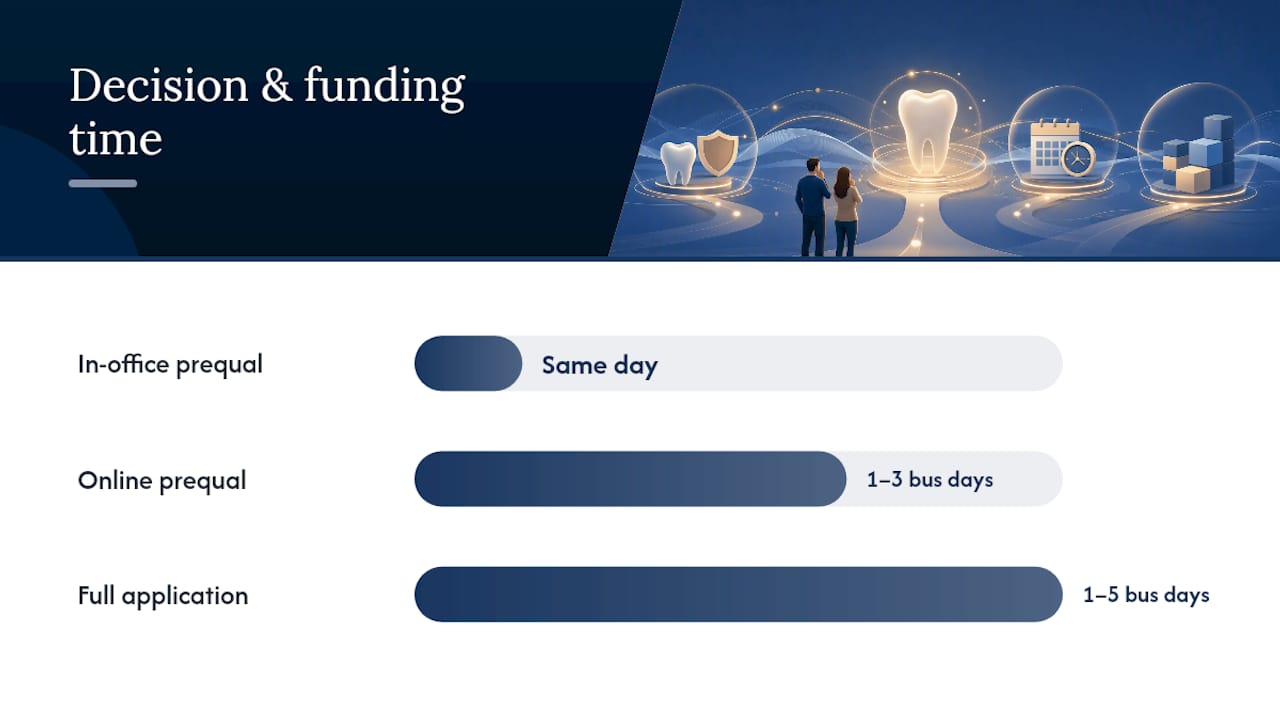
Once approved, the money flows differently depending on the option. With third-party lenders and healthcare credit cards, the practice typically receives payment within 1–3 business days. You then repay the lender directly in monthly installments. With in-office plans, the practice carries the balance itself and records it as an account receivable.
Promotional financing often requires paying the full balance before the promotional period ends to avoid retroactive interest. If you carry even a small balance past the deadline, interest can be charged back to the original purchase date — not just the remaining amount. Confirm exactly how interest is applied before you sign.
For phased treatments spread across multiple visits, CareCredit dental financing notes that certain plans can be financed in a single transaction when all services fall within a 90-day window, which simplifies billing for multi-appointment cases like implants.
Same-day approvals are common with point-of-sale lenders and healthcare credit cards. Funding to the practice typically follows within 1–3 business days. In-office plans can start immediately since no third party is involved.
What types of dental financing options are available?
Here is a plain breakdown of each category, with the honest trade-offs.
In-office payment plans let you pay the practice directly over time, often with no interest for shorter terms. Approval is at the practice's discretion, and there is no hard credit pull in many cases. The downside: the practice carries the risk, so plan sizes and terms tend to be conservative. The American Dental Association advises practices to be selective and comply with federal and state consumer-finance disclosure rules, including caution when in-house plans extend beyond certain timeframes.
Healthcare credit cards (the most recognized being CareCredit) offer promotional no-interest periods of 6, 12, 18, or 24 months on qualifying purchases of $200 or more, plus longer reduced-APR terms for larger balances. Patients have used CareCredit to finance a very large amount of care. The critical catch: if you don't pay the full balance before the promotional period ends, deferred interest kicks in retroactively.
Point-of-sale patient lenders integrate directly into the practice workflow, often via QR codes or provider links, and can deliver same-day decisions. Some, like Cherry, advertise approval rates up to around 85–90% and offer plans covering up to $50,000, making them a strong option for patients with imperfect credit.
Personal loans from banks, credit unions, or online lenders give you fixed monthly payments over terms commonly ranging from 36–84 months. Discover notes that personal loans can be an alternative to medical credit for predictable payments and potentially lower total interest, depending on your credit profile. No deferred-interest risk.
Traditional credit cards work for smaller balances you can clear quickly, but standard APRs make them expensive for anything you carry past a billing cycle or two.
HSA/FSA accounts let you pay with pre-tax dollars, effectively reducing your out-of-pocket cost by your marginal tax rate. No application, no interest, no credit check. The limit is your account balance.
Dental discount plans are membership programs, not insurance, that charge an annual fee (typically $80–$200) and provide reduced rates at participating dentists. They work best when you need multiple services in a year and your dentist participates.
Financing marketplaces like Wellfit connect patients with multiple lenders in one application, offering 0% interest options and in-office approvals to cover what insurance doesn't.
| Financing Type | Approval Speed | Interest Risk | Best For |
|---|---|---|---|
| In-office plan | Immediate | Low (often 0%) | Small-to-mid balances, established patients |
| Healthcare credit card | Same day | Deferred interest risk | Promotional 0% if paid on time |
| Point-of-sale lender | Same day | Varies by term | Higher approval odds, larger balances |
| Personal loan | 1–5 business days | Fixed, no deferred risk | Predictable payments, larger amounts |
| Traditional credit card | Immediate | High if carried | Small balances, short payoff window |
| HSA/FSA | Immediate | None | Pre-tax savings, any eligible procedure |
| Dental discount plan | Same day (membership) | None | Uninsured patients, multiple services |
How do you pick the right plan for your situation?
Start with three numbers: your total treatment cost, the monthly payment you can genuinely afford, and your credit score range. Those three inputs narrow the field fast.
Decision checklist:
- Total treatment cost under $1,000? A 0% promotional card or in-office plan is usually enough.
- Cost between $1,000 and $5,000 with good credit? A healthcare credit card's promotional period or a personal loan both work well.
- Cost above $5,000 or credit below 650? A point-of-sale lender with high approval rates or a financing marketplace gives you the best shot.
- Pre-tax savings available? Use HSA/FSA first before any interest-bearing option.
- Need same-day treatment? In-office plans and point-of-sale lenders are the only options that don't require waiting for external funding.
Questions to ask the dental office:
- Which financing options do you accept, and can I prequalify before my appointment?
- Does the lender pay you upfront, or do I pay you directly?
- What happens if I miss a payment?
- Are there any fees the practice charges on top of the lender's terms?
Questions to ask any lender:
- Is this true 0% interest or deferred interest?
- What is the APR after the promotional period?
- Are there origination fees, prepayment penalties, or late fees?
- Will applying affect my credit score?
Red flags to walk away from:
- A lender that requires your full Social Security Number and income before showing you any terms
- Promotional offers where the fine print shows retroactive interest
- Terms that differ between what the office told you and what the lender's paperwork says
- Any plan where the monthly payment is described verbally but not confirmed in writing before you sign
What do monthly payments actually look like?
APR, loan term, and the original balance are the three levers. A longer term lowers your monthly payment but raises total interest paid. A shorter term costs more per month but less overall.
The table below uses illustrative figures to show how these variables interact. Actual rates depend on your credit profile and the lender's current offers.
*These figures are illustrative only. Your actual rate and payment depend on credit approval, lender, and current promotional availability.
For full-mouth implant cases or clear aligner treatment, financing over 24–60 months is common.
The Truth in Lending Act requires lenders to disclose the APR and total financing cost in writing before you sign, so you always have the right to see the full numbers before committing.
How do you apply, and what documents do you need?
The application process has three paths depending on where you start.
In-office prequal (fastest):
- Ask the front desk which financing options the practice accepts.
- Provide your name, date of birth, and last four digits of your SSN for a soft check.
- Review estimated terms on the spot.
- If you proceed, complete the full application (hard pull) and sign the agreement.
- Treatment can often start the same day.
Online prequal (before your appointment):
- Visit the lender's website and complete the soft-check form.
- Review offers with no credit score impact.
- Bring your pre-approval reference to the appointment.
- The office submits the final application; funding reaches the practice within 1–3 business days.
Full application (for personal loans):
- Apply through a bank, credit union, or online lender.
- Receive a decision in 1–5 business days.
- Funds are deposited to your account; you pay the practice directly.
Documents and information lenders typically request:
- Government-issued photo ID
- Social Security Number
- Proof of income or income source (pay stubs, bank statements, or self-employment records)
- Contact information (address, phone, email)
- Treatment estimate from the dental office
For phased treatments, bring a complete treatment plan showing all planned procedures and their estimated costs so the lender can finance the full scope in one transaction where eligible.
Check the patient resources page at Dc-dentistry for what to bring to your first appointment.
Why do dental practices offer financing?
The short answer: it removes the single biggest reason patients delay or decline recommended care. When a patient hears a $4,000 treatment plan and has no clear path to paying it, they leave and don't come back. Financing converts that hesitation into a scheduled appointment.
The ADA's guidance on patient financing confirms that offering financing increases case acceptance while reducing the time patients spend deliberating. Practices that use third-party lenders also benefit operationally: the lender pays the practice within 1–3 business days, the practice carries no collections risk (most third-party arrangements are non-recourse, meaning the practice isn't liable if the patient later defaults), and staff spend less time chasing payments.
The trade-off for the practice is that third-party lenders charge a merchant fee, which reduces the net revenue per case. Some offices balance this by offering selective in-house plans for smaller balances and third-party options for larger ones.
For patients, the practical result is straightforward: same-day approvals, immediate treatment starts, and a clear monthly payment rather than a lump-sum bill. Practices that outsource financing also tend to have cleaner disclosure processes, since federal law under the Truth in Lending Act requires specific written disclosures for any consumer credit transaction.
How Dc-dentistry helps patients start treatment with financing
DC Implant & Cosmetic Dentistry accepts third-party financing options including CareCredit and LendingTree, and the team can walk you through prequal steps before or during your appointment.
How to get started:
- Contact the practice to book a same-day or next-available appointment.
- Discuss your treatment plan with Dr. Shukoor during the consult; the team will provide a written estimate.
- Choose your financing option — the front desk can help you initiate a soft prequal on the spot or direct you to an online prequal link.
- Sign your financing agreement and schedule your first treatment session.
Bring a government-issued photo ID, your insurance card if applicable, and any prior dental records or X-rays. The practice's same-day appointment availability means you don't have to wait weeks to get the process started.
Whether you're financing dental implants, cosmetic work, or restorative care like tooth decay repair, the financing conversation happens at the practice, not after you've already committed to a plan you can't change.
What most financing advice gets wrong about dental payment plans
The standard advice is to compare APRs and pick the lowest one. That's not wrong, but it misses the more important question: which option actually gets you into the chair?
But if the personal loan takes five business days to fund and you need a tooth extracted today, it's not the right tool. The best financing option is the one that fits your timeline, your credit, and your treatment — in that order.
What patients consistently underestimate is the cost of delay. A cracked tooth that gets financed and treated this week costs less than a cracked tooth that becomes an abscess next month because you were waiting to figure out the money. The clinical cost of waiting almost always exceeds the interest cost of acting.
The other thing most guides skip: ask the practice which lender they prefer working with. Practices that have an established relationship with a specific lender often get faster approvals, smoother funding, and better support when something goes wrong with a claim. That relationship benefits you, not just the office.
Finally, don't treat financing as a last resort. For large cases like implants or full-arch restorations, spreading payments over 24–36 months at a reasonable APR is often smarter than depleting savings, even when you technically have the cash. Keeping liquidity matters.
Dc-dentistry makes financing part of the appointment, not an afterthought
Most patients spend more time worrying about how to pay than they do choosing their dentist. At DC Implant & Cosmetic Dentistry, the financing conversation happens at the consult, not after you've already committed to a plan you can't adjust.
Dr. Shukoor's team accepts CareCredit and LendingTree financing and can walk you through a soft prequal during your visit, so you leave with a treatment plan and a payment plan in the same appointment. Whether you're looking at dental implants, implant-supported dentures, or a smile makeover, the practice's same-day availability means you can start the process today. Book your appointment at DC Implant & Cosmetic Dentistry and get a clear number before you leave the office.
This article is general information, not a substitute for advice from a qualified financial advisor. Consult a qualified financial professional about your own circumstances before acting on anything here.
Sources
- Patient Financing Options | American Dental Association
- Dental Patient Financing Options | CareCredit Card
- Dental Financing: Offer up to $50K, Approve up to 90% - Cherry
- Dental Financing: How to Pay for Dental Work | Discover
- Wellfit Pay dental patient financing marketplace