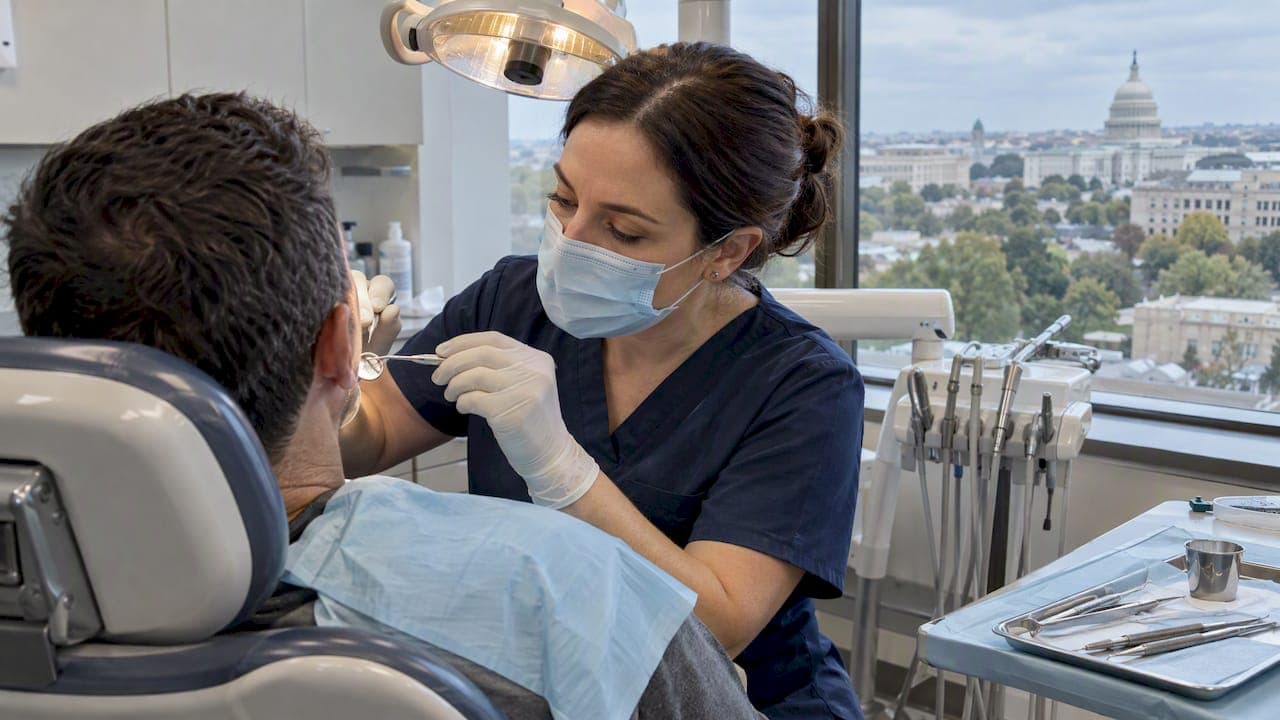
If your implant feels loose, hurts persistently, or the gum around it is swollen or draining, this is often implant failure rather than a simple cosmetic issue, and it calls for a dental exam within days, not weeks. Seek emergency care right away if you notice spreading facial swelling, fever, or trouble breathing or swallowing. For everything short of those red flags, schedule a prompt evaluation: many problems, including a loose crown or screw, are repairable when caught early.
TL;DR:
- Most implant failures occur within the first few months due to poor bone integration or infection, with rates ranging from 0.5% to 5.2%.
- Signs like loose implants, persistent pain, bleeding, pus, or changes in bite require prompt evaluation, especially if systemic symptoms develop.
- Mechanical overload, peri-implantitis, systemic health issues, or surgical trauma are common causes of failure, and early detection can prevent severe outcomes.
- Conservative treatments, such as cleaning and component adjustment, are effective for mild cases, while advanced failures may need surgical intervention or removal.
- Regular maintenance, good oral hygiene, quitting smoking, and managing systemic conditions significantly reduce long-term failure risks.
Table of Contents
- Overview: Early vs Late Implant Failure and How Common It Is
- Signs and Symptoms Patients Should Watch For
- Why Implants Fail: Biological, Mechanical, Surgical, and Systemic Causes
- How Clinicians Diagnose Implant Problems
- Treatment Options: From Conservative Care to Reimplantation
- Prevention and Long-Term Care: Supportive Peri-Implant Care
- Questions to Bring to Your Appointment
- Systemic Conditions Beyond Diabetes That Affect Implant Success
- How Implant Failure Affects Patients Emotionally
- Managing an Infected Implant: From Debridement to Adjunctive Therapies
- What Happens After Failure: Prognosis and Reimplantation Success
- What Implant Failure Can Cost You
- The Part of This Conversation That Gets Skipped
- Getting Help With a Failing or Problem Implant
- FAQ
- Sources
Overview: Early vs Late Implant Failure and How Common It Is
Dental implant failure is generally split into two categories based on timing, and the distinction matters because the causes behind each are different. Early failure happens before or shortly after the implant integrates with the jawbone, usually within the first few months, and it typically traces back to poor osseointegration, surgical trauma, or infection introduced during placement. Late failure occurs after the implant has been successfully integrated and functioning, sometimes years later, and it is more often driven by peri-implantitis or mechanical overload from biting forces.
A scoping review of implant failure and retrieval techniques covering studies from 1983 through 2025 found that early implant failure rates typically range from 0.5% to 5.2%, while late failure rates range from 0.5% to 7.8%. That spread is wide because studies use different criteria for what counts as "failure," different follow-up periods, and different patient populations, so a single number rarely tells the full story.
Early failure runs from 0.5% to 5.2%, and late failure from 0.5% to 7.8%, according to this 2025 scoping review spanning more than four decades of data. The takeaway for patients is not a precise percentage but a pattern: most implants succeed long term, and failure, when it happens, tends to cluster around either the first few months or many years down the line, rather than appearing randomly throughout.
Signs and Symptoms Patients Should Watch For
Catching a problem early almost always means a simpler, less invasive fix. The signs below range from subtle to unmistakable, and knowing which is which helps you decide how quickly to act.
- Mobility or looseness, where the implant crown or the implant itself shifts when you bite or press on it.
- Persistent or worsening pain around the implant site, especially pain that continues well past the normal healing window.
- Bleeding on brushing or probing, or gums that look red, puffy, or pull away from the implant.
- Pus, drainage, or a persistent bad taste or odor coming from the implant area.
- A change in how your bite feels, such as teeth no longer meeting the way they used to.
Not every sign carries the same urgency. A gradually loosening crown or mild tenderness after a dental cleaning is worth a call within a day or two. Spreading swelling into the face or neck, fever, or difficulty swallowing or breathing signals a possible systemic infection and needs emergency attention the same day. If your implant has come out entirely, our quick resource on what to do if your dental implant falls out walks through immediate steps while you arrange care. Pain that lingers past the expected recovery curve deserves its own look, and our guide to what's normal after implant surgery breaks down typical timelines versus warning signs.
Before your appointment, write down when symptoms started and how they have changed, and take a few clear photos of the area in good light. Avoid probing the implant with your fingers or sharp objects at home: this can introduce bacteria or worsen an existing problem.
Pro Tip: Keep a simple daily note of pain level, swelling, and any bleeding for a few days before your visit. A short symptom timeline helps your dentist distinguish a fast-moving infection from a slower mechanical issue.
Why Implants Fail: Biological, Mechanical, Surgical, and Systemic Causes
Implant failure rarely has a single cause. Most cases fall into one of four overlapping categories, and figuring out which one applies shapes the entire treatment plan.
Peri-implantitis is the leading driver of late failure. It is a plaque-related inflammatory condition that progressively destroys the bone supporting the implant, similar to gum disease around natural teeth but often more aggressive because implants lack the same protective fiber attachment. A systematic review and meta-analysis found peri-implantitis prevalence of approximately 19% to 20% at the patient level and about 11% to 12% at the implant level, though the authors note these figures vary considerably depending on the diagnostic criteria a given study used.
Early failure is usually a different story altogether:
- Failed osseointegration, where the bone never properly fused to the implant surface.
- Surgical trauma, such as overheating the bone during drilling or placing the implant with insufficient stability.
- Infection introduced during or shortly after surgery, before the site has had a chance to heal.
Mechanical causes show up at any stage and often masquerade as "implant failure" when the implant fixture itself is actually fine:
- Occlusal overload, where biting forces exceed what the implant and surrounding bone can comfortably handle.
- Bruxism (teeth grinding), which concentrates repetitive stress on the implant and its components.
- Prosthetic misfit or loose abutment screws, which can mimic the feel of a failing implant without any bone loss at all.
Systemic and medication-related factors also raise risk. Smoking impairs blood flow and healing at the surgical site, uncontrolled diabetes slows tissue repair and increases infection susceptibility, and certain medications, including bisphosphonates and some SSRIs, have been associated with altered bone metabolism around implants. A broader scoping review mapping causes of implant failure identified peri-implant disease, systemic health conditions, and mechanical or prosthetic factors as the most frequently implicated contributors across the literature it examined.
One area still under investigation is whether microscopic particles released from implant materials over time play a role in triggering inflammation. The evidence here is preliminary, and it would be premature to treat this as an established cause rather than an open research question.
On the question of whether antibiotics can prevent early failure in the first place, a 2024 systematic review and meta-analysis of randomized controlled trials found that routine antibiotic prophylaxis before implant surgery did not produce a statistically significant reduction in early implant failure, with one analysis estimating a number needed to treat of roughly 143. That finding has shifted how some clinicians think about blanket antibiotic use for otherwise healthy patients.
How Clinicians Diagnose Implant Problems
A proper diagnosis combines a hands-on exam with imaging, and the sequence usually looks like this:
- Clinical exam, including gentle probing around the implant, checking for bleeding on probing, assessing mobility, and examining how well the crown or restoration fits.
- Radiographic comparison, where current x-rays are measured against earlier images to look for progressive bone loss rather than relying on a single snapshot in time.
- Baseline review, since clinicians generally recommend taking baseline radiographs within three months of placing the final restoration specifically so future changes can be measured against a known starting point.
- Systemic and medication review, which comes into play when risk factors like diabetes, bisphosphonate use, or smoking are present, or when the clinical picture does not fully explain the symptoms.
- Component-level testing, where the dentist isolates whether the crown or screw is loose (a prosthetic issue) versus whether the implant fixture itself has lost bone support (a biological issue), since these look and feel similar to patients but require very different fixes.
Because peri-implantitis diagnostic thresholds differ across studies and practices, clinicians typically lean on a combination of signs, bleeding on probing, suppuration, and measurable radiographic bone loss, rather than any single test, to confirm what is actually happening.
Treatment Options: From Conservative Care to Reimplantation
Treatment follows the severity of the problem, starting conservative whenever possible.
Non-surgical steps come first for milder cases: improved home hygiene, professional mechanical debridement to remove plaque and calculus from the implant surface, and sometimes adjunctive antimicrobial rinses. For a loose crown or abutment screw, tightening or replacing the component may be all that is needed, since this does not necessarily mean the implant itself has failed.
When bone loss is more advanced, surgical options come into play:
- Access surgery to directly visualize and clean contaminated implant surfaces.
- Regenerative approaches, which aim to rebuild lost bone around the implant using grafting materials.
- Resective approaches, which reshape the bone and gum to eliminate pockets where bacteria accumulate, accepting some bone loss in exchange for a cleanable, stable result.
When an implant cannot be saved, explantation becomes necessary. A review of implant failure management describes trephine burs as the most commonly reported removal method, while newer techniques, including reverse-torque removal, piezoelectric instruments, and laser-assisted approaches, report success rates ranging roughly from 70% to 100% in small studies, though the review cautions that comparative evidence between these methods remains limited. The choice matters because some techniques preserve more of the surrounding bone than others, which directly affects whether reimplantation can happen right away or needs to wait.
Immediate reimplantation is possible when there is enough healthy bone and no active infection at the time of removal. Staged reimplantation, often following a grafting procedure, is more common when the failure involved significant bone loss. Our resource on when CBCT imaging shows a patient needs a bone graft covers how that decision gets made and what the healing timeline typically looks like.
If a treatment plan feels aggressive or if explantation is recommended quickly, a second opinion is a reasonable step. Useful questions to ask include whether a non-surgical option was ruled out and why, what specific bone loss or mobility findings support the recommendation, and what the plan is if the first intervention does not resolve the issue.
Pro Tip: Ask your dentist to show you the actual radiograph comparison, not just describe it. Seeing the bone loss yourself makes it much easier to understand why a particular treatment is being recommended.
Prevention and Long-Term Care: Supportive Peri-Implant Care
The single most protective habit for implant longevity is what clinical guidelines call supportive peri-implant care, or SPIC. The EFP clinical practice guideline on peri-implant disease frames daily plaque control by the patient as just as important as the surgical work that placed the implant in the first place.
A practical prevention routine includes:
- Scheduling periodic professional maintenance visits, where your dentist monitors probing depths, checks for bleeding, and compares current radiographs to your baseline.
- Using interdental brushes or implant-specific floss daily to clean around the implant collar, where a regular toothbrush often cannot reach effectively.
- Incorporating an antimicrobial or saline rinse when recommended, particularly during periods of higher risk such as after a dental procedure.
- Addressing bruxism with a nightguard if you grind your teeth, since unmanaged grinding places repetitive overload directly on the implant and its components.
- Working with your physician to manage blood sugar if you have diabetes, since poor glycemic control is consistently linked to slower healing and higher infection risk.
Quitting smoking is one of the most effective changes a patient can make, given how clearly impaired blood flow and healing are tied to implant complications. On the clinical side, restoration design also matters: screw-retained crowns are generally easier to remove for cleaning and maintenance than cemented ones, and contours that leave room for interdental brushes make daily home care meaningfully easier to sustain over the years.
Pro Tip: Treat your implant maintenance visits with the same regularity as a dental cleaning, even if nothing feels wrong. Peri-implantitis is far easier to manage when it is caught at the earliest, symptom-free stage.
For a quick home-maintenance reference between professional visits, this guide to daily implant maintenance outlines simple steps that take under a minute a day.
Questions to Bring to Your Appointment
A focused visit starts with the right questions: Is this a prosthetic issue or a fixture issue? What does the radiograph comparison show against my baseline? What is the most conservative option before anything surgical? What happens if this first step doesn't resolve it?
We handle every implant procedure, from the initial exam through surgical placement, repair, or replacement planning, in-house, and same-day appointments are available when a problem needs prompt attention. We believe a clear, written plan with the reasoning behind each recommendation helps you make a confident decision about your own care.
— Jake
Systemic Conditions Beyond Diabetes That Affect Implant Success
Diabetes gets most of the attention in implant risk discussions, but it is not the only systemic factor that matters. Osteoporosis affects bone density and remodeling, which can influence how well an implant integrates initially and how it holds up under load over years of function; patients on long-term bisphosphonate therapy for osteoporosis carry additional considerations around bone healing that a dentist needs to know about before surgery.
Immunosuppression, whether from a medical condition or from medications taken after an organ transplant or for an autoimmune disorder, reduces the body's ability to fight off the low-grade bacterial challenge that implants face daily. This does not automatically rule someone out as an implant candidate, but it typically means closer monitoring, a more conservative approach to timing, and tighter coordination between the dental team and the patient's physician.
Other conditions worth flagging to your dentist include uncontrolled thyroid disorders, radiation treatment to the head or neck, and any condition requiring chronic steroid use, since all of these can affect healing capacity or bone quality. The common thread is communication: a complete, current medical history and medication list lets your dentist assess risk honestly before and after placement, rather than discovering a complicating factor only after a problem develops.
How Implant Failure Affects Patients Emotionally
Losing an implant, or facing the possibility of losing one, is not just a clinical event. For many patients it brings frustration after investing time, money, and discomfort into the original procedure, along with anxiety about whether a replacement will fail again. Visible front-tooth failures can affect confidence in everyday situations like speaking or smiling in front of others.
There is also a practical toll: an implant problem often means rearranging work schedules for additional appointments, managing temporary function with a missing or unstable tooth, and sometimes adjusting what you eat while a site heals or is being treated. Patients who feel dismissed or rushed through this process tend to report more frustration with their care, which is part of why a clear explanation of what went wrong and what the realistic path forward looks like matters as much as the clinical treatment itself.
If you are feeling discouraged about a failed implant, it helps to remember that most mechanical issues are fixable, and even cases requiring explantation generally have a workable path to a stable, functional replacement. Asking your dentist directly about the expected timeline and what to expect at each stage can reduce a lot of the uncertainty that drives anxiety in the first place.
Managing an Infected Implant: From Debridement to Adjunctive Therapies
Infected implants, whether early-stage mucositis or more advanced peri-implantitis, are typically managed in stages, starting with mechanical removal of plaque and calculus from the implant surface using instruments designed not to scratch or damage the implant's surface texture. This is usually paired with closer monitoring and reinforced home-care instruction.

For infections that do not resolve with mechanical cleaning alone, adjunctive therapies sometimes enter the picture. Laser treatment is used by some clinicians to help decontaminate the implant surface and reduce bacterial load in hard-to-reach pocket areas, and photodynamic therapy, which combines a light-activated solution with targeted light exposure, is another adjunctive approach aimed at reducing bacteria around the implant. These are generally used alongside mechanical debridement rather than as standalone treatments, and the evidence comparing their long-term effectiveness to standard debridement is still developing.
For infections that have progressed to significant bone loss or that do not respond to non-surgical management, surgical access becomes necessary so the implant surface can be directly visualized and decontaminated, often combined with regenerative or resective bone procedures depending on the defect. Throughout any of these protocols, the underlying principle from the EFP guideline holds: consistent daily plaque control at home is what keeps a treated infection from recurring.
What Happens After Failure: Prognosis and Reimplantation Success
A failed implant is rarely the end of the road. Once the original implant is removed and the site has healed, or been grafted if bone volume was lost, reimplantation is a well-established path for most patients. The scoping review on implant retrieval notes that explantation techniques themselves report high atraumatic success rates, which preserves more of the bone available for a future implant.
Prognosis after reimplantation depends heavily on why the first implant failed. A mechanical overload issue that gets corrected, for instance by addressing bruxism with a nightguard or adjusting the bite on the new restoration, tends to carry a favorable outlook. A case involving significant bone loss from advanced peri-implantitis may need staged grafting before a new implant can be placed, which extends the timeline but does not eliminate the option.
Patients who had early failure tied to a specific, identifiable cause, such as a surgical complication or a site that simply never integrated, often do well with a second attempt once that underlying issue is addressed. The clearest predictor of long-term success the second time around is consistent follow-through on supportive peri-implant care and addressing whatever risk factor, whether smoking, uncontrolled blood sugar, or unmanaged grinding, contributed to the original failure.
What Implant Failure Can Cost You
Beyond the physical and emotional toll, implant failure carries real financial implications worth planning for. Diagnostic work alone, including updated radiographs and a thorough clinical exam, adds a visit beyond your original treatment. If non-surgical management resolves the issue, costs may stay limited to that evaluation and a maintenance or debridement visit.
More involved cases carry more involved costs: surgical decontamination or regenerative bone procedures, explantation of the failed implant, bone grafting to rebuild lost volume, and ultimately a new implant and restoration once the site is ready. Each of these is typically billed as a separate procedure, and none of our implant, grafting, or repair services carry a published flat price, since treatment scope varies by case; your dentist can walk you through exact costs once a diagnosis and plan are in place.
Dental insurance coverage for implant failure treatment varies significantly by plan and by whether the original procedure was covered, so it is worth confirming benefits before treatment begins rather than after. Financing options, including third-party plans, are available for patients facing out-of-pocket costs for more extensive implant retreatment, which can make a staged treatment plan more manageable to budget for over time.
The Part of This Conversation That Gets Skipped
Most patient information on implant failure jumps straight to worst-case scenarios: extraction, bone grafts, starting over. What gets underplayed is how often the actual fix is mundane, a loose screw, a bite that needs adjusting, a maintenance visit that was overdue. Treating every symptom as a crisis does patients a disservice and feeds unnecessary anxiety.
The conventional advice to "watch for problems" also undersells how much failure is preventable rather than just detectable. The evidence on peri-implantitis prevalence and the clear guidance around supportive peri-implant care point to a less dramatic but more useful truth: consistent maintenance, a nightguard if you grind, and quitting smoking if you smoke will do more for your implant's lifespan than any amount of symptom-watching after the fact.
If you take one thing from this guide, make it this: get a baseline radiograph soon after your restoration is placed, keep your maintenance visits, and call promptly when something changes rather than waiting to see if it resolves on its own. Early action keeps most problems small.
— Jake
Getting Help With a Failing or Problem Implant
If something feels off with an implant, we offer a same-day evaluation to get you answers quickly rather than leaving you to wonder for weeks. Because exams, imaging, repair, and surgical planning all happen in-house, you are not stuck waiting on referrals between specialists while a problem potentially progresses.

What you can expect when you reach out:
- A same-day or next-available appointment for implant pain, mobility, swelling, or a loose restoration.
- A radiograph comparison and clinical exam to pinpoint whether the issue is mechanical or biological.
- A conservative-first treatment plan, with surgical options discussed only when they are genuinely needed.
- A second opinion, welcomed if you already have a treatment plan from elsewhere and want another perspective before committing.
Our dental implant and repair services page outlines what in-house implant repair, bone grafting, and reimplantation planning look like in practice. If you are ready to get a problem looked at, visit our implant services page to schedule a visit.
This article is general information, not a substitute for advice from a qualified doctor. Consult a qualified healthcare professional about your own circumstances before acting on anything here.
FAQ
How common is it for dental implants to fail?
Failure is relatively uncommon overall. A 2025 scoping review found early failure rates of 0.5% to 5.2% and late failure rates of 0.5% to 7.8%, with the wide range reflecting differences in study criteria and follow-up length rather than one fixed number.
What are the signs that a dental implant is being rejected?
Common signs include looseness or mobility, persistent pain beyond the normal healing period, bleeding or swelling around the gum, pus or a persistent bad taste, and a change in how your bite feels. Any of these warrants a prompt dental exam, since a loose crown or screw is often repairable and does not necessarily mean the implant fixture has failed.
What can be done if a dental implant fails?
Treatment ranges from conservative steps like improved hygiene and professional cleaning to surgical decontamination, and, when the implant cannot be saved, explantation followed by reimplantation once the site heals or is grafted. A review of retrieval techniques notes that modern removal methods report high success rates at preserving the surrounding bone, which supports future reimplantation.
Why is my dental implant pulsating even though I don't have pain?
A pulsating or throbbing sensation without pain can reflect inflammation or increased blood flow near the implant site and is worth having checked even in the absence of pain. It does not automatically mean the implant is failing, but a clinical exam and radiograph comparison can rule out early-stage peri-implant disease before it progresses.
Do antibiotics help prevent dental implant failure?
Current evidence does not support routine antibiotic use before implant surgery as a way to reduce early failure. A 2024 systematic review and meta-analysis of randomized trials found no statistically significant benefit from routine antibiotic prophylaxis, so this decision is best made case by case with your dentist based on your individual risk factors.
Sources
- Dental implant failure and retrieval techniques; a scoping review
- What is the prevalence of peri-implantitis? A systematic review and meta-analysis
- Is routine antibiotic prophylaxis warranted in dental implant surgery to prevent early implant failure? - a systematic review