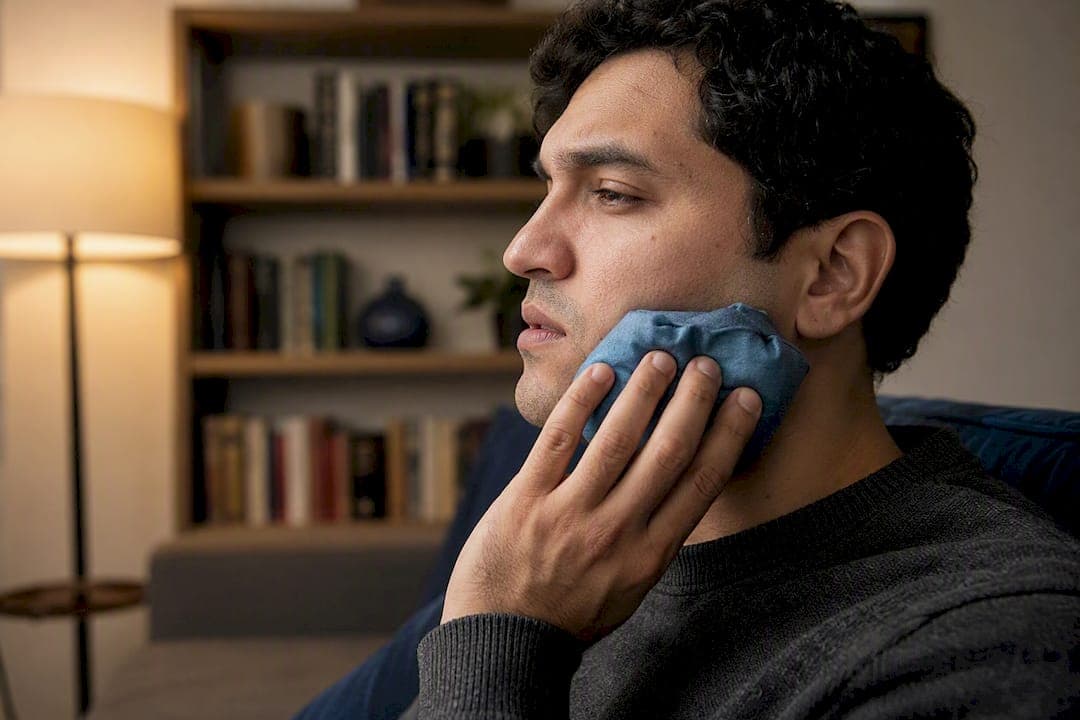
Mild-to-moderate pain for a few days after dental implant surgery is normal. Worsening or new pain, fever, pus, or a loose implant is not, and it means you need a dentist to look at it soon.
Here's what to do right now if you're hurting:
- Take ibuprofen or acetaminophen as directed, and alternate them if your dentist approved that combination.
- Ice the outside of your face in 20-minute intervals for the first day or two.
- Stick to soft foods and skip chewing directly on the implant site.
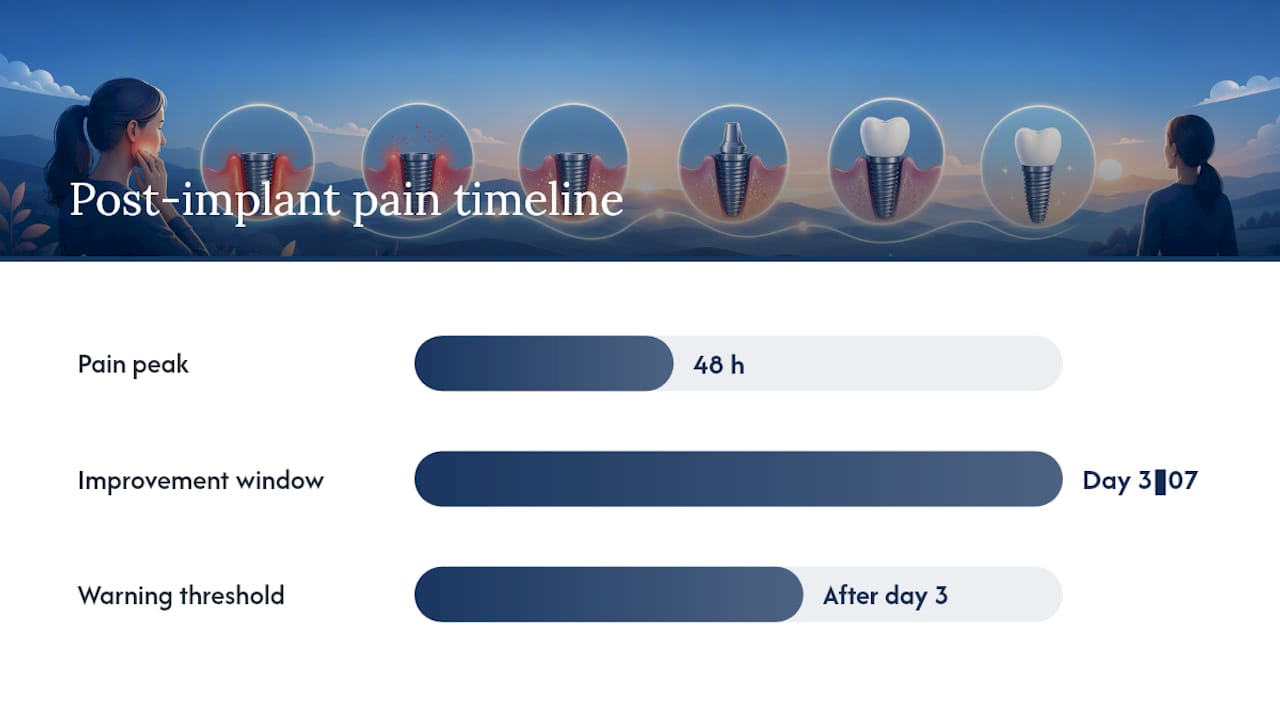
- Call your dentist if pain is climbing rather than easing after day three.
The Cleveland Clinic and Mayo Clinic both describe a short window of soreness as the expected pattern, and Dc-dentistry keeps same-day slots open for patients who need that checked in person.
Key Takeaways
Dental implant pain that fades within a few days is expected; pain that grows worse, along with fever, pus, or looseness, signals a complication that needs prompt dental evaluation.
| Point | Details |
|---|---|
| Pain peaks early | Discomfort is worst in the first 48 hours and should steadily improve, not worsen, through day 3 to 7. |
| Trend matters more than intensity | Pain climbing after day 3 is a stronger warning sign than a single bad day early on. |
| Know the red flags | Fever, pus, spreading swelling, heavy bleeding, or implant mobility all warrant same-day contact with your dentist. |
| Loose crown isn't implant failure | A wiggling crown with a stable post underneath is often a simple prosthetic fix, not implant loss. |
| Get evaluated, don't self-diagnose | Dc-dentistry offers same-day appointments with clinical exams and radiographs to distinguish normal healing from a real problem. |
This article is general information, not a substitute for advice from a qualified doctor. Consult a qualified healthcare professional about your own circumstances before acting on anything here.
Table of Contents
- Dental Implant Pain Timeline: What's Normal Hour by Hour
- Why Dental Implants Hurt: Surgical, Infectious, and Mechanical Causes
- When Implant Pain Means You Need Immediate Care
- How to Manage Dental Implant Pain Safely at Home
- Protecting Your Implant From Long-Term Pain and Failure
- Why Trust This Guidance on Implant Pain
- What the Research Actually Tells Us About Implant Pain
- Get Your Implant Pain Checked Today
- Sources
Dental Implant Pain Timeline: What's Normal Hour by Hour
Recovery follows a fairly predictable arc, and knowing the stages helps you tell normal discomfort from a problem.
- Hours 0 to 48: This is peak discomfort. Local anesthesia has worn off, and the surgical site is inflamed. Expect throbbing, tenderness, and swelling that can extend to your cheek or jaw. This is also when most patients rely most heavily on ice and medication.
- Days 3 to 7: Pain and swelling should trend downward, not up. Cleveland Clinic notes most patients feel mild to moderate soreness for three to five days that responds well to over-the-counter medication. By day seven, many people are back to normal eating with minor caution around the site.
- Weeks to months: Osseointegration, the process where bone fuses to the implant post, continues quietly in the background and shouldn't hurt. Occasional mild sensitivity to pressure or temperature can occur, but sharp or escalating pain at this stage is a signal, not a normal part of healing.
Peer-reviewed data backs up the shorter end of that curve. A study on postoperative pain after dental procedures found implant-related pain drops to near-zero within about 72 hours, and it's typically less intense than pain after a tooth extraction. If you're several days out and still hurting like it's day one, that's the timeline telling you something is off.
Why Dental Implants Hurt: Surgical, Infectious, and Mechanical Causes
Pain after implant surgery isn't one thing. It has several distinct sources, and figuring out which one you're dealing with changes what happens next.
- Surgical trauma and inflammation. This is the expected, short-term cause behind almost all early post-op pain. Tissue was cut, a hole was drilled into bone, and your body is responding exactly as it should.
- Peri-implantitis or soft-tissue infection. This is bacterial inflammation around the implant, similar mechanically to periodontitis, and it can destroy the bone holding the implant in place if it isn't treated early.
- Implant overload or bite problems. A crown set even slightly too high concentrates biting force on one point, and grinding your teeth at night makes that worse. The pain here often shows up specifically when you chew.
- Loose abutment or crown versus true implant mobility. These get confused constantly, and they're not the same emergency.
- Nerve involvement or sinus issues. Shooting pain or numbness in the lip or chin points to nerve proximity, while upper-jaw implants near the sinus cavity can cause pressure that feels more like a sinus infection than a tooth problem.
Pro Tip: Gently wiggle the crown with a clean finger or the back of a spoon handle. If just the crown moves and the implant post underneath feels solid, that's often a prosthetic fix, not implant failure, and it's usually a quick chairside adjustment.
Upper-arch implants deserve special mention because sinus lift procedures sometimes precede placement in that area, and lingering pressure near the cheekbone after surgery there can mean the sinus lining needs attention rather than the implant itself.
When Implant Pain Means You Need Immediate Care
Some symptoms don't wait for a scheduled follow-up. Call your dentist or seek emergency care the same day if you notice any of the following:
- Fever, or swelling that's spreading rather than shrinking.
- Difficulty breathing or swallowing.
- Bleeding that won't stop with steady gauze pressure.
- Pus or a foul taste coming from the implant site.
- The implant itself feels loose or shifts when touched.
- Pain that's worse on day five than it was on day two.
When you call, be ready to describe when the pain started, how it's changed day to day, what medications you've taken, and send photos if the office allows it. Mayo Clinic lists fever, persistent bleeding, pus, and a loose implant as clear indicators that something needs professional evaluation, not home management. Avoid aspirin unless your dentist specifically approved it, since it thins blood and can worsen bleeding at a healing surgical site.
How to Manage Dental Implant Pain Safely at Home
Most implant discomfort responds well to a fairly simple routine, and the biggest mistake people make is either under-medicating out of caution or reaching for the wrong remedy entirely.
- Layer your medications. Alternating ibuprofen and acetaminophen on a schedule, rather than waiting until pain spikes, generally controls discomfort better than either drug alone. Standard post-op guidance from prosthodontic practices supports this combination for most patients; prescription pain medication is reserved for more extensive procedures like full-arch work.
- Ice for the first 48 hours, then switch strategies. Cold packs limit swelling early on. After two days, heat can help if you're dealing with muscle tightness rather than active inflammation, but check with your dentist before switching.
- Eat soft, avoid the site. Yogurt, eggs, soup, and mashed vegetables get you through the first week without stressing the implant. Chewing directly over the site, even with soft food, slows healing.
- Rinse gently. Warm salt water a few times a day keeps the area clean without disturbing healing tissue. Skip vigorous swishing or straws, since suction can dislodge a healing clot.
Pro Tip: Sleep with your head slightly elevated for the first few nights. Lying flat increases blood flow to the face and often makes morning swelling noticeably worse than it needs to be.
Recovering from a recent extraction before implant placement follows a similar logic: control swelling early, protect the site, and let the timeline do its work rather than forcing it.
Protecting Your Implant From Long-Term Pain and Failure
Short-term pain is one problem. Pain that shows up months or years later is a different conversation, and it usually traces back to maintenance gaps rather than the surgery itself.
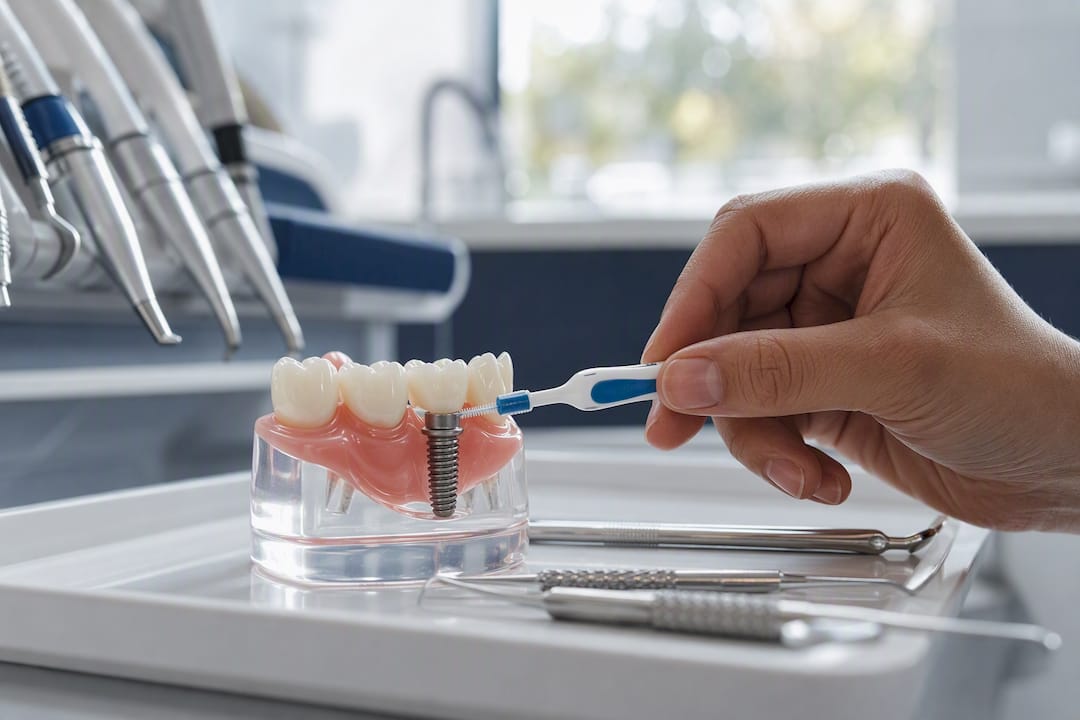
Daily brushing around the implant collar, interdental brushes or floss designed for implants, and professional cleanings on schedule keep peri-implantitis from taking hold. Certain risk factors raise your odds of complications substantially: smoking restricts blood flow to healing tissue, uncontrolled diabetes slows recovery, poor hygiene lets bacterial biofilm build up, and untreated bruxism puts repeated stress on the implant and crown.
Left unaddressed, these factors lead to the complications that cause pain years down the road: peri-implantitis progressing into bone loss, a crown or abutment working loose from repeated overload, or enough bone erosion that the implant needs revision. None of this happens overnight, which is exactly why routine checkups catch it while a simple adjustment still fixes the problem.
Why Trust This Guidance on Implant Pain
Dc-dentistry treats implant patients daily in Washington, DC, backed by same-day appointment availability and over 200 five-star patient reviews. Dr. Kambez Shukoor, a U.S. Navy veteran, leads treatment planning with an approach that pairs advanced imaging with hands-on clinical judgment.
When a patient calls in with implant pain, the assessment follows a consistent process:
- Clinical exam of the soft tissue and bite alignment.
- Radiographs to check bone integration and component fit.
- A mobility test to distinguish a loose crown from a failing implant.
- A check for systemic infection signs like fever or swelling.
Persistent or worsening pain around an implant should never be waited out. Early evaluation is what preserves the implant's long-term prognosis, and the fix at that stage is almost always simpler than the fix six months later.
What the Research Actually Tells Us About Implant Pain
Most of what gets written about implant pain online either underplays it, "you won't feel a thing," or overplays it into something to dread for weeks. Neither holds up against the actual clinical picture. The comparative pain data is fairly blunt about this: implant placement tends to hurt less than a routine extraction, and the discomfort curve bottoms out around 72 hours for most patients. That's a shorter, gentler recovery than a lot of people brace for going in.
Where conventional advice actually falls short is the follow-up window. Plenty of guides cover the first 48 hours in detail and then go quiet, leaving patients unsure what "normal" looks like at day seven or week three. That gap is where anxiety creeps in, and it's also where real complications like peri-implantitis start showing early signs that get dismissed as "just healing."
If you take one thing from this, prioritize tracking direction over intensity. A 4-out-of-10 pain that's climbing on day five matters more than a 6-out-of-10 that's already fading on day two. Trend beats snapshot every time.
Get Your Implant Pain Checked Today
If you're weighing whether your discomfort is normal healing or something that needs attention, guessing isn't a great strategy. Dc-dentistry offers same-day appointments specifically so you're not stuck waiting through a worsening symptom, and every implant patient gets a real clinical exam and radiographs rather than a phone-only guess.

Beyond single-tooth implants, the practice handles full mouth implant reconstruction for patients dealing with multiple failing teeth, along with financing options through CareCredit and Lending Tree so cost isn't a barrier to getting checked. With over 200 five-star patient reviews, Dc-dentistry has built its reputation on catching problems early rather than letting them become emergencies. If pain is escalating rather than easing, call the office directly or book an evaluation for your dental implants today.
Sources
- Dental implant surgery - Mayo Clinic
- Dental implants - Cleveland Clinic
- PMC article on postoperative pain after dental procedures
- Dental implant pain: What’s typical & when to get help - Healthline