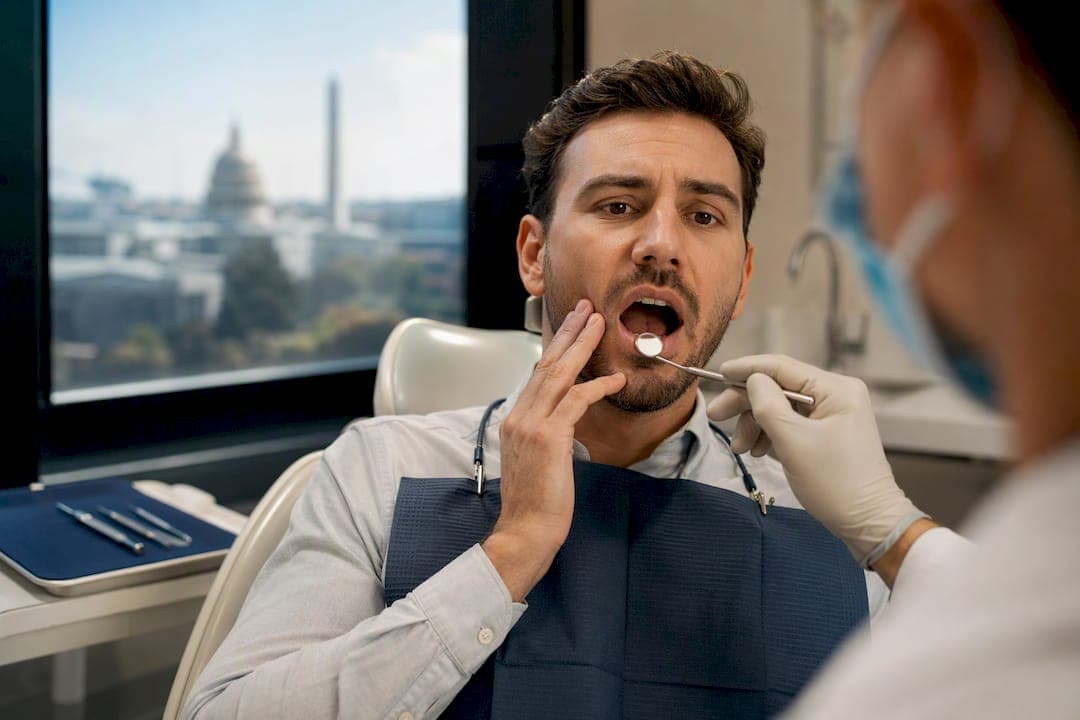
Mild tooth sensitivity after a crown is common and usually improves within days to a few weeks. Cold drinks, biting pressure, and sweets are the usual triggers, and they typically fade as the tooth settles. Gentle self-care handles most of it. Call your dentist right away if you have severe or worsening pain, facial swelling, or fever.
TL;DR:
- Most crown sensitivity resolves within a few weeks, with peak pain in the first 48 hours and most improvements by two weeks.
- Common causes include exposed dentin, high bite, nerve inflammation, cement irritation, or a loose crown, each requiring a different treatment approach.
- Mild sensitivity and cold triggers are normal, but persistent pain, swelling, or a loose crown need prompt dental evaluation, often within days.
- A quick in-office adjustment for a high bite or recementation can fix most issues, while cracks or decay under the crown require more extensive care.
- Managing home care by avoiding hard foods, using desensitizing toothpaste, and wearing a night guard can reduce discomfort during healing.
Table of Contents
- What causes crown sensitivity after a procedure?
- How long does sensitivity after a crown usually last?
- How to manage crown sensitivity at home
- Warning signs that need prompt dental evaluation
- What a dentist checks when a crown is sensitive
- A dentist's honest read on crown sensitivity anxiety
- Get a Same-Day Crown Check at DC Implant & Cosmetic Dentistry
- Sources
What causes crown sensitivity after a procedure?
Most crown discomfort traces back to one of five things, and they range from harmless to urgent.
The most common cause is simple: exposed dentin. Preparing a tooth for a crown removes some enamel, and if a temporary crown doesn't seal perfectly, fluid and air reach the dentin tubules underneath. Those tubules connect straight to the nerve, which is why cold water can feel like a jolt. Clinical research on dentin hypersensitivity following tooth preparation confirms this spike is measurable and expected in the short term.
Nerve irritation is another frequent culprit. Grinding down a tooth, especially one with a deep filling or close decay, can inflame the pulp temporarily. Dentists call this reversible pulpitis, and it usually calms down on its own.
A high bite is the one that surprises people most. If the crown sits even slightly taller than your natural bite, your jaw finds it on every closure, and you get a sharp, localized zing when you chew. It's mechanical, not infectious, and it's often the easiest fix in the whole list.
Other causes include:
- Cement irritation or gum inflammation around the crown margin
- Temporary crowns fitting less precisely than the final restoration, which tends to raise sensitivity until permanent cementation
- A cracked tooth hiding underneath the crown, or a loose or shifting crown
- Recurrent decay at the crown's edge
- Nighttime teeth grinding (bruxism) adding constant low-grade pressure
- Sinus pressure that mimics tooth pain, especially in upper back teeth
Sorting through these matters because the fix for a high bite is a five-minute adjustment, while a cracked tooth or decay under the crown needs a different kind of visit entirely.
How long does sensitivity after a crown usually last?
Recovery follows a fairly predictable arc for most patients, according to guidance from the Cleveland Clinic.
- 0 to 48 hours: Expect peak tenderness here. Cold drinks, chewing, and even brushing near the area can feel sharp. This is the nerve and surrounding tissue reacting to the prep work and cementation.
- 3 to 14 days: Most people notice steady improvement. If your bite felt "off," it's often resolved by now, particularly if you had it checked and adjusted.
- 2 to 6 weeks: A little lingering sensitivity to cold is still within normal range for some patients. But if things are getting worse instead of better during this window, that's a signal, not a coincidence.
- Months later: New pain showing up long after you'd forgotten about the crown almost always points to something new. Think decay creeping in at the margin, a crack, or a crown that's failing.
The general rule holds across most reputable sources: symptoms should trend downward, not sideways or upward. A practical breakdown from Verywell Health echoes the same days-to-weeks pattern and flags the same triggers to avoid in the meantime.
How to manage crown sensitivity at home
Most of what helps is common sense, but a few specifics make a real difference.
On the food side, skip anything hard, sticky, or extreme in temperature for the first week or two. Ice water and hot coffee are the two biggest offenders. If one side of your mouth is the problem, chew on the other side without thinking twice about it.
For pain control:
- Acetaminophen or ibuprofen, taken per the label or your dentist's instructions, handles most short-term discomfort
- A desensitizing toothpaste with stannous fluoride or arginine, applied directly to the sensitive area before bed, can meaningfully cut down cold and touch sensitivity, a step Sensodyne recommends as a first-line home measure
- Switch to a soft-bristle brush and floss gently around the crown margin rather than snapping the floss through
If you're still wearing a temporary crown, avoid gum and chewy candy entirely. They can pull it loose or work cement out from under the edge, which only invites more sensitivity.
Pro Tip: If a specific tooth hurts the instant you bite down and the pain vanishes the moment you release, that's the classic sign of a high crown. Don't wait it out. A quick chairside adjustment with articulating paper usually solves it in one visit.
If you clench or grind at night, that habit can keep a healing crown irritated indefinitely. A properly fitted night guard reduces the load on the tooth while it settles and protects the crown itself from wear over time.
Warning signs that need prompt dental evaluation
Most sensitivity resolves on its own, but certain symptoms mean it's time to stop waiting and pick up the phone.
- Severe or worsening pain, especially if it wakes you up at night
- Facial or gum swelling, a fever, or a foul taste and drainage near the crown
- Pain that's still getting worse after two weeks instead of easing off
- New sharp pain on biting that persists even after a bite adjustment
- A crown that feels loose, rough, or shifted from its original position
Sensitivity that's purely cold-triggered and mild tends to be the least urgent category. Spontaneous pain, or pain that lingers well after the stimulus is gone, is a different story: it often signals irreversible pulpitis, which usually needs a root canal performed through the existing crown rather than more time to heal on its own. Nighttime throbbing in particular is a pattern worth acting on, not monitoring. If you're unsure which category you're in, same-day evaluation settles it faster than another week of guessing.
What a dentist checks when a crown is sensitive
An in-office visit for crown sensitivity is usually quick, and it follows a predictable sequence. Your dentist checks the bite with thin articulating paper to spot high spots, taps the tooth to test for pulp inflammation, and looks closely at the margins for gaps, cracks, or early decay. An X-ray comes into play when something below the gumline needs a closer look.
From there, the fix matches the finding:
- A high bite gets ground down and polished in minutes
- A loosened crown gets recemented or repaired
- A cracked or failing crown gets replaced
- A grinding habit gets a night guard
- Irreversibly inflamed pulp gets a root canal, often without removing the crown at all
A patient who calls with a bite that "just doesn't feel right" after a new crown is one of the most common same-day visits we see, and it's almost always a five-minute fix once we find the high spot.
A same-day model is designed so a nagging bite issue or lingering sensitivity doesn't turn into weeks of avoidable discomfort.
A dentist's honest read on crown sensitivity anxiety
Most of the fear around crown sensitivity comes from not knowing which category you're in, not from the sensitivity itself. The one-line plan is simple: gentle care now, watch for red flags, call if they show up. Severe or persistent pain deserves a same-day look rather than another week of wondering.
— Jake
Get a Same-Day Crown Check at DC Implant & Cosmetic Dentistry
If your crown still hurts past the two-week mark, or something about your bite has felt wrong since day one, waiting rarely makes it better. Same-day crown assessments can diagnose and treat issues such as a high bite, a loose margin, or early nerve pain in one visit instead of a drawn-out back-and-forth.

A typical same-day visit covers a bite analysis, an X-ray if the margin looks suspicious, recementation for a loosened crown, a night guard fitting if grinding is part of the picture, or a referral for root canal therapy when the pulp is involved. If your crown situation has become more complicated, such as a tooth that ultimately needs extraction and replacement, the practice also handles dental implants for missing or failing teeth. Request a same-day appointment through DC Implant & Cosmetic Dentistry and get a straight answer instead of another week of guessing.
This article is general information, not a substitute for advice from a qualified doctor. Consult a qualified healthcare professional about your own circumstances before acting on anything here.
Sources
- Dental crowns: Cleveland Clinic
- What causes dental crown pain and how to relieve it — Healthline
- Tooth sensitive after crown — Sensodyne
- Why does my crown hurt? — Dr. Bernstein / GetSmile