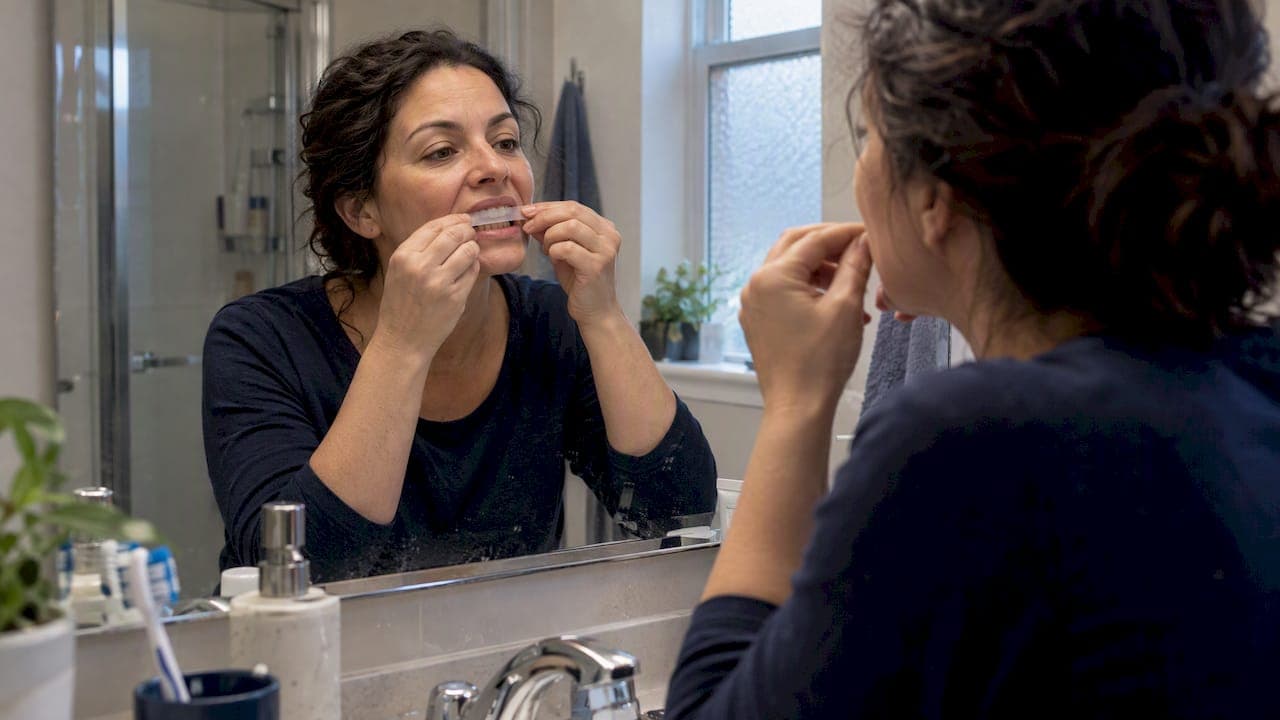
Yes, you can often whiten sensitive teeth if you choose low-concentration, sensitivity-formulated products and follow a low-and-slow approach with desensitizing support. Roughly 60% of people report temporary sensitivity after whitening, and the American Dental Association confirms the discomfort is usually short-lived when products are used correctly.
TL;DR:
- Sensitive formula strips and low concentration tray gels usually cause less discomfort, while toothpaste and rinses lift surface stains gradually and whiten less.
- Dentist fitted trays keep gel off gums more reliably than stock trays, and a dentist can adjust concentration and wear time to your sensitivity history.
- Pretreat with potassium nitrate or stannous fluoride toothpaste, start at the lowest concentration and shortest wear time, and leave a rest day between sessions.
- Address decay, gum disease, cracks, or leaking fillings before whitening; stop and see a dentist if sharp tooth pain, gum ulcers, or severe sensitivity appears.
- Whitening changes natural teeth but not crowns, veneers, bonding, or fillings, so visible restorations may look darker afterward; ask your dentist about expected results.
Table of Contents
- Gentle Whitening Options for Sensitive Teeth
- A Low-and-Slow Routine You Can Follow at Home or With Your Dentist
- What the Research Says About Desensitizing Strategies
- How Long Sensitivity Lasts and How to Manage It
- Safety Checklist Before You Start Whitening
- How We Approach Whitening for Patients With Sensitive Teeth
- Why Most Whitening Advice Gets the Priority Backward
- Get a Whitening Plan Built Around Your Sensitivity
- FAQ
- Sources
Gentle Whitening Options for Sensitive Teeth
Not every whitening product treats sensitive teeth the same way, and the differences matter more than most shoppers realize. Over-the-counter strips marketed for sensitivity use lower peroxide concentrations and shorter contact times, which limits how deep the whitening goes but also limits how much nerve irritation you get. Whitening toothpaste and rinses work slower still since they rely on mild abrasives or low levels of peroxide to lift surface stains rather than bleach underlying dentin.

Dentist-prescribed trays sit in a different category. Custom-fit trays filled with lower-concentration carbamide peroxide gel distribute the gel evenly and keep it off your gums, which is where a lot of irritation from ill-fitting drugstore trays comes from. A dentist can also dial the concentration and wear time to match your sensitivity history, something a one-size-fits-all kit cannot do.
A few things to keep in mind before you start:
- Sensitive-formula strips and low-peroxide tray gels generally cause less discomfort than standard-strength products.
- Whitening toothpaste and rinses work gradually and will not match the results of peroxide-based gels or strips.
- Custom trays from a dentist tend to fit better than stock OTC trays, reducing gum contact with the gel.
- Whitening does not change the color of crowns, veneers, bonding or fillings, so existing restorations on front teeth will stand out after your natural teeth lighten.
That last point trips people up more than any other. If you have visible dental work on the teeth you want whitened, talk to your dentist about what result is realistic before you buy anything.
A Low-and-Slow Routine You Can Follow at Home or With Your Dentist
Going slow is the single biggest lever you have over sensitivity. A paced routine lets your teeth adjust gradually instead of reacting all at once to a full-strength gel.
- Use a potassium nitrate or stannous fluoride desensitizing toothpaste before you start whitening.
- Start with the lowest concentration product available and the shortest recommended wear time, rather than the maximum the label allows.
- Leave at least one rest day between whitening sessions instead of whitening every day.
- Increase wear time or frequency only if you feel no lingering sensitivity after the session.
- Switch to dentist-prescribed trays, or pause entirely, if sensitivity builds instead of fading.
Pro Tip: Brush with desensitizing toothpaste right before bed on whitening nights, then avoid rinsing it away immediately, so the active ingredient has time to work overnight.
This pacing matters more for people with a sensitivity history than the specific brand you pick. Rushing concentration or frequency is the fastest way to turn a manageable routine into a painful one.
What the Research Says About Desensitizing Strategies
Sensitivity is common, but it is also predictable and manageable once you know what the evidence actually shows. An umbrella review of bleaching techniques found that in-office and at-home whitening produce similar color change over time, and that lower-concentration, paced protocols tend to reduce how intense the sensitivity feels, even when it still occurs.
About 60% of patients experience temporary sensitivity after whitening, and the discomfort is usually transient and tied to peroxide concentration. This matters because it reframes sensitivity as an expected, manageable side effect rather than a sign something went wrong.
Specific desensitizing agents have clinical trial support behind them:
- A randomized split-mouth trial found a gel with potassium nitrate and glutaraldehyde reduced both the risk and severity of bleaching-related sensitivity without changing whitening results.
- A randomized, triple-blind trial found that 400 mg of ibuprofen taken before in-office bleaching, combined with a topical desensitizer, reduced immediate sensitivity compared with a placebo.
- Systemic pain relievers alone show inconsistent preventive benefit, which is why pairing them with a topical desensitizer appears to matter more than either measure alone.
None of these approaches reduced how white the teeth got. That is the key takeaway: managing sensitivity and achieving whitening are not a trade-off.
How Long Sensitivity Lasts and How to Manage It
For most people, sensitivity peaks soon after treatment and fades over time. Brief cold sensitivity can occur after a session, but sharp, throbbing, unprovoked, or one-tooth pain warrants dental evaluation.
A few simple steps help during that window:
- Use a desensitizing toothpaste with potassium nitrate or a topical fluoride gel both before and after sessions.
- Brush gently rather than scrubbing.
- Discuss a short course of an over-the-counter analgesic with your dentist if discomfort is more than mild.
Sharp, throbbing, unprovoked, or one-tooth pain is not typical whitening sensitivity and warrants dental evaluation. That pattern points to something else, and it is worth stopping treatment and getting checked rather than pushing through it.
Safety Checklist Before You Start Whitening
A quick check before your first session prevents most whitening problems. Active decay, gum disease, cracked teeth and leaking fillings should all be addressed first, since whitening gel can make existing problems feel worse and won't fix any of them. It also helps to know in advance if you have exposed roots or several restorations on your front teeth, since those areas respond to whitening differently than enamel does, or not at all.
Watch for these warning signs:
- Sharp pain confined to a single tooth rather than general sensitivity.
- Ongoing gum bleeding, swelling or ulcers during treatment.
- Sensitivity that feels severe from the very first use rather than building gradually warrants dental evaluation.
Any of these means it's time to stop and see a dentist rather than wait it out. When shopping for over-the-counter products, look for the ADA Seal of Acceptance, which indicates the product has been evaluated for safety and effectiveness. For more on why a professional exam catches issues that label percentages don't, our teeth whitening safety guide walks through what to check first.
How We Approach Whitening for Patients With Sensitive Teeth
We discuss whether an exam is appropriate to rule out decay, cracks or gum issues that could make treatment uncomfortable or ineffective. From there, we can build a tailored plan based on how your teeth respond. We stay transparent about timelines and realistic outcomes, including how existing restorations will look once your natural teeth lighten. More detail on our process is on our tooth sensitivity page.
Why Most Whitening Advice Gets the Priority Backward
Most whitening guides treat sensitivity as a tolerance problem, something you push through with a stronger desensitizing toothpaste. The research points to a different priority: concentration and pacing matter more than any single desensitizing product you layer on top. A paced, low-concentration routine with a modest desensitizer outperforms a high-strength product paired with aggressive pain management after the fact.
The other thing conventional advice underplays is diagnosis. Sensitivity that shows up before you've whitened anything, or pain that concentrates in one tooth, isn't a whitening problem at all. Treating it as one just delays finding the actual cause, whether that's a cracked tooth, exposed root or early decay.
If you take one thing from this, let it be sequencing: get checked, pretreat with a desensitizing toothpaste, start low, and let your teeth tell you when to go further. Skipping straight to the strongest product you can buy is the most common and most avoidable mistake.
— Jake
Get a Whitening Plan Built Around Your Sensitivity
We offer teeth whitening designed around your specific sensitivity history rather than a generic strength or schedule.

A few ways to get started:
- Schedule an exam to check for decay, gum issues or restorations that affect your whitening results.
- Discuss pre-treatment desensitizing options and which tray or in-office approach fits your sensitivity level.
- Ask about financing if you're weighing options against cost.
Visit our teeth whitening page to book an appointment or learn more about what a supervised plan looks like for sensitive teeth.
This article is general information, not a substitute for advice from a qualified doctor. Consult a qualified healthcare professional about your own circumstances before acting on anything here.
FAQ
Can people with sensitive teeth whiten safely?
Yes, most people with sensitive teeth can whiten safely using low-concentration products, a paced schedule and desensitizing support. The American Dental Association notes whitening is generally safe when done correctly, and a dentist exam beforehand catches anything that needs attention first.
How common is sensitivity after whitening?
Temporary sensitivity after whitening is common, reported by roughly 60% of patients, and it is usually tied to the peroxide concentration used. It typically fades within a few days as your teeth adjust.
What ingredients actually reduce whitening sensitivity?
Potassium nitrate and topical fluoride are common first-line desensitizers, and a gel combining potassium nitrate with glutaraldehyde has reduced both the risk and severity of sensitivity in clinical trials without affecting whitening results. Some dentists may pair a topical desensitizer with ibuprofen before in-office sessions for added relief.
Is custom tray whitening gentler than over-the-counter kits?
Custom trays fitted by a dentist tend to fit more precisely than stock OTC trays, which keeps the gel off your gums and reduces one of the main sources of irritation. One comparison of professional and home whitening also points to custom-fit appliances as a more controlled option for people managing sensitivity.
When should I stop whitening and see a dentist?
Stop and get checked if you notice sharp pain in a single tooth, gum bleeding or ulcers, or sensitivity that feels severe from the very first use rather than building gradually. These patterns can signal decay, a cracked tooth or gum disease rather than typical whitening sensitivity.
Sources
- Pubmed
- Whitening | American Dental Association
- Comparison of in-office and at-home bleaching techniques: An umbrella review of efficacy and post-operative sensitivity
- Effect of an experimental desensitizing agent on reduction of bleaching-induced tooth sensitivity - The Journal of the American Dental Association