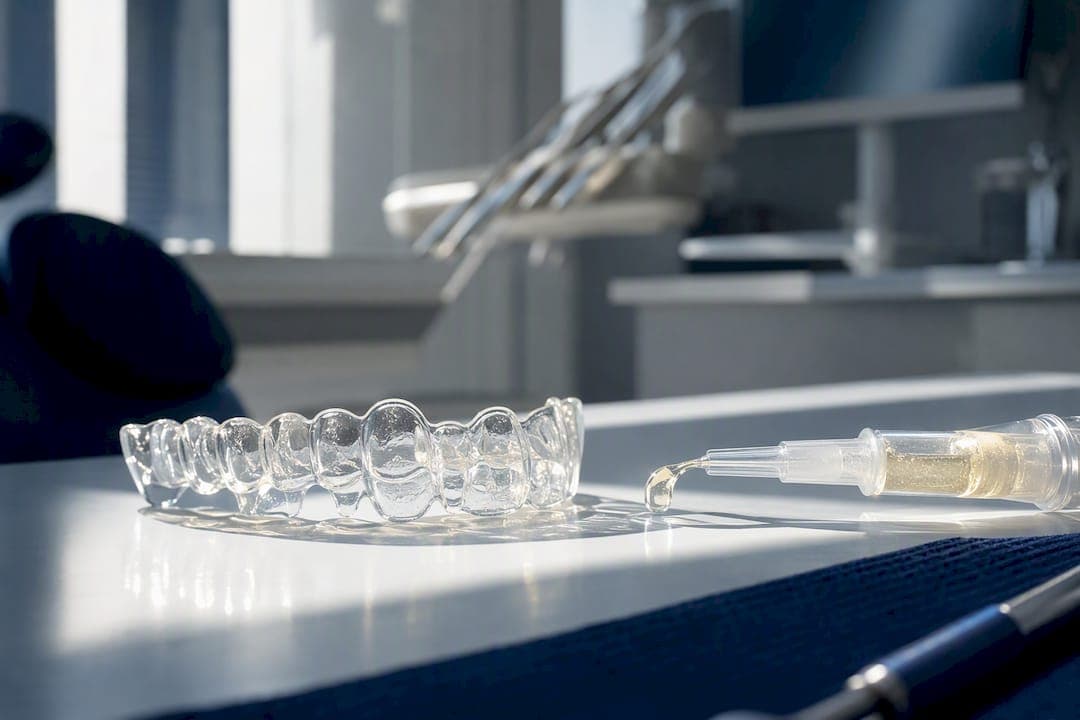
Teeth whitening is generally safe when you follow product directions or a dentist's protocol, and most people tolerate it well. The two side effects that come up most often are temporary tooth sensitivity and mild gum irritation, both of which usually fade within days. If you have fillings, crowns, untreated cavities, gum disease, or you are pregnant, talk to a dentist before you start.
TL;DR:
- Whitening gels with higher peroxide concentrations increase the effectiveness but also raise the risk of tooth sensitivity and gum irritation.
- Crowns, veneers, bonding, and fillings do not lighten because they are not affected by peroxide-based whitening agents.
- A dental exam is essential beforehand to identify decay, gum disease, or restorations that could cause pain or uneven results during whitening.
- Store-bought whitening products typically use lower peroxide levels than professional treatments, but improper fit of trays can lead to tissue irritation.
- Sensitive teeth usually recover quickly, especially if pain management strategies like desensitizing toothpaste are implemented before and during treatment.
Table of Contents
- How peroxide-based whitening actually works
- What are the real risks and side effects?
- Who should get a dental exam before whitening?
- Professional whitening versus store-bought kits
- How to prevent and manage whitening sensitivity
- A quick safety checklist before you whiten
- How a dental clinic reduces the risk of whitening
- What actually matters when you weigh whitening safety
- Ready for a whitening plan that fits your teeth
- Sources
- FAQ
How peroxide-based whitening actually works
Whitening gels rely on one of two active ingredients: hydrogen peroxide or carbamide peroxide, which breaks down into hydrogen peroxide once it contacts saliva. Both release reactive oxygen molecules that penetrate the enamel and break apart the pigmented compounds, called chromophores, responsible for staining. The chemistry itself is straightforward, but the outcome depends heavily on two variables: how concentrated the gel is and how long it stays on the tooth.
According to a review of peroxide-based whitening, this method is safe and effective when manufacturer instructions are followed, but higher concentrations and longer exposure times raise the odds of sensitivity and irritation along with the whitening effect. That trade-off is the reason in-office treatments, which use stronger gels for shorter sessions, and take-home trays, which use weaker gels over longer periods, are engineered so differently.
One detail that surprises a lot of people: whitening only works on natural tooth enamel and dentin.
- Peroxide breaks down stain molecules trapped in enamel and the dentin layer beneath it.
- Concentration and contact time both drive the whitening result and the side-effect risk.
- Crowns, veneers, bonding, and fillings do not contain the tissue peroxide acts on, so they never lighten. Learn more about why teeth turn yellow and how to whiten them in the first place.
What are the real risks and side effects?
Tooth sensitivity is the most common complaint, and it typically shows up during the first few days of treatment before settling down once the gel is discontinued or the course ends. The American Dental Association lists temporary sensitivity and gingival inflammation as the two most frequent adverse effects, and notes that a clinical exam beforehand helps catch the people most likely to experience them.
Gingival irritation is usually mechanical rather than chemical: an ill-fitting tray lets gel spread onto the gum line instead of staying on the tooth surface, and that direct contact can cause redness, tenderness, or in poorly managed cases a chemical burn. People with gum recession face a higher baseline risk here, since exposed root surfaces lack the enamel layer that normally shields the underlying dentin from the gel.
There is also laboratory evidence worth flagging. Aggressive, high-concentration protocols have been linked to enamel softening and mineral loss in vitro, and the effect appears concentration-dependent rather than universal. Restorations are not immune to collateral effects either: peroxide will not lighten a filling or crown, but it can occasionally roughen exposed margins around older restorations.
- Sensitivity is common but usually short-lived, and it tracks with peroxide strength.
- Gum irritation often comes from tray fit, not the gel's inherent strength.
- Enamel and restoration effects appear mainly with high-concentration, poorly supervised protocols.
A Cochrane review of over-the-counter whitening found sensitivity and oral irritation to be common adverse events, more prevalent with higher peroxide concentrations. That pattern holds across both professional and store-bought products, which is why concentration matters more than brand.
Who should get a dental exam before whitening?
Some situations call for a checkup before you open a whitening kit, because the standard advice assumes healthy teeth and gums to begin with. Guidance from healthdirect recommends that people who are pregnant or breastfeeding, or who have untreated dental disease or extensive restorations, speak with a dentist first, since safety data for those groups is limited and self-treating can mask a problem that needs attention.
Untreated cavities and active gum disease are the clearest red flags. Whitening gel reaching an open cavity through a crack or gap can trigger sharp pain, and it can produce uneven, patchy results if decay or old restorations sit next to healthy enamel.
- Pregnant or breastfeeding individuals should wait and consult a dentist, since evidence on safety during this period is limited.
- Untreated decay, active gum disease, or cracked teeth can turn a routine whitening session into a painful one.
- Existing crowns, veneers, or fillings will not match newly whitened enamel, which sometimes means restoration planning has to happen alongside or after whitening.
Professional whitening versus store-bought kits
The core safety trade-off between clinic-supervised whitening and shelf products comes down to control. A dentist examines your teeth and gums first, catching decay, recession, or restorations that would otherwise go unnoticed, then dispenses a concentration matched to what your enamel and gums can tolerate. Custom-fitted trays keep the gel where it belongs instead of pooling against the gum line, which is the main driver of chemical irritation.
Store-bought strips, pens, and generic trays are convenient and inexpensive, and they generally use lower peroxide concentrations than in-office treatments. That lower strength cuts some risk, but a one-size-fits-all tray fits real mouths imperfectly, which raises the odds of gel leaking onto soft tissue or missing parts of the tooth surface entirely.
The evidence on effectiveness tells a similarly mixed story. The Cochrane review found that home-based bleaching whitens teeth over periods ranging from two weeks to six months compared with placebo, but rated the overall certainty of that evidence as low to very low, meaning results vary more between people than marketing claims suggest.
- Dentist-supervised whitening adds an exam, custom trays, and a tailored concentration, all of which lower the chance of an adverse reaction.
- Over-the-counter kits trade some of that precision for lower cost and convenience.
- Sensitivity risk rises with concentration regardless of who dispenses the product, so the label's percentage matters more than the setting.
For background on staining causes and which approach fits different situations, the clinic's overview of yellowing and whitening options walks through the basics.
How to prevent and manage whitening sensitivity
Most sensitivity is manageable with a few practical adjustments made before, during, and after treatment.
- Before starting, get any cavities treated and make sure your tray fits properly, since gaps let gel reach sensitive areas it should not touch.
- Switch to a potassium-nitrate desensitizing toothpaste a week or two before you begin. Colgate Professional's guidance for clinicians notes this can modestly reduce sensitivity intensity.
- During treatment, use only the gel volume recommended and shorten the wear time if sensitivity appears rather than pushing through.
- Stop immediately if you experience sharp or lasting pain, and contact a dentist rather than waiting it out.
- After treatment, a fluoride rinse or topical desensitizer applied directly to the teeth can calm lingering tenderness.
A 2026 umbrella review of interventions for bleaching-induced sensitivity found that potassium-nitrate-based products may reduce how intense sensitivity feels, while systemic NSAIDs like ibuprofen showed no meaningful preventive benefit, so reaching for painkillers beforehand is not a reliable strategy.
Pro Tip: Start a desensitizing toothpaste a week before you whiten rather than the day you begin, since it needs time to build a protective effect on exposed dentin.
A quick safety checklist before you whiten
Run through this before buying a kit or booking a session.
- Book a dental exam first if you have restorations, existing sensitivity, or any signs of gum or tooth disease.
- Choose ADA-accepted or dentist-dispensed products rather than unregulated alternatives, and follow the labeled directions exactly.
- Never substitute household hydrogen peroxide for dental-grade gel. The Cleveland Clinic warns that household peroxide is not formulated for this use and can cause chemical burns and uneven results.
- Limit how often you whiten. The ADA notes that frequent whitening trends driven by social media carry a risk of cumulative enamel damage, and recommends whitening sparingly.
| Step | What it addresses | Why it matters |
|---|---|---|
| Dental exam | Cavities, gum disease, recession | Catches issues that raise sensitivity or pain risk |
| ADA-accepted product | Product quality and labeling | Reduces chance of chemical burns or misuse |
| Frequency limits | Cumulative enamel exposure | Lowers long-term enamel softening risk |
How a dental clinic reduces the risk of whitening
Whitening typically starts with an exam and imaging to catch cavities, recession, or restorations that can affect treatment, allowing a dentist to tailor the peroxide concentration to what a patient's enamel and gums can handle.
Soft-tissue protection matters just as much as the gel itself. For non-vital teeth needing internal bleaching, the practice follows a 2 mm barrier protocol designed to keep the bleaching agent away from surrounding tissue and reduce the chance of a chemical burn.

Dr. Kambez Shukoor leads treatment planning at the practice, which has positive patient reviews and offers same-day appointment availability.
Supervised protocols like this exist specifically to catch the risk factors a store shelf cannot.
What actually matters when you weigh whitening safety
The research supports a simple judgment: whitening is one of the lower-risk cosmetic dental procedures available, but "generally safe" is doing a lot of work in that sentence, and it only holds when the person using the gel matches the assumptions the research was built on: healthy gums, no active decay, sensible concentration, and reasonable frequency.
Where conventional advice falls short is in treating whitening as a one-size-fits-all consumer product rather than a chemical process with real inputs and outputs. Marketing around whitening strips and pens rarely mentions that certainty around home-based effectiveness is low, or that gum recession quietly raises someone's sensitivity risk before they ever open the box.
If you take one thing from this, prioritize the exam over the percentage on the label.
— Jake
Ready for a whitening plan that fits your teeth
A dental exam before you whiten catches the cavities, recession, or restorations that turn a simple cosmetic step into a painful one, and it lets a dentist match the concentration and tray fit to your mouth instead of guessing. Same-day appointments can be available for this kind of assessment, helping patients find out promptly if whitening is suitable for them.

If you already have crowns, veneers, or fillings, whitening alone will not affect them, and restoration options can be discussed alongside your whitening plan. Financing options may be available for cosmetic treatments.
- Book an exam to check whether whitening suits your teeth and gums.
- Get a tailored concentration and custom tray instead of a generic kit.
- Ask about restoration planning if you have crowns, veneers, or fillings that will not whiten.
Visit the teeth whitening page to see available options and book a visit.
Sources
- Tooth Whitening: What We Now Know - PMC
- Whitening | American Dental Association
- Effectiveness and Safety of Over-the-Counter Tooth-Whitening (Cochrane)
- Interventions for bleaching-induced tooth sensitivity: an umbrella review - Frontiers in Oral Health (2026)
- Teeth whitening | healthdirect
This article is general information, not a substitute for advice from a qualified doctor. Consult a qualified healthcare professional about your own circumstances before acting on anything here.
FAQ
Can teeth be whitened safely?
Yes, for most people whitening is safe when done according to label directions or a dentist's protocol. The main risks are temporary sensitivity and mild gum irritation, both of which usually resolve on their own once treatment stops or eases up.
Is tooth whitening damaging to teeth?
Standard whitening does not permanently damage healthy enamel when used as directed, though sensitivity and gum irritation are common short-term effects. Aggressive, high-concentration, or overly frequent whitening has been linked to enamel softening in laboratory studies, which is why the ADA recommends whitening sparingly rather than repeatedly.
Does whitening work on crowns, veneers, or fillings?
No, whitening gel only affects natural enamel and dentin, so crowns, veneers, and fillings stay the same color regardless of treatment. If you have visible restorations, a dentist can plan whitening and any needed restoration replacement together so the shades match.
Why do my teeth feel sensitive after whitening?
Sensitivity happens because peroxide temporarily affects the dentin layer beneath enamel, especially with stronger gels or longer exposure. It is usually short-lived, and a potassium-nitrate desensitizing toothpaste used before and during treatment can help reduce the intensity.
Is teeth whitening safe during pregnancy?
Dental guidance recommends waiting until after pregnancy and breastfeeding, since healthdirect notes that safety evidence for this group is limited. Speaking with a dentist first is the safest route if you are unsure.