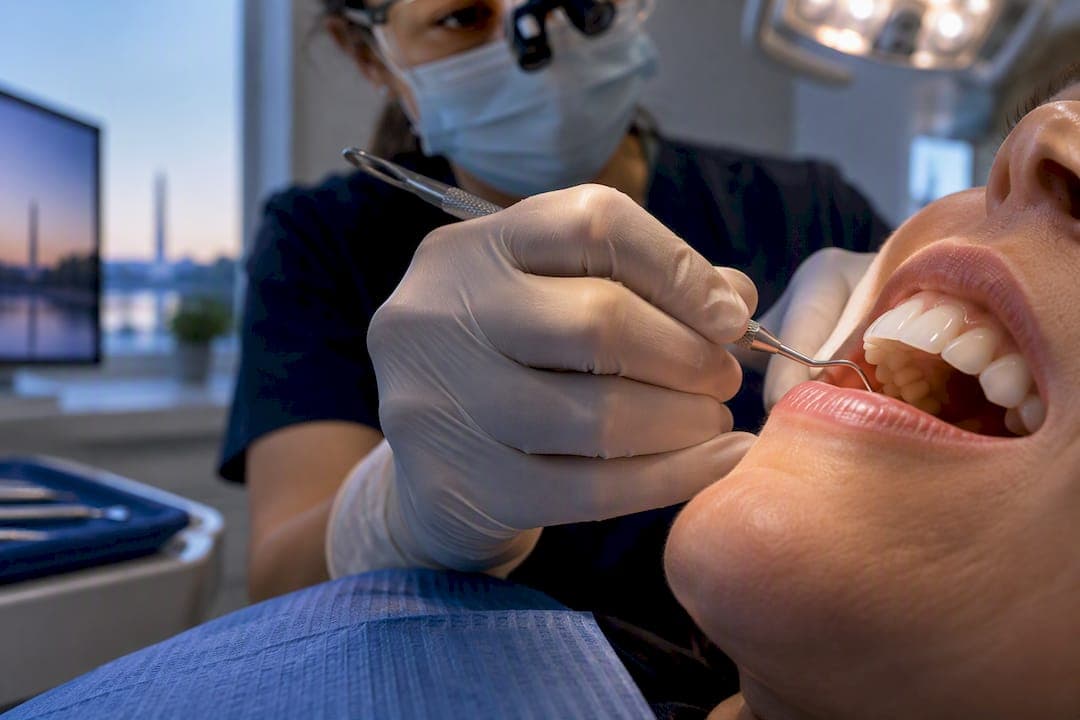
Scaling and root planing is a two-step, non-surgical deep cleaning that removes tartar from above and below the gumline, then smooths the tooth roots so gum tissue can reattach. It's the standard first treatment for chronic periodontitis, and the goal is specific: shrink pocket depth, stop the infection, and protect the bone holding your teeth in place. Most dentists recheck progress around 90 days out, and that recheck is what tells you whether the gums healed or whether you need something more.
TL;DR:
- Scaling and root planing is most effective for mild to moderate periodontitis with pocket depths under six millimeters and bleeding on probing.
- Deeper pockets, furcation involvement, or persistent bone loss may require surgical intervention beyond SRP.
- The procedure typically lasts one to two hours per full mouth, often split into two visits, and involves local anesthesia, with most discomfort occurring during recovery.
- Costs vary widely depending on the treatment area, provider type, and adjunct therapies, with regional and practice differences influencing final prices.
- The 90-day recheck is crucial for assessing tissue healing, with persistent deep pockets indicating the need for additional treatment.
Table of Contents
- Scaling and Root Planing vs. a Regular Cleaning
- What Happens During the Procedure
- Does Deep Cleaning Actually Work?
- Risks and What Counts as a Red Flag
- Recovery Timeline and the 90-Day Recheck
- What Does Scaling and Root Planing Cost?
- How a Full-Service Dental Practice Approaches SRP
- A Quick Note From Jake
- Ready to Book a Periodontal Evaluation?
- Sources
- FAQ
Scaling and Root Planing vs. a Regular Cleaning
A routine cleaning polishes teeth and clears surface plaque. Scaling and root planing, sometimes called SRP dental treatment or deep cleaning, goes below the gumline to clear out bacteria and calculus a toothbrush and prophy cup can't reach. This is the real dividing line in the deep cleaning vs. regular cleaning question: regular cleanings maintain healthy gums, SRP treats gums that are already infected.
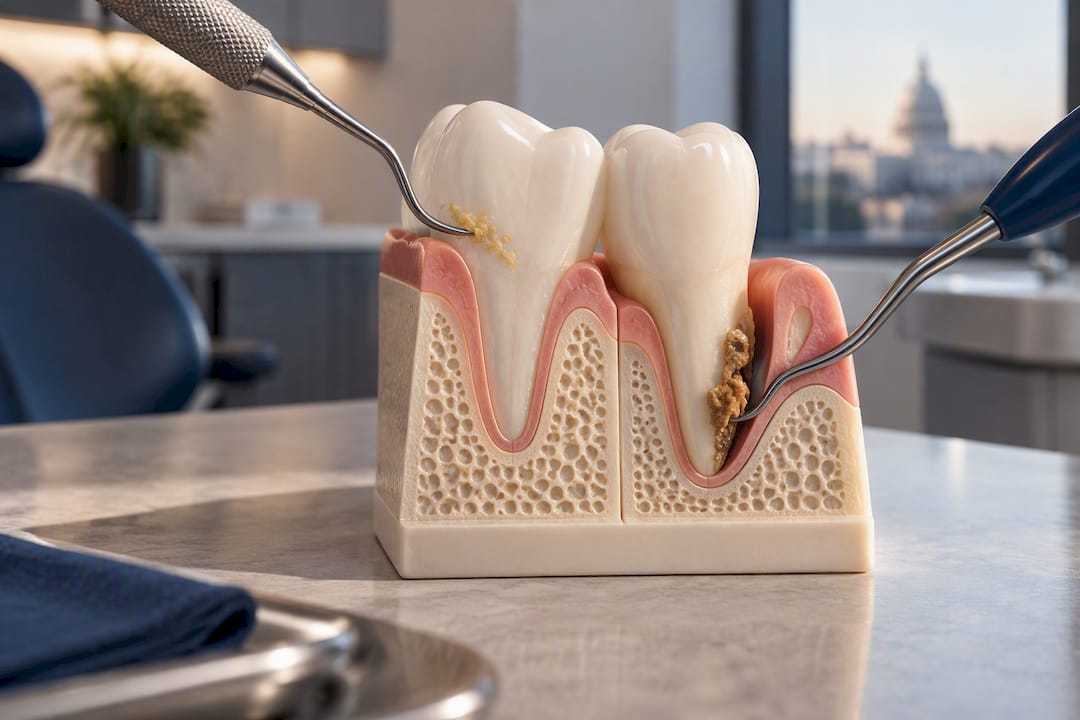
Dentists don't decide to recommend SRP on a hunch. They measure pocket depth with a periodontal probe, check for bleeding on probing, and review X-rays for early bone loss around the roots. Pockets deeper than 4 millimeters combined with bleeding and radiographic bone loss are the classic signal that periodontal cleaning, not a standard cleaning, is what you need.
The instrumentation is where the two procedures really part ways:
- Ultrasonic scalers use vibration to break up hardened tartar (calculus) both above and below the gumline.
- Hand curettes let the hygienist or dentist feel for rough spots on the root surface and smooth them precisely.
- Periodontal probes measure pocket depth before, during, and after treatment to track healing.
If you've been told your gums bleed easily or your last checkup flagged "pocketing," this is very likely the periodontal (gum) disease treatment your dentist has in mind.
What Happens During the Procedure
SRP is done in stages, and knowing the order helps you know what to expect in the chair.
- Numbing the area. Many patients get local anesthesia, especially when pockets are deep or the gums are inflamed and tender. Some cases with mild inflammation skip anesthesia entirely.
- Scaling. The clinician removes calculus and plaque from the tooth surface and just under the gumline using ultrasonic instruments, hand tools, or both.
- Root planing. The root surface gets smoothed so bacteria have fewer places to hide and gum tissue has a cleaner surface to reattach to.
- Adjunct therapy, if indicated. In select cases, dentists place a locally delivered antimicrobial directly in a pocket, or prescribe sub-antimicrobial-dose doxycycline (commonly 20 mg twice daily for 3 to 9 months) to help calm inflammation from the inside. The ADA's clinical guideline notes these adjuncts can offer a small-to-moderate added benefit, not a guaranteed one, and they aren't used for every patient.
- Wrap-up and instructions. You'll get guidance on rinsing, eating, and what sensitivity to expect over the next few days.
A full-mouth SRP often takes 1 to 2 hours, and many practices split treatment across two visits, doing one half of the mouth per appointment so anesthesia and instrumentation stay manageable.
Pro Tip: Ask your dentist whether your case calls for a same-visit or split-visit approach before you book. It changes how much numbness and downtime you're dealing with on any given day.
Does Deep Cleaning Actually Work?
Yes, for the cases it's designed to treat. Randomized trials show measurable drops in plaque and gum inflammation within 1 to 6 months of treatment, and the ADA lists scaling and root planing as the initial nonsurgical therapy for chronic periodontitis.
That evidence comes with real limits, though:
- SRP performs best on mild to moderate periodontitis, where pockets are shallow enough for instruments to reach cleanly.
- Pockets deeper than 6 millimeters, or teeth with furcation involvement (bone loss between the roots of a multi-rooted tooth), often don't respond fully to SRP alone.
- In those deeper cases, surgical periodontal therapy usually becomes the next step, since instruments physically can't reach the base of a very deep pocket.
- Certain lasers and other add-on therapies still lack strong supporting evidence, so a guideline summary from Texas A&M's dentistry program urges clinicians to stick with what's actually been proven rather than upselling unproven adjuncts.
The practical takeaway: SRP is genuinely effective, but "effective" has a ceiling that depends on how far the disease has already progressed.
Risks and What Counts as a Red Flag
Most people feel some soreness for a few days. Tenderness, mild swelling, brief bleeding when brushing, and heightened tooth sensitivity are all part of normal healing, and a little temporary tooth mobility can happen too as inflamed tissue settles down.
Less common problems include localized infection, bleeding that doesn't taper off, or pockets that stay just as deep at your follow-up as they were before treatment. None of these are typical, but they're the reason your dentist wants you back for a recheck.
Call your dentist promptly if you notice:
- A fever or feeling generally unwell after the procedure
- Bleeding that won't stop or gets worse instead of better
- Pain that intensifies rather than easing over several days
- Pus, a bad taste, or swelling that spreads beyond the treated area
Recovery Timeline and the 90-Day Recheck
Expect the numbness to fade within a few hours, and expect gums to feel more sensitive during recovery than they did during the appointment itself. That gap between "hurts more after than during" surprises a lot of patients, so plan for it rather than being caught off guard.
- First 24 to 48 hours. Stick to soft foods, use over-the-counter pain relievers as needed, and avoid anything very hot, cold, or crunchy.
- First week. Brush gently, rinse with warm salt water or a prescribed rinse, and hold off on aggressive flossing near the treated area until your dentist gives the go-ahead.
- The 90-day mark. This is when clinicians typically remeasure pocket depth to see whether tissue has tightened up and bleeding has resolved. If pockets are still deep, that's the trigger for a discussion about further treatment.
Pro Tip: Keep brushing and rinsing on schedule even when your gums feel fine after a week. Homecare in that first 90 days is what determines whether the recheck shows real healing or a stall.
If lingering sensitivity is your main complaint, this protocol on managing tooth sensitivity covers some general strategies worth discussing with your dentist.
What Does Scaling and Root Planing Cost?
Pricing depends on how many quadrants of your mouth need treatment, who performs it (a hygienist, general dentist, or periodontist), and whether adjunct therapies like localized antimicrobials are added to the plan. Specialist fees and additional imaging can push the price higher than a straightforward two-quadrant cleaning.
Costs vary widely by region and practice, so treat any number you see online as a rough starting point, not a quote. Before you commit to treatment, ask the clinic:
- For an itemized breakdown by quadrant, not just a flat total
- Which insurance codes they'll bill and what your plan actually covers
- Whether follow-up visits and maintenance cleanings are included or billed separately
- If adjunct therapies (antimicrobials, doxycycline) carry an extra charge
How a Full-Service Dental Practice Approaches SRP
A practice built around comprehensive care handles scaling and root planing as part of a bigger picture, not a stand-alone fix. That means imaging and pocket charting happen up front, so the treatment plan accounts for what's actually going on under the gumline, not just what's visible.
When pockets are unusually deep, furcation involvement shows up on X-rays, or the disease keeps coming back despite good homecare, a referral to a periodontist is the right call rather than repeating SRP indefinitely. Same-day appointments, written treatment plans, and scheduled follow-up visits make it easier to actually keep the 90-day recheck that determines whether treatment worked.
A Quick Note From Jake
Scaling and root planing is not exotic or experimental. It's the proven starting point for treating gum disease, and it works best when you treat the 90-day follow-up as seriously as the procedure itself. Homecare between now and then does more heavy lifting than people expect. Bring a written list of questions to your appointment. Ask exactly what your pocket numbers were and what they need to be next time.
— Jake
Ready to Book a Periodontal Evaluation?
If you're noticing bleeding gums, persistent bad breath, or a dentist has already flagged deep pockets, waiting rarely makes the situation simpler to treat. DC Implant & Cosmetic Dentistry performs the full pathway in-house, from imaging and pocket charting to scaling and root planing and any follow-up restorative work, so you're not bounced between offices mid-treatment.

Some dental practices offer same-day appointments, reducing wait times for patients with suspicious symptoms. Initial visits to dental clinics often include a full exam, X-rays, pocket measurements, and a written treatment plan to explain the patient's condition and recommended care. Experienced dental professionals oversee care with an emphasis on clear communication before any instrument touches your gums. If dental visits make you anxious, it's worth mentioning that up front so the team can adjust the pace of your appointment. Visit the general dentistry and periodontal care page to see what's included, or schedule a periodontal evaluation directly to get pocket depths measured and a plan in writing.
Sources
For deeper reading beyond this guide: the ADA's MouthHealthy page on scaling and root planing covers the basics of the procedure and recovery. The ADA chairside clinical guideline details the evidence behind adjunct therapies. Cleveland Clinic's overview walks through patient-facing expectations, and the CDC's periodontal disease page explains why ongoing maintenance matters after treatment.
This article is general information, not a substitute for advice from a qualified doctor. Consult a qualified healthcare professional about your own circumstances before acting on anything here.
- Scaling and Root Planing | MouthHealthy (ADA)
- ADA chairside guide: Nonsurgical treatment of chronic periodontitis by scaling and root planing (with or without adjuncts)
FAQ
Does scaling and root planing really work?
Yes, for mild to moderate periodontitis. Clinical trials show measurable drops in plaque and gingival inflammation within 1 to 6 months, though very deep pockets or bone loss may need surgical follow-up.
Do gums grow back after scaling and root planing?
Gum tissue can reattach more tightly to a cleaned, smoothed root surface, which often reduces pocket depth and makes gums look less swollen. It's tissue reattachment and inflammation reduction, not new gum growth covering exposed roots.
How much does periodontal scaling and root planing cost?
Cost depends on how many quadrants need treatment, who performs it, and whether adjunct therapies are used, so prices vary widely by clinic and region. DC Implant & Cosmetic Dentistry's general dentistry page has current details, or you can request an itemized quote at your evaluation.
How painful is scaling and root planing?
Most patients feel more discomfort during recovery than during the procedure itself, since local anesthesia typically covers the treatment visit. Expect tenderness and sensitivity for a few days, manageable with over-the-counter pain relievers.
How do I know if I need deep cleaning instead of a regular cleaning?
Deep cleaning is indicated when a dentist finds pockets deeper than about 4 millimeters, bleeding on probing, or early bone loss on X-rays. A regular cleaning only maintains gums that are already healthy, so if your last checkup flagged any of those signs, deep cleaning is the appropriate next step.