Fluoride treatments work. They prevent cavities, strengthen enamel against acid attacks, and can even reverse early decay before it becomes a filling. Children benefit most from a public-health standpoint, but adults with dry mouth, gum recession, or a history of cavities often get just as much value from professional applications. Used at recommended levels, fluoride is safe. The bigger question isn't whether it works. It's whether you personally need the professional version or whether your toothpaste is already doing the job.
TL;DR:
- Most adults in fluoridated areas and low-risk patients rely effectively on daily toothpaste and tap water, with professional fluoride treatment providing limited additional benefit.
- High-risk patients, such as those with dry mouth, recent cavities, or exposed roots, benefit from targeted professional fluoride applications two to four times annually.
- Fluoride varnish, gel, and rinses vary in concentration and application method, with professional treatments offering higher doses under supervision to prevent decay.
- Fluoride use at recommended levels is proven safe, but overuse in children can cause cosmetic fluorosis, emphasizing the importance of personalized risk assessment.
- Frequency of professional fluoride treatments should align with individual risk factors, generally being twice a year for most, with higher-risk cases requiring more frequent care.
Table of Contents
- How does fluoride prevent tooth decay?
- What are the real, evidence-backed benefits of fluoride treatment?
- What types of fluoride treatments are available?
- Who actually needs professional fluoride treatment?
- Is fluoride treatment safe, and what about fluorosis?
- How often should you get fluoride treatment, and what happens at the appointment?
- What clinicians want patients to understand about fluoride
- Ready to find out if you need professional fluoride treatment?
- Sources
How does fluoride prevent tooth decay?
Fluoride reaches your teeth two ways: systemically, through fluoridated water and supplements absorbed before teeth erupt, and topically, through toothpaste, varnish, and rinses applied directly to teeth you already have. For anyone past childhood, topical exposure is what matters most.
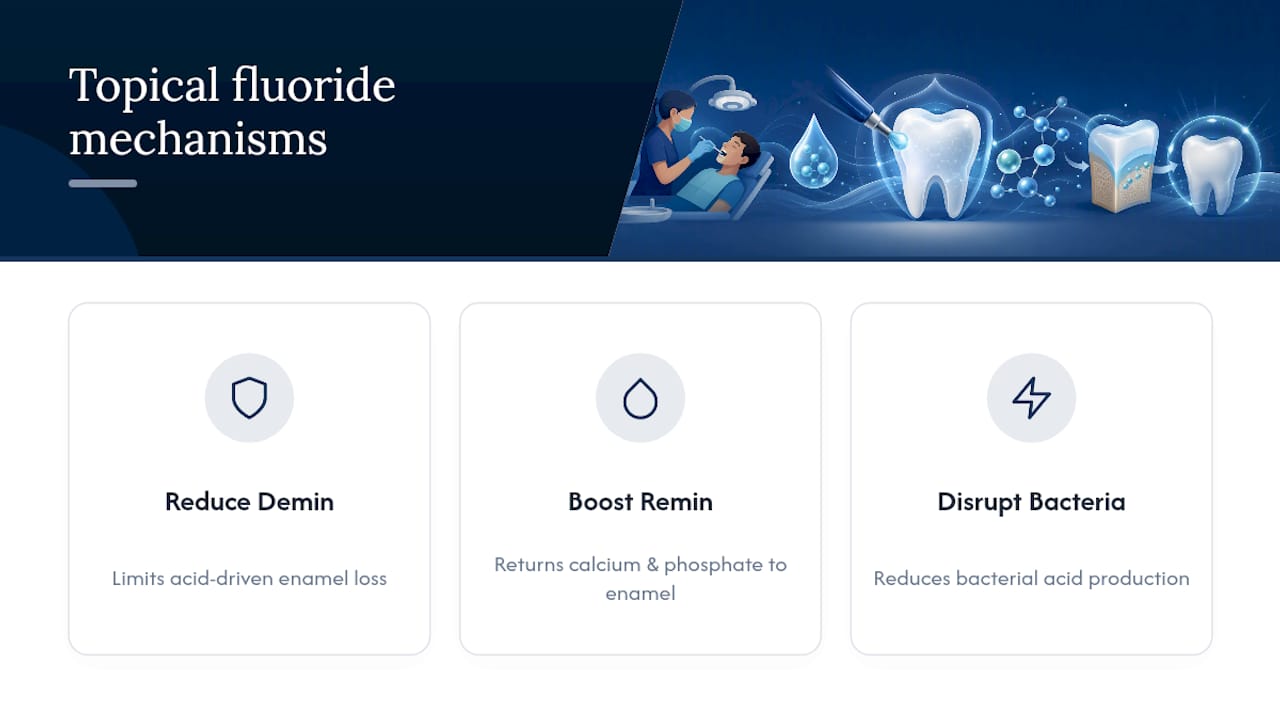
Topical fluoride fights decay through three mechanisms working together. It slows the demineralization that happens every time acid from plaque bacteria attacks your enamel. It speeds remineralization, pulling calcium and phosphate back into weakened enamel to form fluorapatite, a mineral structure more acid-resistant than the original enamel. And it disrupts the metabolic processes of cavity-causing bacteria, making it harder for them to produce the acid that starts the damage in the first place.
Saliva plays an underappreciated role here. It carries dissolved fluoride across your teeth throughout the day, which is why frequent, low-dose topical exposure (brushing twice daily) can outperform occasional high-dose exposure in day-to-day protection. Professional treatments exist to boost that baseline when someone's risk profile calls for more, a mechanism confirmed by research on how topical fluoride works.
What are the real, evidence-backed benefits of fluoride treatment?
The case for fluoride isn't marketing. It's decades of clinical evidence, and the benefits break down into a few distinct categories.
- Fewer cavities, including reversal of early lesions. Systematic reviews of fluoride varnish trials show consistent reductions in caries incidence among children and high-risk patients, and early "white spot" lesions can sometimes remineralize before they need a drill.
- Stronger, more acid-resistant enamel. The fluorapatite formed during remineralization resists the acid produced by plaque bacteria better than untreated enamel, which matters most for anyone with a diet heavy in sugar or acidic drinks.
- Reduced sensitivity and protection for exposed roots. As gums recede with age, root surfaces lack the enamel coating and decay faster; fluoride helps blunt both the sensitivity and the decay risk.
- Population-level payoff. The CDC's evidence on fluoride shows twice-yearly varnish applications meaningfully cut caries rates in both primary and permanent teeth, and community water fluoridation remains one of the most cost-effective public health interventions on record, reducing the number of restorative procedures a population needs over time.
The strongest results come from layering these approaches: fluoridated water, fluoride toothpaste, and professional treatment together outperform any single method alone.
What types of fluoride treatments are available?
Not all fluoride is the same strength, and that's by design. Products are formulated for specific delivery contexts and age groups.
- Varnish is a sticky resin painted onto teeth, typically 5% sodium fluoride (about 22,600 ppm fluoride). It's the go-to for young children because the small quantity applied limits how much they could swallow compared with other professional methods.
- Gel and foam, often 1.23% APF (roughly 12,300 ppm), get applied in trays and require a set contact time. Evidence doesn't support rushing this step. Trials showing benefit used standard contact times, not shortcuts.
- Toothpaste and over-the-counter rinses carry far lower concentrations, generally under 1,500 ppm, but daily use makes up for the lower dose. For most low-risk adults living in a fluoridated area, this is enough.
- Prescription-strength gels or rinses bridge the gap for people who need more than toothpaste but not a full in-office application.
- Fluoride supplements are reserved for children living in areas with fluoride-deficient water, prescribed carefully based on local water testing.
Concentration is the whole story here. Professional products are potent specifically because they're applied under supervision, not left in a medicine cabinet.
Who actually needs professional fluoride treatment?
This is where a lot of people overpay for treatment they don't need, or skip treatment they genuinely should get. Professional fluoride earns its cost most clearly for patients with identifiable risk factors, not as a blanket recommendation for everyone in the chair.
- Chronic dry mouth (xerostomia). Reduced saliva means less natural fluoride circulation and less buffering against acid, making professional treatment a priority for dry mouth patients.
- A recent cavity or active decay history. Past decay is one of the strongest predictors of future decay, according to guidance from Cleveland Clinic on fluoride use.
- Braces, bridges, or other appliances. Anything that makes brushing and flossing harder creates more places for plaque to sit undisturbed, a factor worth discussing if you're weighing orthodontic or cosmetic dental work.
- Exposed root surfaces from gum recession. Roots lack the protective enamel layer and decay faster once exposed.
- Enamel erosion or a history of head and neck radiation. Both dramatically raise caries risk regardless of age.
Guidelines from the American Academy of Pediatric Dentistry frame this as risk tiers: high-risk patients benefit from treatment two to four times a year, moderate-risk patients once or twice, and low-risk patients can generally rely on toothpaste and fluoridated tap water. For many healthy adults with no risk factors, additional professional fluoride adds little beyond what's already coming from the sink and the toothpaste tube. Your dentist is the right person to sort out which tier you're actually in.
Is fluoride treatment safe, and what about fluorosis?
Fluoride's safety record is well established when used at recommended levels, but "more is better" doesn't apply here. Dental fluorosis, faint white streaks or spots on enamel, can develop when children under 8 get too much fluoride while their adult teeth are still forming under the gums. It's cosmetic, not harmful to tooth function, and it's the reason dosing matters so much for kids.
That's also why the U.S. Public Health Service sets community water fluoridation at 0.7 mg/L, a level calibrated to prevent decay while keeping fluorosis risk low. Acute fluoride toxicity from swallowing a large amount is rare but real, which is why children should be supervised while brushing and why toothpaste and mouthrinses should be stored out of small children's reach. Major health agencies, including the CDC and NIDCR, maintain that fluoride is safe and effective at the concentrations used in public water systems and dental products.
How often should you get fluoride treatment, and what happens at the appointment?
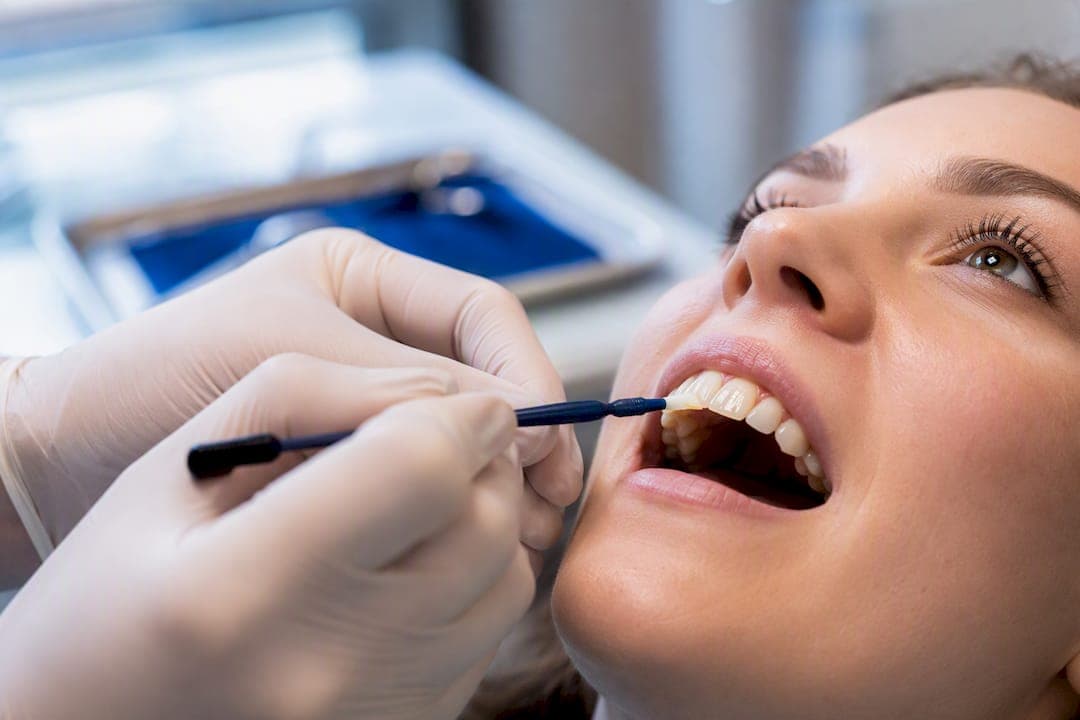
A professional application is fast. Varnish typically goes on in under five minutes, painted directly onto tooth surfaces with a small brush. Afterward, you'll be told to avoid eating, drinking, or rinsing for about 30 minutes so the fluoride has time to work into the enamel.
Frequency depends on risk, not habit. Twice-yearly treatment, often paired with your regular cleaning appointment, covers most patients. Higher-risk cases, per a clinician's judgment, may call for treatment three or four times a year.
Insurance coverage varies widely by plan and age; many plans cover fluoride treatment fully for children but only partially, or not at all, for adults. Where coverage falls short, some patients use dental benefits available through certain expat or international plans to offset the cost. Out-of-pocket, expect a modest per-visit fee, generally far less than the cost of treating a cavity that could have been prevented.
What clinicians want patients to understand about fluoride
Fluoride gets treated as an afterthought in a lot of dental visits, tacked on at the end of a cleaning without much explanation. That's a missed opportunity. The decision of varnish versus gel versus a prescription-strength take-home product should follow directly from a patient's actual risk profile, not from whatever's stocked in the office that day. A patient with dry mouth from medication needs a different plan than a healthy teenager with straight teeth and no cavity history, and treating them the same wastes the higher-risk patient's time.
The practice at DC Implant & Cosmetic Dentistry builds fluoride recommendations around that kind of individualized risk assessment rather than a one-size schedule. If you're unsure which tier you fall into, that's a five-minute conversation worth having at your next visit, and same-day appointments make it easy to get answers without waiting weeks.
— Jake
Ready to find out if you need professional fluoride treatment?
If you've read this far wondering whether your dry mouth, your history of cavities, or your kid's new braces put you in a higher-risk category, that's a question worth answering in person rather than guessing. DC Implant & Cosmetic Dentistry builds fluoride plans around your actual risk factors instead of a generic twice-a-year default, so you're not paying for treatment you don't need or skipping treatment you do.

The practice offers same-day appointments, advanced diagnostic technology, and a preventive-care approach under Dr. Kambez Shukoor that starts with an honest risk assessment. If it turns out you need more than a fluoride boost, from a filling to full restorative work, the same visit can start that conversation too. Schedule a preventive exam and oral hygiene assessment to find out where you actually stand.
This article is general information, not a substitute for advice from a qualified doctor. Consult a qualified healthcare professional about your own circumstances before acting on anything here.
Sources
- Fluoride: Uses, Benefits & Side Effects - Cleveland Clinic
- Topical fluoride mechanisms and recommendations (NCBI Bookshelf, 2023)
- About Fluoride | CDC
- Ask the Expert: Why is fluoride good for dental health? | NIDCR
- Fluoride Therapy — AAPD policy/guidance