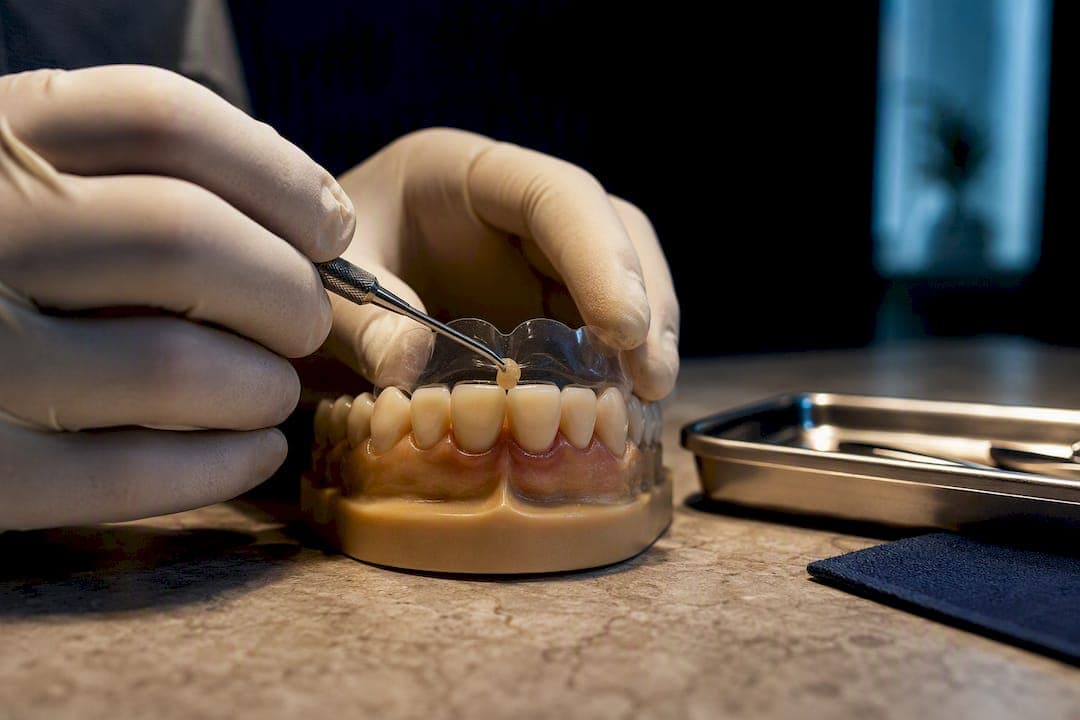
Black triangles between your teeth are usually fixable, and the right fix depends entirely on what caused the gap. Dentists generally choose from three paths: restorative camouflage like bonding or injection-molded composite, orthodontic repositioning of the teeth, or tissue-based procedures like gum grafts or hyaluronic acid injections. The restorative route tends to be the most predictable; regrowing lost gum tissue is far less reliable, especially once bone has receded.
TL;DR:
- Restorative composite bonding, especially injection-molded techniques, offers a predictable, minimally invasive, and durable solution with a high success rate at 12 months.
- Cases involving gum recession, active disease, or bone loss often require coordinated treatment by specialists to improve long-term outcomes.
- The size of the embrasure, periodontal health, and gum tissue thickness significantly influence whether a conservative or surgical approach is appropriate.
- Orthodontic repositioning can help close gaps caused by tooth alignment issues, but may need final restorative adjustments for optimal results.
- Costs, treatment duration, and maintenance vary widely, with bonding being quick and affordable, while grafts and veneers involve multiple appointments and healing periods.
Table of Contents
- What Is a Dental Black Triangle, and Why Does It Matter?
- What Causes Black Triangles to Form?
- Restorative, Orthodontic, or Surgical: Which Black Triangle Treatment Fits?
- How Do Dentists Decide Which Black Triangle Treatment Fits?
- What to Expect: Costs, Timelines, and Long-Term Upkeep
- How DC Implant & Cosmetic Dentistry Approaches Black Triangle Cases
- Ready to Close Your Black Triangles? Here's How Dc-Dentistry Helps
- Sources
What Is a Dental Black Triangle, and Why Does It Matter?
Dentists call it an "open gingival embrasure." It's the V-shaped gap that opens up between two teeth near the gumline when the interdental papilla, the small triangle of gum tissue that normally fills that space, shrinks back or never fully forms. What you see as a dark triangle is really the shadow of your mouth's interior showing through the empty space where gum tissue used to sit.
This isn't purely cosmetic, even though most people notice it first in photos or when talking to someone close up. An open embrasure changes how your mouth functions day to day.
- It creates a trap for food debris, especially fibrous foods like meat and leafy greens.
- Trapped debris feeds plaque buildup, which raises your risk of cavities and gum inflammation right at the gumline.
- The gap can worsen over time if the underlying cause (recession, bone loss) isn't addressed.
- It's often one of the first things patients ask a cosmetic dentist to fix, ahead of whitening or alignment.
Left alone, a small triangle can slowly become a bigger one, particularly if gum disease is part of the picture.
What Causes Black Triangles to Form?
Most black triangles trace back to one of five overlapping issues, and figuring out which one applies to you is the first real step toward treatment.
- Triangular tooth shape. Some people are simply born with teeth that taper sharply toward the gumline, creating narrow contact points that leave more room for a gap even with healthy gums.
- Gum recession. Periodontal disease, gum trauma, or years of brushing too hard can wear away the gum tissue that used to fill the embrasure.
- Orthodontic movement. Braces or clear aligners straighten crowded teeth, but crowding was often hiding small gaps at the root level. Once teeth move into alignment, those hidden gaps become visible.
- Age and gum phenotype. Gum tissue thins and bone support drops gradually with age. People with naturally thin ("scalloped") gum tissue lose papilla height faster than those with thicker, more resilient tissue.
- Combined defects. Recession paired with a notched or worn area at the tooth's root surface, called a non-carious cervical lesion, complicates things further. A significant portion of gum recession cases involve one of these combined defects, and they often need a different treatment mix than recession alone.
Knowing which of these applies to you shapes almost everything that follows, including whether a dentist reaches for a composite kit or refers you to a periodontist first.
Restorative, Orthodontic, or Surgical: Which Black Triangle Treatment Fits?
Treatment for black triangles splits into four broad categories, and picking the right one comes down to how big the gap is, whether gum disease is active, and how much tooth structure you're willing to alter.
Non-surgical hygiene care comes first when inflammation, not tissue loss, is driving the problem. Scaling and root planing to clear out plaque and calculus below the gumline can sometimes let mildly swollen papilla tissue settle back into place. This won't close a true structural gap, but it's the right starting point before anything more invasive, and it's the approach the Cleveland Clinic recommends as a first step for recession-related issues generally.
Direct composite bonding is the classic fix: a dentist hand-sculpts tooth-colored resin along the edge of the tooth to close the gap. It's fast and affordable, often done in a single visit, but it's also technique-sensitive. Get the contour wrong and you end up with an overhang that traps more plaque than the black triangle did.
Injection-molded composite, often called the Bioclear technique, has become the more predictable version of that same idea. Instead of hand-shaping resin against a flat matrix, the dentist uses a custom-fitted, tooth-shaped mold, gauges the embrasure, isolates the tooth, and injects warmed composite directly into the form. Case series and a PubMed-reviewed study point to restorations that stay intact at the 12-month mark in many cases. Clinician write-ups in Inside Dentistry describe the full protocol, including matrix sizing, aluminum trihydroxide surface prep, and layered injection, and note that one-year recalls often show restorations holding shape with real hygiene benefits. A randomized trial in BMC Oral Health found the matrix technique itself affects contact quality, which is part of why this method has largely replaced the celluloid-strip approach for black triangle cases specifically.
Porcelain veneers or crowns make sense when a tooth needs more than a patch, whether that's because of shape irregularities, discoloration, or wear beyond what bonding can mask. The tradeoff is permanence: veneers require removing a thin layer of enamel, which bonding doesn't.
Orthodontic treatment, sometimes combined with interproximal reduction (light reshaping of the sides of teeth to change contact points), repositions teeth so the gap narrows or closes on its own. This is often paired with restorative finishing afterward rather than used alone.
Periodontal grafting (connective tissue grafts, coronally advanced flaps) is the most reliable option for restoring lost root coverage, but papilla regrowth specifically remains unpredictable even with surgery. A review of pink and white esthetics notes that clinicians often lean toward restorative reshaping precisely because biological regeneration of papilla tissue is so hard to guarantee.
Hyaluronic acid injections offer a minimally invasive middle ground. A systematic review found measurable papilla fill around the four-month mark in some patients, but results tend to decline over time and repeat injections are common.
Gingival veneers and pink composite can mask a gap temporarily and cost less than permanent options, though they're best thought of as a stopgap rather than a lasting fix.
Pro Tip: Ask specifically whether your case is a pure gum-tissue problem or a combined defect involving the tooth root. Combined cases usually need a different sequence of care, and treating them like a simple recession case often produces disappointing results.
How Do Dentists Decide Which Black Triangle Treatment Fits?
A proper assessment goes well beyond glancing at the gap in a mirror. Here's roughly what that evaluation looks like and what to bring to your own consultation.
- Measure the embrasure size and papilla height to classify how much tissue loss is really involved.
- Check periodontal status with probing depths to rule out active gum disease driving further recession.
- Assess gingival phenotype, thin tissue behaves differently than thick tissue and changes which treatments are realistic.
- Examine tooth shape and existing contact points, since triangular teeth respond differently to bonding than naturally square ones.
- Ask your dentist directly: What's causing this in my case? What's the recommended sequence of treatment? How long will results last, and what maintenance will they need? Are there cheaper or less invasive alternatives, and what do they cost?
Treat any promise of guaranteed papilla regrowth with real skepticism, especially if bone loss is present and nobody has mentioned a periodontist. The same goes for a straightforward composite recommendation when your history includes recent orthodontic treatment. Cases involving recession, active gum disease, or a post-braces gap usually turn out best with a coordinated plan between a general dentist, periodontist, and sometimes an orthodontist, rather than one provider working in isolation.
What to Expect: Costs, Timelines, and Long-Term Upkeep
Costs vary widely by region and case complexity. Composite bonding and injection-molded composite are typically more budget-friendly options and often finish quickly. Veneers and grafting procedures usually involve multiple appointments spread across weeks, plus healing time for surgical work. Orthodontic correction takes longer, often several months to over a year, since it depends on overall tooth movement rather than the black triangle alone.
- Bonding and injection-molded composite: usually one visit, minimal to no downtime.
- Veneers: typically two to three visits including a temporary phase.
- Periodontal grafting: one surgical visit plus multiple weeks of healing and follow-up checks.
- HA injections: repeat sessions are common, since effects can fade over months.
Composite restorations need periodic polishing and checkups to catch early wear before it becomes a bigger repair. Smoking and inconsistent plaque control shorten the lifespan of almost every option on this list, restorative or surgical. Because these procedures are typically classified as cosmetic, dental insurance usually won't cover them, though many practices offer financing to spread out the cost. Good daily hygiene habits go a long way toward protecting whatever treatment you choose.
How DC Implant & Cosmetic Dentistry Approaches Black Triangle Cases
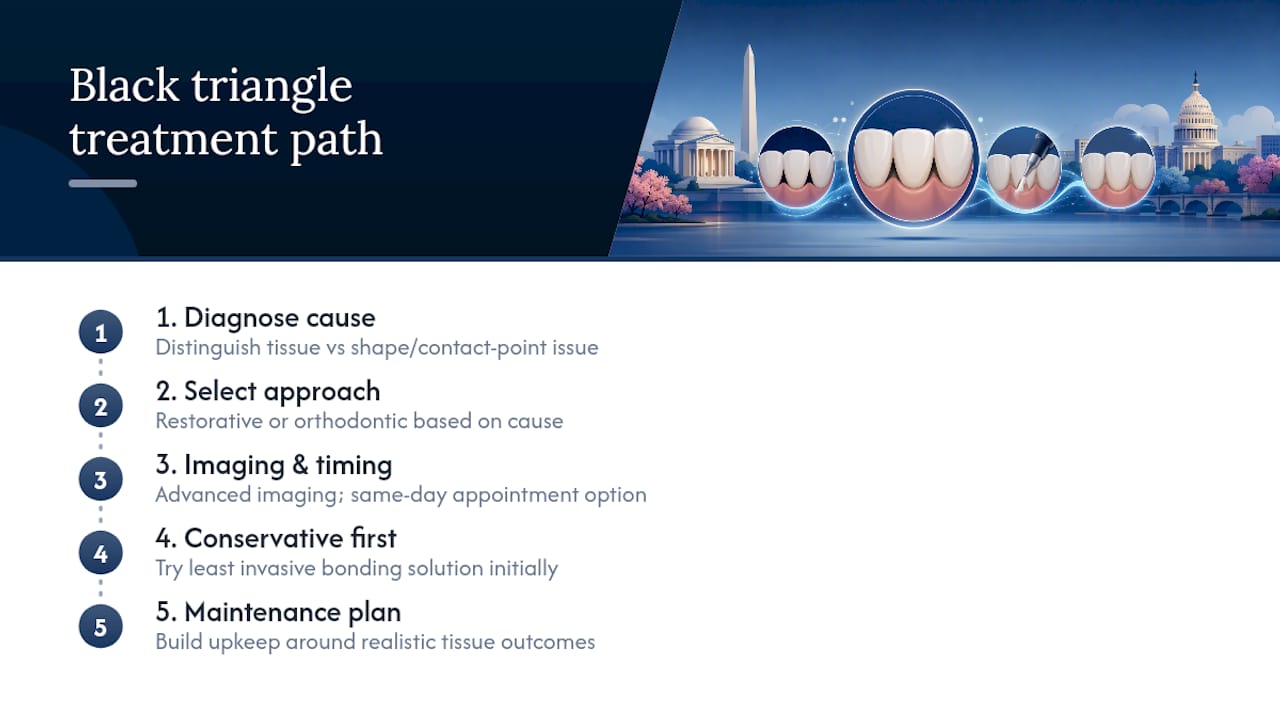
At Dc-dentistry, evaluating a black triangle starts with distinguishing a true tissue problem from a shape or contact-point issue, then building a plan around whichever restorative or orthodontic approach fits the cause. Treatment planning uses advanced imaging and same-day appointment availability, which matters when a patient wants a conservative bonding fix without waiting weeks for a first visit.
The clinic's many positive reviews reflect a pattern favoring conservative-first treatment: try the least invasive option that produces a real cosmetic result, then build a maintenance plan around it rather than promising outcomes tissue biology can't reliably deliver.
— Jake
Ready to Close Your Black Triangles? Here's How Dc-Dentistry Helps
Unlike a general clinic that hands you a generic bonding quote without checking your gum health first, Dc-dentistry builds every black triangle plan around a real diagnosis, so you're not paying for a fix that won't hold. If your gap comes from tooth shape or minor recession, our team can walk you through conservative composite bonding options as part of a broader cosmetic dentistry consultation.

If your case involves gum recession, we'll talk through what's realistic before recommending anything, similar to the staged approach SmileFam describes for planning cosmetic work around recession. Cases tied to crowding or shifted teeth after orthodontics may call for clear aligners to correct contact points before any restorative finishing touch. Bring a list of any prior orthodontic or periodontal treatment to your visit. We'll examine your gum phenotype and tooth contacts, discuss financing through CareCredit or Lending Tree if needed, and lay out a sequence of care instead of a single guess. Book a consultation with Dc-dentistry today and get a clear answer on what will actually close your black triangles.
This article is general information, not a substitute for advice from a qualified doctor. Consult a qualified healthcare professional about your own circumstances before acting on anything here.
Sources
- What to know about black triangles — WebMD
- PubMed article on injection-molded composite outcomes
- Esthetic dentistry review on pink and white esthetics — PMC
- Conservative treatment to close black triangles — Inside Dentistry
- An updated evidence-based recommendation for the treatment of gingival recession associated with non-carious cervical lesions