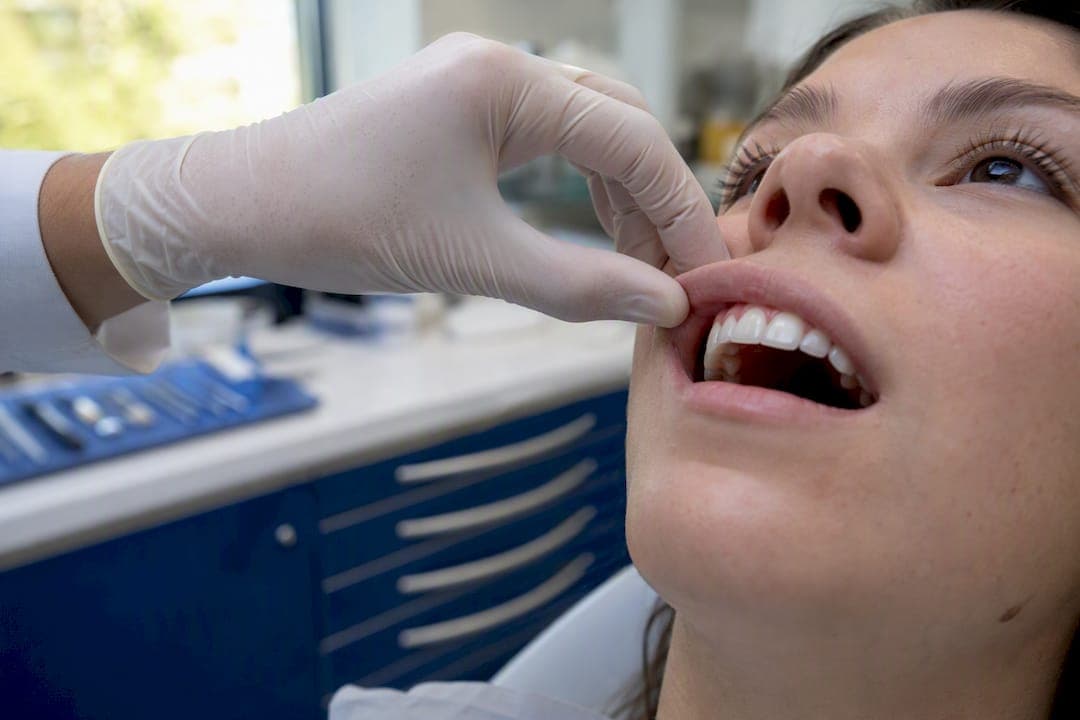
White spots on teeth are patches of enamel that have lost minerals or never formed correctly, and whether they're fixable depends entirely on what caused them. Some, like early enamel demineralization, can be reversed with fluoride before they turn into cavities. Others, like fluorosis or developmental defects, are permanent changes in the enamel structure that need a cosmetic fix, not a remineralizing gel.
Here's what to do right now:
- Tighten up plaque control and cut back on frequent acidic or sugary snacking, especially between meals.
- Book a dental exam. Only a dentist can tell you whether a spot is active (still losing minerals) or already settled.
- Ask about remineralization first, before jumping to whitening or veneers. Fixing the cosmetic surface won't help if the underlying process is still active.
The CDC's oral health surveillance data makes prevention the clear priority: catching a white spot early, while it's still just a chalky patch of demineralized enamel, is far cheaper and less invasive than treating it once it's cavitated.
Key Takeaways
White spots on teeth range from reversible early demineralization to permanent developmental defects, and the right treatment depends entirely on correctly diagnosing which one you have.
| Point | Details |
|---|---|
| Identify lesion activity first | Active, porous lesions can often be remineralized; hard, inactive ones usually need cosmetic treatment instead. |
| Match cause to timing | Fluorosis and hypoplasia form before teeth erupt; decalcification and diet-related spots appear afterward. |
| Try conservative options before cosmetic ones | Fluoride varnish and CPP-ACP should be attempted before resin infiltration, bonding, or veneers. |
| Watch for red flags | New sensitivity, pain, or spreading spots mean you should schedule an exam soon, not wait. |
| Get a personalized diagnosis at Dc-dentistry | DC Implant & Cosmetic Dentistry offers same-day exams to assess lesion activity and outline a conservative-first treatment plan. |
Table of Contents
- What Causes White Spots on Teeth?
- How Do Dentists Diagnose White Spots?
- What Are the Treatment Options for White Spots on Teeth?
- How Can You Prevent White Spots on Teeth?
- Can White Spots on Teeth Go Away, and How Long Does It Take?
- When Should You See a Dentist About White Spots?
- How Dc-Dentistry Approaches White Spot Evaluation
- Sources
What Causes White Spots on Teeth?
Not every white spot has the same origin, and the pattern often tells you which one you're dealing with. A dentist reads these visual clues the way a mechanic reads an engine noise.
- Enamel demineralization (early decay): Chalky, opaque patches that show up near the gumline or around orthodontic brackets, usually where plaque sits undisturbed.
- Dental fluorosis: Diffuse, symmetric white streaking or mottling across multiple teeth, caused by excess fluoride intake while teeth were still developing in childhood.
- Enamel hypoplasia: A developmental defect where the enamel simply didn't form with full thickness, often from illness, nutritional deficiency, or fever during early tooth formation. Clinical reviews of developmental enamel defects and fluorosis note these lesions form before the tooth even erupts, which is why they rarely respond to fluoride later in life.
- Braces-related decalcification: Sharp, localized white rectangles that appear right around where brackets sat, a sign of plaque buildup during orthodontic treatment. Research on orthodontics and white spot lesion prevalence confirms this risk climbs without diligent cleaning.
- Diet and acid exposure: Frequent soda, citrus, or sports drinks soften enamel and speed up mineral loss.
- Poor oral hygiene: Plaque left in place for days lets acid-producing bacteria work continuously on the same patch of enamel.
- Dry mouth or mouth breathing: Reduced saliva means less natural buffering and remineralization, so spots can develop faster in people who breathe through their mouth at night.
Timing matters: fluorosis and hypoplasia form while teeth are still developing under the gums, long before they're visible. Decalcification, diet-related demineralization, and hygiene-related spots show up after the tooth has already erupted, often within months of a habit or a set of braces.
How Do Dentists Diagnose White Spots?
Diagnosis isn't guesswork. A dentist works through a short but specific process to figure out both the cause and, more importantly, whether the lesion is still active.
- Review your history: fluoride exposure as a child, whether you wore braces, any high fevers or illness during your early years.
- Examine the tooth both wet and dry. Active lesions often look more obvious once the surface dries out.
- Use gentle probing or palpation to check texture without damaging fragile enamel.
- Take radiographs if there's a concern the white spot has already progressed into deeper decay.
- Some practices use fluorescence-based tools like DIAGNOdent or photographic documentation to track a lesion over time. Research on diagnostic tools for white spot lesions shows these aids help with monitoring, but visual inspection remains the everyday clinical standard.
The activity distinction is the whole ballgame here. An active lesion is porous, matte, and often still reversible with remineralization. An inactive or arrested lesion is hard, shiny, and rarely responds to fluoride, according to research on lesion activity in white spot management. Bring up your childhood fluoride use, orthodontic history, and any recent whitening treatments. That detail shapes the whole treatment conversation.
What Are the Treatment Options for White Spots on Teeth?
Treatment splits into two very different categories, and mixing them up wastes time and money. One category treats the disease process. The other treats how it looks.
Reversible, non-invasive options aim to rebuild lost minerals in enamel that's still salvageable:
- Improved home hygiene combined with fluoride toothpaste, which slows or halts active demineralization.
- Professional fluoride varnish, applied in-office, which delivers a concentrated dose directly to the lesion.
- Prescription-strength fluoride gels for higher-risk patients.
- CPP-ACP pastes (casein phosphopeptide-amorphous calcium phosphate), which supply calcium and phosphate ions the enamel can reabsorb.
- Silver diamine fluoride in select cases where arresting active decay matters more than immediate cosmetics.
Research on remineralization and prevention strategies backs these approaches for early, active lesions, but they take weeks of consistent use to show results, and they can't rebuild enamel that's already permanently altered.
Minimally invasive options bridge the gap between prevention and full restoration:
- Resin infiltration (often called the Icon technique) fills the porous structure of a white spot with a clear resin, masking the lesion almost immediately. Clinical evidence on resin infiltration shows it can improve appearance in a single visit.
- Enamel microabrasion physically removes a very thin surface layer of discolored enamel, which works well for shallow, surface-level discoloration but isn't appropriate for deeper defects, based on research on microabrasion and whitening.
Restorative and cosmetic options step in when the enamel structure itself is permanently changed:
- Composite bonding covers the spot with tooth-colored resin, a good option for smaller or isolated defects.
- Porcelain veneers handle widespread or severe discoloration, particularly from fluorosis, when other methods can't fully blend the tooth's appearance.
A systematic review of white spot lesion treatment found that resin infiltration tends to deliver faster cosmetic results than fluoride varnish, though fluoride requires repeated applications over time to show comparable improvement. Neither is universally "better." They solve different problems.
Pro Tip: Always remineralize first if a lesion is still active. Jumping straight to resin infiltration or veneers on a lesion that's still losing minerals just seals a problem inside the tooth instead of solving it. Save cosmetic intervention for spots that are either inactive or have already been stabilized.
One more thing worth knowing: teeth whitening can reduce the contrast between a white spot and the surrounding enamel by lightening the whole tooth, but it doesn't fix a structural defect underneath. It's often used alongside bonding or veneers, not as a standalone fix for fluorosis or hypoplasia.
How Can You Prevent White Spots on Teeth?
Prevention looks different depending on your age and situation, but the underlying principle is the same: limit acid exposure and keep plaque from sitting on the enamel long enough to do damage.
For children, the guidance is specific. Use only a pea-sized amount of fluoride toothpaste after age 3, supervise brushing until kids can reliably spit rather than swallow, and avoid fluoride supplements unless a dentist actually prescribes them, since excess fluoride during tooth development is what causes fluorosis in the first place. Dc-dentistry's guidance on children's oral health covers age-specific fluoride amounts in more detail.
For adults, the focus shifts to habits: reduce how often you sip acidic or sugary drinks throughout the day (frequency matters more than total volume), stick with fluoride toothpaste, and ask about professional fluoride varnish if you're at higher risk. Managing dry mouth, whether from medication or mouth breathing, also helps since saliva is your natural remineralizing agent.
If you're in braces or wearing clear aligners, extra vigilance around the brackets pays off. Use interdental brushes to clean spots a regular toothbrush misses, ask about fluoride varnish during active treatment, and if you're using aligners, avoid drinking anything but water while they're in. Solid daily oral hygiene habits matter more during orthodontic treatment than almost any other time in adult life.
Can White Spots on Teeth Go Away, and How Long Does It Take?
Whether a white spot disappears comes down entirely to what caused it, and that's the single most important thing to understand before starting any treatment.
Active demineralization can genuinely reverse with weeks to months of consistent fluoride or CPP-ACP use, since the enamel is porous enough to reabsorb minerals. Structural defects like fluorosis or hypoplasia are permanent; the enamel itself formed differently, and no amount of fluoride changes that.
Timelines vary by treatment:
- Remineralization: weeks to months, with visible improvement gradual rather than immediate.
- Resin infiltration or microabrasion: often a single appointment, occasionally a short series of visits.
- Bonding or veneers: typically one to three visits depending on how many teeth are involved.
Cost also varies widely by region and case complexity, so treat any figure as a rough guide rather than a quote. Fluoride varnish and remineralizing gels tend to sit at the lower end of the cost spectrum. Resin infiltration falls in the moderate range. Bonding costs more than infiltration but less than veneers, which represent the higher-cost end since they involve custom fabrication. Many practices offer financing for restorative work, and it's worth asking whether insurance covers any portion of a specific treatment before committing. Get an itemized treatment plan first. Conservative options are almost always cheaper than jumping straight to veneers.
When Should You See a Dentist About White Spots?
Most white spots aren't emergencies, but a few signs mean you shouldn't wait for your next routine cleaning.
- New or worsening sensitivity to cold drinks, sweets, or air around the spot.
- Pain, especially if it's sharp or lingers after the trigger is gone.
- A spot that's visibly growing or spreading to nearby teeth.
- Brown staining or a visible pit forming at the center of a white spot, which usually signals it has progressed into an actual cavity.
At the appointment, expect the dentist to review your history, examine the lesion, and take radiographs if decay is a real possibility. They'll assess whether the lesion is active or arrested, then walk you through remineralization versus cosmetic options with a written plan that includes timelines and costs. Bring a list of any medications you're taking, your childhood fluoride history if you know it, and photos if the spot has changed over the past few months. That level of detail speeds up diagnosis considerably.
How Dc-Dentistry Approaches White Spot Evaluation
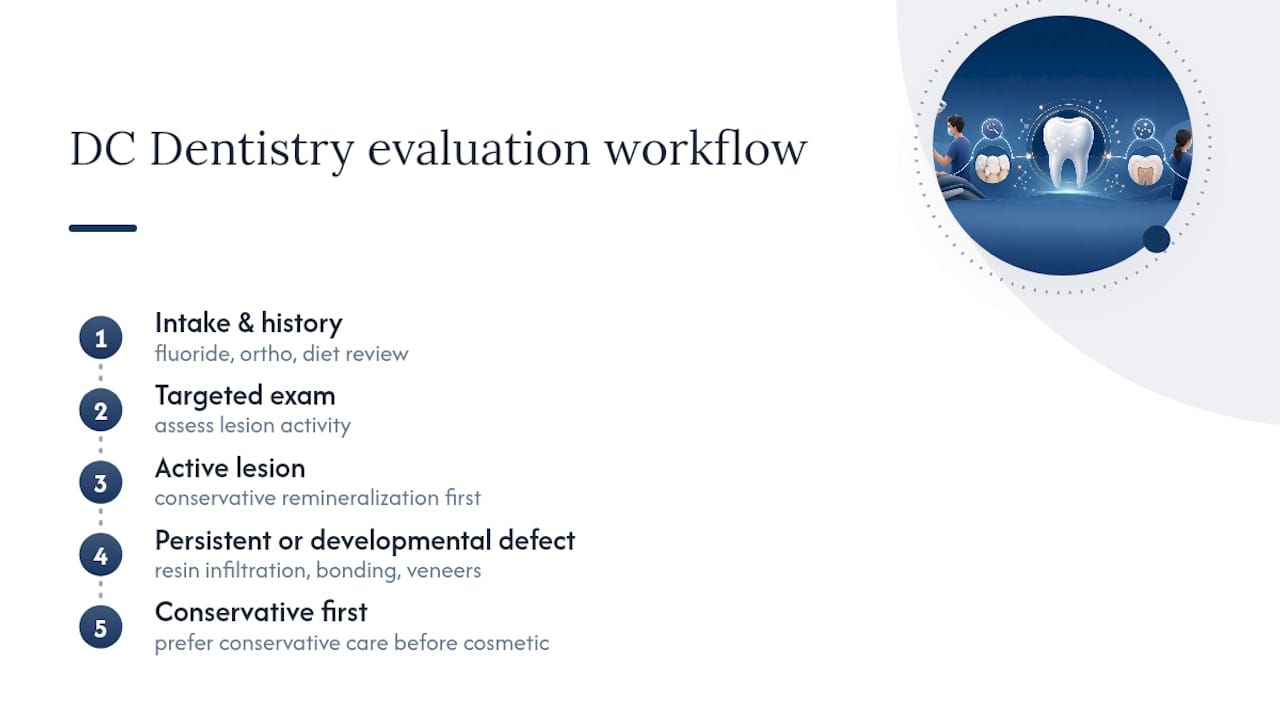
A patient walks in worried about a chalky patch near their gumline, and the first move isn't a cosmetic recommendation. It's a diagnosis. The workflow at DC Implant & Cosmetic Dentistry starts with intake and history, covering fluoride exposure, orthodontic background, and diet patterns that might explain what's showing up on the enamel.
From there, a targeted exam assesses lesion activity, since that single factor determines everything downstream. If the lesion is still active, conservative remineralization comes first. Only when a spot remains cosmetically unacceptable after stabilization, or when it's a permanent developmental defect, does the conversation move to resin infiltration, bonding, or veneers.
Dr. Kambez Shukoor, a U.S. Navy veteran who leads the practice, built this stepwise approach around the idea that conservative care should always come before cosmetic care when both are medically reasonable options. The practice offers same-day appointments, so a patient noticing a new spot doesn't have to wait weeks just to get a clear answer about what they're looking at.
A Clinician's Note on Conservative Care
We'd rather remineralize a tooth than restore one, and that preference shapes every recommendation we make for white spots. Cosmetic fixes have their place, but only after we've confirmed the underlying process is stable.
We've treated white spots in kids getting their adult teeth, teenagers finishing orthodontic treatment, and adults who've lived with fluorosis their whole lives. Every plan starts the same way: figure out what's actually happening in the enamel before deciding how to fix what you see.
Getting Your White Spots Evaluated and Treated
There's no single fix for white spots because there's no single cause, which is exactly why a personalized evaluation matters more than any product you'll find at the drugstore. DC Implant & Cosmetic Dentistry offers the full range readers need to address white spots properly, from preventive fluoride treatments and resin infiltration to composite bonding, porcelain veneers, professional teeth whitening, and orthodontic support through clear aligners for patients whose spots trace back to bracket-related decalcification.

If you've spotted a chalky patch, a streaky line, or a stubborn white mark that whitening hasn't touched, the next step is a same-day exam where Dr. Shukoor's team can assess lesion activity and map out a plan, conservative first, cosmetic only if needed. Schedule your visit through the teeth whitening consultation page to get started.
Sources
- White spot lesions: diagnosis and treatment – a systematic review | BMC Oral Health
- PubMed: differential diagnosis and lesion activity in white spot management
- CDC — 2024 Oral Health Surveillance: selected findings
This article is general information, not a substitute for advice from a qualified doctor. Consult a qualified healthcare professional about your own circumstances before acting on anything here.