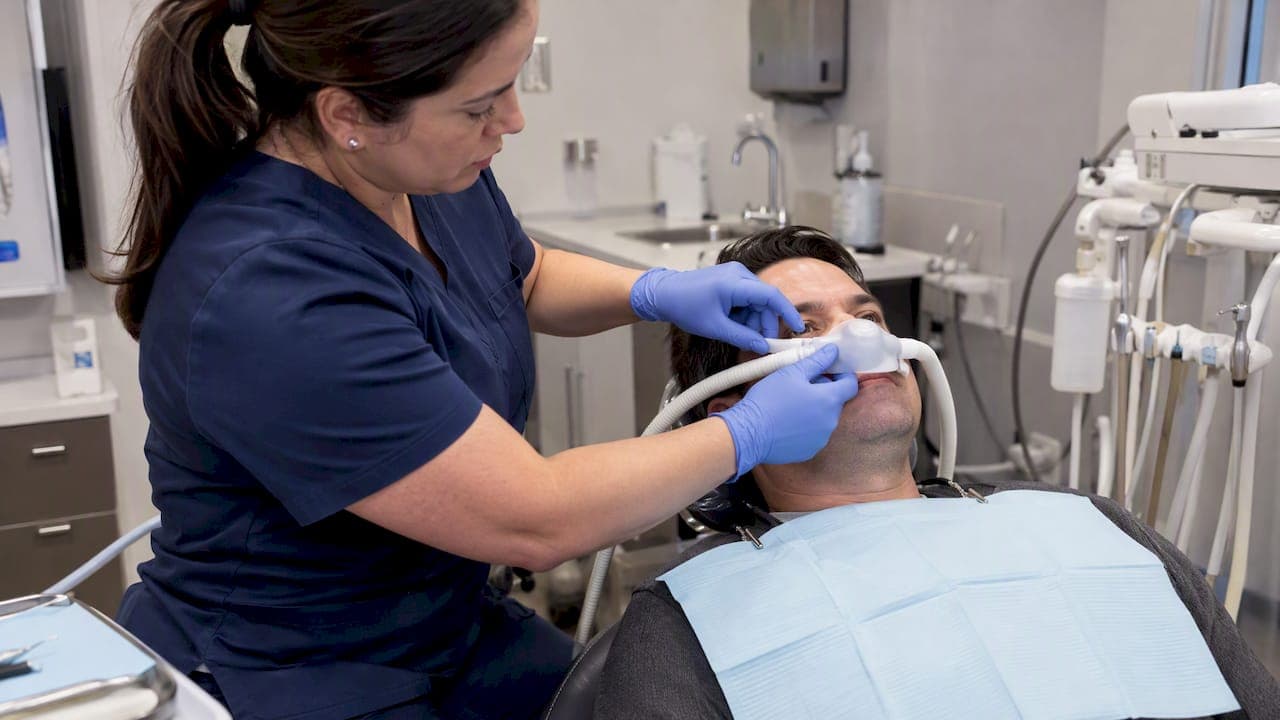
The main sedation dentistry options are nitrous oxide, oral conscious sedation, IV sedation, and general anesthesia. Nitrous oxide suits mild anxiety and short visits, oral sedation fits moderate anxiety, IV sedation supports deeper relaxation and longer work, and general anesthesia is for complex cases or patients who cannot cooperate. Sedation is a spectrum, so clinics follow fasting and monitoring guidelines.
TL;DR:
- Local anesthetic still controls pain; sedation reduces anxiety, and its depth can exceed the intended level, so ask who can monitor and manage emergencies.
- Before sedation, follow your clinic’s fasting instructions; general guidance calls for at least 2 hours after clear liquids and 6 hours after a light meal.
- Nitrous oxide effects usually fade within 15 to 30 minutes, but oral or IV sedation can take up to 24 hours for full recovery.
- After oral or IV sedation, arrange a ride home and an adult to stay with you; do not plan to drive yourself.
- Heart or lung disease, sleep apnea, and medication interactions can change the safest plan, so disclose your full medical history and supplements before treatment.
Table of Contents
- What are the main types of sedation dentistry?
- What happens during sedation and right afterward?
- How do clinicians keep sedation safe?
- How do dentists decide which option fits you?
- How should you prepare for sedation and recovery?
- Why comfort and continuity matter
- Dc-dentistry: sedation-friendly care in Washington, DC
- FAQ
- Sources
What are the main types of sedation dentistry?
Sedation dentistry uses medication to manage anxiety and stress, and Cleveland Clinic lists inhalation, oral conscious, and IV sedation as the most common choices. Here is how each one works and when it comes up:
- Nitrous oxide: You breathe it through a small mask, it takes effect within minutes, and it wears off quickly. It fits mild anxiety and short procedures.
- Oral conscious sedation: You may take an oral sedative before treatment. The medication and timing depend on your plan. Effects vary from person to person, and you need an escort home. It suits moderate anxiety.
- IV sedation: Medication goes through a vein, so the dentist can adjust the dose as you go. It can reach deeper conscious sedation, and many patients remember little of the procedure. We think of it for severe anxiety or long, complex work.
- General anesthesia: You are fully unconscious. It may be considered when sedation is unsuitable, and it needs specialist-level management.
- Other routes: Intranasal and intramuscular options exist for selected patients, as the NHS overview from Guy's and St Thomas' explains.
One point surprises many people: local anesthetic stays the foundation of pain control. Sedation calms you, while the numbing medication keeps the area comfortable. Sedation is also a continuum, and a dose meant for moderate sedation can sometimes produce a deeper level, which is why rescue skills matter.
What happens during sedation and right afterward?
The visit follows a predictable rhythm, whichever method you choose:
- You arrive, and the team reviews your health history, medications, and when you last ate or drank.
- You receive the sedation: a mask over your nose, a pill taken at the planned time, or an IV placed in your arm or hand.
- The team checks that you are responsive, then begins the local anesthetic and the treatment.
- Throughout, staff monitor your consciousness, oxygen level, and blood pressure. Capnography, which tracks your exhaled carbon dioxide, may be added when the sedation level calls for it.
- If you receive IV medication, the dose is titrated, meaning adjusted in small steps, to keep you comfortable without going deeper than planned.
- After treatment, you rest and are observed until you are steady enough to leave.
Recovery depends on the method. The Cleveland Clinic reports that nitrous oxide effects typically wear off within 15–30 minutes, while other forms of sedation may require up to 24 hours for full recovery.
Recovery window: nitrous oxide effects typically wear off within 15–30 minutes, while other forms of sedation may require up to 24 hours for full recovery.
That gap explains the escort rule. After oral or IV sedation, plan for someone to take you home and stay with you. If you are weighing nitrous oxide, our page on driving after laughing gas covers the transport question in detail.
How do clinicians keep sedation safe?
Safety rests on preparation, training, and equipment. These are the pillars we look for:
- Fasting: Guidelines recommend a minimum of 2 hours for clear liquids and 6 hours for light meals before sedation to lower the risk of aspiration.
- Rescue ability: The ADA guidelines state that the level of sedation is independent of route. The clinician must be able to diagnose and manage the consequences if you become more deeply sedated than intended, and training requirements rise with deeper levels.
- Monitoring and reversal: The ASA practice guidelines note that drugs such as propofol and ketamine can rapidly deepen sedation. They emphasize monitoring, readiness to manage respiratory depression, and access to reversal agents such as flumazenil and naloxone.
- Medical history: Heart or lung conditions, sleep apnea, and drug interactions can change which option is appropriate. Some patients are better served by an anesthesiologist consult.
- Evidence limits: A systematic review of oral sedation found that some benzodiazepines reduce anxiety in adults, but evidence quality limits firm conclusions about which agent works best. That is one reason your clinician individualizes the plan.
Pro Tip: Ask who will administer the sedation and who will watch you while the dentist works. A separate, trained monitor is a good sign.
How do dentists decide which option fits you?
No single option is "best." The choice comes from weighing a few factors:
- Your anxiety level, from mild unease to avoiding the dentist for years
- How long and how complex the procedure will be
- Your medical history and current medications
- Airway concerns, including sleep apnea risk
A pre-sedation assessment covers your history, a medication review, informed consent, and a check that you are fit for sedation. If anxiety is your main hurdle, our page on dealing with dental anxiety shows how we approach it.
Questions worth bringing to your consult:
- Who gives and monitors the sedation?
- What fasting rules apply to me?
- What does the recovery plan look like?
- How does the team handle an emergency?
How should you prepare for sedation and recovery?
A little planning prevents delays and cancellations. Work through this checklist:
- Follow the fasting instructions you are given, and take or skip medications exactly as directed.
- Tell us about every medication, supplement, and medical condition.
- Arrange a ride and an adult to stay with you if you are having oral or IV sedation.
- Wear comfortable clothing, and bring your ID and medication list.
- Plan a quiet rest period afterward, and expect drowsiness or mild nausea.
- Call the clinic if side effects linger, and call emergency services for trouble breathing or unusual unresponsiveness.
Pro Tip: Set up a comfortable spot at home before your visit, with water, a blanket, and your phone charger within reach.
For clinic-specific steps, see our pre and post anesthesia services.

Why comfort and continuity matter
Anxious patients tell us the same thing: they want to feel in control. That is why I believe the right sedation plan is one you understand fully before you sit in the chair. Having the exam, the sedation, and the treatment under one roof removes handoffs and gives you one familiar team. Dr. Kambez Shukoor, a U.S. Navy veteran, leads our care, and we offer same-day appointments. If sedation is on your mind, bring it up at your assessment and we will talk it through.
— Jake
Dc-dentistry: sedation-friendly care in Washington, DC
If dental anxiety has kept you away from the chair, we can help you take the first step. At DC Implant & Cosmetic Dentistry, we handle everything from exams and cleanings to implants and cosmetic work in one Washington, DC office, so you meet the same team at every stage. Our approach starts with a clear, written treatment plan, and we talk through comfort options, including sedation, before any work begins.

Whether you need a routine visit or a longer restorative procedure, we can match your comfort needs to the treatment. See our general dentistry services, then book an assessment and tell us what worries you most.
This article is general information, not a substitute for advice from a qualified doctor. Consult a qualified healthcare professional about your own circumstances before acting on anything here.
FAQ
What is the most commonly used sedative in dentistry?
Nitrous oxide is among the most common choices, along with oral and IV sedation, according to Cleveland Clinic. It is popular because it works quickly, and its effects typically wear off within 15–30 minutes.
Are you completely asleep during sedation dentistry?
Usually not. Nitrous oxide, oral, and IV sedation keep you responsive, although IV sedation may leave you with little memory of the procedure, as the NHS overview describes. Only general anesthesia produces full unconsciousness.
What is the safest form of sedation?
Safety depends on the match between the method, your health, and the team's training, more than on the drug alone. Nitrous oxide has few side effects and clears quickly, per a JADA review, while deeper levels demand stronger monitoring and rescue skills.
What is the best dental sedation for me?
The best option fits your anxiety level, procedure length, and medical history. Mild anxiety often pairs with nitrous oxide, while longer or more complex work may call for IV sedation after a pre-sedation assessment.
Sources
- What Is Sedation Dentistry?
- Ada
- Effectiveness and safety of oral sedation in adult patients undergoing dental procedures: a systematic review
- Practice Guidelines for Sedation and Analgesia by Non-Anesthesiologists