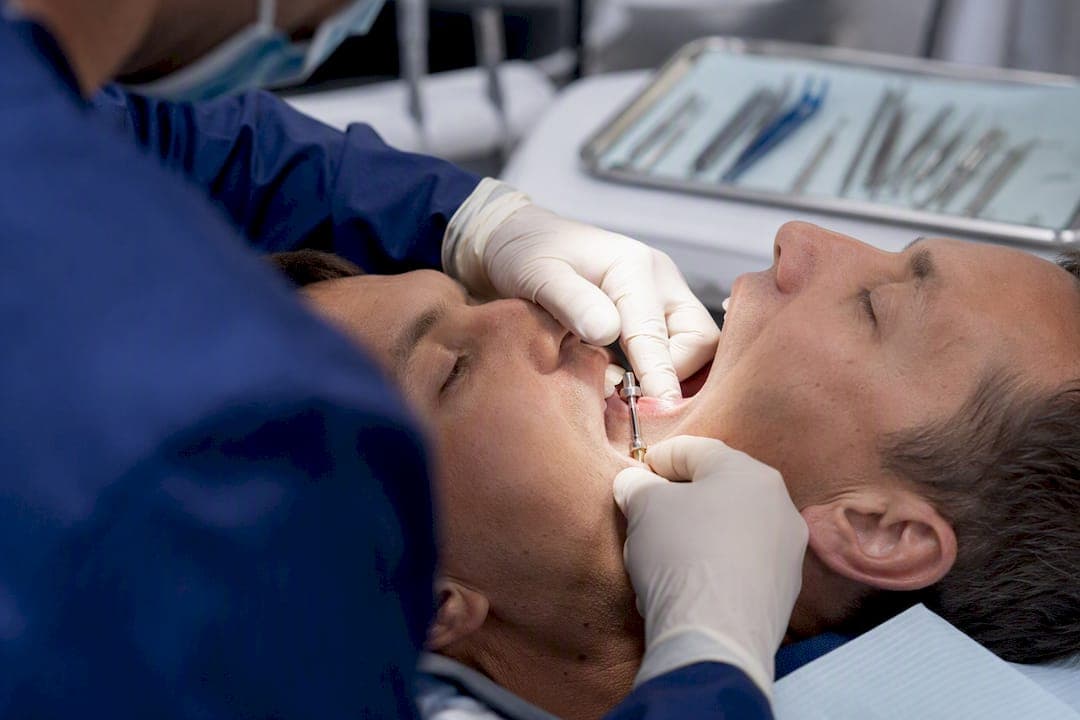
Mini dental implants are one-piece titanium fixtures under 3.0 mm in diameter, smaller and structurally simpler than standard implants. Dentists reach for them most often to stabilize a loose lower denture or to fill a narrow ridge that can't accommodate a full-size implant. They're less invasive to place and typically cost less per fixture, but that smaller footprint comes with a real ceiling: mini implants aren't the right tool for replacing back teeth or carrying heavy chewing loads long term.
- Diameter under 3.0 mm, one-piece titanium design
- Best-supported use: mandibular overdenture retention and narrow-ridge sites
- Trade-off: lower cost and faster healing, but limited load capacity for posterior fixed bridges
Key Takeaways
Mini dental implants work best as a lower-cost, less invasive solution for stabilizing loose dentures and filling narrow ridges, not as a substitute for standard implants under heavy chewing load.
| Point | Details |
|---|---|
| Size defines function | Under 3.0 mm diameter means less bone contact, which caps mini implants at lighter-duty uses like overdenture retention. |
| Strongest evidence base | Long-term studies support mandibular overdenture stabilization; posterior fixed-load use shows higher failure rates. |
| Imaging matters | A CBCT scan is recommended for narrow ridges to plan safe implant angulation before surgery. |
| Maintenance is ongoing | O-ring attachments typically need replacement every 12 to 18 months to preserve denture retention. |
| Next step | DC Implant & Cosmetic Dentistry offers same-day implant evaluations with Dr. Kambez Shukoor to determine candidacy. |
Table of Contents
- What Makes a Mini Dental Implant Different
- Where Mini Implants Actually Help Patients
- Are You a Good Candidate for Mini Implants?
- How the Placement Procedure Actually Works
- What Recovery Looks Like After Placement
- Mini Implants vs. Standard Implants: Where the Evidence Points
- What Mini Dental Implants Cost and How Pricing Breaks Down
- Keeping Mini Implants Healthy Long-Term
- What to Ask at Your Implant Consultation
- The Real Question Isn't Mini vs. Standard, It's Fit
- Scheduling an Implant Evaluation at DC Implant & Cosmetic Dentistry
- Frequently Asked Questions
- Sources
What Makes a Mini Dental Implant Different
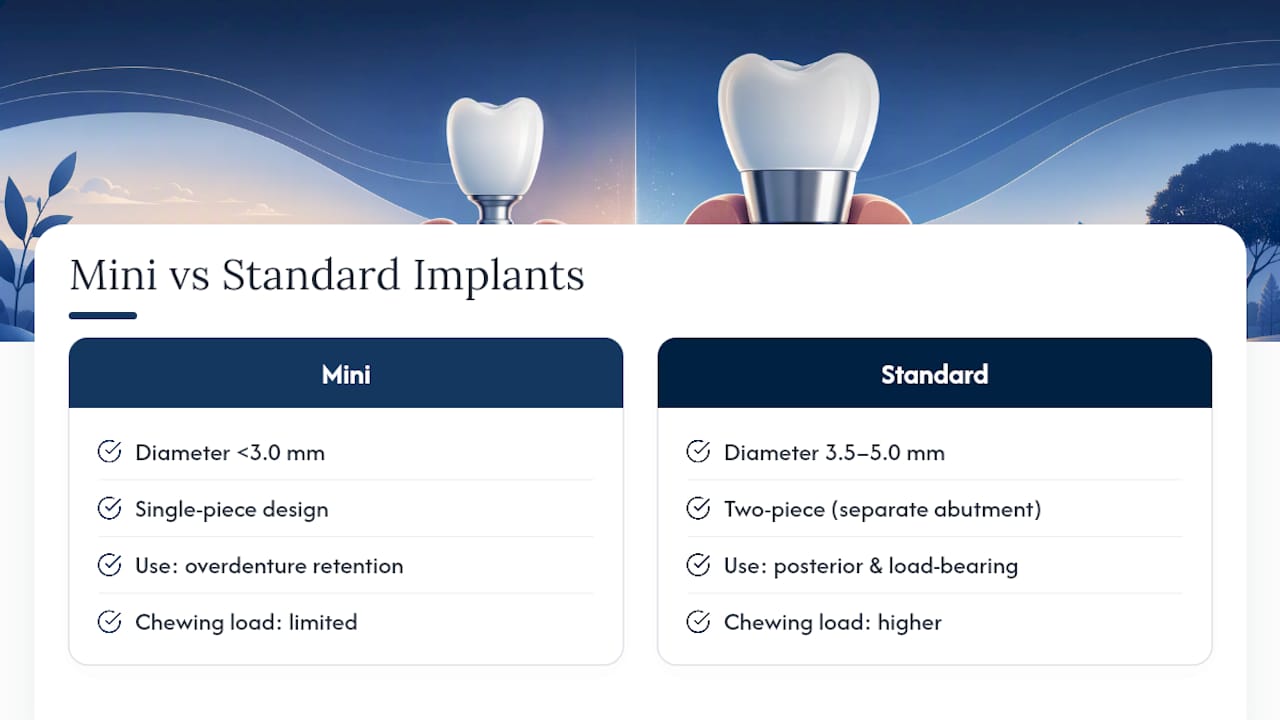
The defining feature is size. A mini implant runs under 3.0 mm across, while conventional two-piece implants span 3.5 mm to 5.0 mm. That's not a trivial difference. Less diameter means less surface area bonding to bone, which is the whole reason mini implants get reserved for lighter-duty jobs.
Construction matters too. Standard implants come in two pieces (the implant body and a separate abutment screwed in after healing). Mini implants are almost always one solid piece, implant and ball-shaped or Locator-style attachment head fused together. That head is what an overdenture clips onto, and it's designed to snap in and out for daily removal and cleaning.
- One-piece design eliminates the abutment-connection step entirely
- Rounded ball or Locator-type heads snap into a denture's retention housing
- Smaller diameter means less bone-to-implant contact than a standard fixture
Diameter is the whole story here: every clinical decision about what a mini implant can and can't do traces back to that under-3-mm measurement and the reduced osseointegration surface it creates.
Where Mini Implants Actually Help Patients
The benefit list reads well, and most of it holds up in practice. Placement is often flapless, meaning the dentist works through the gum without cutting a surgical flap, which shortens chair time and eases recovery. Cost per implant tends to run lower than standard implants, and some patients qualify for same-day loading, walking out with a functional denture attached the day of surgery.
- Loose denture stabilization. This is the best-documented use. Mini implants anchor removable mandibular dentures so they stop shifting during eating and speaking.
- Narrow-ridge single-tooth replacement. Where a ridge is too thin for a standard implant without grafting, a mini implant can sometimes fill the gap.
- Orthodontic anchorage. Temporary mini implants act as fixed points for tooth movement, then get removed once treatment finishes.
- Transitional support. Some practices use them as provisional anchors while a longer-term plan gets finalized.
Pro Tip: Ask specifically whether your case fits the overdenture-retention category. That's where the evidence is strongest. If a dentist proposes mini implants for a back-tooth bridge, get a second opinion before committing.
Are You a Good Candidate for Mini Implants?
Candidacy comes down to bone and bite force. Dentists look for adequate bone width and density, often referencing the Lekholm and Zarb bone-quality classification, with denser cortical bone giving mini implants the primary stability they need since they don't have much surface area to spare.
Patients who grind or clench heavily are usually poor candidates. High occlusal force on a small-diameter implant raises fracture and loosening risk substantially, and posterior load-bearing situations (back teeth, heavy chewing) generally call for standard implants instead.
- Preferred: dense cortical bone, mandibular anterior region, denture-retention goals
- Caution flags: bruxism, heavy bite forces, need for posterior fixed prosthetics
- Systemic considerations: uncontrolled diabetes, active smoking, and osteoporosis can all affect healing and warrant closer evaluation
- Imaging: a CBCT scan is typically recommended when the ridge looks narrow on initial exam, giving a 3D view standard x-rays can't provide
Patients missing several teeth who don't fit the mini-implant profile often do better with multiple tooth implant solutions built around standard-diameter fixtures.
How the Placement Procedure Actually Works
The process starts with imaging. A panoramic x-ray is the minimum standard, but a CBCT scan gets ordered whenever the ridge looks tight, letting the dentist map bone volume and nerve position in three dimensions before touching a drill.
- Assessment and imaging. Panoramic x-ray at minimum, CBCT for narrow ridges, plus a bite and denture-fit evaluation.
- Pilot drilling. Most mini implant placements are flapless, a small pilot hole is drilled directly through the gum tissue rather than lifting a surgical flap.
- Implant insertion. The self-tapping implant threads into the pilot site at a controlled torque, the dentist is feeling for solid resistance that signals good primary stability.
- Attachment and loading. For overdentures, dentists commonly place two to four implants anterior to the mental foramina, splinted or unsplinted depending on ridge shape, then fit the denture's retention housings the same day in cases suited for immediate loading.
The flapless approach cuts down on swelling and bleeding since there's no incision to heal, but it also removes the dentist's direct visual confirmation of bone quality, which is why experienced clinicians stress careful pre-op planning before committing to immediate loading.
What Recovery Looks Like After Placement
Discomfort is usually mild compared to standard implant surgery. Expect some soreness and minor swelling for the first 72 hours, tapering off over the following two weeks as the gum tissue settles around the implant heads.
- First 72 hours: mild soreness, possible minor swelling, over-the-counter pain relief usually sufficient
- Weeks 1 to 2: tissue healing continues, denture fit gets checked and adjusted
- Functional gains: most denture wearers notice better retention, easier chewing, and clearer speech almost immediately
- Follow-up visits: a short-term check within two weeks, then periodic maintenance appointments to monitor the O-ring attachments
Mini Implants vs. Standard Implants: Where the Evidence Points
The core limitation is physics, not marketing. A smaller-diameter fixture bonds to less bone, and that reduced surface area caps how much chewing force it can safely handle. That's the entire reason mini implants stay in the denture-retention lane rather than replacing molars.
Long-term data backs a nuanced picture. A retrospective study following flapless, immediately loaded mini implants for up to 15 years found acceptable survival rates in patients using them for overdenture retention, the intended use. But the same body of evidence shows failure rates climb noticeably when mini implants get pushed into off-label, high-load posterior applications they weren't designed for.
The distinction that matters most isn't mini versus standard. It's matching the implant's load capacity to the job it's being asked to do. Overdenture retention plays to a mini implant's strengths; a fixed posterior bridge does not.
- Prosthetic flexibility is narrower with mini implants: they suit removable overdentures well but rarely support long-span fixed bridges
- Retention housings and O-rings wear over time and need periodic replacement, a maintenance cost standard implants don't carry the same way
- Readers considering a full-arch solution should compare against implant-supported dentures or full-mouth reconstruction before deciding
What Mini Dental Implants Cost and How Pricing Breaks Down
Per-fixture pricing runs lower for mini implants than for standard implants, which is a big part of their appeal for denture patients on a budget. But the number that matters isn't the per-implant price. It's the total treatment cost, and that scales with how many implants you need and what kind of prosthesis sits on top.
- Number of implants: overdenture cases typically use two to four fixtures per arch, multiplying the base cost
- Prosthesis type: a new denture built to snap onto implant attachments costs more than a simple retrofit of an existing one
- Imaging and diagnostics: a CBCT scan adds to upfront costs but can prevent a poor surgical outcome
- Grafting, if needed: patients who don't quite qualify for standard implants without bone augmentation may still need grafting even with the mini-implant route
Dental insurance coverage for implants varies widely by plan, and many patients rely on financing options like CareCredit to spread out the cost. Worth asking about at your consult before you commit to a treatment plan.
Keeping Mini Implants Healthy Long-Term
Daily hygiene around the exposed implant heads matters more than people expect. Food debris and plaque collect around the ball or Locator attachment just like they would around a natural tooth, and skipping cleaning there invites gum inflammation.
- Brush around each implant head daily with a soft brush, and clean the denture's retention housing separately
- Expect O-ring replacement roughly every 12 to 18 months to keep retention snug
- Schedule periodic occlusal checks and denture relines as tissue and bone shift over time
- Contact your dentist promptly if you notice persistent looseness, pain, or gum recession around an implant head
Pro Tip: If your denture starts feeling loose again after months of good fit, don't assume the implant failed. It's often just a worn O-ring, a five-minute fix at a follow-up visit.
What to Ask at Your Implant Consultation
Dr. Kambez Shukoor, a U.S. Navy veteran, leads implant evaluations at DC Implant & Cosmetic Dentistry with same-day appointment availability for patients who need answers quickly. A thorough consult should cover imaging needs, loading timeline, and long-term maintenance before any treatment decision gets made.
- Ask what imaging is needed for your specific ridge and whether a CBCT scan is warranted
- Ask whether same-day loading is realistic for your bone quality or whether a healing period makes more sense
- Ask what the maintenance schedule looks like, including O-ring replacement and follow-up visits
Straightforward denture-retention cases often get a same-visit recommendation. Complex bone loss or a bite that suggests bruxism sometimes warrants a referral to a specialist for a second opinion before moving forward.
The Real Question Isn't Mini vs. Standard, It's Fit
The conventional pitch around mini dental implants leans hard on convenience: less invasive, cheaper, faster. All true, and all somewhat beside the point. The question that actually determines whether a patient does well with mini implants is whether the clinical scenario matches what the evidence supports, which is overdenture retention and narrow-ridge sites, not a wholesale swap for standard implants.
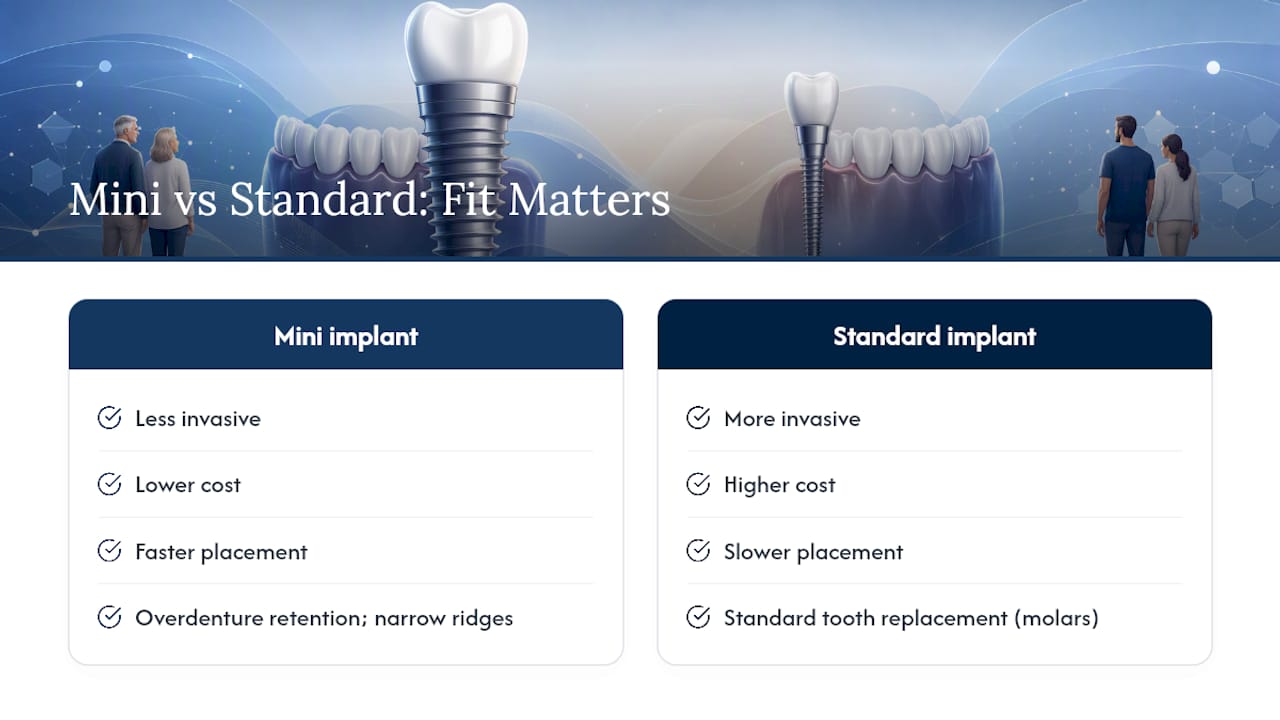
Where advice usually falls short is treating mini implants as a budget version of a standard implant rather than a different tool for a different job. A patient who needs a replacement molar and gets steered toward a cheaper mini implant because of cost pressure is being set up for the higher failure rates the retrospective data shows in off-label posterior use.
If you're weighing this decision, prioritize getting proper imaging before anything else. A panoramic x-ray tells a dentist very little about ridge width in three dimensions, and a CBCT scan, while an added expense, is what actually protects you from a mismatched treatment plan. Ask hard questions about why a mini implant is being proposed for your specific case, not just whether it's cheaper.
Scheduling an Implant Evaluation at DC Implant & Cosmetic Dentistry
If a loose denture or a missing tooth has you weighing your options, a same-day consult beats weeks of research alone. DC Implant & Cosmetic Dentistry offers implant-supported dentures, single-tooth implants, and full-mouth implant solutions in one Washington, DC office, with Dr. Kambez Shukoor evaluating each case individually rather than defaulting to a one-size answer.

Bring a list of your current medications, any recent dental x-rays you have on hand, and questions about your bite and bone health. The practice offers financing options, including CareCredit, to help spread out treatment costs, and same-day appointments mean you don't have to wait weeks just to get a straight answer about candidacy. Whether you're exploring implant-supported dentures or a broader full-mouth implant plan, the next step is simple: schedule an evaluation and get a treatment plan built around your actual bone and bite, not a generic recommendation.
Frequently Asked Questions
Are mini dental implants safe? Yes, for their intended use. Clinical literature supports mini implants as a safe option for overdenture retention and narrow-ridge sites when placed in patients with adequate bone density and reasonable bite force.
How long do mini dental implants last? Retrospective data following patients for up to 15 years shows acceptable long-term survival when mini implants are used for their intended purpose, overdenture retention, rather than posterior load-bearing.
What's the difference between mini implants and regular implants? Mini implants measure under 3.0 mm in diameter and come as a single piece, while standard implants run 3.5 mm to 5.0 mm and use a separate abutment. That size difference limits how much chewing force a mini implant can safely handle.
How much do mini dental implants cost? Per-implant pricing tends to be lower than standard implants, but total cost depends on how many implants you need and the complexity of the denture or prosthesis attached.
Can mini implants replace a missing back tooth? Generally not recommended. Posterior teeth handle heavier chewing forces than mini implants are built for, and evidence shows higher failure rates in off-label posterior use. A standard implant or a multiple tooth implant solution is usually the better fit.
This article is general information, not a substitute for advice from a qualified doctor. Consult a qualified healthcare professional about your own circumstances before acting on anything here.
Sources
- Dental Mini-Implants - StatPearls - NCBI Bookshelf
- Flapless mini implants immediately loaded for full-arch overdenture rehabilitation: up to 15-year retrospective study
- Mini Dental Implants Cost and Procedure Guide - CareCredit
- Mini Dental Implants: Uses, Limitations, and Clinical Outcomes | Dental Implants Authority