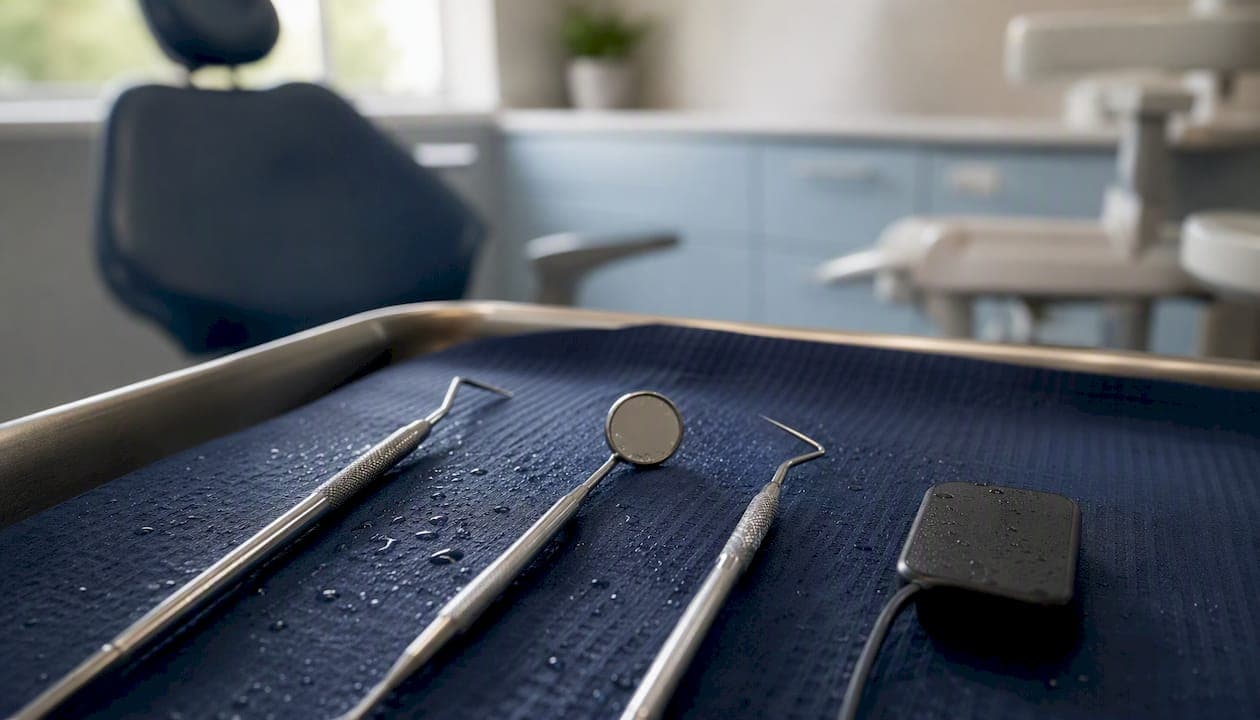
A comprehensive dental exam is a full baseline evaluation of your teeth, gums, bite, jaw joints, and oral soft tissues. It goes well beyond a routine cleaning visit. Think of it as the dental equivalent of a physical: the dentist builds a complete picture of your oral health from scratch, documents everything, and uses that record to guide every appointment that follows.
The CDC links oral health directly to overall systemic health, which is exactly why this kind of thorough first look matters. At DC Implant & Cosmetic Dentistry in Washington, DC, a comprehensive oral evaluation typically covers:
- Full medical and dental history review
- Tooth-by-tooth clinical inspection
- Periodontal probing and pocket-depth charting
- Oral cancer screening of soft tissues
- Dental X-rays or other imaging as clinically indicated
- Bite and TMJ assessment
- Review of existing restorations (fillings, crowns, implants)
Key Takeaways
A comprehensive dental exam is the most complete oral health assessment available and the foundation for every treatment decision that follows.
| Point | Details |
|---|---|
| What it covers | History, full-mouth inspection, periodontal probing, oral cancer screening, X-rays, bite check, and restoration review. |
| How long it takes | New patients should budget 60–90 minutes; established patients returning after a gap typically need 60 minutes. |
| Who needs it more often | Patients with active gum disease, high cavity rates, dry mouth, or tobacco use may need exams more frequently than the standard 6-month interval. |
| How to prepare | Bring your insurance card, medication list, and any prior X-rays or dental records to avoid delays and give the dentist a complete baseline. |
| DC Implant & Cosmetic Dentistry | Offers same-day comprehensive exams in Washington, DC, with advanced imaging, Dr. Shukoor's expertise, and in-house financing options. |
Table of Contents
- What does a comprehensive dental exam actually check?
- How does a comprehensive exam differ from a routine checkup?
- What happens during your appointment, step by step?
- How to prepare for your dental exam
- Who needs more frequent or specialized exams?
- What does a comprehensive dental exam cost, and what does insurance cover?
- What happens after the exam?
- What patients can expect at DC Implant & Cosmetic Dentistry
- Discomforts you might feel during the exam and how they're handled
- How to choose the right dentist for a comprehensive exam
- Questions worth asking your dentist during or after the exam
- Why comprehensive exams are worth prioritizing
- Ready to book your comprehensive dental exam in Washington, DC?
- Sources
What does a comprehensive dental exam actually check?
Each component has a specific job. Understanding them makes the appointment feel less like a mystery and more like a logical sequence.
Medical and dental history. The dentist asks about medications, allergies, systemic conditions (diabetes, heart disease, autoimmune disorders), and prior dental work. This isn't small talk. Certain medications cause dry mouth, which raises cavity risk. Heart conditions may affect how procedures are managed. The history shapes every clinical decision that follows.
Tooth-by-tooth clinical inspection. Each tooth gets examined for decay, cracks, wear patterns, and sensitivity. The dentist checks enamel integrity, looks for signs of grinding (bruxism), and notes any teeth that are missing, mobile, or structurally compromised.
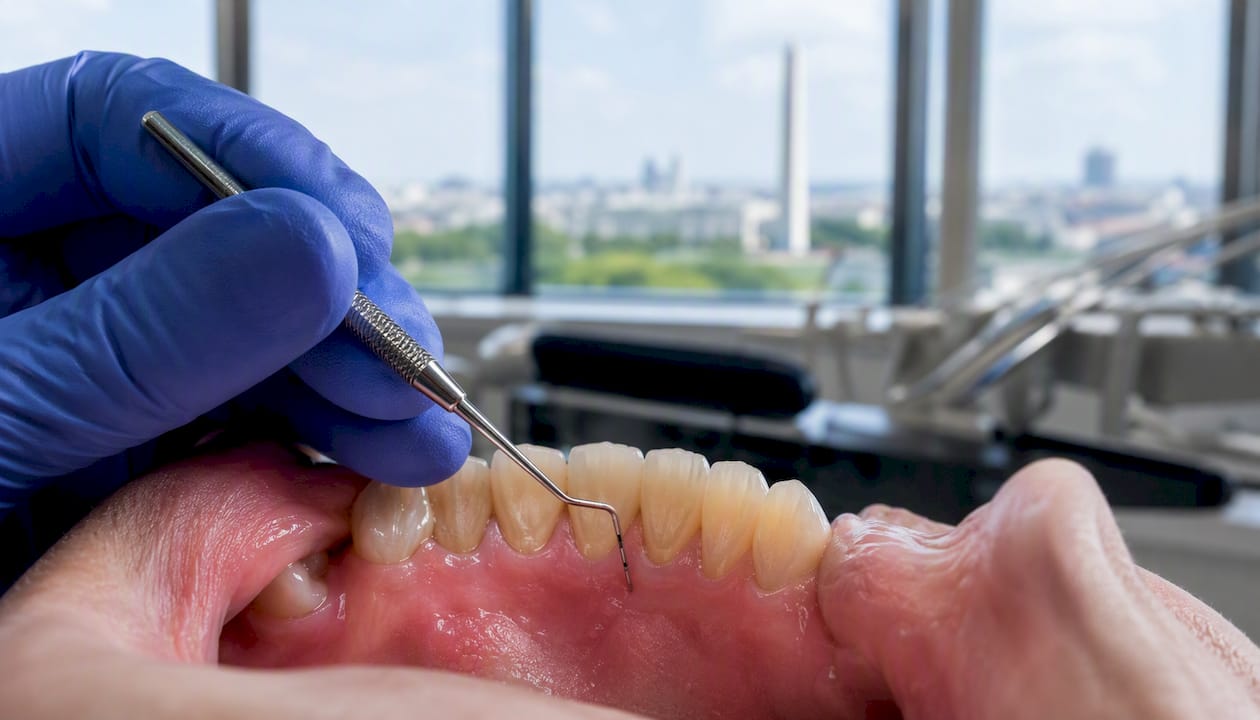
Periodontal probing. A small probe measures the depth of the sulcus (the space between your gum and tooth). Healthy pockets measure 1–3 mm. Readings of 4 mm or more suggest early to moderate gum disease; deeper pockets indicate more advanced periodontal disease, which peer-reviewed research associates with systemic inflammation. Catching this early changes the treatment trajectory significantly.
Oral cancer screening. The dentist examines the tongue, floor of the mouth, cheeks, palate, and throat for unusual lesions, discoloration, or asymmetry. This takes about two minutes and can catch abnormalities long before symptoms appear. DC Implant & Cosmetic Dentistry includes a dedicated oral cancer screening as part of every comprehensive evaluation.
Imaging. A full-mouth series of X-rays or a panoramic image reveals bone levels, root anatomy, impacted teeth, and decay between teeth that no mirror can show. The Academy of General Dentistry (AGD) provides clinical guidance on appropriate imaging frequency based on patient risk and history.
Bite and TMJ check. The dentist evaluates how your upper and lower teeth meet (occlusion) and checks for clicking, tenderness, or restricted movement in the jaw joints. Untreated bite problems can cause headaches, tooth fractures, and muscle pain over time.
Restoration review. Existing fillings, crowns, bridges, and implants are checked for wear, marginal integrity, and signs of secondary decay underneath.
Pro Tip: Bring any prior X-rays or dental records, even if they're from years ago. A dentist who can compare your current bone levels to a baseline from five years back has far more diagnostic information than one starting from zero.
How does a comprehensive exam differ from a routine checkup?
The short answer: scope and purpose. A comprehensive exam establishes a baseline. A periodic (routine) exam monitors changes against that baseline.
| Feature | Comprehensive exam | Periodic/routine checkup |
|---|---|---|
| Full medical and dental history | Yes, in detail | Updated briefly |
| Complete periodontal charting | Yes | Spot-check or abbreviated |
| Full-mouth X-rays | Usually included | Bitewings as needed |
| Oral cancer screening | Full soft-tissue exam | Often included but briefer |
| Treatment planning | Full written plan | Updates to existing plan |
| Typical time | 60–90 minutes | 60 minutes |
| Typical trigger | New patient or long gap in care | Every 6 months |
A dentist will typically recommend a comprehensive exam when you are a new patient, when you haven't been seen in two or more years, or when your dental history is complex enough that a fresh full evaluation is clinically warranted.
Practical differences patients notice:
- More paperwork and history-taking at the start
- Longer appointment time
- More X-rays than a standard recall visit
- A written or verbal treatment plan at the end, not just a "see you in six months"
What happens during your appointment, step by step?
Knowing the order of events removes most of the anxiety. Here's how a typical first dental exam flows:
- Check-in and paperwork. You complete medical history forms, insurance verification, and consent documents. Arriving 15 minutes early prevents delays.
- X-rays. A dental assistant or hygienist takes digital X-rays before the clinical exam so the dentist has images to review during the inspection.
- Hygienist assessment. The hygienist performs periodontal charting, notes bleeding points, and completes a professional cleaning (scaling and polishing). MedlinePlus confirms that hygienists handle scaling, polishing, and flossing, and may apply fluoride or sealants when appropriate.
- Dentist clinical exam. The dentist reviews X-rays, conducts the tooth-by-tooth inspection, performs the oral cancer screening, and checks the bite and TMJ.
- Findings review and treatment plan. The dentist walks you through findings, explains priorities, and outlines recommended next steps. You should leave with a clear picture of what needs attention and in what order.
For new patients, budget about an hour to an hour and a half. Established patients returning after a short gap typically need less time, around three quarters of an hour.
What to bring:
- Photo ID and insurance card
- Current medication list (including supplements)
- Prior dental X-rays or records if you have them
- List of any symptoms, sensitivities, or concerns
How to prepare for your dental exam
Most preparation is logistical, but a few details genuinely affect the appointment.
- Medications: Take your regular medications as scheduled unless your physician has told you otherwise. Prophylactic antibiotics before dental procedures are only indicated for specific cardiac conditions or joint replacements, and only when your physician recommends it. Do not self-prescribe.
- Pregnancy: Tell the front desk when you schedule. Routine X-rays are generally deferred during the first trimester unless clinically urgent; the hygienist and dentist will adjust accordingly.
- Insurance: Call your insurer beforehand to confirm what preventive services are covered and whether a comprehensive exam code (D0150) is treated differently from a periodic exam code (D0120). The difference matters for your out-of-pocket cost.
- Prior records: Gather any X-rays, treatment summaries, or specialist letters. Even a photo of a previous smile or a note about past root canals helps.
Pro Tip: If dental anxiety is a real barrier for you, mention it when you call to book. DC Implant & Cosmetic Dentistry has specific strategies for managing dental anxiety and can discuss comfort options before you even walk in the door.
Who needs more frequent or specialized exams?
Clinical guidance from the MSD Manual recommends the first dental examination by age 1 or when the first tooth erupts, with subsequent evaluations commonly at 6-month intervals. Higher-risk patients may need more frequent assessments, determined by their dentist based on individual risk factors.
Conditions and situations that typically shorten the recall interval:
- Active periodontal disease: Patients with gum disease often need periodontal maintenance every 3–4 months rather than the standard 6.
- High cavity rate: Frequent decay suggests a need for more regular monitoring and possibly fluoride treatment.
- Dry mouth (xerostomia): Saliva is your mouth's natural defense against decay. Reduced flow from medications or systemic conditions accelerates cavity formation.
- Immunocompromised states: Chemotherapy, HIV, or long-term corticosteroid use can change oral tissue behavior rapidly.
- Heavy smoking or tobacco use: Significantly raises oral cancer and periodontal disease risk.
- Pregnancy: Hormonal changes increase gum inflammation risk; a dental visit during the second trimester is widely recommended.
- Certain medications: Blood thinners, bisphosphonates, and some antihypertensives all have oral health implications worth monitoring.
Special populations worth noting: children benefit from early exams to catch developmental issues; seniors face higher rates of dry mouth, root decay, and oral cancer; pregnant patients need gum monitoring throughout gestation.
What does a comprehensive dental exam cost, and what does insurance cover?
Billing for a full dental health assessment typically involves several separate line items, which surprises many patients who expect a single charge.
- Comprehensive exam (D0150): The clinical evaluation itself, billed separately from cleaning.
- Full-mouth X-rays (D0210) or panoramic image (D0330): Imaging is almost always a separate charge.
- Prophylaxis/cleaning (D1110 for adults): Routine cleaning billed independently.
- Periodontal charting: Sometimes bundled, sometimes billed separately depending on the practice.
Pro Tip: Before any treatment beyond the exam itself, ask for a pre-treatment estimate in writing. Call your insurer with the procedure codes to confirm coverage. A five-minute phone call can prevent a surprise bill.
The AGD's patient resources include guidance on understanding dental benefit plans and what questions to ask before agreeing to treatment.
What happens after the exam?
The findings review is where the appointment pays off. A thorough dentist will walk you through X-rays and photos, explain pocket depths, note the condition of each restoration, and present a prioritized treatment list.
Common follow-up pathways:
- Monitoring: Minor findings (a small area of early demineralization, a slightly worn filling) may be watched at the next recall visit rather than treated immediately.
- Preventive steps: Fluoride varnish, sealants, or a custom night guard may be recommended based on findings.
- Restorative treatment: Cavities, cracked teeth, or failing restorations get scheduled for repair.
- Periodontal therapy: Pocket depths of 4 mm or more often lead to a recommendation for scaling and root planing rather than a standard cleaning.
- Specialist referral: Impacted wisdom teeth, suspected TMJ disorders, or suspicious lesions may warrant an oral surgeon, periodontist, or oral medicine specialist.
Ask for a written treatment plan with procedure codes and estimated costs. If the recommended work is extensive, a second opinion is entirely reasonable and most good dentists will say so themselves.
What patients can expect at DC Implant & Cosmetic Dentistry
DC Implant & Cosmetic Dentistry brings together general and cosmetic dental services under one roof in Washington, DC, which means findings from a comprehensive exam can be acted on without referrals to multiple offices. A first visit typically runs 60–90 minutes and includes digital X-rays, full periodontal charting, oral cancer screening, and a detailed findings review.
Dr. Kambez Shukoor, a U.S. Navy veteran, leads the practice. The practice has earned over 200 five-star reviews, and same-day appointments are available for patients who need to be seen quickly. Financing through CareCredit and Lending Tree is available for treatment plans that extend beyond what insurance covers.
The practice's exams and X-rays page details the imaging options available, including panoramic and bitewing X-rays, and explains when each is clinically appropriate.
Discomforts you might feel during the exam and how they're handled
A comprehensive exam is not a painful procedure, but a few moments can be uncomfortable.
Periodontal probing is the most commonly cited source of sensitivity. If your gums are inflamed, the probe pressure can sting. This typically resolves within minutes. Patients with significant sensitivity can ask for a topical anesthetic gel applied to the gum tissue beforehand.
X-rays require holding film or a sensor in your mouth, which can trigger a gag reflex in some patients. Letting the hygienist know in advance allows them to adjust positioning or use a smaller sensor.
Jaw fatigue from keeping your mouth open for an extended exam is real, especially for patients with TMJ tenderness. Short breaks during the appointment are completely reasonable to request.
Cold air or explorer contact on sensitive teeth can cause brief sharp sensations. These are diagnostic signals, not damage. The dentist notes them as part of the exam findings.
None of these discomforts require you to push through without saying anything. A good dental team adjusts technique when patients communicate what they're feeling.
How to choose the right dentist for a comprehensive exam
Credentials matter, but so does the clinical environment and how the dentist communicates findings.
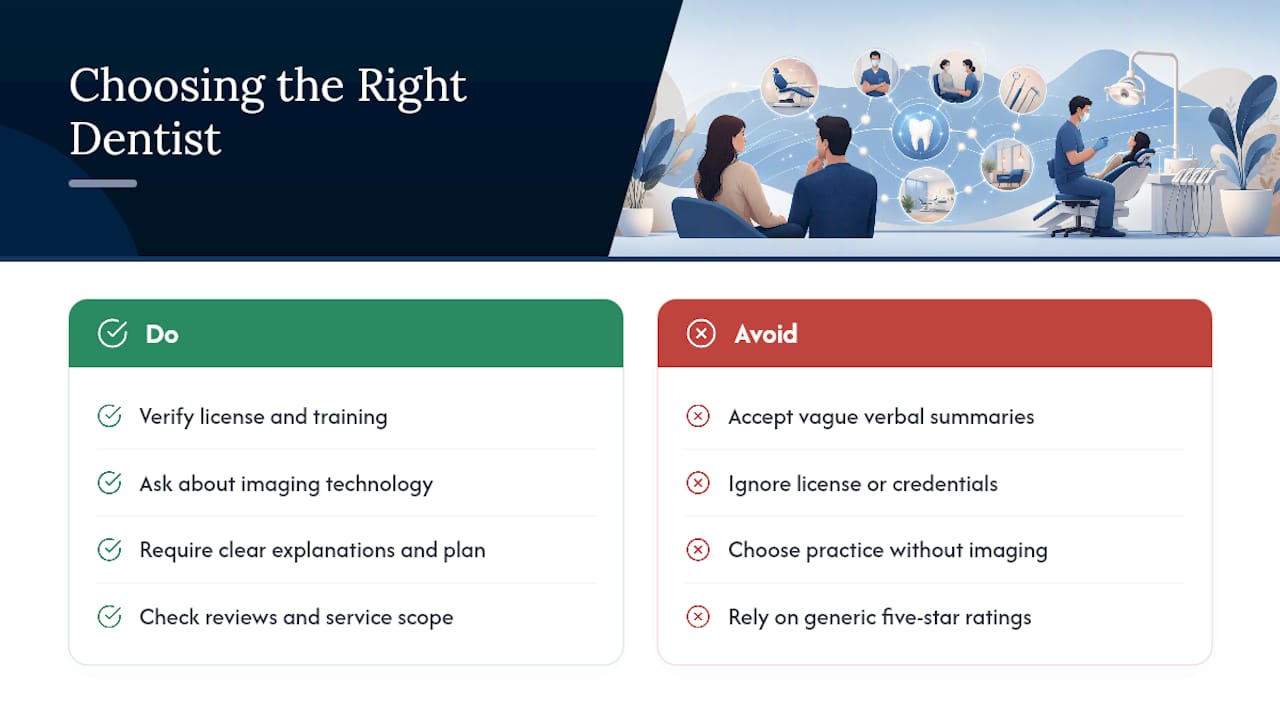
Verify licensure and training. Every dentist practicing in the US must hold a DDS or DMD degree and a valid state license. You can verify a dentist's license through your state dental board's online lookup tool. Additional fellowship or membership with organizations like the AGD signals ongoing continuing education.
Ask about technology. Digital X-rays reduce radiation exposure compared to traditional film. Intraoral cameras let you see what the dentist sees. A practice that uses current imaging technology tends to catch things earlier.
Evaluate communication. A dentist who explains findings in plain language, shows you X-rays, and gives you a written treatment plan with codes and costs is one you can trust. Vague verbal summaries with no documentation are a red flag.
Check reviews, but read them critically. Look for patterns: patients mentioning thoroughness, clear explanations, and follow-through on treatment plans carry more weight than generic five-star ratings.
Consider the scope of services. If the exam reveals a need for implants, aligners, or cosmetic work, a practice that handles all of it in-house saves you time and keeps your records in one place.
Questions worth asking your dentist during or after the exam
Most patients leave without asking the questions that would actually help them. These are worth writing down before your appointment:
- "What are my top two or three priorities, and why?"
- "Which findings are urgent versus which can wait?"
- "What does my periodontal chart tell you about my gum health trend?"
- "Are there lifestyle or diet changes that would reduce my cavity or gum disease risk?" (The practice's nutrition and dental guidance covers this in detail.)
- "What do my X-rays show about bone levels compared to a healthy baseline?"
- "If I do nothing about [specific finding] for six months, what happens?"
- "What are the procedure codes for the recommended treatment so I can check my insurance coverage?"
That last question alone can save hundreds of dollars and prevents the common scenario where a patient agrees to treatment without understanding what their plan actually covers.
Why comprehensive exams are worth prioritizing
The conventional wisdom is that dental exams are about catching cavities. That framing undersells them. A full oral evaluation is one of the few medical appointments where a single 90-minute visit can surface early-stage oral cancer, undiagnosed gum disease affecting systemic inflammation, bite problems causing headaches, and structural failures in restorations that would become emergencies if left alone.
Patients who skip comprehensive exams for years and then return often face a treatment list that is longer and more expensive than it would have been with consistent monitoring. The exam itself is rarely the expensive part. What it prevents is.
There's also a practical argument for choosing a practice that does everything in one place. When the dentist who found the problem is also the one who treats it, the clinical handoff is seamless and the treatment plan reflects the full picture rather than a fragment of it.
Ready to book your comprehensive dental exam in Washington, DC?
DC Implant & Cosmetic Dentistry makes the first step straightforward. Same-day appointments are available, so you don't have to wait weeks to get started. The practice handles everything from the initial exam through restorative and cosmetic treatment, including dental implants, clear aligners, veneers, and whitening, all in one Washington, DC location.

Dr. Shukoor and the team will walk you through findings clearly, give you a written treatment plan, and work with your insurance or financing options (CareCredit and Lending Tree) so cost doesn't become a barrier. Call the practice directly or book online to schedule your dental exam and X-rays appointment. Patient resources, insurance information, and intake forms are available at the patient resources page before you arrive.
Sources
- MSD Manual — Evaluation of the dental patient
- MedlinePlus — Dental exam
- PMC article (peer-reviewed review) — periodontal disease and systemic links
- AGD — Academy of General Dentistry
This article provides general information about dental exams and is not a substitute for professional dental advice. Consult a licensed dentist for guidance specific to your oral health situation.