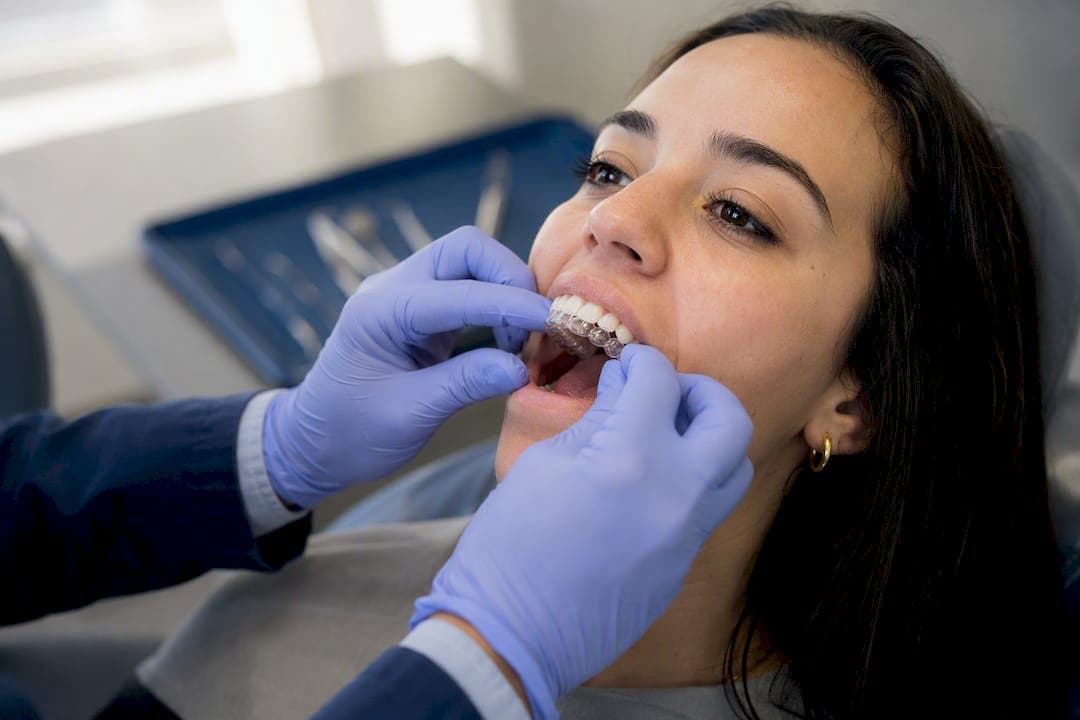
Clear aligners typically run $1,800 to $8,100, with most patients landing around $5,000 for a full course of treatment. Where you fall in that range depends almost entirely on how much your teeth need to move.
- Minor cases (small gaps, mild crowding): roughly $1,800 to $3,500
- Moderate cases (bite adjustments, several rotations): roughly $3,500 to $6,000
- Complex cases (significant crowding, jaw correction): roughly $6,000 to $8,100
That $1,800 to $8,100 span comes from CareCredit's cost data, and it's wide for a reason: a provider can't quote you accurately until they've actually looked at your teeth.
Pro Tip: Before you pay anything, ask your provider which tier your case falls into and how many aligner trays that requires. A 14-tray plan and a 40-tray plan can carry a $4,000 price gap even though both get called "clear aligners."
Key Takeaways
Clear aligner cost depends primarily on case complexity, with national prices ranging from about $1,800 to $8,100 and averaging near $5,108.
| Point | Details |
|---|---|
| National average price | Budget around $5,108, with most cases falling between $1,800 and $8,100 depending on complexity. |
| Complexity drives the quote | Minor spacing cases cost far less than cases needing bite correction, attachments, or extra refinements. |
| Insurance rarely covers it fully | Average coverage is about $1,772, and lifetime orthodontic maximums limit total payout. |
| Financing lowers monthly impact | A $5,000 plan with $500 down often runs close to $188 a month over 24 interest-free months. |
| Get a written, itemized estimate | Dc-dentistry provides same-day consults with clear pricing, financing help, and insurance verification. |
Table of Contents
- How Much Do Clear Aligners Cost on Average?
- What Factors Influence Clear Aligners Price?
- What's Included in a Clear Aligners Price?
- Does Insurance Cover Clear Aligners?
- What Financing Options Are Available for Aligners?
- How Do You Get an Accurate Clear Aligners Quote?
- How Long Does Treatment Take and What Does Aftercare Cost?
- What Does the Research Say About Time, Cost, and Results?
- How We Approach Pricing at Dc-dentistry
- Get a Clear, No-Surprise Aligner Quote
- Frequently Asked Questions
- Sources
How Much Do Clear Aligners Cost on Average?
The most commonly cited national average sits at $5,108 for clear aligner treatment without insurance, according to CareCredit. That number gets thrown around a lot, but it's an average of wildly different cases, not a price tag you should expect to see on your own estimate.
Location moves the number too. A general dentist in a smaller market might quote $1,000 less than an orthodontist in a major metro for a comparable case, simply because of overhead and demand. Provider type matters just as much as geography, which the next section covers in more detail.
Here's what that average looks like when you break it into real scenarios:
- A patient with mild spacing between the front teeth might need 10 to 16 aligner trays and finish treatment for around $2,200.
- A patient correcting moderate crowding and a slight overbite often needs 24 to 36 trays, landing closer to $4,800.
- A patient with significant crowding, rotated molars, or a bite that needs real correction may need 40 or more trays plus attachments, pushing the total toward $7,500.
Several clinic and consumer sources converge on a planning figure worth remembering: budgeting $3,500 to $6,000 covers most adult in-office treatments, assuming the case doesn't involve surgical or heavily orthodontic-driven complexity.
What Factors Influence Clear Aligners Price?
Clinical complexity drives the biggest swings in price. Crowding, rotations, and bite correction all increase the number of aligner trays a lab has to produce, and more trays mean more office visits to monitor progress. A case that only needs to close a small gap might wrap up in 10 trays; a case correcting a deep overbite can require 50 or more.
Provider type changes the number too. Orthodontists specialize in tooth movement and often charge more for that specialization, while general dentists offering clear aligners sometimes price treatment lower, particularly for straightforward cases. Local market rates shift things further: aligner treatment in a major city typically costs more than the same treatment in a smaller town.
Beyond the base plan, a few line items push totals higher:
- Attachments (small tooth-colored bumps that help trays grip and rotate teeth)
- Interproximal reduction (IPR), a minor filing between teeth to create space
- Refinements, additional aligner sets needed when teeth don't track exactly as planned
- Accelerated treatment technology, which speeds tooth movement for an added fee
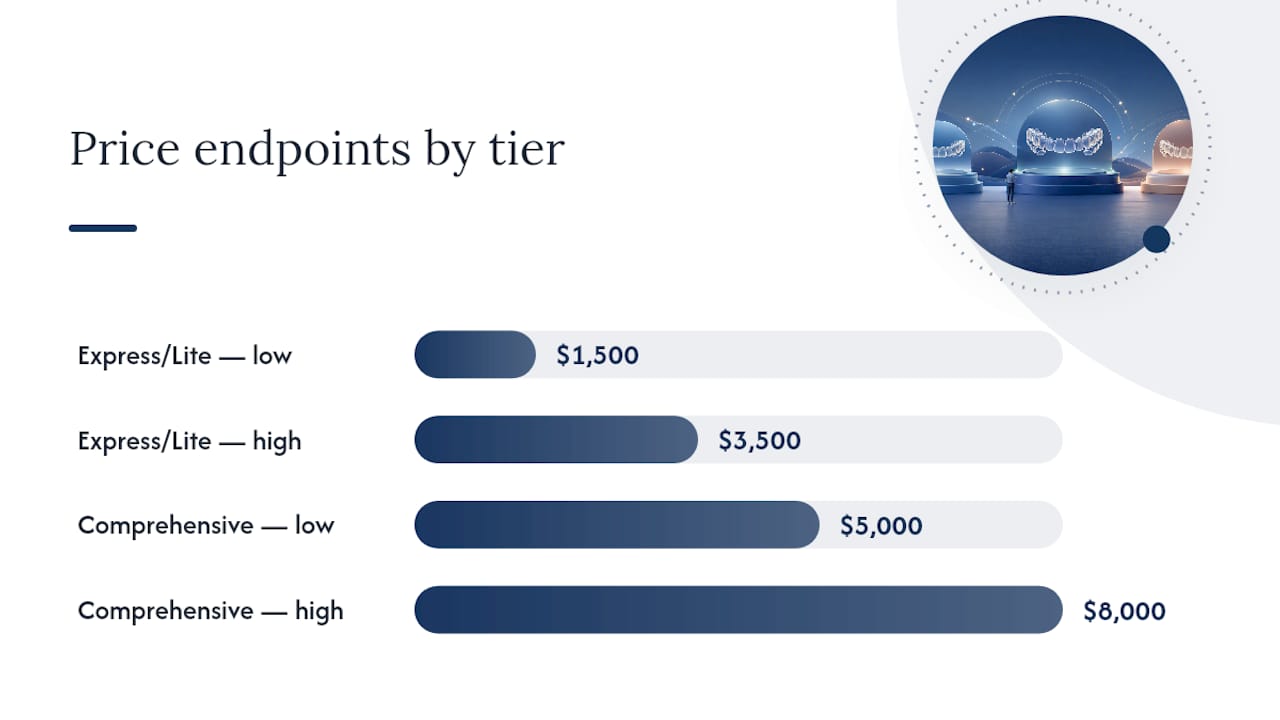
Pro Tip: Watch for "starting at" pricing in ads. Those figures almost always describe the Express or Lite tier, which typically runs $1,500 to $3,500 and only handles minor movement. If your case is more involved, the real quote will be closer to Comprehensive pricing, often $5,000 to $8,000.
What's Included in a Clear Aligners Price?
A standard treatment fee usually bundles more than just the trays themselves. Most quotes include the initial consultation and exam, digital scans or X-rays, the full series of custom aligners, scheduled check-in visits throughout treatment, one or two rounds of refinements if teeth need extra correction, and a set of final retainers once treatment wraps.
What often gets billed separately catches people off guard:
- Attachments or IPR, if your case requires them
- Additional refinement sets beyond what's included in the base plan
- Replacement aligners if one gets lost or damaged
- Accelerated treatment add-ons
- Extra retainers beyond the first set
When you're reviewing a written estimate, ask specifically: "Does this price include refinements if my teeth need extra movement, and how many replacement aligners are covered before I'm charged extra?" That single question tends to expose the gap between a bare-bones quote and a truly all-in price.
Does Insurance Cover Clear Aligners?
Many dental plans that include orthodontic benefits treat clear aligners the same way they treat braces. Invisalign reports an average insurance coverage amount of $1,772, and notes many plans cover up to $3,000 toward treatment. Coverage varies enormously by plan, though, and lifetime orthodontic maximums are common, meaning your plan may only pay out a set amount once, ever, regardless of how many phases of treatment you need.
To verify your actual benefit before committing to a plan:
- Call your insurer and ask for your lifetime orthodontic maximum and how much of it, if any, has already been used.
- Ask whether clear aligners specifically are covered, since some plans cover braces but classify aligners differently.
- Request the coverage in writing, referencing procedure codes D8080 (comprehensive orthodontic treatment, adolescent) or D8090 (adult), so your provider's office can bill correctly.
If you have an HSA or FSA, orthodontic treatment generally qualifies as a deductible medical expense under IRS Publication 502. Paying with pre-tax dollars effectively discounts your out-of-pocket cost by whatever your marginal tax rate is, so it's worth checking your account balance before you pay in full elsewhere.
What Financing Options Are Available for Aligners?
Most practices offer a mix of in-office payment plans and third-party financing, and the American Association of Orthodontists recommends confirming the specific terms with your provider before signing anything.

In-office plans commonly break the total cost into monthly installments at 0% interest, often over 12 to 24 months. Third-party options like CareCredit work more like a line of credit: you're approved for a limit, and depending on the plan you choose, interest may be deferred (meaning it's waived if you pay it off in the promotional window) or charged from day one.
Here's the math on two common scenarios. On a $5,000 treatment plan with $500 down, financed over 24 months at 0% interest, you're looking at roughly $188 a month. The same $5,000 balance financed through a deferred-interest CareCredit plan carries a similar monthly payment during the promo period, but if the balance isn't paid off by the deadline, interest often gets applied retroactively to the full original amount.
Before choosing either route, ask these questions: What's the required down payment? Is the interest rate fixed or deferred? Are there penalties for paying it off early? And if treatment runs longer than planned, does the payment plan adjust, or are you on the hook for the difference upfront?
How Do You Get an Accurate Clear Aligners Quote?
Bring your current insurance card, a summary of any prior orthodontic treatment (including whether you've used part of your lifetime maximum), and any digital scans or photos if a provider has requested them ahead of time.
At the consultation itself, ask directly:
- Which tier does my case fall into, and how many aligner trays does that require?
- What's included in this price, and what would trigger an extra charge?
- How much of my insurance lifetime maximum, if any, would this treatment use?
- Is there a refund or guarantee policy if treatment doesn't go as planned?
Request the answers in a written estimate that itemizes inclusions and financing terms. That's the only way to compare quotes from different providers side by side without guessing what each number actually covers.
How Long Does Treatment Take and What Does Aftercare Cost?
Mild cases often finish in 6 to 12 months. Moderate cases typically run 12 to 18 months, and complex cases involving significant bite correction can stretch to 24 months or longer. Longer treatment generally means more trays, which usually means a higher total cost.
Aftercare adds a few recurring expenses worth budgeting for:
- Retainers to hold your new tooth position, often $150 to $500 depending on the material and whether you need a replacement set
- Replacement aligners if one is lost mid-treatment
- Periodic check-ups to confirm teeth are staying put
Compliance matters more than most patients expect. Aligners generally need to be worn around 20 to 22 hours a day, and inconsistent wear is one of the most common reasons treatment runs long or needs extra refinement trays, both of which add cost. Colgate's guidance echoes this: aligners tend to land in a similar overall price range as traditional braces, and getting a personalized estimate from a dental professional is the only reliable way to know where you'll fall.
What Does the Research Say About Time, Cost, and Results?
A randomized trial of 100 adult orthodontic patients found that those treated with clear aligners had a shorter average treatment duration and higher patient-reported satisfaction than those treated with conventional braces.
That's a meaningful data point when you're weighing cost against outcome. A shorter treatment window can mean fewer total office visits and a lower chance of needing costly refinements from prolonged wear.
- DC Implant & Cosmetic Dentistry offers clear aligner treatment alongside patient education, including guidance on the 30-minute rule for aligner wear, to help patients stay on track.
- Same-day appointment availability means questions about fit or discomfort get addressed quickly, reducing the chance that a minor issue turns into a costly delay.
How We Approach Pricing at Dc-dentistry
We tell every patient the same thing before they commit to anything: your quote should reflect your case, not a marketing number you saw online. Dc-dentistry walks through your scans, explains exactly what's included, and works through financing or insurance options so the number on paper matches what you'll actually pay. If you're ready to see where your case lands, visit our clear aligners page to schedule a consult.
Get a Clear, No-Surprise Aligner Quote
Most patients researching clear aligner costs online never get a number that reflects their actual mouth, because online estimates can't see your teeth. Dc-dentistry closes that gap with a same-day consult that turns a national price range into a written, itemized quote before you commit to anything.
Our Washington, DC office offers a few things that make this easier than the typical shop-around process:
- Same-day appointments, so you're not waiting weeks just to get a number
- Financing support, including help evaluating CareCredit and in-office payment plans
- Insurance verification assistance to check your lifetime orthodontic maximum before you pay anything out of pocket
If your case involves other work, like whitening or veneers after your teeth are aligned, we can map that into your overall treatment plan and budget from the start. Schedule a consult through our clear aligners in Washington, DC page and walk out with a real number, not a guess.
Frequently Asked Questions
How much do clear aligners cost without insurance? Most patients pay between $1,800 and $8,100, with a national average near $5,108, depending on case complexity and provider.
Are at-home aligners cheaper than in-office treatment? At-home kits often carry lower sticker prices, but professional guidance warns that DIY aligners skip clinical oversight, which matters for anything beyond very minor spacing.
Does insurance cover clear aligners for adults? Many plans cover orthodontic treatment for adults similarly to braces, though coverage amounts and lifetime maximums vary by plan.
Can I use HSA or FSA funds for clear aligners? Yes. Orthodontic treatment generally qualifies as a deductible medical expense under IRS Publication 502, letting you pay with pre-tax dollars.
What's a realistic monthly payment for aligners? A $5,000 treatment plan with $500 down financed over 24 months at 0% interest runs close to $188 a month, though your actual payment depends on your provider's terms.
This article is general information, not a substitute for advice from a qualified doctor. Consult a qualified healthcare professional about your own circumstances before acting on anything here.
Sources
- CareCredit — Clear Aligners (Invisalign®) Treatment Cost and Financing
- Invisalign — average cost and insurance information
- IRS Publication 502 — Medical and Dental Expenses
- ToothCostGuide — Invisalign cost breakdown